
Best yerba mate for tereré – how to choose the perfect cold yerba mate?
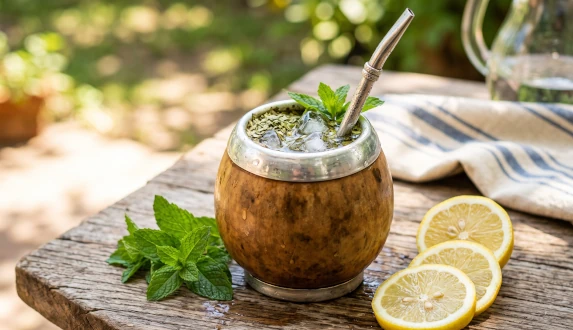
When the sun is blazing and a traditional hot infusion of mate tea seems to make the heat even more intense, there is a refreshing alternative: ice-cold yerba mate. Although, in theory, any yerba mate blend can be prepared with cool water, in practice it quickly becomes clear that not every blend tastes equally good when served cold. Choosing the right product is the key to success, so in this article we will focus on practical buying advice: how do you choose yerba mate for tereré?
Preparing an infusion with ice-cold water follows its own rules of physics and chemistry. A blend that is too delicate can quickly lose its character, while an unsuitable cut may clog the straw. If you want your tereré to be full-flavoured, delicious and capable of providing long-lasting stimulation, it is worth choosing yerba mate selected for tereré, either specially created for this type of extraction or naturally well suited to it. If you are just getting started and wondering how to make tereré from scratch, take a look at our earlier blog post: Tereré – our way to beat the heat! Prepare your favourite mate – cold, of course – and let us explore the world of ice-cold refreshment!
Table of contents:
- What should good yerba for tereré be like?
- Is every yerba mate suitable for tereré?
- Which types of yerba mate work best for tereré?
- How do you choose yerba mate for tereré to suit your preferences?
- The most common mistakes when choosing yerba for tereré
- Yerba mate for tereré – which style of infusion should you choose?
- Which yerba mate for tereré will be the best?
What should good yerba for tereré be like?
Yerba mate is traditionally associated with a hot infusion. For centuries, pouring warm water over the leaves – at around 70-80°C – was the main way to quickly release the distinctive flavour, smoky aroma and stimulating properties of Ilex paraguariensis. Hot water works rapidly, effectively opening up the leaves and drawing out their best qualities. However, in the hot climate of South America, particularly in sun-drenched Paraguay, a brilliant alternative emerged: cold yerba mate, better known as the famous tereré.
The challenge is that extraction in ice-cold water follows completely different rules. Low temperatures significantly slow down the release of flavour and active compounds. This is why not every pack of yerba mate that tastes excellent when prepared hot will work equally well when served cold. The best mate tea for tereré is usually a full-flavoured Paraguayan blend with a particular cut, a specific balance of powder and stems, plenty of intensity and – very often – a generous mix of herbal or citrus additions. Let us take a closer look at why these qualities are the key to a perfectly refreshing infusion.
Cut size and the amount of powder in yerba mate
If you have ever held a traditional Paraguayan yerba mate in your hands, you will probably have noticed that, although it contains plenty of thicker stems, the leaves themselves are finely ground and the pack contains a substantial amount of powder. This is not accidental. It is a deliberate feature that works particularly well when preparing tereré mate!
As we have already established, cold water works more slowly. If we used only coarsely cut leaves with ice-cold water, the infusion would have little to release and could end up watery and flat. This is where the powder comes in. Fine particles have a large surface area in contact with the water, allowing them to release their flavour and strength very quickly, even at such a low temperature. And what about the thicker stems? They act as a valuable natural filtering framework. They help prevent the fine powder from compacting into an impenetrable paste at the bottom of the vessel, allowing you to enjoy your drink without worrying about a blocked bombilla.
Flavour intensity in cold water
Ice-cold water is a much gentler solvent than boiling water. On the one hand, this is a major advantage: tereré is usually naturally less bitter and less astringent than a traditional hot infusion, making it smooth and easy to drink when you need to quench your thirst. On the other hand, delicate yerba mate blends, such as Argentine suave varieties, may completely lose their character in cold water, offering neither a distinct flavour nor a satisfying stimulating effect.
Yerba mate tereré needs a powerful base. Science supports this view! As discussed in the review Composition and bioactive properties of Yerba Mate (Ilex paraguariensis A. St.-Hil.): A review, yerba mate is a rich source of caffeine, chlorogenic acid and theobromine. During slow, cold extraction, however, these compounds are released more gradually. By choosing a full-flavoured, strong and smoky mate – such as a classic Paraguayan blend – you ensure that even with slower, reduced extraction, the infusion delivers a solid and steady boost of energy. A strong base also has enough potential to maintain its character through many refills!
💬 Scientific source: K. P. Burris et al., Composition and bioactive properties of Yerba Mate (Ilex paraguariensis A. St.-Hil.): A review, Chilean Journal of Agricultural Research, 2012.
Flavour additions – are flavoured yerba mate blends worth choosing?
The answer is a definite yes! Although traditional cold yerba mate without any additions has many loyal fans, herbal and fruit blends are the foundation of summer refreshment. In South America, fresh herbs – known as yuyos – are commonly added to the water used for tereré, along with a squeeze of citrus juice. Ready-made flavoured yerba blends are the easiest way to recreate this tradition at home.
It is worth remembering that choosing a blend with mint, boldo or lemon is not only about adding variety to the flavour. It can also offer an interesting nutritional benefit. Research published in late 2024 in the scientific journal Antioxidants found that ice-cold water releases active compounds from holly leaves more slowly and in different proportions than hot water. As a result, pure yerba prepared cold has lower antioxidant potential than a hot infusion. This is where additions can help! The study showed that, in cold-prepared infusions, the presence of flavour additions such as herbs or fruit significantly increased overall antioxidant activity. By choosing a flavoured blend, you can enhance the overall composition of your drink. Refreshment, great flavour and valuable plant compounds – what more could you ask for?
💬 Scientific source: J. Płatkiewicz et al., Antioxidant Capacity, Phenolic Compounds, and Other Constituents of Cold and Hot Yerba Mate (Ilex paraguariensis) Infusions, Antioxidants, 2024.
💡 Interesting fact: why does mint feel so cooling? Adding mint to yerba mate for tereré is about more than a pleasant aroma. The menthol it contains stimulates TRPM8 receptors in the mouth – the same receptors responsible for sensing cold. This means that mint-flavoured cold yerba mate can “trick” the brain and intensify the sensation of ice-cold refreshment!
💬 Scientific source: A. M. Peier et al., A TRP Channel that Senses Cold Stimuli and Menthol, Cell, 2002.
Is every yerba mate suitable for tereré?
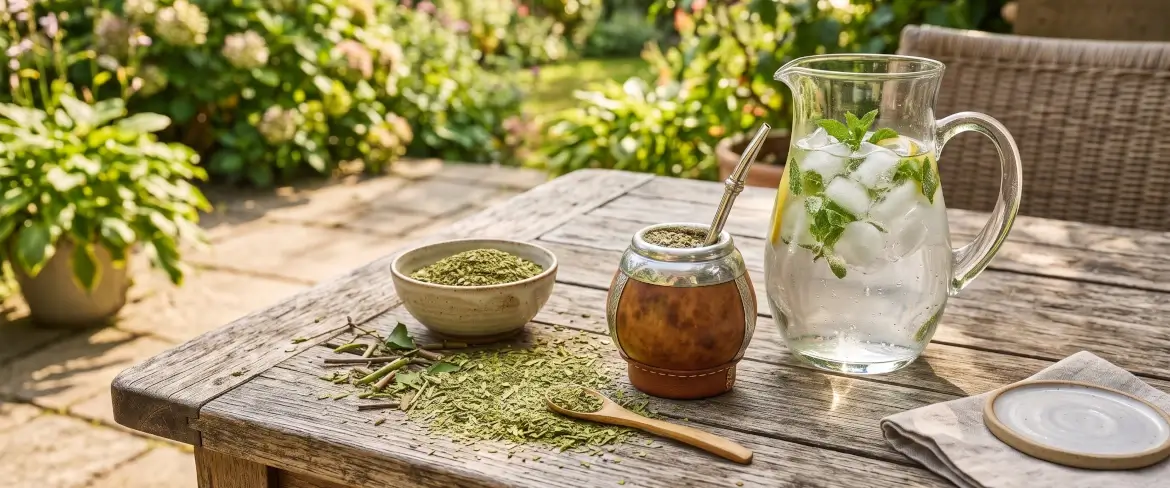
The short answer is: in theory, yes; in practice, not necessarily. From a technical point of view, there is nothing to stop you from pouring ice-cold water over any yerba mate blend you happen to have in your cupboard. After all, it is still made from Ilex paraguariensis! Before you add ice cubes to your favourite delicate blend, however, it is worth remembering that cold yerba mate is a completely different experience from its hot counterpart.
It is a little like coffee: delicate beans that are perfect for a hot, creamy espresso do not always work equally well in an icy, refreshing cold brew. Choosing a random holly blend may result in an infusion that is watery, lacking in character and simply... disappointing. Let us take a closer look at what causes these differences in quality.
Cold yerba mate vs traditional yerba mate – the key differences
The main difference between these two ways of enjoying yerba mate comes down to how our senses – and the water itself – respond to temperature. Hot water immediately releases a broad range of flavours, from subtle grassy notes to deep bitterness. Warmth also intensifies the aroma, which travels easily with the steam and reaches our sense of smell, creating a feeling of comfort and relaxation.
By contrast, cold yerba mate tastes considerably milder. Cold temperatures slightly dull the sensitivity of our taste buds, while the slower extraction means that fewer aromatic compounds enter the water at the same time. This is why yerba mate tereré needs to be – paradoxically – much more intense in its dry form! This style of drink calls for a full-flavoured blend with a smoky character and plenty of herbal or citrus notes. Only such a robust yerba mate blend can cut through the icy barrier and deliver a satisfying, rounded flavour from the very first sip.
Can you drink ordinary yerba mate cold?
Of course you can! No one is going to stop you experimenting. If the sun is blazing and the only blend on your shelf is a mild Argentine classic without stems (known as despalada) or bright green Brazilian chimarrão, you can still give it a try. You should simply be prepared for a less intense result. Such an infusion will probably lose its flavour after just two or three refills with ice-cold water.
When does this solution make sense? Above all, when you do not have another option to hand and need something cooling straight away. In that situation, it is worth experimenting a little! A great source of inspiration – especially for beginners – is the so-called tereré ruso. This involves pouring well-chilled fruit juice, such as peach, orange or apple juice, over a classic, delicate yerba mate instead of using plain water. The sweet, fruity liquid beautifully enhances and complements the milder flavour of the blend, creating an exceptionally refreshing drink.
💡 A useful tip – an initial pour: If you are wondering how to make tereré with an ordinary, very delicate yerba mate using water, there is a simple trick worth trying. Before adding ice cubes and pouring in ice-cold water, pour just two tablespoons of lukewarm water over the dry leaves. This allows the leaves to open up slightly, so that subsequent cold refills can draw out their deeper flavour and aroma more quickly and effectively!
When is it worth choosing yerba mate made for tereré?
If you want complete satisfaction, fewer problems with a blocked bombilla and a flavour that lasts throughout a hot afternoon, a dedicated yerba for tereré is an absolute must-have. It is easy to recognise – producers usually include terms such as Tereré or Fresca on the packaging.
When is it best to choose one? Above all, when you value convenience and a perfectly balanced flavour. Dedicated tereré mate blends are ready-made compositions in which the producer has done all the work for you. The dry leaves have a suitable structure with plenty of powder, while the proportions of cooling herbs and citrus notes have been carefully balanced. Instead of searching the kitchen for fresh mint, cutting up fruit or wondering what to add to your jug, simply open the pack, add the yerba, pour in ice-cold water and... it is ready! Knowing how to make tereré becomes pleasantly simple.
Which types of yerba mate work best for tereré?
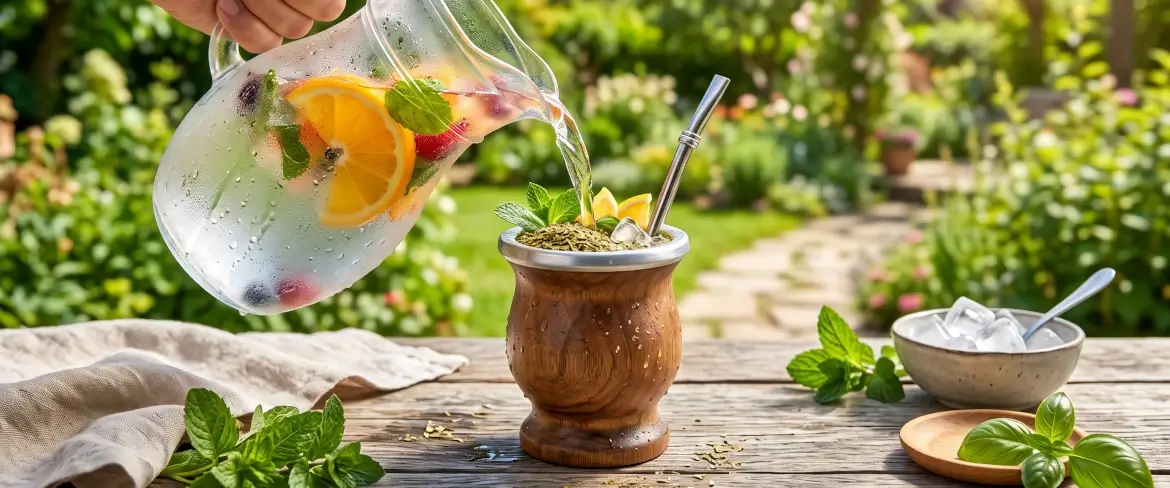
Now that we know what cold extraction involves and why the structure of the dry leaves matters so much, it is time to get more specific! Choosing the right pack in a shop can be slightly overwhelming – after all, there are hundreds of brands, different countries of origin and dozens of flavour variations to choose from. To make things easier, we have prepared a short guide. Discover which types of cold yerba mate are reliable choices for an infusion that will help you forget about the heat.
Paraguayan yerba mate – the classic choice for tereré
If we had to name the undisputed champion of ice-cold infusions, we would choose the classic yerba mate from Paraguay without hesitation. It is no coincidence that cold mate is such an important part of everyday life there, enjoyed in a wide range of settings – in public spaces, at work and among family and friends. Paraguayan producers have perfected the art of creating dry blends intended for preparation with ice-cold water.
What makes typical Paraguayan yerba tereré so distinctive? Above all, it has plenty of intensity and a deep, smoky, woody flavour profile resulting from traditional fire and smoke drying. Its pronounced bitterness and astringency, which can feel particularly powerful when the mate is prepared hot, become pleasantly smoother when combined with ice, while remaining clearly noticeable. Thanks to its characteristic structure – finely ground leaves, a generous amount of powder and thicker stems – it is the safest and most authentic choice. By choosing traditional Paraguayan brands such as Selecta, Guarani or Pajarito, you can enjoy a tereré mate experience inspired by the sun-drenched streets of Asunción.
Why does Paraguayan yerba mate work so well for tereré?
- ✔️ An ideal structure: the leaves and fine powder release their flavour and intensity quickly and effectively into ice-cold water. The stems found in Paraguayan yerba mate help prevent the bombilla from becoming blocked.
- ✔️ The right level of intensity: cold water slows down the release of caffeine. A strong, smoky Paraguayan base helps prevent the infusion from tasting flat or watery, while providing a solid and gradually released boost of energy.
- ✔️ Authentic tradition: it is no coincidence that some of the best yerba mate blends for cold preparation come from Paraguay. The culture of drinking tereré with ice-cold water and freshly crushed herbs has been officially recognised by UNESCO and added to the Representative List of the Intangible Cultural Heritage of Humanity.
Flavoured and herbal yerba mate blends – mint, citrus and other additions
Not everyone enjoys dry, smoky bitterness, and many people look for a fruity and herbal form of refreshment during the summer. This is where a ready-made, flavoured yerba blend for tereré comes in. It is an excellent option, especially when you are short on time and do not want to prepare the additions yourself.
Which flavour combinations work particularly well when the sun is blazing?
- ✔️ Mint and boldo: a classic South American combination for refreshment. These herbs provide a cooling sensation and a welcome feeling of relief.
- ✔️ Citrus fruits: lemon, grapefruit and orange are excellent for balancing the bitterness of yerba mate. Citrus yerba mate tereré is a great choice for anyone who enjoys crisp, slightly tart and refreshing flavours.
- ✔️ Exotic fruit: guava, passion fruit, pineapple and acai berries combined with ice-cold water can bring a distinctly tropical character to your drink!
Flavoured blends are also exceptionally convenient. You do not need to search through recipe guides to find out how to make tereré with perfectly balanced proportions. Instead of looking for fresh mint in the kitchen or cutting up fruit, simply add the ready-made blend to your mate gourd. Preparing it is as simple as pouring cold water over the leaves. It could not be easier!
Strong vs mild yerba mate – which is better in hot weather?
We are often asked whether a strong, highly stimulating blend or a milder, more relaxed yerba mate is better for cold preparation. As is often the case, the answer depends on the situation and your personal preferences.
Strong, classic blends are an excellent choice for work, a long drive or an active day outdoors. Cold water releases their caffeine gradually and steadily. Instead of a sudden energy peak, you get a more even and sustained stimulating effect that can work well during several hours of activity. This type of yerba mate also tends to retain its flavour through many refills.
Milder varieties, such as green, air-dried mate green blends or Argentine suave varieties, are ideal for a relaxed afternoon in the garden. They offer a lighter, gentler form of refreshment, and the smaller amount of caffeine extracted by cold water may be less likely to interfere with your evening routine. Just bear in mind that their flavour may fade a little sooner.
📌 In summary:
- Looking for deep flavour, long-lasting stimulation and a classic experience? ➡️ Choose strong Paraguayan yerba mate.
- Do you want a refreshing drink without having to cut up fruit? ➡️ Choose ready-made herbal or citrus blends.
- Planning a light and relaxing break? ➡️ Mild yerba mate with your favourite juice could be the perfect choice.
How do you choose yerba mate for tereré to suit your preferences?
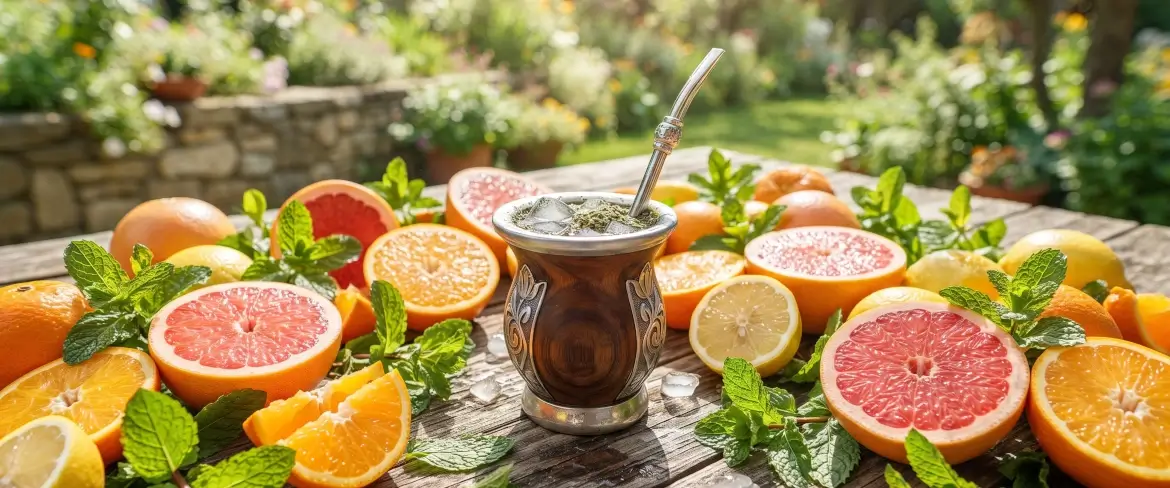
You already know what characterises low-temperature extraction and why the structure of the dry leaves matters so much. Now it is time for the most enjoyable part – choosing your yerba mate! Everyone has slightly different expectations when it comes to an infusion: some people look for a mild flavour, while others want a powerful boost of energy. That is why we have prepared a few simple scenarios to help you choose. Discover which yerba for tereré best suits your preferences and find your ideal option for the summer.
Cold yerba mate for beginners
If this is your first experience with Ilex paraguariensis, or you simply do not enjoy intense, smoky bitterness, Brazilian mate green could be the perfect choice. Air-dried rather than smoked and not aged, it retains its vibrant green colour and exceptionally mild flavour. The Verde Mate Green range is an excellent option in this category. Its rich selection of flavoured blends makes cold yerba mate taste pleasantly fresh and easy to enjoy – ideal when you are just starting out.
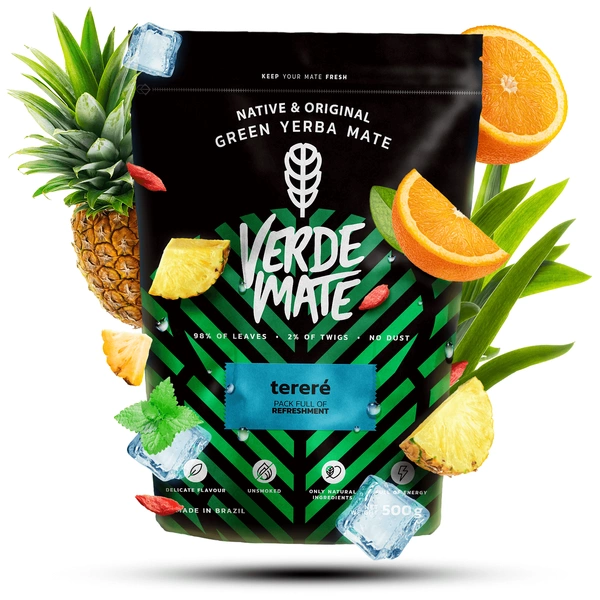
The queen of summer refreshment! Mild green mate combined with candied pineapple, goji berries, orange peel, lemongrass and mint. A fruity explosion of flavour with virtually no bitterness.
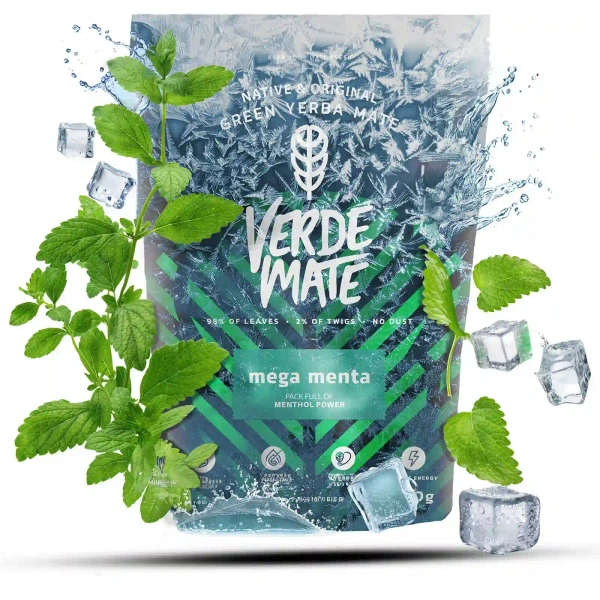
A great choice for anyone who loves an intense cooling sensation. A mild base of air-dried leaves enriched with a natural mint and menthol flavour. It delivers an immediate feeling of coolness and pleasant freshness.
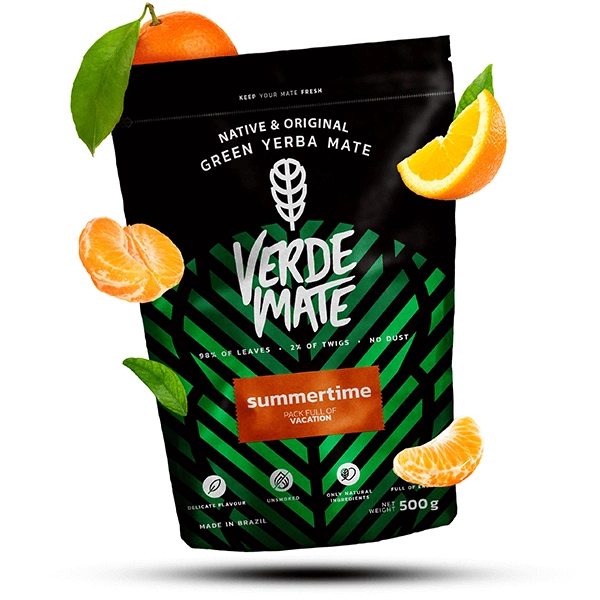
A taste of sunshine in every pack! It combines orange peel, lemongrass, mint, marigold petals, natural orange and lemon flavours, and natural mandarin oil. A delicious, light and wonderfully aromatic tereré mate blend.
Tereré for those looking for a powerful boost
Are you facing a long drive, or perhaps a demanding day at work in hot weather? You need a blend for more challenging moments. In this situation, we recommend classic Paraguayan yerba mate. As you already know from the previous sections, a high proportion of fine powder and a solid, smoky base help ensure that cold water extracts a satisfying amount of caffeine. This is yerba tereré for experienced mate drinkers: intense, full-flavoured and enriched with cooling additions that balance its dry character.
A powerful, smoky Paraguayan yerba mate with an exceptionally rich herbal bouquet. Lemongrass, mint, sage, lemon verbena, rosemary and eucalyptus leaf create a blend that provides stimulation and a cooling sensation in equal measure!
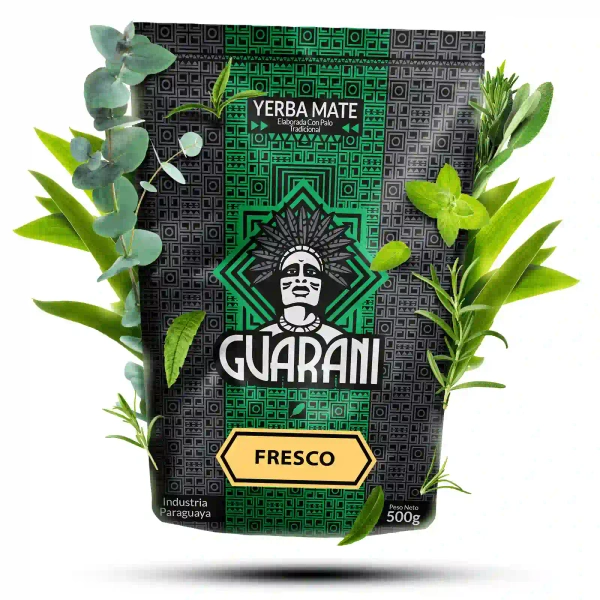
One of the strongest yerba mate blends on the market, presented in a summery version! Exceptionally smoky, with lemon peel, lemongrass, mint, lemon verbena and boldo. Plenty of energy and excellent flavour for many refills.
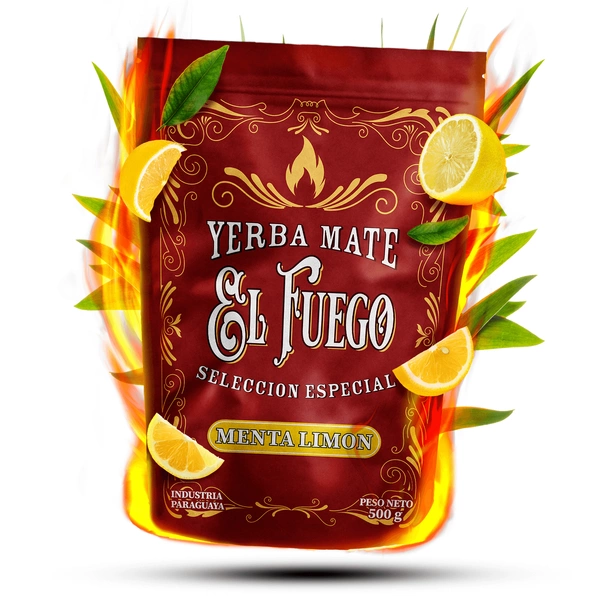
A South American classic at its best. The deep flavour of the smoky leaves is perfectly balanced with peppermint and traditional boldo. It is an excellent choice for quenching your thirst while providing a substantial caffeine boost.
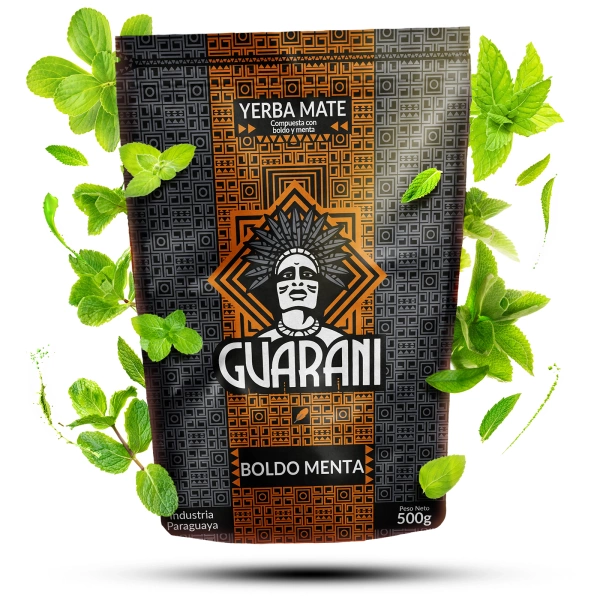
Cold yerba mate for fans of light, refreshing flavours
Are you looking for something in between? If Brazilian green mate is too delicate for you, while smoky Paraguayan yerba mate feels a little too intense, aged yerba mate blends with citrus and herbal additions could be the ideal compromise. They offer depth without overwhelming bitterness. Keep a few of these products in your cupboard and you will soon see that wondering how to make tereré is a thing of the past – simply add the dry leaves, drop in a few ice cubes and enjoy!
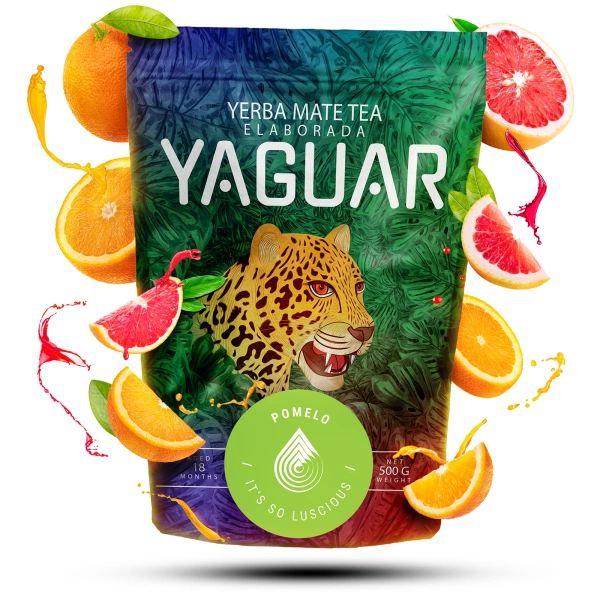
A highly refreshing combination of classic yerba mate with pieces of orange peel and rich grapefruit flavours. The dry character of the mate pairs beautifully with light, citrusy tartness.
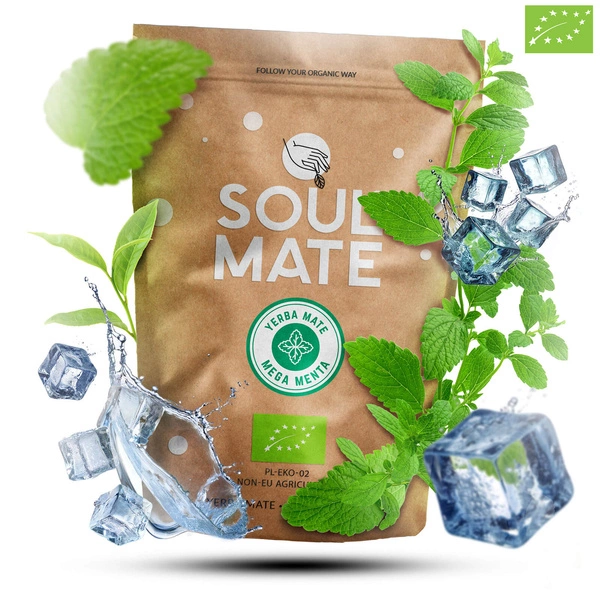
A premium option! Certified organic yerba mate, air-dried without smoke, combined with a natural mint and menthol flavour. Pure, light refreshment.
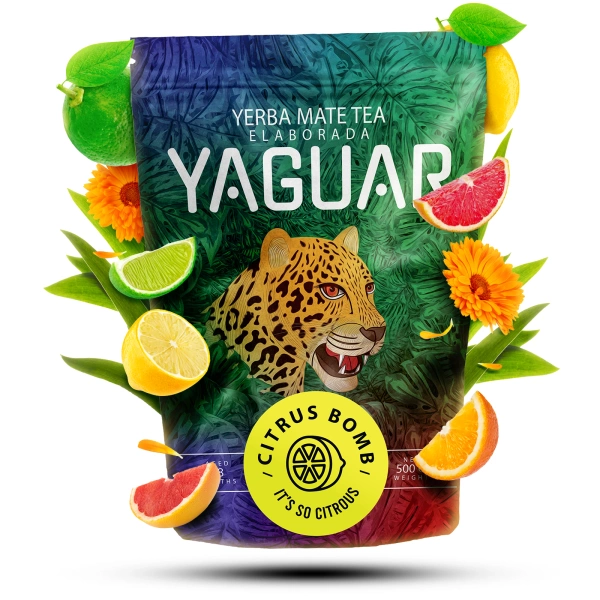
A true citrus bomb! A balanced yerba mate blend with a vibrant combination of orange, lemon and lime peels, lemongrass, marigold petals, and natural orange, lemon and grapefruit flavours. An excellent fruity-style cold yerba mate.
The most common mistakes when choosing yerba for tereré
You already know which products are reliable choices, but it is still easy to make a small mistake when browsing the shelves. You may choose a pack with enthusiasm, prepare the ice and then feel... disappointed after the first sip. To help you avoid a watery infusion, a lack of energy and a blocked bombilla, we have gathered the most common pitfalls encountered by beginners – and by experienced mate drinkers too. What should you avoid, and what are the most common mistakes?
- ❌ Avoiding powder at all costs. Many beginners see powder as something inferior, treating it as a production by-product and looking for yerba made up exclusively of larger leaves. This is a major mistake when preparing cold yerba mate! Coarsely cut leaves need hot water to release their flavour and character. In ice-cold water, they may not release enough flavour. Remember: good yerba mate for tereré benefits from a certain amount of powder, as it helps flavour and caffeine pass into the drink more efficiently.
- ❌ Choosing only the mildest, classic blends. It may seem logical to look for light and subtle flavours in summer. Unfortunately, if you choose a very mild Argentine yerba mate and prepare it with ice, you may end up with a drink that tastes almost like... plain water. Low temperatures soften the flavour. That is why yerba for tereré should have a pronounced character in its dry form, so that it becomes well balanced once chilled.
- ❌ Choosing a finely ground blend with hardly any stems. Once you know that powder is useful, it can be tempting to take this idea too far and choose, for example, a finely ground Uruguayan yerba mate with almost no stems. This can quickly lead to problems in your mate gourd. Without stems to act as a framework and natural filter, fine powder can compact rapidly at the bottom of the vessel when combined with ice-cold water, forming a dense, muddy paste. The result may be a blocked bombilla and a tereré mate that takes considerable effort to drink.
- ❌ Avoiding ready-made flavoured blends. Some purists reject yerba mate with fruit additions, considering them “unnatural”’. In reality, citrus and herbal additions can work particularly well in cold water, bringing extra flavour to the compounds that the holly leaves release more slowly at low temperatures. Citrus or mint yerba mate tereré is not a shortcut to avoid – it is a practical and research-informed choice for summer.
- ❌ Being impatient after the first pour. Even the best yerba mate will not release all of its flavour in five seconds. Ice-cold water, often combined with ice cubes, gradually opens up the structure of the dry leaves. If you take a sip through the bombilla immediately after pouring, you may taste little more than water. Preparing tereré requires a little patience – give the leaves two or three minutes to open up after the first pour. This is an important part of knowing how to make tereré properly.
⚠️ A simple rule to remember: The best yerba mate for tereré is one with a strong and distinctive character. Do not be afraid to choose plenty of powder, a deep smoky profile or an intense herbal aroma. Flavours that may seem slightly overwhelming in a hot infusion can work beautifully in ice-cold water. The low temperature softens these notes and creates a perfectly balanced, refreshing drink.
Yerba mate for tereré – which style of infusion should you choose?
Now that we have covered the practical details and know which mistakes to avoid, it is worth considering what you want from your drink. Everyone has a different daily routine. Sometimes you need instant refreshment after a demanding workout or a walk through a hot city, while at other times you are looking for a companion for a long, unhurried afternoon in the garden. The best choice depends on the occasion and the kind of moment you want to create. Discover which style of infusion fits your plans best!
For quick refreshment – light and aromatic blends
When the sun is blazing and you need to cool down straight away, there is no time for compromises. In these situations, choose cold yerba mate with plenty of distinctive additions such as mint, boldo, lemon verbena or citrus fruit. Light, strongly flavoured blends tend to release their essential oils and aromas quickly. They can provide an immediate sensation of freshness from the very first or second pour.
You will not have to wait long to enjoy the refreshing effect. Blends based on green, air-dried mate green or mild Argentine fruit blends, sometimes known as compuesta, are particularly suitable for this purpose. They are an excellent choice for tereré during a short break at work or for a moment of relaxation after physical activity, when your main goal is to quench your thirst and refresh your senses.
For a long drinking session – yerba mate with a slower flavour release
Planning a longer session with your mate gourd? Perhaps you want to read a book in a hammock, work at your desk or take a long summer journey by car? In these situations, you want the infusion to retain its character after more than just a few refills with ice-cold water. If you are wondering how to make tereré that will last for most of the day, pay attention to the structure and production method of the dry leaves.
The key is traditionally aged con palo blends – containing stems as well as a suitable amount of powder. The firm stems contribute to a slower release of flavour, allowing the leaves to be gradually and evenly infused. Classic Paraguayan blends or stronger Argentine varieties without intense fruit flavours are particularly suitable, as their flavour is less likely to disappear quickly. This patient style of yerba mate for tereré rewards you with a stable flavour and a gradual release of caffeine over many hours.
For an intense flavour – classic, strong blends
For true enthusiasts who appreciate depth, smoky notes and the distinctive bitterness of yerba mate, the best choice will be a powerful blend with a 100% classic, intensely smoked profile. This type of tereré mate leaves little room for compromise. Its flavour is so strong and dry that ice-cold water acts like a gentle finishing touch: it softens the most astringent notes while preserving the powerful grassy and woody core.
This is the ideal choice for anyone who wants their drink to have an authentic character rooted in the traditions of South America. If you enjoy a long, pleasantly astringent aftertaste and want a strong boost of energy during a hot day, choose a pure classic Paraguayan blend without any additions. Add a few ice cubes to your mate gourd and enjoy the essence of traditional tereré!
Which yerba mate for tereré will be the best?
We have reached the end of our guide! We have established why the structure of the dry leaves matters, why cold preparation requires more time and which mistakes are best avoided. Now it is time for a final summary. Which pack should make its way into your basket? There is no single objectively best option – the right choice is the one that suits your taste and lifestyle.
To make your decision as easy as possible, we have gathered everything we have discussed into a simple buying guide. Find the scenario that best matches your preferences and follow our suggestions.
- 👉 If you are just beginning your yerba mate journey and prefer mild, very fruity flavours without any bitterness ➡️ Choose Brazilian green mate green, perhaps with pineapple, mango or light citrus notes.
- 👉 If you need a powerful, steady boost of energy for work or a journey ➡️ Choose classic, strong Paraguayan yerba mate with plenty of powder and a flavour that lasts through many refills.
- 👉 If you want an intense cooling sensation in the middle of a hot day ➡️ Choose ready-made herbal blends with plenty of refreshing mint, menthol and boldo.
- 👉 If you are looking for a balanced option with a crisp, slightly tart flavour ➡️ Choose yerba blends with citrus additions, such as dried peel and natural oils with lemon, pomelo or grapefruit notes.
Finally, remember the golden rule: cold water and ice soften flavours! Notes that may seem too strong, smoky or overwhelming in a hot infusion can work beautifully in ice-cold water, revealing their best qualities. Do not be afraid to experiment! Try adding fresh herbs, slices of lemon or frozen juice cubes to your mate gourd. If you fancy something different, prepare a sweet, fruity tereré ruso. Preparing cold yerba mate is not only a delicious way to stay refreshed, but also a relaxing summer ritual. Stock up on your favourite blends and be ready for the next hot spell!
Do not let the heat slow you down – prepare your mate gourd, add some ice and enjoy refreshing tereré every day!
❓ FAQ – frequently asked questions about yerba mate for tereré
1. Which yerba mate for tereré will be the best?
2. Is every yerba mate suitable for cold preparation?
3. What is the difference between cold yerba mate and traditional yerba mate?
4. Is flavoured yerba mate a good choice for tereré?
5. Which yerba mate for tereré should I choose if I want a strong boost of energy?
6. How to make tereré quickly at home?
7. Is tereré or cold yerba mate healthy?
Sources of information:
- Wikipedia: Mate (drink), Tereré.
- J. Płatkiewicz et al., Antioxidant Capacity, Phenolic Compounds, and Other Constituents of Cold and Hot Yerba Mate (Ilex paraguariensis) Infusions, Antioxidants, 2024.
- K. P. Burris et al., Composition and bioactive properties of Yerba Mate (Ilex paraguariensis A. St.-Hil.): A review, Chilean Journal of Agricultural Research, 2012.
- A. M. Peier, A TRP Channel that Senses Cold Stimuli and Menthol, Cell, 2002.
Recommended

Verde Mate Green Tereré 0.5kg

Guarani Menta Limón 0.5kg

Verde Mate Green Ananas 0.5kg
