
Candied fruit – what is it and how to use it in the kitchen?
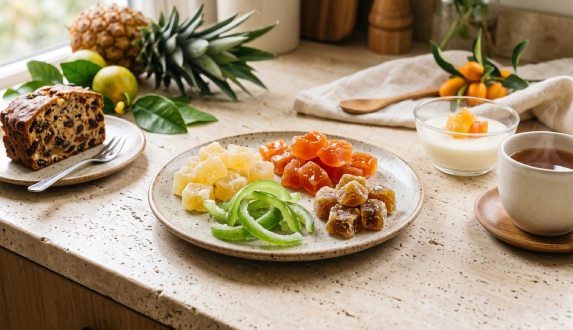
Sweet flavour, intense aroma and remarkable shelf life – candied fruit has enjoyed lasting popularity among culinary enthusiasts for centuries. It works perfectly as an addition to homemade bakes, elegant desserts and aromatic, warming infusions. It is not only a tasty, full-flavoured snack but also a very attractive decoration that can completely change the look of even the simplest cake. Colourful cubes, glossy halves and shiny slices are especially tempting when we are looking for bold, tropical touches in our kitchen. In our series of educational articles, we have already covered the properties of dried and freeze-dried fruit. Today it is time for another equally fascinating method of preserving food.
In this article you will learn what candied fruit is, what this term means exactly and how the process of making it works in practice, from selecting the raw ingredient to drying it. We will take a closer look at the technology itself, which preserves the fruity character and deep aroma for many months using only natural preservation mechanisms. We will also consider its general properties, trying to assess objectively whether and how it can fit into a balanced, mindful diet.
Besides a solid dose of theory, we have prepared plenty of practical kitchen inspiration for you. We will present proven products available in our shop and suggest creative ideas for making full use of their culinary potential every day. Whether you are a pastry enthusiast who creates multi-tiered cakes, or you simply want to add variety to your morning porridge or yerba mate infusion, you are sure to find something for you here. Happy reading!
Table of contents:
- Candied fruit – what is it?
- Candied fruit properties
- Which candied fruit can you find at MateMundo?
- What to use candied fruit for in the kitchen?
- What to pair candied fruit with?
- How to store candied fruit?
Candied fruit – what is it?
When we come across this popular sweet ingredient in recipes, many people ask a basic question: what is candying, exactly, and how does it differ from other ways of preserving food? Put simply, candied fruit is fruit that has been preserved in a sugar solution. It has a sweet taste, a distinctive aroma and a characteristic slightly elastic, chewy texture that works wonderfully in many kitchen experiments.
To understand properly what candied fruits are, it helps to compare them with other popular snacks. Fresh fruit is full of water and spoils relatively quickly. Dried and freeze-dried fruit, on the other hand, are made by evaporating the moisture completely. Candying is a process that goes a step further – during it, the natural water in the fruit’s tissues is slowly replaced by sugar syrup.
Candying fruit – how does it work?
Professional candying of fruit is a true craft that requires the right amount of time and balance. From a technological point of view, candying is based on a process called osmotic dehydration. The fruit is gradually and slowly soaked in sugar solutions of increasing concentration. The whole cycle consists of several precise stages:
- ✔️ Preparing the fruit – the raw ingredient is carefully washed, peeled and then cut into the desired shape (for example cubes, slices or pieces).
- ✔️ Cooking in syrup – the fruit is submerged in the sugar liquid and heated slowly, and over the following days the concentration of the syrup is gradually increased to saturate the plant structure.
- ✔️ Draining – once the tissues reach the right level of saturation, the fruit is taken out of the solution and left to drain.
- ✔️ Drying – the last stage is gentle drying, which removes excess stickiness and gives the fruit its ideal, ready-to-use texture.
💡 Good to know: Replacing water molecules with sugar during osmotic dehydration significantly lowers the so-called water activity in the product (aw). This effectively inhibits the growth of bacteria, yeasts and moulds, giving the fruit exceptional shelf life without the need for chemical preservatives.
💬 Scientific source: A. K. Yadav, S. V. Singh, Osmotic dehydration of fruits and vegetables: a review, Journal of Food Science and Technology, 2012.
What kinds of fruit can be candied?
In theory, most raw ingredients can be candied, but in practice the fruit that works best has a fairly firm, fibrous cell structure. This is because delicate fruit, such as raspberries or blueberries, could easily fall apart during repeated cooking in thick syrup and under strong osmotic pressure. Citrus fruit and its thick peel work very well, as do firmer exotic fruits.
An excellent, versatile choice is candied pineapple, which goes wonderfully with desserts, as well as delicate, tropical candied papaya. Refreshing, citrusy candied pomelo is also becoming more and more popular. Roots deserve a mention too – candied ginger is a true classic with a spicy profile, ideal for infusions.
Why is candying so beneficial for these particular fruits? Unlike traditional drying with hot air, gradually saturating the plant tissue with sugar syrup creates a kind of protective barrier inside it. As a result, candied pineapple, papaya and ginger do not lose their essential oils and keep their full, highly characteristic aroma, reminiscent of the fresh raw ingredient. They also retain valuable fractions of fibre and gain a longer shelf life, which makes them much easier to use in the kitchen all year round.

Candied fruit properties
When we take a closer look at the properties of candied fruit, they can be divided into two main categories: those related to its remarkable culinary qualities and those resulting from the preservation of the original raw ingredient’s features. Whichever product we choose, it has several universal characteristics that cooking enthusiasts around the world have valued for years.
It is worth noting that osmotic dehydration not only preserves the fruit but also significantly changes its structure. Replacing water with sugar syrup turns it into a product with a high energy density. This means that a relatively small portion provides a considerable amount of carbohydrates, making it a quick and efficient source of energy. In addition, unlike fresh fruit, it does not spoil under standard room conditions, which makes it a very practical store cupboard staple in any kitchen.
- ✔️ Intense flavour and aroma – the sugar syrup acts as a natural carrier and stabiliser, which “locks” valuable essential oils inside the plant tissue.
- ✔️ Attractive appearance – fruit that has undergone osmotic dehydration gains a beautiful, almost glassy shine and keeps a vivid, lively colour, which makes it an ideal decoration for bakes and desserts.
- ✔️ Exceptional shelf life – the lowered water activity mentioned earlier means these products can be stored for a long time without losing their elastic texture.
- ✔️ Wide range of uses – it is a very versatile ingredient that works equally well in sweet bakes, warming drinks and porridge.
It is worth remembering that each fruit reacts slightly differently to preservation. For example, exotic candied papaya owes its textural properties (a pleasant, elastic softness) to its natural cell structure, while candied citrus peel stays somewhat firmer and more intense in flavour.
Is candied fruit healthy?
Given that the technological process is based on syrup, many people ask the key question: is candied fruit healthy, and can it be safely included in a balanced diet? As is often the case in nutrition, the answer is: it depends on moderation.
There is no doubt that, because of the way it is prepared, candied fruit contains a significant amount of added sugar. For this reason, it should not be treated as a direct substitute for fresh or freeze-dried fruit. These products are best treated as a tasty, occasional addition that adds variety to dishes and drinks in small amounts, rather than as the basis of a daily diet. It is also always worth checking the ingredients of the product you choose.
💡 Good to know: On the other hand, candied fruit is still a plant-based product. If we choose it wisely, we can give the body not only sweetness but also a little fibre and valuable phytocompounds that occur naturally in the ingredients used.
Research shows that the plants most often chosen for candying are rich in bioactive substances. Citrus fruit and ginger root are excellent examples. Citrus peel (from oranges or pomelo, for example) is a valuable source of natural flavonoids and phenolic compounds, which show strong antioxidant activity and may help neutralise free radicals. Ginger rhizome (Zingiber officinale), in turn, is widely valued for its gingerols and shogaols. Reviews of clinical studies suggest that these compounds may help ease inflammation. Adding suitable amounts of candied citrus peel or ginger to autumn and winter infusions is a tasty and practical way to make use of the potential of these plants.
💬 Scientific sources:
- G. O. Oboh, A. O. Ademosun, Characterization of the antioxidant properties of phenolic extracts from some citrus peels, Journal of Food Science and Technology, 2011.
- N. H. Anh et al., Ginger on Human Health: A Comprehensive Systematic Review of 109 Randomized Controlled Trials, Nutrients, 2020.
📌 Summary:
- Candied fruit is an excellent, aromatic culinary ingredient with a long shelf life.
- Because of its concentration of added sugar, it should not replace fresh fruit – the key to balance is moderation, and treating it as a seasoning or decoration.
- Selected ingredients (such as citrus peel or ginger) provide valuable phytocompounds and antioxidant properties that we can draw on to add variety to our diet.
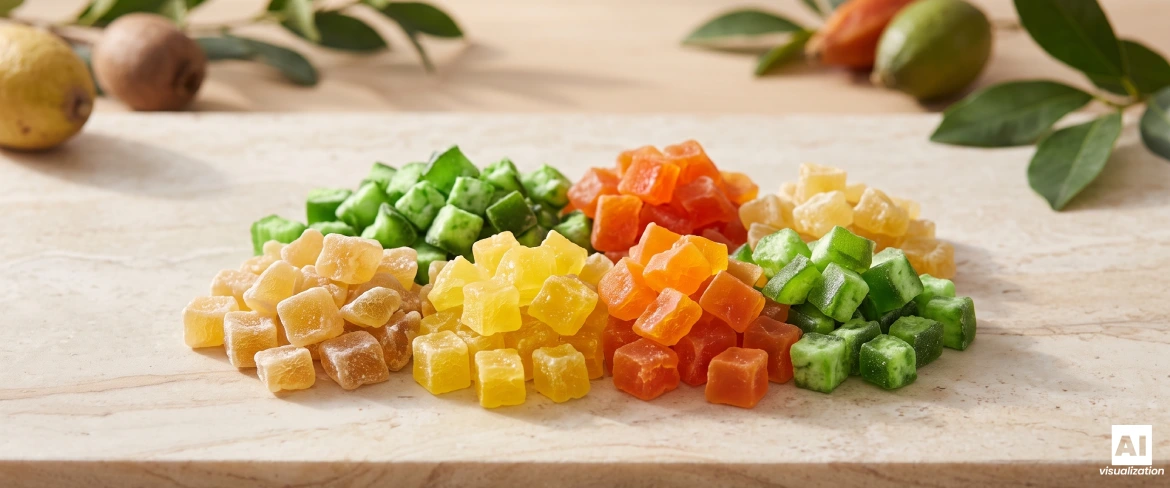
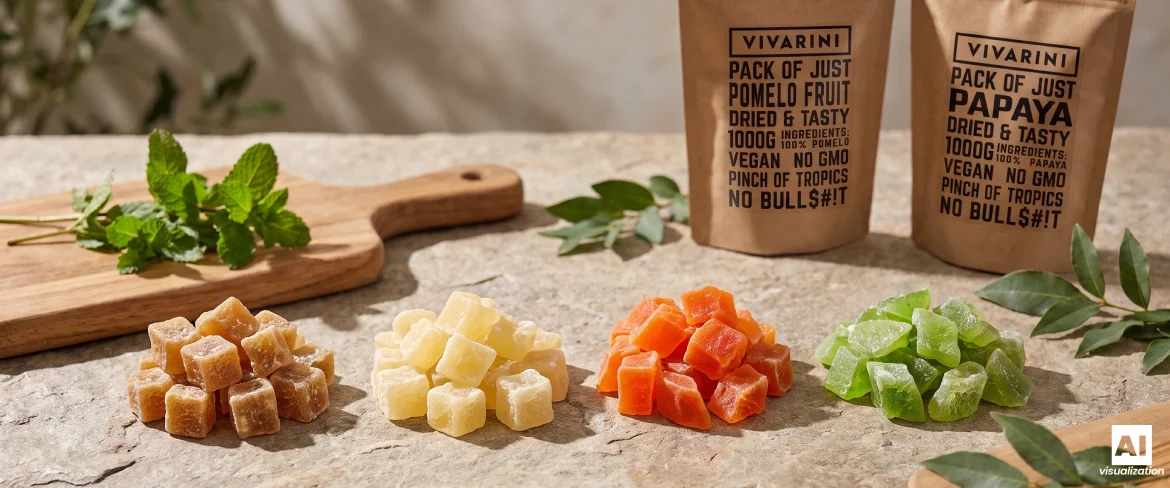
Which candied fruit can you find at MateMundo?
Choosing the right culinary additions is crucial for the final flavour and look of the dishes you prepare. To meet the expectations of people who value high quality and carefully selected ingredients, we have added a selection of products from the Vivarini brand to our range. This is a producer known for its attention to every detail of the preservation process, which translates directly into excellent flavour and an ideal texture.
Below you will find a detailed overview of four outstanding products that will work well in any kitchen. They differ in flavour profile – from spicy and warming, through sweet and tropical, to bold and citrusy. Get to know them better and be inspired to create your own unique culinary combinations.
Vivarini candied ginger
When we are looking for bold and unusual additions, candied ginger is one of the most interesting options. Fresh ginger rhizome is known for its natural, intense heat, which for many people can be too overwhelming when eaten on its own. Saturating it with sugar syrup, however, softens this pungency and creates an incredibly balanced, sweet-and-hot profile.
It is this contrast that makes candied ginger such a unique product. On the one hand it offers pleasant sweetness, and on the other it leaves a characteristic, warming sensation on the palate, which we appreciate especially on colder days.
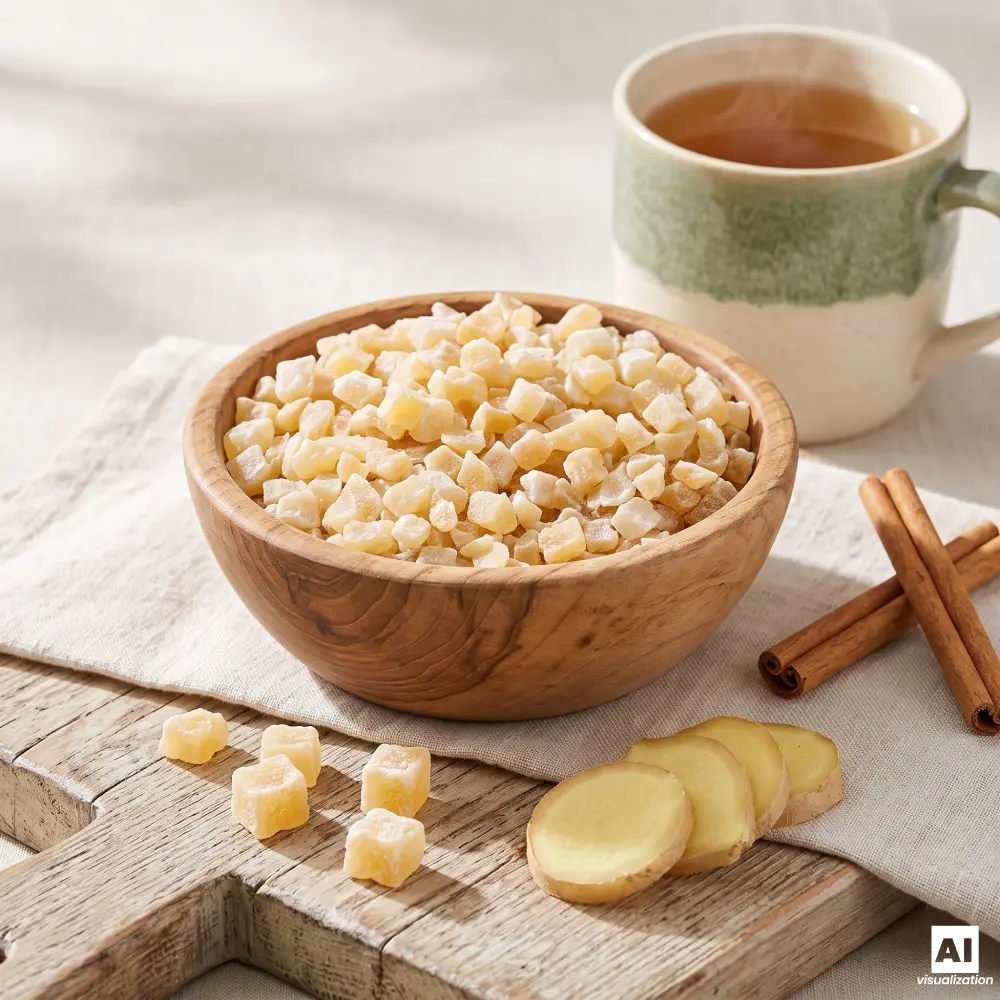
Candied ginger
In our shop you will find Vivarini candied ginger, which delights with its structure that is crisp on the outside and elastic inside. This product stands out for its:
- Deep, spicy aroma – perfectly preserved thanks to the gentle process of osmosis.
- Bold flavour – in which the heat of natural gingerols meets a sugar coating.
- Convenient portion – the 50g pack is a great way to try the product as an addition to your favourite drinks and desserts without having to buy a large supply.
Thanks to the careful selection of rhizomes, every piece offers the full vitality and refreshing character of this remarkable plant.
Because of its distinctive profile, this ingredient opens up a wide range of culinary possibilities. In autumn and winter it is practically an essential element of warming infusions – it goes very well with black tea, yerba mate or herbal infusions. Just drop a few pieces into a cup to give the drink a completely new dimension.
In the kitchen it is an invaluable ingredient in aromatic bakes. It will enrich the flavour of traditional gingerbread, fruitcakes and crumbly biscuits. It is also worth remembering its role in savoury dishes – finely chopped, it balances flavours in dishes inspired by Asian cuisine, such as vegetable stir-fry or sweet-and-sour sauces.
💡 Fun fact: Ginger rhizome is naturally rich in compounds such as gingerols and shogaols. Although candying involves processing, in many Asian culinary traditions it is believed that even in a sweet form this plant may gently support digestion, especially after a large, heavy meal.
Vivarini candied pineapple
Changing the mood to a much sunnier one, we move on to an absolute classic among sweet additions. Candied pineapple is the essence of the tropics, allowing you to enjoy an exotic flavour at any time of year. Naturally sweet and at the same time slightly refreshing, pineapple handles the process of osmotic preservation perfectly.
It is worth stressing that, thanks to the naturally fibrous structure of the fruit, candied pieces keep an excellent springiness. They do not fall apart in high temperatures or turn into an unappetising mush, which is a common problem with soft tinned fruit. As a result of preserving in syrup, they gain a beautiful, golden-yellow colour and a firm texture. Unlike fresh pineapple, this product does not release excess juice, which helps you avoid the so-called slack-baked layer in bakes.
Candied pineapple – diced
The offer from Vivarini is a guarantee of convenience and delicious flavour. Candied pineapple has been prepared with maximum practicality in the kitchen in mind:
- Ideal form: the product comes as even, small pieces, so it is ready to use straight away – with no tiresome chopping or messy chopping board.
- Intense aroma: as soon as you open the pack, you can smell a beautiful, sweet, fruity fragrance.
- Economical pack: the 0.5kg size is an optimal supply for baking enthusiasts, allowing you to use the product many times in different recipes. The product is also available in the shop in 100g and 1kg versions.

It is a truly indispensable ingredient in the workshop of every home baker. Candied pineapple works fantastically in hearty bakes such as Easter babka cakes, traditional poppy seed rolls or festive fruitcakes, adding a refreshing fruity note. You can also happily add it to fluffy muffins and light no-bake cheesecakes.
Its uses go well beyond baking, though. Small, sweet cubes are an excellent way to add variety to nourishing breakfasts. They balance the taste of plain yoghurt, enrich homemade granola and muesli, and add more interesting texture to everyday warm porridge.
Vivarini candied papaya
Staying with exotic flavours, we cannot overlook candied papaya. It is a choice for lovers of more delicate, subtle and highly elegant fruity notes. Its natural structure makes it extremely soft, fleshy and pleasant to bite once preserved.
A characteristic feature of papaya is its mild, almost buttery flavour, which does not dominate the other ingredients in a dish but blends in with them perfectly. This makes it a very versatile addition that allows for plenty of culinary experiments.
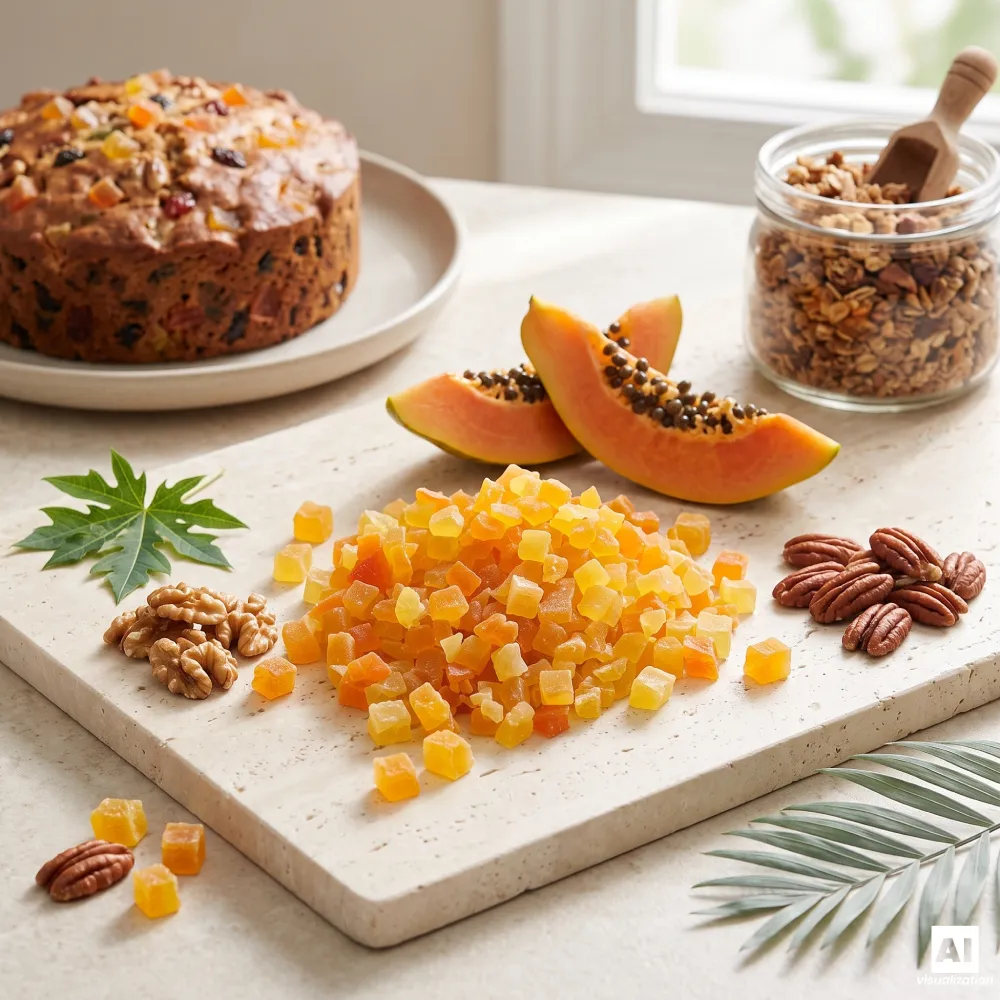
Candied papaya
If you are looking for harmony and delicacy, candied papaya will be a good choice. In an attractive, airtight pack, you will find a product characterised by:
- A beautiful, luminous colour – adding visual appeal to every dish and dessert.
- An excellent texture – the papaya flesh absorbs syrup very well, which gives it an elasticity that stops it crumbling during baking.
- A delicate aroma – which brings a pleasant, fruity and tropical breath to the kitchen without being overpowering.
Thanks to its gentle character, candied papaya works wonderfully as an ingredient in all kinds of pound cakes and sand cakes. It will also enrich heavier, traditional fruitcakes and small butter biscuits. If you like to make your own homemade nut and dried fruit mixes for snacking at work or while studying, this tropical addition definitely deserves a place in them.
The delicate texture and mild sweetness of papaya mean that this fruit pairs very well with nuts that have a distinct flavour (such as walnuts and pecans). This combination is a great base for crunchy, original granola or healthy, homemade energy bars.
Vivarini candied pomelo
The crowning item on our list is a product that no citrus lover will walk past. Pomelo, often called the largest citrus fruit in the world, has an extremely thick, fleshy peel. It is this peel, properly prepared, that is one of the most exquisite raw ingredients in the whole art of confectionery.
In its natural form, the so-called albedo (the white, inner part of citrus peel) is often discarded because of its intense, sharp bitterness. However, a long process of osmotic preservation in syrup completely transforms its character. The unpleasant bitterness is neutralised, and fresh essential oils come to the fore, leaving only a subtle, sophisticated hint of bitterness in the finish. It is this light, bittersweet balance that makes candied pomelo peel appreciated by the greatest chefs.
Candied pomelo
For people who want to take their desserts to the next level, we have candied pomelo in our range. The large, economical pack is an ideal choice for true baking enthusiasts, offering:
- An intense aroma of essential oils – characteristic of high-quality citrus fruit.
- A subtle, bittersweet balance – which perfectly cuts through the cloying sweetness of creams and heavy cakes.
- A bold colour and firm texture – thanks to which the product not only tastes great but also looks fantastic on the plate.

How can you make full use of this potential? Candied pomelo is an outstanding addition to all kinds of citrus bakes – from traditional lemon loaf cakes to orange cream tarts. What is more, its bittersweet profile creates an absolutely magical combination with real, dark chocolate. You can use it to make homemade, artisan pralines, as a topping for very chocolatey brownies, or simply as an elegant, edible decoration on top of a smoothly glazed cake.
Whichever of the products described you decide to reach for, you can be sure it will bring new, aromatic and joyful energy to your kitchen. Remember that culinary imagination knows no limits, and these small, sweet additions are an excellent excuse to discover completely new flavour combinations!
What to use candied fruit for in the kitchen?
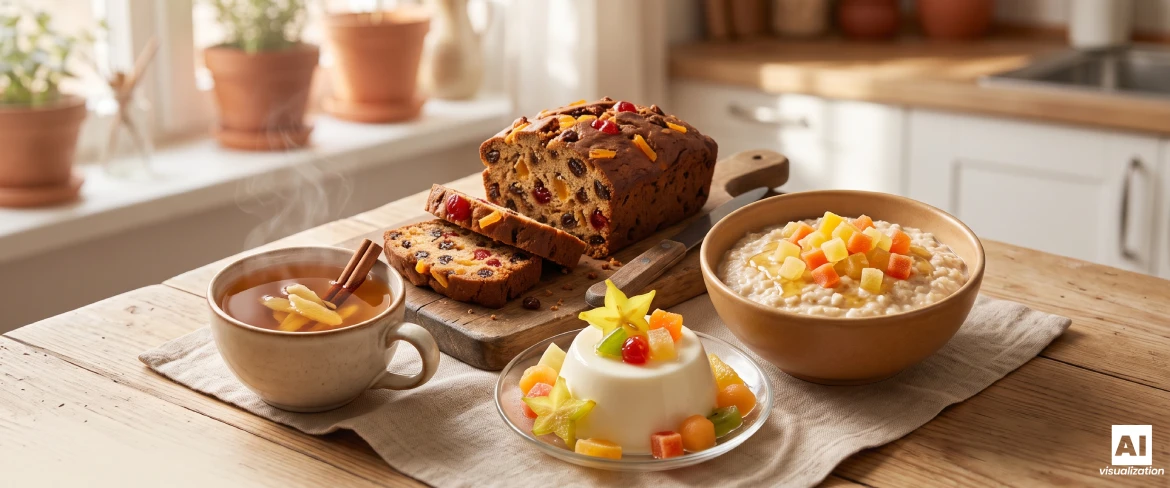
When we wonder what to use candied fruit for, traditional festive bakes are the first thing that comes to mind. However, it is worth knowing that the potential of these sweet additions is much greater. Their versatility, bold flavour and resistance to high temperatures make them an excellent ingredient in many different dishes.
We can use them successfully not only in baking but also in making cold desserts, nourishing breakfast dishes and even aromatic, warming drinks. Let’s take a closer look at the most interesting ways to include them in your everyday menu.
Candied fruit for cakes and bakes
This is without doubt the most classic and most popular use. Thanks to their firm structure and lack of excess water, fruit preserved in sugar syrup behaves brilliantly in the oven. It is absolutely indispensable when baking heavy, traditional cakes such as a fruitcake rich in dried fruit, aromatic gingerbread or a classic poppy seed roll. During the festive season it also makes a beautiful addition to Easter babka cakes and colourful mazurek cakes.
However, it works excellently not only in traditional recipes. You can happily add it to modern, light cheesecakes, fluffy muffins or quick pound cakes to give them an interesting, fruity texture. It is worth stressing that, unlike fresh fruit, candied varieties do not release juice during baking. This minimises the risk of an unappetising slack-baked layer, and their elastic structure does not fall apart at high temperatures.
💡 Cooking tip: A common problem when baking cakes with additions (such as fruitcakes or muffins) is heavy pieces of fruit sinking to the bottom of the tin. To prevent this, simply chop larger pieces a little smaller, then gently coat them in a small amount of plain wheat flour or potato flour just before adding them to the raw batter. This way the fruit will spread evenly throughout the bake!
Candied fruit in desserts
Sweet cubes and glossy slices are a fantastic way to add variety to desserts served cold. Their elastic texture contrasts nicely with creamy, smooth bases, creating a pleasant eating experience.
- ✔️ Ice cream and dessert cups: finely chopped fruit is a great topping for vanilla or cream ice cream, as well as a colourful addition to layered desserts with whipped cream, mascarpone or jelly.
- ✔️ Mousses and creams: delicate creams based on cream and mascarpone will take on a completely new character when you stir in a little candied papaya or pineapple.
- ✔️ Chocolate and homemade pralines: candied peel (pomelo, for example) is an ideal match for real dark chocolate. You can use it to make homemade chocolate bars, artisan pralines or truffles.
Thanks to its beautiful, glassy shine and bold colour, this fruit is also a very attractive decoration. Arranged on top of elegant cakes, cream tarts or crumbly biscuits, it immediately catches the eye and gives bakes a professional, elegant look.
Candied fruit for breakfast
The first meal of the day does not have to be boring. Although fruit preserved in syrup is associated mainly with desserts, in the right proportions it is an excellent way to add variety to nourishing breakfasts. It provides a quick portion of carbohydrates, which is especially valuable in the morning, when the body needs energy to get going.
It works fantastically as a sweet addition to warm, creamy porridge or millet porridge. If you prefer cold breakfasts, you can happily add it to plain yoghurt, crunchy muesli, homemade granola or classic breakfast cereals. Cut into small cubes and combined with nuts, pumpkin seeds or chia seeds, it makes a brilliant, original nut and dried fruit mix. It is also an indispensable ingredient for forming healthy, homemade cereal bars. Simply combine it with rolled oats and a little peanut butter to create a filling snack for work or school.
Candied fruit for drinks
Using candied fruit in drinks is an art that is gaining more and more popularity. Hot water slowly releases the aromas and essential oils locked inside it, giving infusions a deep and incredibly pleasant flavour.
The absolute leader in this category is candied ginger. Added to a pot of tea, yerba mate or your favourite herbal infusion, it immediately releases its spicy, warming notes, which work perfectly on cold autumn and winter evenings. Citrusy pomelo or tropical pineapple and papaya, in turn, are a fantastic addition to fruit teas and dessert drinks. In summer, once chilled, they can also be a colourful and intriguing element in refreshing cocktails and homemade lemonades, giving them subtle, natural sweetness.
The key to bringing out the maximum aroma is to let the fruit steep in the infusion for longer. Water at a temperature of around 80-90°C slowly dissolves the outer sugar coating, releasing natural juices into the drink. After you have finished the tea or infusion, the softened fruit is a delicious, flavour-packed reward at the bottom of the cup. In summer, once chilled, it can also be a colourful and intriguing element in refreshing cocktails and homemade lemonades, giving them subtle, natural sweetness.
What to pair candied fruit with?
The key to successful bakes and desserts is skilful balancing of flavours. Because fruit preserved in syrup is very sweet, it is best combined with ingredients that have a contrasting – slightly savoury, bitter or very bold – profile. The right companions help cut through the dominant sweetness and bring out the best in it.
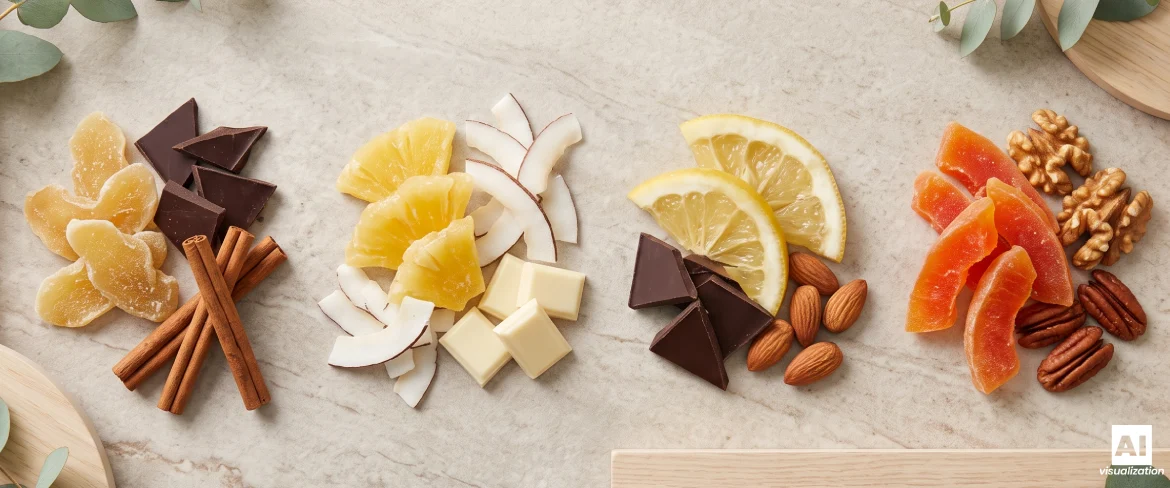
The absolute classics, which work in almost every kitchen, include:
- ✔️ chocolate – especially dark chocolate with a high cocoa content, which tones down the sweet taste of the fruit very well,
- ✔️ nuts and almonds – they add essential crunch and bring pleasant, earthy notes (walnuts, pecans or classic almonds are worth choosing),
- ✔️ other dried additions – such as slightly tart raisins or desiccated coconut, which add variety to the texture of dishes,
- ✔️ warming spices – cinnamon, cardamom, cloves or nutmeg, which enhance the natural aroma and give dishes depth.
It is worth remembering that each type of fruit has its own unique flavour preferences. By choosing the right additions, we can create completely new, fascinating combinations.
Proven culinary pairings
| Candied fruit | What to pair it with | Effect and uses |
|---|---|---|
| Ginger | Chocolate, cinnamon, cloves | Creates a warming, strongly spiced profile. Excellent for autumn biscuits and gingerbread. |
| Pineapple | Coconut (desiccated or flakes), white chocolate | Tropical, holiday-style harmony. Ideal for light cheesecakes, porridge and summer desserts. |
| Pomelo | Dark chocolate, almonds | Slightly bitter citrus cuts through dark cocoa very well. A classic in artisan pralines. |
| Papaya | Raisins, pecans and walnuts | A mild, exotic addition that pairs well with crunchy nuts in fruitcakes. |
Specific flavour fusions deserve special attention. Ginger combined with chocolate and cinnamon guarantees a deep, intriguing aroma that works perfectly on colder days. Pineapple paired with coconut will instantly transport us to exotic places, bringing to mind popular tropical cocktails. Pomelo coated in dark chocolate, in turn, is a sophisticated, very elegant snack that will be appreciated by lovers of more mature, savoury compositions.
💡 Practical tip: If you plan to add candied fruit to your morning muesli or yoghurt, try lightly toasting your chosen nuts, almonds or coconut flakes in a dry frying pan first. Brief heating releases their natural oils and significantly boosts their crunch, which creates an even better and clearer contrast for the soft, sweet pieces of fruit.
How to store candied fruit?
Although candying, which involves gradually saturating fruit with sugar, significantly extends its shelf life and preserves it naturally, the right storage conditions are key to keeping its quality for a long time. Improper storage can cause the pieces to dry out and harden or, on the contrary, to become too damp and lose their characteristic, elastic texture.
For candied fruit to keep its excellent flavour, deep aroma and ideal structure for many months, it is worth following a few basic, universal rules:
- ✔️ Airtight packaging – these products should always be kept in containers that completely cut off the air supply. Clean glass jars, vacuum containers or the original thick packaging with a zip-lock closure (a zip) all work very well.
- ✔️ A dry, cool place – moisture is the biggest enemy of preserved fruit. The best environment is a home larder or a closed kitchen cupboard. Always avoid places exposed to temperature fluctuations, such as the area around the oven, the microwave or a radiator.
- ✔️ Protection from light – direct sunlight can cause the beautiful, vivid colours of the fruit to fade gradually and speed up the loss of its valuable properties.
Whichever storage method you choose, it is always worth paying close attention to the best before date and the manufacturer’s individual recommendations on the label of each product. This way you can be sure that your culinary additions are completely safe and ready to use.
📌 Summary:
- Candied fruit is a highly aromatic, long-lasting preserved ingredient with a very wide range of uses.
- Thanks to osmotic dehydration, it keeps its essential oils and does not release juice during baking, which makes it an ideal ingredient for cakes and desserts.
- It is an excellent, warming addition to infusions such as tea or yerba mate (especially candied ginger).
- It is worth pairing it with ingredients that have a contrasting flavour (such as dark chocolate) and remembering to keep a balance in how much of it you eat every day.
Candied fruit is excellent proof that classic methods of preserving food can deliver incredible results, full of flavour and character. If you now know what makes it so special, what it can be used for and how to store it properly, there is only one thing left to do – invite it into your kitchen and start your own culinary experiments!
Get inspired by natural sweetness and create exceptional combinations that will become a permanent part of your menu!
❓ FAQ – frequently asked questions about candied fruit
1. What is candied fruit and how does candying work?
2. Is candied fruit healthy?
3. What can candied fruit be used for in the kitchen?
4. Which candied fruit should I choose for infusions and tea?
5. How should candied fruit be stored properly?
Sources:
- Wikipedia: Candied fruit.
- N. H. Anh et al., Ginger on Human Health: A Comprehensive Systematic Review of 109 Randomized Controlled Trials, Nutrients, 2020.
- A. K. Yadav, S. V. Singh, Osmotic dehydration of fruits and vegetables: a review, Journal of Food Science and Technology, 2012.
- G. O. Oboh, A. O. Ademosun, Characterization of the antioxidant properties of phenolic extracts from some citrus peels, Journal of Food Science and Technology, 2011.
Recommended

Vivarini – Papaya (candied) 1kg

Vivarini – Pineapple (candied) 0.5kg

Vivarini – Ginger (candied) 50g
