
Does tea stimulate? Which tea has the most caffeine and which works the strongest?
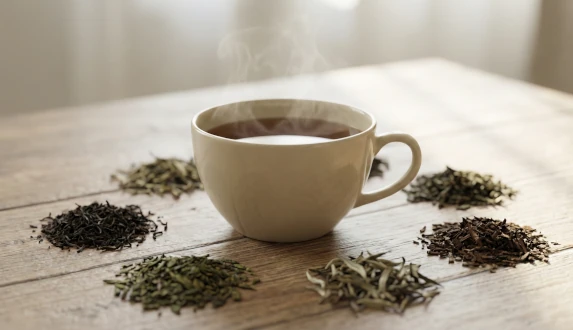
Does tea stimulate in the same way as coffee? Or does it work more gently, but for longer? If you are wondering which tea is best for a morning boost or for adding energy during the day, you are in the right place. More and more people are looking for an alternative to strong coffee – something that effectively stimulates, but does not cause a sudden “crash” a few hours later. That is where tea comes in: aromatic, diverse and – contrary to appearances – quite powerful when it comes to its stimulating effect. But does every cup of tea work in the same way?
There are many myths surrounding this topic – some claim that only coffee truly “gets you going”, while others choose green tea, pu erh tea or classic black tea as their daily boost. A common question is: is there caffeine in tea and is it enough to genuinely improve concentration and energy levels? The answer is: yes, tea stimulates – but it works differently from coffee. Everything depends on the type of tea, the brewing method and how your body responds to caffeine in tea. In this article, we will compare the most popular types of tea, find out which tea has the most caffeine, and see which tea stimulates the most in practice.
Summary:
- Does tea stimulate?
- Caffeine in tea – what affects its level in the brew?
- Which tea has the most caffeine? A comparison of types
- Which tea stimulates the most?
Does tea stimulate?
Simply put: yes. However, if you ask, “is there caffeine in tea and does it work in the same way as in coffee?” – the answer becomes much more complex.
All classic teas made from the Camellia sinensis plant – that is black tea, green tea, white tea, pu erh tea and yellow tea – contain caffeine. It is this tea caffeine that is responsible for the stimulating effect, improved concentration and reduced feelings of fatigue.
If you would like to try different varieties and find out which tea stimulates you best, visit our “Tea” category, where you will find a wide selection of loose-leaf teas – from delicate to bold and intense.
It is worth remembering that whether tea stimulates strongly or gently depends on several factors:
- the type of tea,
- the amount of leaves used,
- brewing time,
- water temperature,
- and your individual sensitivity to caffeine.
For one person, the same cup may be a strong and clearly stimulating tea, while for another it may provide only gentle support for concentration. That is why it is so important to match the brew to your needs and the time of day.
Caffeine in tea vs theine – is it really the same?
You may often come across the term “theine”. In practice, theine and caffeine are the same chemical substance. The difference lies not in the molecule itself, but in its “environment”.
Caffeine in tea occurs alongside polyphenols (including catechins) and the amino acid L‑theanine. These compounds influence how caffeine is absorbed and perceived by the body. As a result, tea tends to provide:
- ✔️ a gentler effect than coffee,
- ✔️ a more stable and sustained release of energy,
- ✔️ a less abrupt “energy spike”.
💡 Good to know: Clinical studies suggest that the combination of caffeine and L‑theanine – in proportions similar to those found in tea – may modulate the effects of caffeine and reduce some of its physiological impact. A randomised study from 2015 showed that L‑theanine influences how caffeine affects cerebral blood flow and mood.
💬 Scientific source: F. L. Dodd et al., A double-blind, placebo-controlled study evaluating the effects of caffeine and L-theanine both alone and in combination on cerebral blood flow, cognition and mood, Psychopharmacology, 2015.
This is why many people choose tea as an alternative to coffee – especially when they want to stay focused without feeling jittery.
Why does tea stimulate differently from coffee?
Although both coffee and tea contain caffeine, they differ in both the amount and the “chemical context”. A cup of coffee usually delivers more caffeine at once. The result? A quick surge of energy – sometimes followed by an equally rapid drop.
With tea, the situation is different:
- ✔️ L‑theanine may support a state of calm alertness,
- ✔️ polyphenols influence the rate at which caffeine is absorbed,
- ✔️ the stimulating effect is often more stable and longer-lasting.
For many people, tea as a stimulating alternative to coffee turns out to be a better solution – especially during mental work or long study sessions. It does not provide such a sharp “hit”, but can offer steady, balanced energy.
💬 Scientific source: S. J. Einöther, V. E. Martens, Acute effects of tea consumption on attention and mood, The American Journal of Clinical Nutrition, 2013.
In the following sections, we will take a closer look at which tea has the most caffeine, whether black tea stimulates the most, and whether white tea stimulates despite its delicate flavour. We will also see where rooibos tea fits into this comparison – and whether every tea that contains caffeine automatically counts as a high caffeine tea.
📌 In short:
- Does tea stimulate? Yes – thanks to its caffeine content.
- Caffeine in tea is the same substance as in coffee, but it works differently due to the presence of L‑theanine and polyphenols.
- The effect is usually gentler but more stable than coffee.
- Which tea stimulates the most depends not only on the type, but also on the brewing method.
Caffeine in tea – what affects its level in the brew?
Now that we know that there is caffeine in tea, it is time to address another important question: how much caffeine actually ends up in your cup?
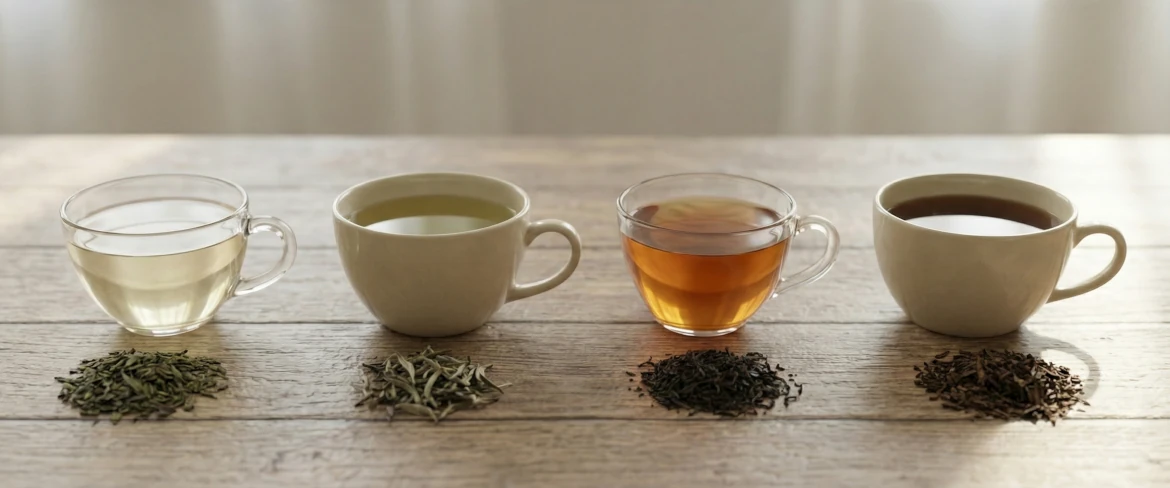
Contrary to appearances, it is not only the type of tea that matters. Yes, black tea, green tea and white tea differ in terms of caffeine content in the dry leaves, but that is only part of the story. Equally important are:
- the brewing method,
- water temperature,
- extraction time,
- the amount of leaves used,
- and even the degree of leaf fragmentation.
That is why the answer to the question which tea has the most caffeine is not always straightforward. The same tea can work very differently depending on how you prepare it.
Type of tea and caffeine content
Different types of tea made from Camellia sinensis contain varying amounts of caffeine in the dry leaves. This depends on factors such as the degree of oxidation, the part of the plant used and the processing method.
The general tendencies are as follows:
- ✔️ Black tea – usually associated with the strongest stimulating effect and often considered a high caffeine tea.
- ✔️ Green tea – often contains slightly less caffeine than black tea, yet green tea caffeine can still provide a noticeable boost.
- ✔️ White tea – perceived as the mildest, although in practice white tea caffeine levels can be surprisingly close to other types, depending on the raw material.
- ✔️ Pu erh tea – its caffeine level depends on the type (sheng/shu) and production process.
- ✔️ Yellow tea – less common, usually falling within a similar range to green tea.
It is also worth mentioning rooibos tea. It does not come from the tea plant, but from the South African red bush (Aspalathus linearis) and contains no caffeine. So if you are looking for an evening brew or are particularly sensitive to caffeine, this is a safe choice.
We discuss the comparison of caffeine levels in different drinks – not only tea, but also coffee and yerba mate – in more detail in the following articles on our blog:
Brewing time and water temperature vs caffeine in tea
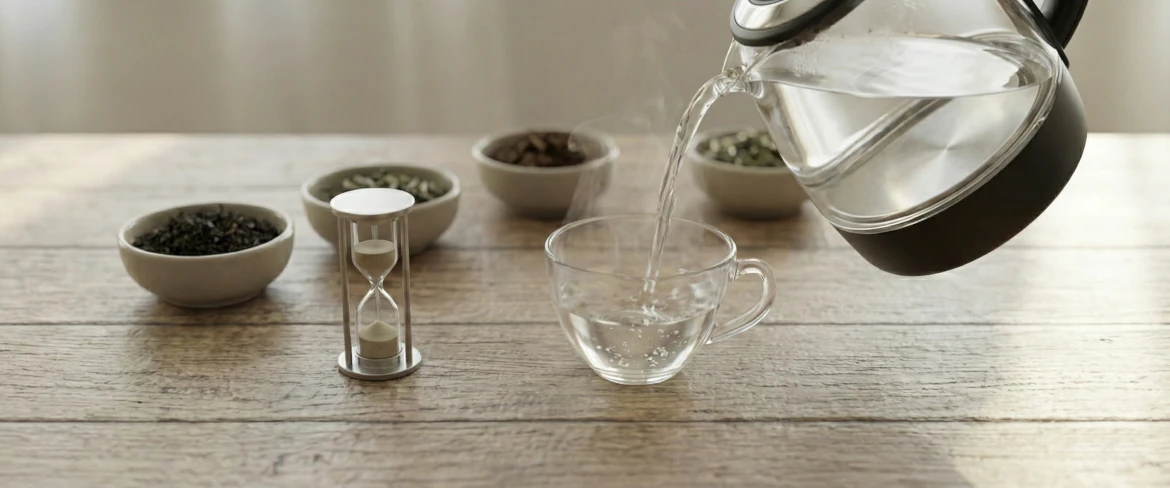
Even if you choose a specific type, brewing time and water temperature largely determine how strong and stimulating your tea will be.
The rule is simple: the longer you brew tea and the higher the water temperature, the more caffeine passes into the infusion. Caffeine extracts relatively quickly, but as brewing time increases, the amount of caffeine in tea in your cup also rises.
☕ Practical tip
- If you want a strong effect ➡️ use slightly more leaves and extend the brewing time.
- If you are sensitive to caffeine ➡️ shorten the brewing time and use a lower water temperature (especially for green and white tea).
Leaves, tea dust and processing method
Many people wonder which tea is “stronger” – loose leaf or tea bags. The answer is not straightforward, because the strength of the brew – both in flavour and stimulating effect – depends on several factors, not just the form of the tea.
Loose-leaf tea (especially high-quality tea) consists of whole or large leaf fragments. The compounds it contains – including caffeine – are released gradually, and the infusion develops a deeper, more complex flavour. In contrast, tea bags often contain finely broken leaves (so-called fannings or dust), which have a larger surface area in contact with water. This means that caffeine in tea can transfer into the brew more quickly.
In practice, this means that a tea bag infusion may seem stronger after a short brewing time – but this often also results from the faster release of tannins, which are responsible for bitterness. A “strong” taste does not necessarily mean a higher level of tea caffeine.
The part of the plant used also matters. Young buds and the first leaves usually contain more caffeine than older, larger leaves. That is why even delicate-tasting white tea can genuinely have a stimulating effect – it all depends on the raw material used.
📌 What does this mean?
- Loose-leaf tea offers greater flavour potential and better control over brewing.
- Tea bags brew faster and are easier to over-extract, which can create the impression of greater strength.
- Which tea has the most caffeine depends not only on its form, but also on the quality of the leaves, the amount used and the brewing time.
In short, the form alone (loose leaf or tea bag) does not determine whether tea stimulates more strongly. The key factors are leaf quality, degree of fragmentation and brewing method.
Which tea has the most caffeine? A comparison of types
We have established that caffeine in tea depends not only on the type, but also on the brewing method. Now it is time for a specific comparison. Which tea truly works the strongest?
The values below are approximate – the actual amount of tea caffeine in a cup depends on the amount of leaves used, water temperature and brewing time. Nevertheless, some general trends can be identified.
If you are wondering which tea has the most caffeine and which makes the best choice for a stimulating effect, the comparison below will help you decide.
Does black tea stimulate the most?
Black tea is very often considered the most classic high caffeine tea. Per cup, it can contain on average around 40-60 mg of caffeine (depending on the brewing method), which makes it one of the strongest options among teas. Its effect is noticeable, yet usually more stable than coffee. It is a good choice:
- ✔️ for a morning boost,
- ✔️ for work that requires concentration,
- ✔️ for those who want to reduce coffee intake without giving up energy.
👉 If you would like to explore different varieties, visit the “Black teas” category. You can also read more about its properties in our blog article: Is black tea healthy? Discover its properties and nutritional values.
Does green tea stimulate like coffee?
This is one of the most common questions: does green tea stimulate and can its effect be compared to coffee? Generally, it does not act as intensely – but often for longer and in a “cleaner” way.
Green tea usually contains less caffeine than black tea (around 25-45 mg per cup), yet thanks to the presence of L‑theanine, green tea caffeine tends to produce a more balanced effect. For many people, it provides calm concentration without a sudden spike in energy followed by a crash.
👉 If you are looking for a brew for work, studying or creative tasks, explore our “Green teas” category.
Pu‑erh tea – a stimulating tea with long-lasting effects
Pu erh tea stands out due to its fermentation process, which affects both its flavour and properties. Depending on the type (sheng or shu), it may contain a caffeine level comparable to black tea.
Pu‑erh sheng (raw pu‑erh) is naturally aged. Over time, it undergoes slow fermentation, and its flavour is often more vibrant, fresh and sometimes slightly astringent. Younger versions tend to provide a more lively and pronounced stimulating effect.
Pu‑erh shu (ripe pu‑erh) is subjected to accelerated fermentation under controlled conditions. As a result, it produces a darker infusion with a smoother, earthier taste and often a more gradual, sustained stimulation. Many people describe it as long-lasting but less abrupt.
In both cases, caffeine in tea – specifically in pu‑erh – can remain at a level comparable to black tea. However, the subjective perception of stimulation may differ due to fermentation and the profile of accompanying compounds.
👉 If you would like to try its distinctive, deep flavour, visit the “Pu‑erh teas” category.
Does white tea stimulate despite its delicate flavour?
Many people assume that because white tea is subtle and light, it cannot be strong. This is a myth. In practice, white tea caffeine levels can be similar to green tea, and sometimes even higher – especially when it is made from young buds. This means that, when brewed properly, it can be an effective stimulating tea.
👉 If you would like to test its potential, explore the products in the “White teas” category.
Stimulating tea – which one should you choose?
A classic black tea with a distinctive character. Ideal for a morning boost.
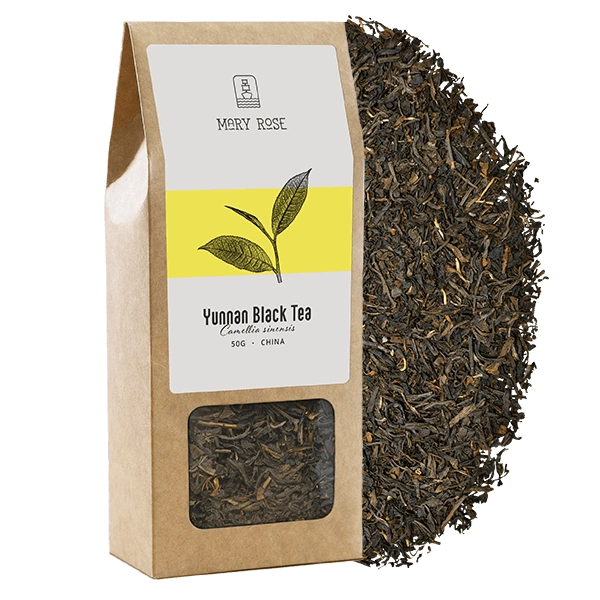
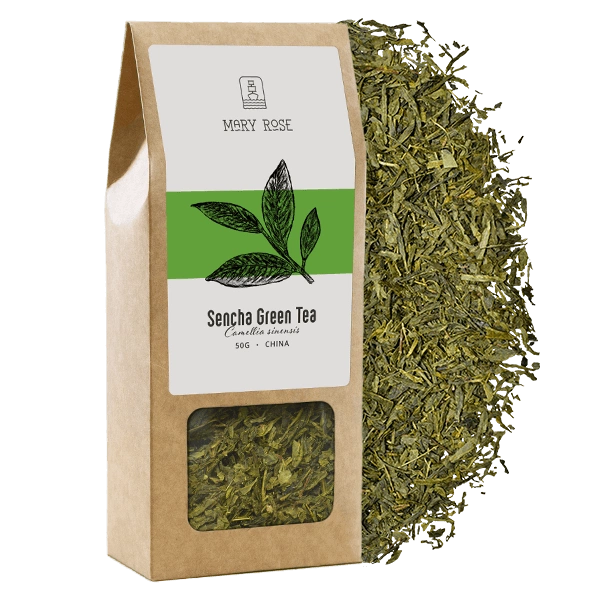
Fresh, vegetal and providing clean, stable stimulation.
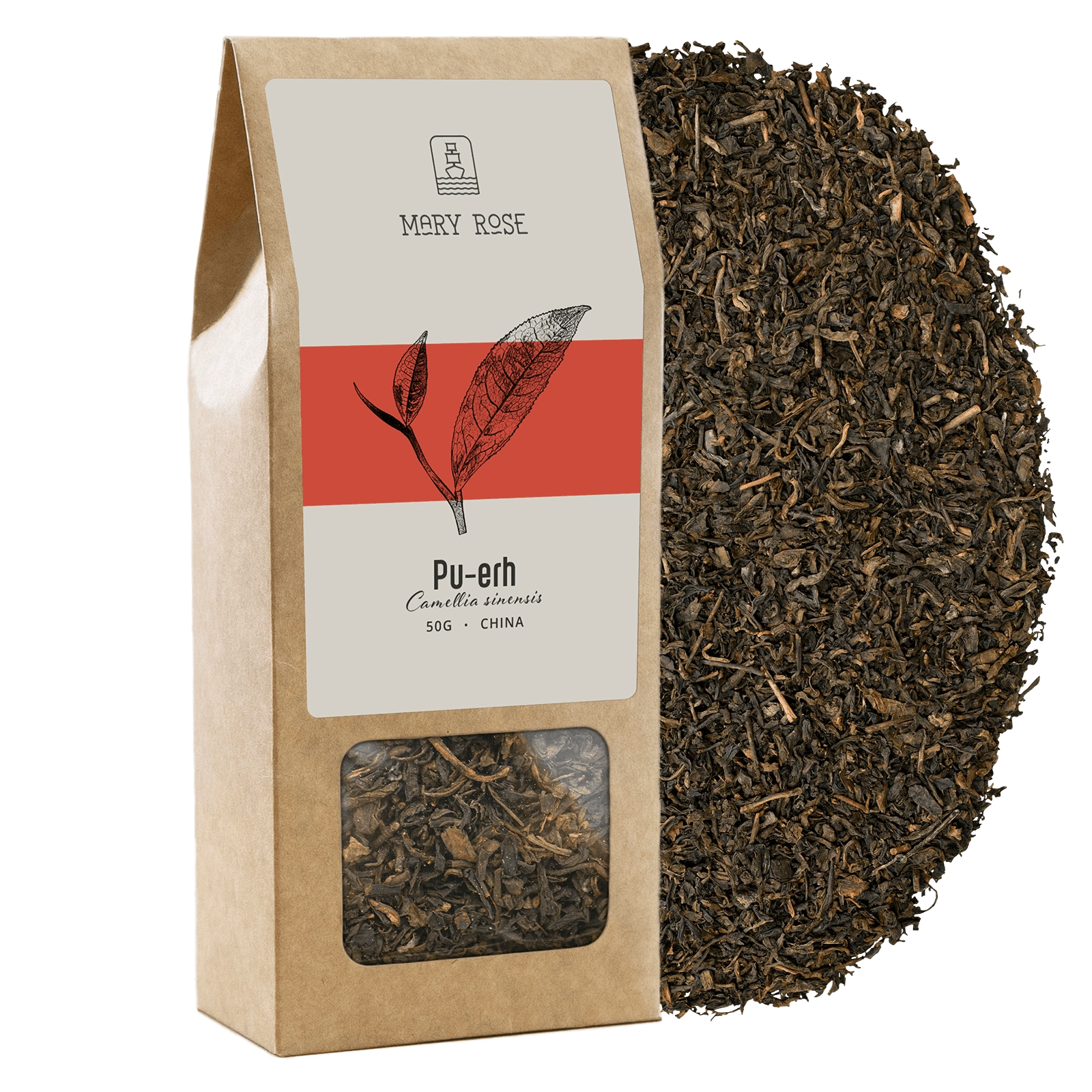
Fermented tea with a deep flavour and long-lasting effect.
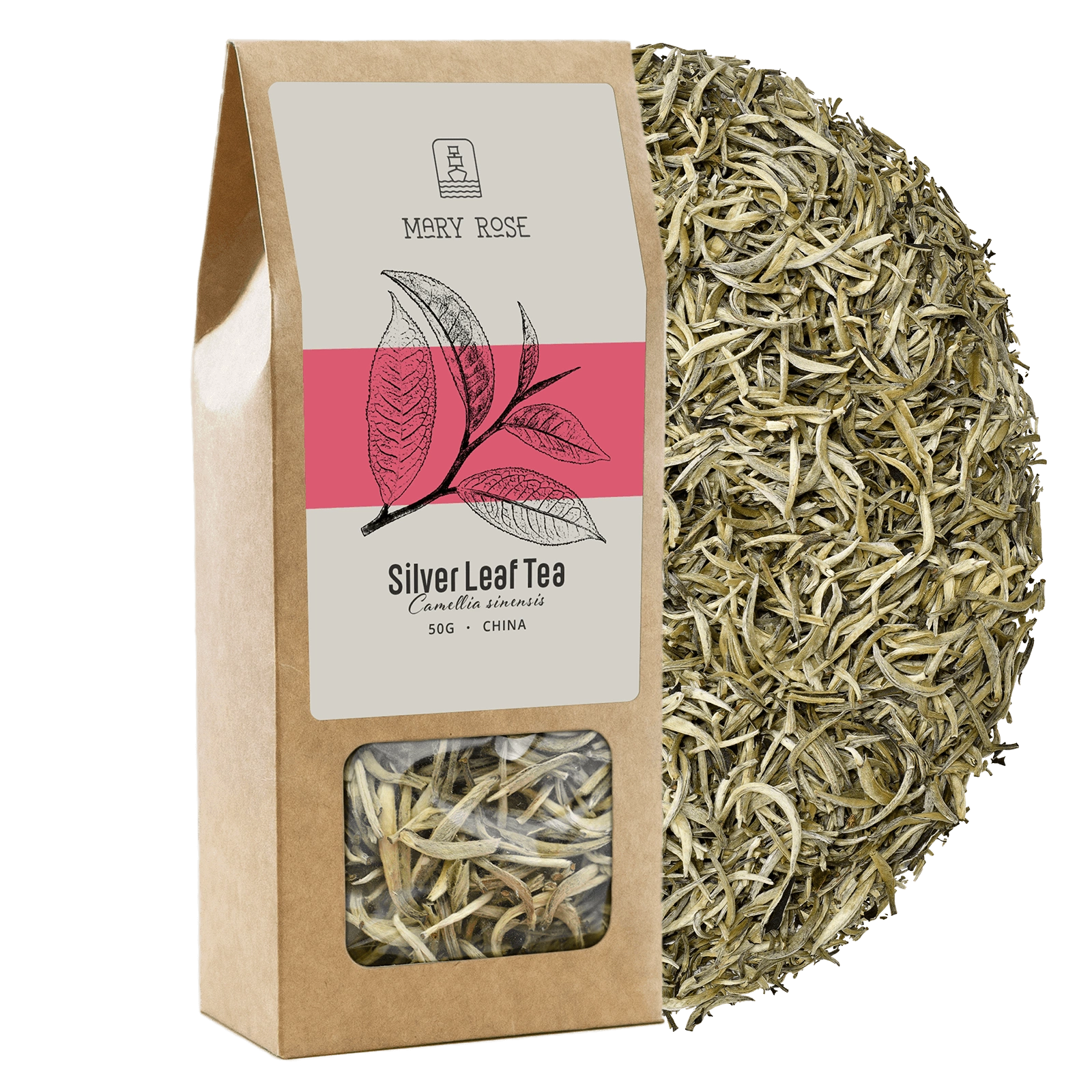
Subtle in flavour, yet surprisingly stimulating.
Which tea stimulates the most?
If you are looking for a short and specific answer: in practice, properly brewed black tea or pu‑erh tea tends to stimulate the most – especially if you use a larger amount of leaves and extend the brewing time.
Close behind are green tea and white tea, which often contain slightly less caffeine per cup, but thanks to L‑theanine provide a more stable and “cleaner” form of stimulation. Yellow tea usually falls within a similar range to green tea, while rooibos tea contains no caffeine at all – and therefore does not stimulate.
Ultimately, the answer to the question which tea stimulates the most is: the one that is properly matched to your needs and brewed correctly. For one person, the best option may be an intense black Yunnan tea; for another, a green sencha that offers calm focus.
Below you will find the approximate caffeine content of different types of tea. The values refer to a cup of around 200-250 ml and may vary depending on the brewing method.
☕ Comparison of teas in terms of caffeine content and stimulating effect
| Type of tea | Caffeine content (per cup) | Character of stimulation |
|---|---|---|
| Black tea | 40-60 mg | distinct, stable |
| Pu‑erh tea | 30-60 mg | gradual, long-lasting |
| Green tea | 25-45 mg | gentle, “clean” |
| White tea | 20-50 mg* | delicate, but noticeable when strongly brewed |
| Yellow tea | 25-45 mg | similar to green tea |
| Rooibos tea | 0 mg | no stimulating effect |
* White tea caffeine levels can vary significantly depending on the buds used and the brewing method.
Stimulating tea instead of coffee – is it a good solution?
For many people, stimulating tea is a very good option if they do not want to reach for coffee. Thanks to L‑theanine and polyphenols, the effect of caffeine in tea tends to be gentler and more even. This means:
- ✔️ a lower risk of a sudden energy “crash”,
- ✔️ more stable concentration,
- ✔️ a milder perception of stimulation.
On the other hand, if you are looking for a very fast and intense effect, coffee will usually stimulate you more strongly in a short time. The choice depends on your lifestyle, caffeine sensitivity and personal taste preferences.
Instead of searching for one “strongest” answer, it is worth experimenting and discovering which tea stimulates you best – and, if you wish, comparing it with coffee or yerba mate. A conscious choice of type and proper brewing will allow you to adjust your energy level to your daily rhythm – without giving up the pleasure of drinking an aromatic infusion.
Choose your stimulating tea and discover how natural energy can taste every day!
❓ FAQ – frequently asked questions about stimulating tea
1. Does tea stimulate?
2. Is there caffeine in tea?
3. Which tea has the most caffeine?
4. How much caffeine does tea have compared to coffee?
5. Is stimulating tea a healthy alternative to coffee?
Sources of information:
- Wikipedia: Tea, Caffeine.
- N. H. M. Rubel Mozumder et al., A Comprehensive Understanding of Camellia sinensis Tea Metabolome: From Tea Plants to Processed Teas, Annual Review Food Science and Technology, 2025.
- M. Wong et al., Phytochemical profile of differently processed tea: A review, Journal of Food Science, 2022.
- A. Musilová, A. Kubíčková, Effect of brewing conditions on caffeine content in tea infusions simulating home-made cup of tea, Monatshefte für Chemie - Chemical Monthly, 2018.
- K. Boros et al., Theanine and Caffeine Content of Infusions Prepared from Commercial Tea Samples, Pharmacognosy Magazine, 2016.
- F. L. Dodd et al., A double-blind, placebo-controlled study evaluating the effects of caffeine and L-theanine both alone and in combination on cerebral blood flow, cognition and mood, Psychopharmacology, 2015.
- S. J. Einöther, V. E. Martens, Acute effects of tea consumption on attention and mood, American Journal of Clinical Nutrition, 2013.
Recommended

Mary Rose - Rooibos Superior - 50g

Mary Rose - Morning Dew Tea - 50g

Mary Rose - Assam Tea Compote - 50g
