How to choose an adaptogenic mushroom supplement? Reishi, chaga and lion’s mane in practice

We live in constant motion. An excess of responsibilities, stress, short sleep and the feeling of so-called “brain fog” are everyday realities for many of us. When your morning coffee stops working and your body craves recovery, you often look for natural ways to restore internal balance. That is exactly why adaptogenic mushrooms and functional mushrooms have gained so much popularity in recent years. But where should you start?
This short guide you’re reading will help you understand the differences between the most popular species and choose a supplement tailored to your individual needs. No marketing noise – just clear criteria, scientific insights and practical tips. If you’re wondering what products are currently available, visit the “Adaptogenic mushrooms” category in our shop. But before you add anything to your basket, learn how reishi, chaga and lion’s mane differ, and how they may influence your wellbeing.
Summary:
- Adaptogenic mushrooms in practice
- Reishi, chaga, lion’s mane – three different needs, three different effects
- Mushroom supplements – what determines quality?
- Extract, powder, capsules – which form should you choose?
- How to read mushroom supplement labels?
- What to look for when choosing reishi, chaga or lion’s mane?
- What makes Magic Pwdr functional mushrooms stand out?
Adaptogenic mushrooms in practice
When you type the phrase “adaptogenic mushrooms what are they” into a search engine, you’ll quickly find information saying they are natural substances that support the body’s resistance to stress factors. And that’s true! Functional mushrooms are increasingly used in daily supplementation as holistic support for dealing with stress, fatigue, and drops in mood or immunity.
However, it’s worth clarifying one key point right away: mushroom supplements are not magic pills that work within minutes, giving you a sudden energy boost like an energy drink or instantly putting you to sleep. Their strength lies in long-term effects. Medicinal mushrooms provide the body with unique bioactive compounds that gradually help restore its natural balance, known as homeostasis. The effect is not immediate, but with regular use, it may lead to noticeable improvements in overall wellbeing.
💬 Scientific source: G. Venturella et al., Medicinal Mushrooms: Bioactive Compounds, Use, and Clinical Trials, International Journal of Molecular Sciences, 2021.
Clinical studies confirm that functional mushrooms are rich in bioactive compounds (such as polysaccharides and terpenoids), which may have immunomodulatory and antioxidant effects and help the body reduce inflammation.
When should you consider adaptogenic mushrooms?
Most often, people turn to them during periods of overload – both physical and mental. They are an excellent option for those seeking more “systemic” support rather than short-term fixes for fatigue. When your body and mind are sending SOS signals, natural solutions such as mushroom powder or mushroom extract can become a valuable part of your daily routine.
Wondering if this is for you? Consider introducing them into your diet if:
- ✔️ you experience chronic fatigue and lack energy,
- ✔️ you struggle with focus and often feel “brain fog”,
- ✔️ you live under constant stress and find it hard to relax before sleep,
- ✔️ you work mentally, study intensively or train physically,
- ✔️ you want to naturally support your immunity and vitality.
💡 Scientific insight: A recent double-blind, placebo-controlled study showed that regular supplementation with mushroom extracts may reduce cortisol (the stress hormone), improve sleep quality and significantly decrease perceived mental fatigue.
💬 Source: A. S.-D. Hisamuddin et al., Adaptogenic Effects of Mushroom Blend Supplementation on Stress, Fatigue, and Sleep: A Randomised, Double-Blind, and Placebo-Controlled Trial, Brain and Behavior, 2026.
As you can see, the potential hidden in these seemingly simple natural products is enormous. Before you enthusiastically add the first product you see to your basket, remember that the world of adaptogenic mushrooms is highly diverse. Now that you understand how broad medicinal mushrooms benefits can be, the key question arises: where should you start? The answer is simple – success lies in choosing the right species based on your current needs and lifestyle. Let’s take a closer look at the “big three” of functional mushrooms.

Reishi, chaga, lion’s mane – three different needs, three different effects
Although all of them belong to the fascinating group of functional mushrooms, their effects are completely different. Choosing the right adaptogen should depend primarily on the goal you want to achieve. Are you looking for deep relaxation, sharp focus, or perhaps a strong protective shield for the autumn and winter season? Below you’ll find clear guidelines to help you decide.
Reishi (Ganoderma lucidum) – balance and recovery support
In Traditional Chinese Medicine, reishi mushrooms (Ganoderma lucidum) have been known for centuries as the “mushroom of immortality”. Today we know that this poetic name has a lot of truth behind it. Reishi mushroom supplement is most commonly chosen in the context of stress, overstimulation and improving sleep quality. It supports the nervous system, but importantly – unlike synthetic sedatives – it does not cause daytime drowsiness or mental dullness.
Wondering what exactly reishi mushroom benefits include? It works as a natural buffer for your nervous system. If your mind races at night and stress from the day prevents restful sleep, this adaptogen may become your best ally.
💬 Scientific source: Y. Qin et al., Ganoderma lucidum spore extract improves sleep disturbances in a rat model of sporadic Alzheimer’s disease, Frontiers in Pharmacology, 2024.
Studies suggest that reishi mushrooms act, among others, by influencing GABAergic mechanisms in the brain (GABA is the main neurotransmitter acting as a natural “brake” – responsible for relaxation and reducing excessive stimulation). In short: they help calm the nervous system, reduce inflammation and significantly improve sleep parameters, which are essential for proper recovery.
Lion’s Mane (Hericium erinaceus) – focus and mental clarity
Now let’s move to the star of biohacking and a favourite among knowledge workers, programmers and students. Lion's mane mushroom (Hericium erinaceus) resembles a lion’s mane in appearance – hence its name. But what matters most lies within. If your daily work requires maximum concentration (so-called deep work), this is the adaptogen to look at.
What exactly are the lion's mane benefits? Primarily, it supports cognitive functions. It helps reduce brain fog, improves memory and enhances mental clarity. While caffeine gives you borrowed energy for a few hours, lion's mane extract works by actually nourishing your nerve cells.
🧠 Worth knowing – how does lion’s mane support the brain? The secret of lions mane mushroom lies in two unique compounds: hericenones and erinacines. Scientific studies show that they stimulate the production of NGF (Nerve Growth Factor). This means lion’s mane literally supports neurogenesis – the formation of new nerve cells – while protecting the brain from oxidative stress.
💬 Source: I. Szućko-Kociuba et al., Neurotrophic and Neuroprotective Effects of Hericium erinaceus, International Journal of Molecular Sciences, 2023.
Chaga (Inonotus obliquus) – a natural protective shield
The third key mushroom in our overview is chaga, known scientifically as Inonotus obliquus. It grows mainly on birch trees in cold regions such as Siberia and Northern Europe. The harsh conditions in which it develops force it to produce large amounts of protective compounds – and that’s exactly what makes it so valuable.
Chaga mushroom benefits are primarily focused on the immune system. It is a true antioxidant powerhouse! It helps neutralise free radicals responsible for cellular ageing and inflammation. So what is the main inonotus obliquus application? It is natural support for immunity and vitality. It is especially beneficial for people who feel weakened, frequently get sick, or simply want to protect their bodies from environmental stressors.
💬 Scientific source: K. A. Szychowski et al., Inonotus obliquus - from folk medicine to clinical use, Journal of Traditional and Complementary Medicine, 2020.
Scientific publications confirm that chaga mushroom exhibits strong antioxidant and anti-inflammatory properties, reduces reactive oxygen species (ROS), and supports the immune system, acting as a protective shield for the body.
📌 Summary – how to choose the right mushroom?
- Looking for relaxation, better sleep and balance after a stressful day? Choose ➡️ reishi.
- Need focus, mental performance and relief from brain fog? Go for ➡️ lion's mane supplement.
- Want to support immunity and boost antioxidant intake? Choose ➡️ chaga mushroom powder.

Mushroom supplements – what determines quality?
Now that you have a “map of needs” (reishi for relaxation, lion’s mane for focus, chaga for immunity), it’s time for the next important step: quality. And this is where things can vary greatly. Not all mushroom supplements are created equal – the differences don’t come from the species itself, but from what actually goes into the product and how it is made.
In short: what matters most is the production method, the raw material used, and the transparency of the manufacturer. If a brand simply states “mushroom extract” without details (how much, from which part, what standardisation), it’s hard to judge its real value. But when everything is clearly described, making a good choice becomes much easier.
📌 What to check first:
- which part of the mushroom was used (fruiting body, mycelium, whole material),
- the form of the extract (e.g. mushroom powder, standardised mushroom extract),
- content of active compounds (e.g. beta-glucans),
- whether the manufacturer provides origin and production details.
Fruiting body vs mycelium – the key difference
Imagine buying an apple but instead of a juicy fruit, you get… a powdered tree branch. Sounds absurd? That’s often the case with adaptogens. The most valuable part is the fruiting body – the visible mushroom – not the mycelium, which is often grown quickly and cheaply on grain substrates. It is in the fruiting body that most bioactive compounds are found.
Unfortunately, many low-quality products are simply ground mycelium mixed with the grain it was grown on (such as rice or oats). If you are looking for high-quality mushroom supplements, make sure they are based on mushroom extract from fruiting bodies.
Origin and cultivation of adaptogenic mushrooms
Mushrooms absorb substances from their environment like a sponge – both beneficial and harmful, including heavy metals and pollutants. That’s why the environment in which they grow directly affects their quality and safety. Clean, controlled cultivation or responsible wild harvesting in unpolluted areas is essential. Before you choose a seemingly attractive lion's mane mushroom powder, check whether the manufacturer clearly states the origin of their raw material.
Standardisation and beta-glucan content – a key quality indicator
The effectiveness of a supplement is not determined by the weight of the product, but by what is actually inside. Beta-glucans and polysaccharides are among the most important active compounds in medicinal mushrooms. Their standardised content allows you to objectively assess product quality.
A good mushroom extract> will have clearly defined parameters. One of them is the DER ratio (Drug Extract Ratio). For example, a 10:1 extract means that 10 kg of raw mushrooms were used to produce 1 kg of final extract.
🧐 The golden rule: When choosing mushroom supplements, always look for three key words: extract, fruiting body, standardisation. This is your guarantee of a high-quality product rich in active compounds.
Extract, powder, capsules – which form should you choose?
You already know that quality, origin and the right part of the mushroom (the fruiting body!) are crucial. However, when browsing the market, you will almost immediately face another dilemma. There are many different forms of mushroom supplements available: capsules, tablets, liquid solutions, as well as adaptogenic mushrooms in powder. Which option should you choose?
It’s worth remembering that the form of a supplement is not just about convenience. It has a direct impact on bioavailability – that is, how effectively your digestive system absorbs valuable bioactive compounds. Let’s take a closer look at what really lies behind the most popular options and why one form clearly stands out if you’re aiming for real results.
Extract vs mushroom powder – differences in effectiveness
When you hear the phrase “mushroom powder”, you should stay alert. In the supplement market, this term can refer to two completely different products: regular ground mushroom and powdered mushroom extract. The difference in effectiveness is significant, especially with regular use.
Why does this happen? Mushroom cells are surrounded by chitin – an extremely tough substance (the same one that forms the shells of insects). The human digestive system is not adapted to break it down efficiently. If you consume ordinary, unprocessed ground mushrooms, most of the valuable compounds remain locked inside this chitin “safe” and are simply excreted from the body.
The solution to this problem is extraction (usually water extraction or dual extraction: water-alcohol). This process literally breaks down the tough cell walls, releasing and concentrating what matters most – beta-glucans, polysaccharides and antioxidants. Once the liquid evaporates, what remains is a highly concentrated mushroom extract in powdered form. It is far more bioavailable and significantly more potent than the same amount of regular powder.
⚖️ Regular powder vs extract powder – what should you choose?
- ❌ Regular mushroom powder (ground dried mushroom): difficult to digest due to the chitin barrier, low bioavailability, low concentration of active compounds. It would require consuming large amounts (literally spoonfuls) to achieve any noticeable effect.
- ✔️ Powdered mushroom extract: high bioavailability (chitin has been broken down during processing), very high concentration of active substances. A small serving (e.g. 500 mg) is enough to deliver a powerful dose of support.
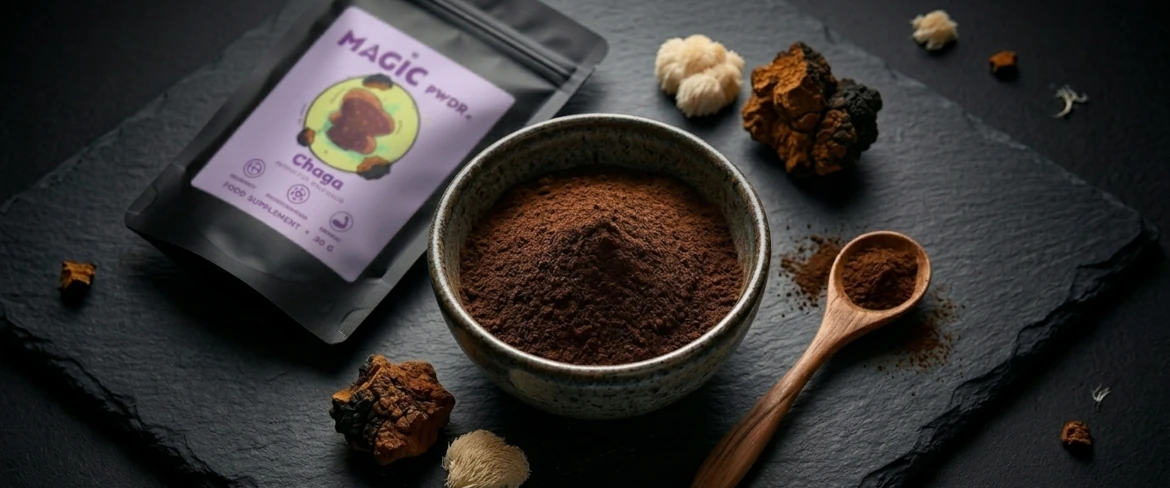
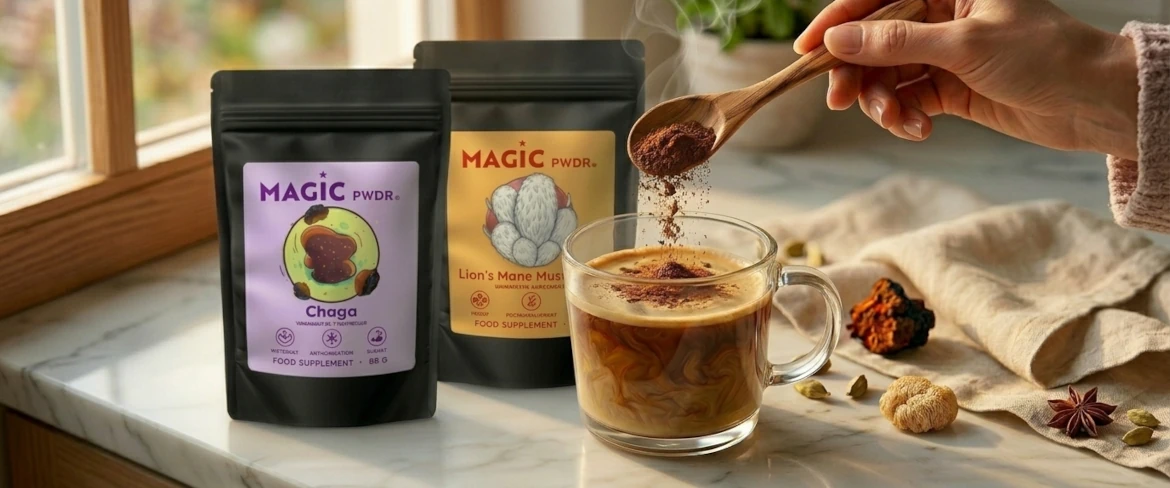
What about capsules? While they are quick and convenient to take on the go, they take away an important aspect of adaptogenic supplementation – creating a daily, mindful ritual. Mushroom powder (in the form of a highly bioavailable extract) is an extremely flexible option. You can easily add it to your morning coffee, favourite tea, creamy matcha latte or a nutritious smoothie. This type of mushroom extract blends well with drinks and fits perfectly into a modern, healthy lifestyle, giving you full control over your dosage.
How to read mushroom supplement labels?
Beautiful packaging and catchy marketing slogans can easily grab your attention, but it is the label on the back of the product that is the real test of quality. In the world of natural wellness, it is easy to come across big promises without real substance, which is why the ability to evaluate the ingredients list is your greatest advantage. A label can tell you far more than even the most elaborate marketing description – as long as you know what to look for. Often, just a quick glance at a few key details is enough to instantly assess whether a given mushroom supplement actually makes sense and is worth your investment.
What should you watch out for in mushroom supplement ingredients?
The golden rule when it comes to adaptogenic mushrooms is simple: the cleaner and more transparent the composition, the better. High-quality functional mushrooms defend themselves with their naturally concentrated profile and do not need artificial enhancers or cheap fillers. When browsing the market, it’s worth being selective and consciously avoiding products that leave too much room for guesswork.
❌ Red flags – avoid these on labels:
- No information about the part of the mushroom used: if the packaging only states something vague like “lion’s mane mushroom powder” or simply “chaga mushroom”, without specifying that the fruiting body was used, there is a high chance you are buying mostly low-value mycelium mixed with grain substrate.
- Lack of standardisation: no DER ratio (such as 10:1) is a clear sign that the manufacturer does not control the actual potency of the product. In this case, you are essentially buying a “mystery product”.
- Long list of artificial additives: while a small amount of anti-caking agents may sometimes be technologically justified (to prevent mushroom powder from clumping), ingredients such as maltodextrin, artificial colours, flavourings or hidden sugars should be avoided in high-quality mushroom supplements.

What to look for when choosing reishi, chaga or lion’s mane?
You already know the theory, can read labels, and understand why a standardised mushroom extract is superior to regular, unprocessed mushroom powder. But how do you translate this knowledge into a final decision when browsing an online shop? A good choice is always a combination of uncompromising product quality and precise alignment with your lifestyle. The fact that a “popular mushroom” gets great reviews online is simply not enough to deliver real, noticeable results.
Matching the mushroom to your goal – stress, immunity, focus
When choosing mushroom supplements, think of them as specialised tools. If you want to hammer a nail, you don’t use a screwdriver. The same applies to adaptogenic mushrooms. Each of the species we’ve discussed works slightly differently, so the best place to start is by identifying your main priority at the moment. This is the simplest way to avoid a poor choice and fully benefit from their potential.
Ask yourself one simple question: what does my body need most right now?
- 🎯 Do you need support for studying or work (focus)? If your problem is lack of concentration and reduced mental performance, your best choice is lion’s mane. The best lion's mane supplement or lion's mane extract acts as a natural “trigger” for neurogenesis in your brain.
- 🛡️ Do you want to strengthen your body from within (immunity)? If your internal defence system feels weakened, remember what chaga mushroom offers. Chaga mushroom benefits include powerful antioxidant support that enhances vitality and resilience.
- 🧘 Are you looking for relaxation after a long day (calm)? If stress prevents you from falling asleep and you feel overstimulated, reach for reishi mushrooms. Their well-known reishi mushroom benefits support relaxation and recovery, helping you unwind naturally.
❓ Can you combine different adaptogenic mushrooms?
Absolutely! Functional mushrooms work in remarkable synergy, complementing each other’s properties. For example, you can start your day with lion’s mane mushroom and chaga mushroom powder (added to coffee or matcha) to boost energy and focus, and then unwind in the evening with reishi mushroom supplement. The key is to choose well-designed blends or high-quality single extracts that give you full control over dosage.
If you’ve made it this far, you now have a simple formula for making the right choice: extract quality + goal. And once you know which mushroom to choose, it’s time for the most interesting part – products that actually turn this potential into a practical daily routine.
Unfortunately, the market shows huge differences in quality, and finding a true gem among countless marketing claims can be challenging. That’s why, instead of wasting time searching endlessly, it’s worth looking at a concrete example. With conscious consumers in mind, we’ve introduced a new line that embodies all the key features of a high-quality supplement. Discover functional mushrooms Magic Pwdr – a new brand focused on uncompromising quality, clean ingredients and transparency, proving that natural supplementation can be both effective and flexible.

What makes Magic Pwdr functional mushrooms stand out?
The market today shows huge differences in quality. Many brands attract attention with attractive packaging, but once you turn the product around and read the label, the illusion quickly fades. That is exactly why we decided to take matters into our own hands. Truly good products should not stand out because of aggressive marketing, but because of uncompromising composition and full transparency. Taking into account all the strict criteria discussed in this guide, we have introduced a new, original brand to our range.
Magic Pwdr is our answer to the needs of conscious consumers. It is a line of functional mushrooms created with no shortcuts – based exclusively on the highest-quality raw materials. It proves that natural supplementation can be powerful in its effects while remaining incredibly simple in everyday use. Take a look at what we’ve prepared for you!
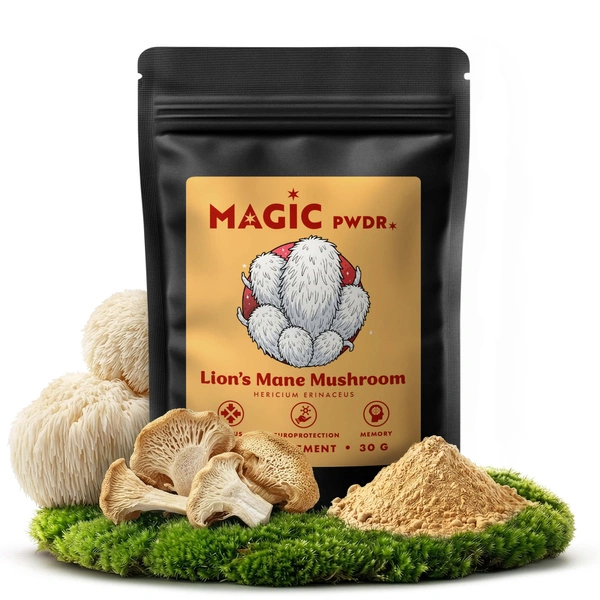
Lion's Mane
Powdered 10:1 extract from the fruiting bodies of Hericium erinaceus. Focus and mental clarity.
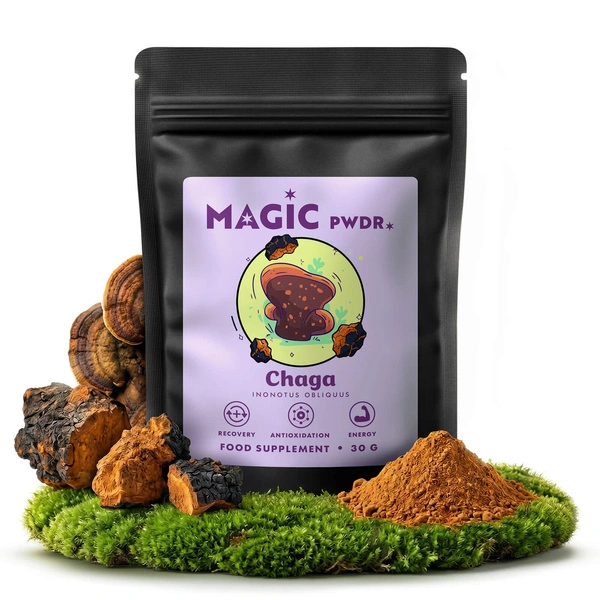
Chaga
Powdered 10:1 extract from Inonotus obliquus fruiting bodies. Your natural antioxidant shield.
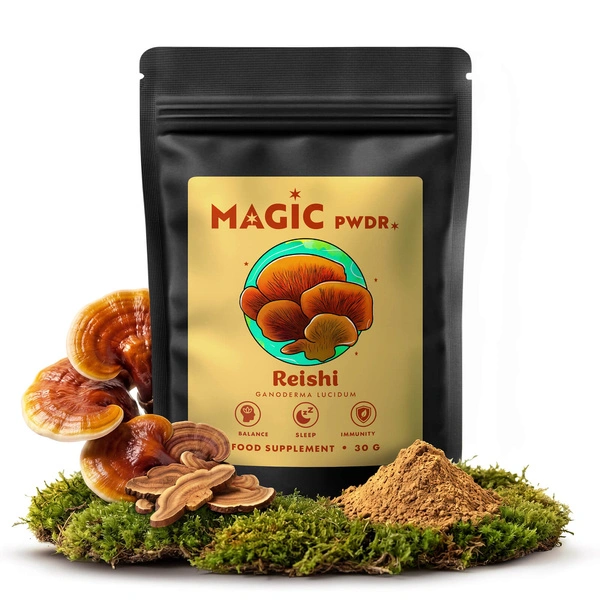
Reishi
Powdered 10:1 extract from reishi mushrooms. Deep relaxation and recovery.
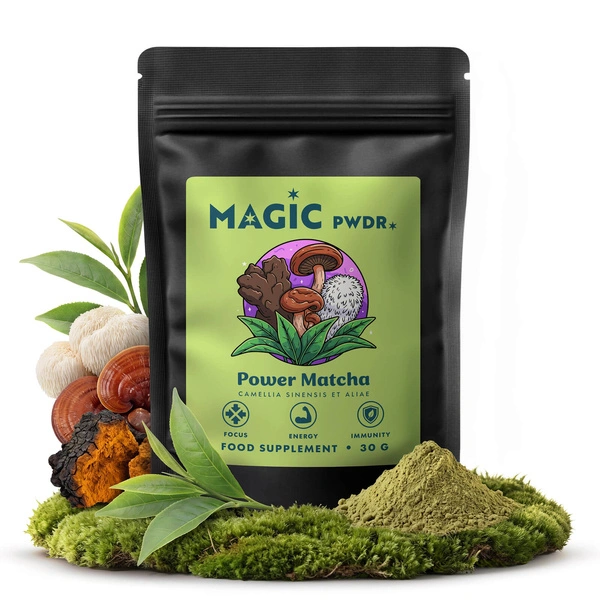
Power Matcha
Energy & Focus Blend. Matcha with adaptogenic mushrooms (lion's mane, chaga, reishi).
Clean composition and standardised extracts in Magic Pwdr products
As promised, you won’t find any guesswork in these products. Magic Pwdr mushroom supplements are made from 100% pure extracts of fruiting bodies – no ground mycelium, no cheap fillers and no empty claims. They use a strong 10:1 standardisation, meaning each small serving delivers the power of ten times the amount of raw mushrooms. The brand focuses on a clean, transparent composition and clearly defined active ingredients. In the case of pure extracts, the product contains simply… one ingredient. In functional blends such as Power Matcha, only essential components are included, maintaining the highest standards of purity.
Convenient form – mushroom powder for everyday use
Capsules are boring. The real magic of adaptogenic mushrooms begins when they become part of your daily ritual. Mushroom powder from Magic Pwdr is perfect for that. A highly bioavailable mushroom extract dissolves easily in liquids, making it simple to incorporate into your daily routine. You can add lion's mane mushroom powder to your morning coffee, enrich your smoothie with chaga mushroom powder, or enjoy reishi in your evening cocoa. It’s a practical and flexible solution that will continue to expand with ready-made blends (e.g. based on yerba mate, cocoa or coffee).
Transparency and quality of raw materials
For the creators of the brand, information about origin and production methods is essential. Transparency is one of the most important indicators of quality in modern mushroom supplements, which is why everything on Magic Pwdr labels is clear at first glance. Take a look at the Power Matcha composition: 68% green tea matcha, 7% lion’s mane extract, 5% chaga mushroom and 3% reishi, complemented by natural sweeteners and antioxidants. You know exactly what you’re consuming and what you’re paying for. No hidden proprietary blends with negligible amounts of active ingredients.
If you feel that the supplement market is confusing, this guide comes down to one simple principle: choose functional mushrooms based on facts. Quality of raw material, transparent composition, standardisation and matching the mushroom to your goal – that’s what turns a supplement from a “nice addition” into real support for your daily life.
That is why Magic Pwdr is a great place to start – for those who don’t want empty promises, but instead want to consciously explore adaptogenic mushrooms and build a natural daily routine. If you want to move from theory to practice, choose your first product and see which direction works best for you.
Ready to say goodbye to fatigue and take your daily routine to the next level? Choose wisely and discover the natural power of Magic Pwdr!
❓ FAQ – frequently asked questions about adaptogenic mushrooms
1. Do adaptogenic mushrooms really work?
Yes, their effects are not a myth – they are based on scientifically documented bioactive compounds (such as beta-glucans, polysaccharides and terpenoids). However, it is important to remember that functional mushrooms do not provide an immediate stimulating effect like caffeine. Their real power becomes noticeable with long-term use – they work systemically, helping the body return to homeostasis and building natural resistance to stress factors.
2. Are functional mushrooms and adaptogenic mushrooms the same?
These terms are often used interchangeably, but there is a subtle difference. Functional mushrooms refer to a broad category of mushrooms with proven health-supporting properties. Adaptogenic mushrooms are a narrower subgroup – their main role is to help the body adapt to physical, biological and emotional stress.
3. What are the benefits of lion’s mane (Hericium erinaceus)?
Lion’s mane is best known for supporting the brain and nervous system. Its key benefits include improved memory, enhanced concentration (ideal for mental work), and helping to reduce brain fog. This is due to its ability to stimulate the production of nerve growth factor, which supports the formation and regeneration of nerve cells.
4. Chaga (Inonotus obliquus) – what are its properties?
Chaga is a powerful antioxidant. Its main role is to protect cells from oxidative stress and free radicals. Regular use of chaga extract supports the immune system, helps reduce inflammation and boosts overall vitality, acting as a natural protective shield for the body.
5. Can reishi be taken daily and when is the best time to use it?
Yes, reishi mushrooms can – and should – be taken daily, as adaptogens show their full potential with regular use. Due to their calming effect on the nervous system and support for deep sleep, reishi supplements are best taken in the afternoon or evening.
6. Can you combine reishi, chaga and lion’s mane?
Absolutely! These mushrooms work in synergy and complement each other well. A popular and effective approach is to take lion’s mane in the morning (e.g. added to coffee) for focus, chaga during the day for antioxidant support, and reishi in the evening for relaxation and recovery.
Sources of information:
- Wikipedia: Medicinal uses of fungi, Hericium erinaceus, Inonotus obliquus, Ganoderma lucidum.
- A. S.-D. Hisamuddin et al., Adaptogenic Effects of Mushroom Blend Supplementation on Stress, Fatigue, and Sleep: A Randomised, Double-Blind, and Placebo-Controlled Trial, Brain and Behavior, 2026.
- Y. Qin et al., Ganoderma lucidum spore extract improves sleep disturbances in a rat model of sporadic Alzheimer’s disease, Frontiers in Pharmacology, 2024.
- I. Szućko-Kociuba et al., Neurotrophic and Neuroprotective Effects of Hericium erinaceus, International Journal of Molecular Sciences, 2023.
- G. Venturella et al., Medicinal Mushrooms: Bioactive Compounds, Use, and Clinical Trials, International Journal of Molecular Sciences, 2021.
- K. A. Szychowski et al., Inonotus obliquus - from folk medicine to clinical use, Journal of Traditional and Complementary Medicine, 2020.
Recommended

Magic Pwdr – Chaga 100g

Magic Pwdr – Reishi 100g

Magic Pwdr – Lion's Mane 100g
