
Is yerba mate healthy? How does it affect cholesterol and blood pressure?
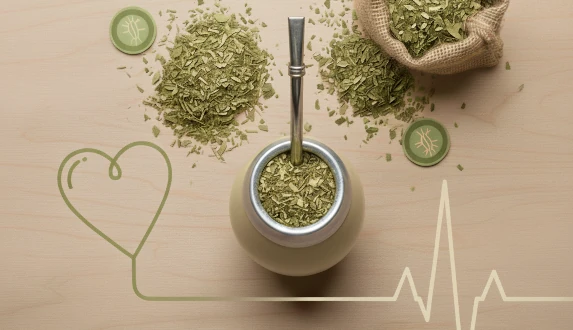
Yerba mate has been attracting attention for years – not only among people looking for a natural energy boost, but also among those who want to better understand is yerba mate healthy and how this infusion may affect daily functioning. There is also growing interest in its potential role in heart health – especially its impact on cholesterol levels and blood pressure. It is therefore no surprise that in recent years yerba mate has become the subject of numerous scientific studies.
In this article, we will explain how does yerba mate work, what its properties are, which compounds contribute to its popularity and why it appears so often in discussions about a healthy lifestyle. We will also take a closer look at scientific studies analysing yerba mate in the context of lipid levels and blood pressure, and examine which yerba mate’s health properties are most frequently mentioned in the literature.
Summary:
- Yerba mate and health – pro‑health properties
- Yerba mate and cholesterol – does mate tee help lower cholesterol?
- Yerba mate and blood pressure – does yerba mate raise blood pressure?
- Yerba mate – what does it help with?
- Is yerba mate really healthy?
Yerba mate and health – pro‑health properties
The infusion made from the leaves of the yerba mate plant is valued not only for its stimulating effect but also for its rich, natural composition. Many people wonder is yerba mate healthy, and the answer – based on current scientific knowledge – depends on several factors, including the brewing method, dosage, frequency of consumption and individual tolerance.
Yerba mate contains a mixture of polyphenols, vitamins, minerals and natural alkaloids responsible for its stimulating properties. It is this unique combination that makes researchers examine its influence on metabolism, energy levels and potential links between yerba mate and cholesterol as well as the functioning of the cardiovascular system.
Many of the described properties come from the presence of antioxidants and bioactive compounds. These are the main reasons behind the growing interest in questions such as does yerba mate lower cholesterol. It is worth emphasising that we describe scientific findings only – yerba mate does not replace treatment or medical advice.
Yerba mate – health properties: antioxidants, vitamins and minerals
Yerba mate contains numerous compounds that naturally support the body. These include:
- ✔️ Polyphenols – mainly chlorogenic acids, known for their strong antioxidant effects. Scientific literature describes their role in neutralising free radicals.
- ✔️ Saponins – plant compounds with a bitter taste, associated with supporting natural defence mechanisms.
- ✔️ B vitamins – including B1 and B2, necessary for proper energy metabolism.
- ✔️ Magnesium – a mineral important for the nervous and muscular systems.
- ✔️ Iron – essential for oxygen transport.
💡 Did you know? According to research, polyphenols make up as much as 7-10% of the dry mass of yerba mate leaves, and around 95% of this group consists of chlorogenic acids.
💬 Scientific source: A. C. de Vasconcellos et al., Phenolic Compounds Present in Yerba Mate Potentially Increase Human Health: A Critical Review, Plant Foods for Human Nutrition, 2022.
The high polyphenol content explains why yerba mate often appears in discussions on lipid balance. This is also why search queries such as yerba mate and cholesterol or yerba mate cholesterol are becoming more common. Antioxidants may help protect lipids from oxidative stress – a natural plant property rather than a therapeutic action.
How does yerba mate work – energy, focus, metabolism
Yerba mate is widely known for its stimulating effects. These come not only from caffeine, but also from the presence of theobromine and theophylline – alkaloids that act more gently and steadily.
The synergy of caffeine, theobromine and theophylline contributes to:
- higher energy levels and reduced fatigue,
- improved concentration,
- support for the nervous system,
- a boost in metabolic processes.
For this reason, many people choose yerba mate as an alternative to coffee. In the context of metabolism, questions such as is yerba healthy or whether the infusion affects fat or sugar levels arise frequently. Research suggests that yerba mate’s bioactive compounds may support energy management – though responses vary between individuals.
Drinking yerba mate – what yerba mate effects can you expect?
The yerba mate effects depend on individual tolerance and the type of yerba mate used. The most commonly reported include:
- higher daily energy levels,
- better cognitive performance – focus, alertness,
- smoother digestion,
- natural metabolic support,
- a more stable energy curve compared to coffee.
People exploring topics such as what does yerba mate help with or yerba mate contraindications often ask about long‑term effects. Most positive responses relate to the synergy of caffeine and antioxidants, though not everyone enjoys the intense flavour or stimulating effect.
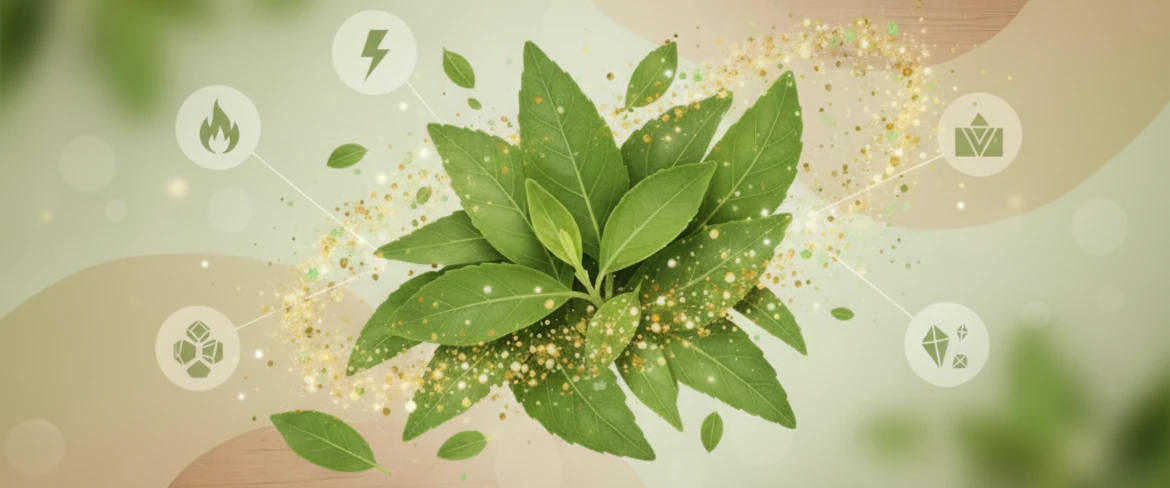
Yerba mate and cholesterol – does mate tee help lower cholesterol?
The relationship between yerba mate and cholesterol has been attracting the attention of researchers and health‑conscious individuals for many years. Scientific literature increasingly examines how the polyphenols and saponins found in yerba mate leaves may affect fat metabolism and whether regular consumption of yerba mate can help maintain a healthy lipid profile.
In this section, we will take a closer look at how its active compounds work, review the key scientific findings and answer the most common questions, such as does yerba mate lower cholesterol, how it influences LDL and HDL levels, and who may benefit most from drinking it.
How yerba mate influences LDL and HDL cholesterol levels?
Studies suggest that yerba mate’s effects on the lipid profile are mostly connected to its polyphenols – particularly chlorogenic acids – as well as saponins. These compounds, present in significant quantities in the leaves, contribute to several mechanisms involved in fat metabolism.
- ✔️ Protection of LDL cholesterol: the polyphenols in yerba mate act as natural antioxidants. A 2008 study showed that just one week of regular consumption reduced the susceptibility of LDL (“bad cholesterol”) to oxidation – a process considered unfavourable for blood vessels.
- ✔️ Support for fat breakdown: chlorogenic acids may support the body in managing fats by influencing genes responsible for their breakdown and aiding metabolic processes.
- ✔️ Support for a healthy gut microbiome: some polyphenols reach the intestines unchanged, where they are transformed by beneficial bacteria into compounds that may help support a favourable lipid profile, for example by shifting the Firmicutes/Bacteroides ratio.
💬 Scientific source: R. L. T. Matsumoto et al., Effects of Maté Tea Intake on ex Vivo LDL Peroxidation Induced by Three Different Pathways, Nutrients, 2009.
In practice, this means yerba mate may support natural processes responsible for maintaining the balance between LDL (“bad”) and HDL (“good”) cholesterol. This is not a therapeutic effect but a natural consequence of the plant’s composition.
Does yerba mate lower cholesterol?
The question does yerba mate lower cholesterol is extremely popular. The most reliable way to answer it is by examining results from well‑designed clinical studies.
One of the most widely cited studies was conducted in a group of individuals taking statins. Participants consumed approximately 990 ml of yerba mate daily for 40 days. The researchers observed an 8.6% reduction in LDL cholesterol and a 6.2% increase in HDL. This suggests that regular consumption may support beneficial changes in lipid parameters.
In another study published in 2021, men aged 45-65 were monitored while consuming yerba mate extract. The results also suggested that yerba mate’s compounds may help maintain a healthier LDL to HDL ratio, although the effect varied depending on initial health status.
💬 Scientific sources:
- D. T. A. da Veiga et al., Protective effect of yerba mate intake on the cardiovascular system: a post hoc analysis study in postmenopausal women, Brazilian Journal of Medical and Biological Research, 2018.
- K. S. Gebara et al., A Randomized Crossover Intervention Study on the Effect a Standardized Maté Extract (Ilex paraguariensis A. St.-Hil.) in Men Predisposed to Cardiovascular Risk, Nutrients, 2021.
📌 Important note: Yerba mate may support a healthy lifestyle, particularly thanks to its polyphenols and antioxidants, but it is not a substitute for medical treatment. It can complement a balanced diet but should not replace therapy prescribed by a healthcare professional.
In conclusion, regular yerba mate consumption may support favourable lipid changes, but its effects always depend on several factors, including diet, lifestyle and individual metabolism.
Yerba mate for cholesterol – who may benefit?
Although yerba mate is not a medicinal product, its natural properties – particularly its high antioxidant content – make it an appealing addition to a healthy lifestyle for several groups of people.
- ✔️ People with elevated cholesterol: especially those seeking natural ways to support heart health.
- ✔️ People committed to a healthy lifestyle: yerba mate can complement a diet rich in vegetables, whole grains and physical activity.
- ✔️ People focused on cardiovascular prevention: moderate daily consumption may support antioxidant activity and lipid metabolism.
- ✔️ Fans of natural stimulating drinks: yerba mate provides caffeine along with polyphenols and saponins – a unique combination that supports various metabolic processes.
Of course, everyone reacts differently to yerba mate. Individuals taking medication or with diagnosed lipid disorders should consult their doctor before introducing yerba mate into their routine. The good news is that available research suggests yerba mate may be a helpful addition to healthy dietary habits.
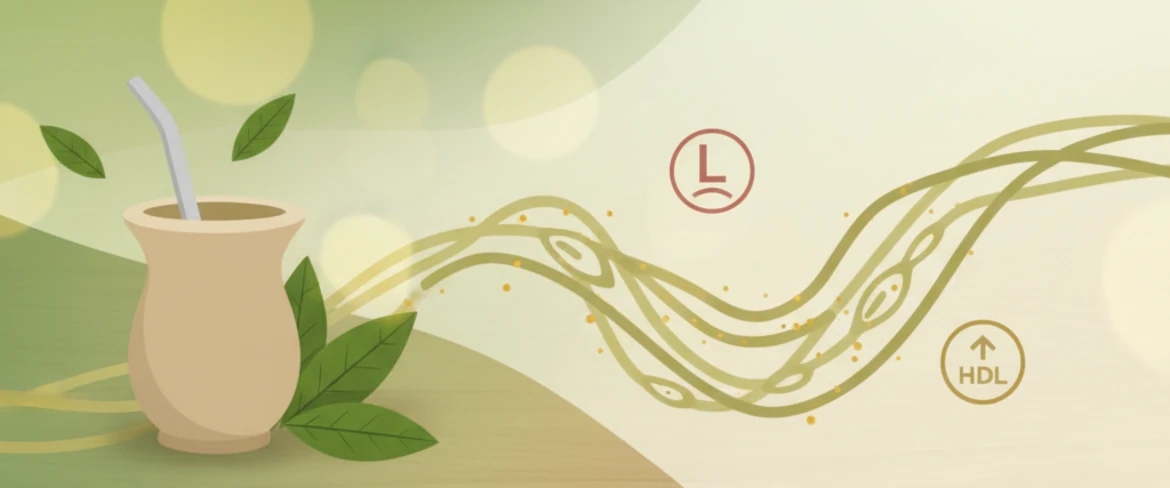
Yerba mate and blood pressure – does yerba mate raise blood pressure?
Yerba mate is known primarily for its stimulating effects, which it owes to the presence of caffeine and other methylxanthines. It is therefore natural that many people wonder whether this infusion can affect blood pressure and does yerba mate raise blood pressure in a similar way to coffee.
The answer is not straightforward. The relationship between yerba mate and blood pressure is complex and depends on many factors – including individual sensitivity to caffeine, the amount consumed and overall health status. Clinical studies indicate that in healthy individuals the effects are usually mild, and in some cases yerba mate may even support processes beneficial for the cardiovascular system.
In this section, we take a closer look at how caffeine in yerba mate works, whether the infusion is suitable for people with hypertension, and how to prepare yerba mate so that it does not significantly affect blood pressure.
Effects of caffeine in yerba mate on blood pressure
Yerba mate contains caffeine, but its effects differ from those of coffee. This is due to the presence of other methylxanthines – theobromine and theophylline – which have vasodilatory properties and balance the stimulating effects of caffeine. For this reason, the body's reaction is often gentler and more stable than after a cup of strong coffee.
Clinical studies show that caffeine can cause a temporary rise in blood pressure, but this effect is usually short‑lived and less intense than with coffee. Interestingly, some compounds in yerba mate – particularly polyphenols – may work in the opposite direction, supporting natural mechanisms that regulate vascular tension. According to available sources, chlorogenic acids may help reduce blood pressure in people with hypertension.
In the previously cited study by Gebara et al. (2021), conducted on 34 men, regular consumption of yerba mate extract for four weeks did not lead to significant changes in systolic or diastolic blood pressure compared to placebo. The authors noted that participants were mostly normotensive or had mild hypertension, suggesting that moderate yerba mate consumption is generally well tolerated.
Is yerba mate safe for people with hypertension?
People with hypertension often ask is yerba healthy for them and whether they can drink it safely. According to available studies, moderate intake of yerba mate usually does not lead to an increase in blood pressure in most individuals. Some research even indicates that polyphenols may support natural mechanisms regulating vascular tension, which may be beneficial for the cardiovascular system.
However, it is important to remember that yerba mate contains caffeine – which can cause a short‑term increase in blood pressure, especially in those who are sensitive or who prepare very strong infusions. This is why observing your own body’s reaction is crucial. If you experience heart palpitations, discomfort or a noticeable rise in blood pressure after drinking yerba mate, it is best to reduce the amount of leaves used or choose milder brews.
It is also worth paying attention to when yerba mate is consumed. For some individuals, it is better to drink it at a distance from medications – especially those used to lower blood pressure. If you have diagnosed hypertension, consulting a doctor before introducing yerba mate into your routine is a good idea, especially if you are unsure about your sensitivity to caffeine.
📌 How to drink yerba mate so it does not raise blood pressure too much?
The way yerba mate is prepared has a significant impact on how the body reacts. The release of caffeine depends heavily on water temperature, the amount of dry leaves used and the length of brewing. If you want to avoid excessive stimulation or sudden increases in blood pressure, the following tips may help:
- ✔️ Use less yerba mate – 10-15 g is a good starting point for those sensitive to caffeine.
- ✔️ Avoid very hot water (above 80°C), as it increases caffeine extraction.
- ✔️ Choose yerba mate with lower caffeine content – such as Argentine elaborada or herbal blends.
- ✔️ Combine yerba mate with a heart‑healthy diet – rich in vegetables, fibre and anti‑inflammatory foods.
- ✔️ Avoid drinking yerba mate on an empty stomach if you tend to react strongly to caffeine.
- ✔️ Observe your body's reaction – monitor heart rate, blood pressure and overall well‑being.
- ✔️ Be cautious with blood pressure medication – leave a gap between taking medication and drinking yerba mate.
Thanks to these guidelines, you can tailor yerba mate to your needs and enjoy it without worrying about excessive stimulation or undesirable changes in blood pressure.
Yerba mate – what does it help with?
Yerba mate is best known for its stimulating effect, but its potential is much broader. Thanks to its content of caffeine, polyphenols, saponins, vitamins and minerals, yerba mate affects many processes in the body – from energy levels and concentration to digestion and natural immune mechanisms.
In this section, we will look at the key areas where yerba mate may support the body – in line with research findings and the most commonly described yerba mate health properties.
Yerba mate and the circulatory system, digestion and immunity
Yerba mate has long been studied for its impact on the cardiovascular system. Its polyphenols show strong antioxidant properties – they neutralise free radicals and protect cells from oxidative stress. According to the available research, these compounds may help maintain proper vascular function and natural metabolic balance. This does not imply a therapeutic effect, but it is an interesting direction of study in the context of cardiovascular health.
Yerba mate is also appreciated for its supportive effects on digestion. Thanks to the presence of saponins and natural bitter compounds, it may stimulate digestive processes, increase digestive juice production and support fat metabolism. This is why many people who drink yerba mate regularly report a feeling of greater digestive comfort and reduced heaviness after meals.
Antioxidants, including chlorogenic acids, also play a role in natural immune mechanisms. In the previously cited study by Veiga et al. (2018), researchers observed a reduction in inflammatory markers under certain metabolic conditions. This is not an effect equivalent to treating infections, but it may support the body’s overall resilience.
Is it worth drinking yerba mate regularly?
Yerba mate enthusiasts often highlight that the greatest benefits come with regular but moderate consumption. This is because mate tea influences several processes at once – energy, concentration, metabolism and even cardiovascular function.
📌 Most commonly reported yerba mate effects include:
- ✔️ more stable energy levels throughout the day – thanks to the synergy of caffeine, theobromine and theophylline,
- ✔️ better concentration and alertness – without the sudden “spike” typical of coffee,
- ✔️ support for metabolism – polyphenols and alkaloids may help the body manage energy more efficiently,
- ✔️ better digestion – thanks to saponins and natural bitter compounds,
- ✔️ potential support for cardiovascular health – in line with studies analysing the effects of polyphenols,
- ✔️ general lifestyle support – yerba mate can be one of the elements associated with healthy habits.
These effects do not appear equally in everyone – much depends on dosage, frequency, the type of yerba mate, the brewing method and individual sensitivity to caffeine.
To sum up: regular yerba mate consumption may positively influence many aspects of well‑being – mood, energy, daily concentration – and may support general health maintenance. The key is moderation and choosing high‑quality yerba mate.
Is yerba mate really healthy?
To sum up the entire article, let’s try to answer the fundamental question: is yerba healthy? Based on available research, yerba mate is a drink with a wide range of natural properties that may support daily functioning. Thanks to its caffeine content, polyphenols, vitamins and minerals, it helps maintain energy levels, supports concentration, may aid metabolism and, under certain conditions, may also support cardiovascular or digestive processes.
However, it is important to remember that individual reactions to yerba mate vary and depend on many factors: dosage, brewing method, type of yerba mate, caffeine tolerance and overall health. Therefore, there is no single answer that applies to everyone. Moderate consumption, choosing high‑quality products and observing your body's reactions is the best approach for those who want to incorporate yerba mate into their daily routine.
One thing is certain – yerba mate is more than just a stimulating drink. It is a plant with a long tradition, a rich composition and significant potential, which is becoming a regular part of a healthy lifestyle for an increasing number of people. It is worth trying it and seeing how it works for you personally.
Discover your favourite yerba mate and see how it works for you in practice!
❓ FAQ – frequently asked questions about yerba mate and its impact on cholesterol and blood pressure
1. Can you drink yerba mate every day?
2. Does yerba mate really lower cholesterol?
3. Does yerba mate raise blood pressure?
4. Can people with hypertension drink yerba mate?
5. Is yerba mate healthy for the heart?
Sources of information:
- Wikipedia: Mate (drink).
- C. I. Heck, E. H. de Mejia, Yerba Mate Tea (Ilex paraguariensis): a comprehensive review on chemistry, health implications, and technological considerations, Journal of Food Science, 2007.
- E. C. de Morais et al., Consumption of yerba mate ( Ilex paraguariensis ) improves serum lipid parameters in healthy dyslipidemic subjects and provides an additional LDL-cholesterol reduction in individuals on statin therapy, Journal of Agricultural and Food Chemistry, 2009.
- R. L. T. Matsumoto et al., Effects of Maté Tea Intake on ex Vivo LDL Peroxidation Induced by Three Different Pathways, Nutrients, 2009.
- D. T. A. da Veiga et al., Protective effect of yerba mate intake on the cardiovascular system: a post hoc analysis study in postmenopausal women, Brazilian Journal of Medical and Biological Research, 2018.
- K. S. Gerbara et al., A Randomized Crossover Intervention Study on the Effect a Standardized Maté Extract (Ilex paraguariensis A. St.-Hil.) in Men Predisposed to Cardiovascular Risk, Nutrients, 2021.
- A. C. de Vasconcellos et al., Phenolic Compounds Present in Yerba Mate Potentially Increase Human Health: A Critical Review, Plant Foods for Human Nutrition, 2022.
Recommended

Verde Mate Green Herbal Energy 0.5kg

Yaguar Hierbas Pampeanas 0.5kg

Soul Mate Orgánica Anís 0.5kg (organic)
