
Yerba mate vs matcha – which should you choose? A comparison of their properties, flavour and effects
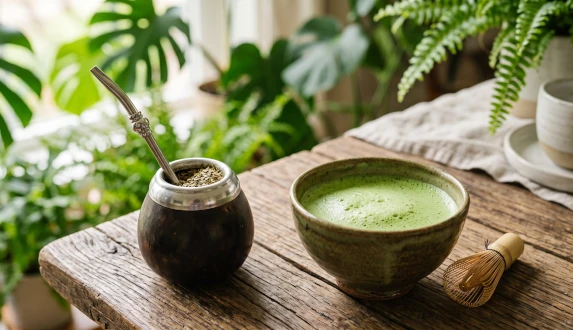
Are you looking for a natural source of energy to replace your usual coffee? You may be wondering which would suit you better: matcha or yerba mate. Both drinks are becoming increasingly popular around the world and can form part of a balanced diet. Although they are known for their vibrant green colour, antioxidant compounds and caffeine content, they differ in many important ways. The right choice depends on your individual preferences and may influence how you structure your daily beverage ritual.
The differences begin with their botanical origins and extend to their flavour, preparation rituals and potential effects on the body. Understanding these details can help you make a more informed choice when looking for a drink to accompany periods of focus and activity. In this article, we will take an in-depth look at yerba mate vs matcha, drawing on available information and research. Our aim is to explain the key characteristics of both plants and help you choose the drink that best suits your taste and everyday routine.
Table of contents:
- Yerba mate and matcha – how are they different?
- Yerba mate – properties, flavour and effects
- Matcha – properties, flavour and effects
- Yerba mate vs matcha – the key differences
- Matcha or yerba mate – which should you choose?
- Matcha and yerba mate – a quick comparison
Yerba mate and matcha – how are they different?
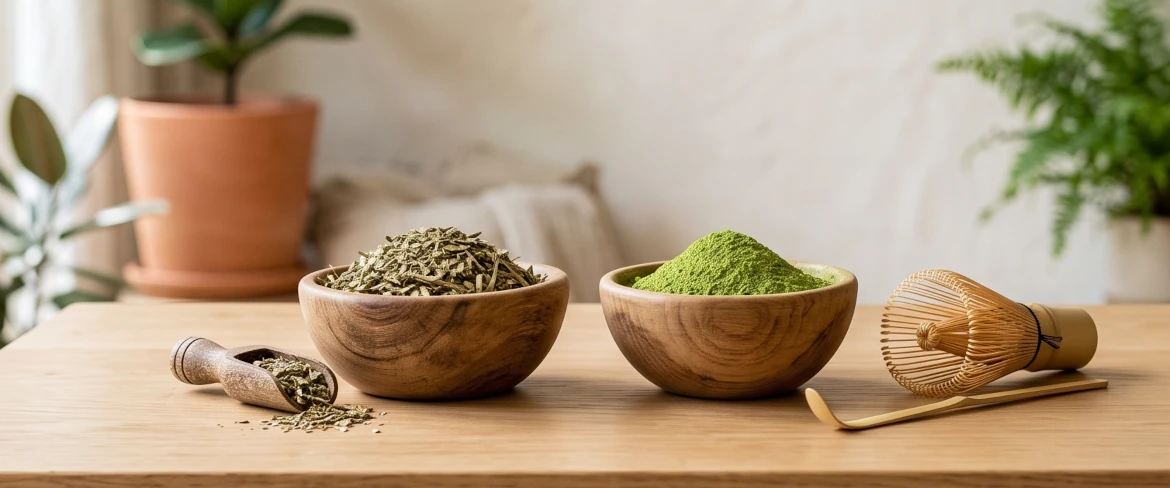
To understand the differences between yerba mate and matcha, it is worth starting with the basics. Although these drinks are often discussed together in the context of healthy eating, they come from different parts of the world and have distinct traditions. Yerba mate is an infusion made from the dried and crushed leaves and stems of the yerba mate plant (Ilex paraguariensis), native to parts of South America, including Argentina, Brazil and Paraguay.
By contrast, matcha is deeply rooted in Asian culture, particularly in Japan. Botanically, it is a powdered form of green tea (Camellia sinensis). The tea plants used to produce matcha are generally shaded for several weeks before harvesting. This changes the plant’s composition and contributes to its distinctive colour and flavour. After harvesting, the leaves are processed, dried and carefully ground into an exceptionally fine, vivid green powder.
💡 Worth knowing: Although matcha and yerba mate are often compared by people interested in caffeine-containing drinks, they come from entirely different plants. They do share some features, including the fact that both raw materials are dried before being prepared as beverages.
Key differences in preparation and drinking
One of the clearest differences between matcha and yerba mate is the way they are prepared and served. Each drink requires different accessories and creates a different experience.
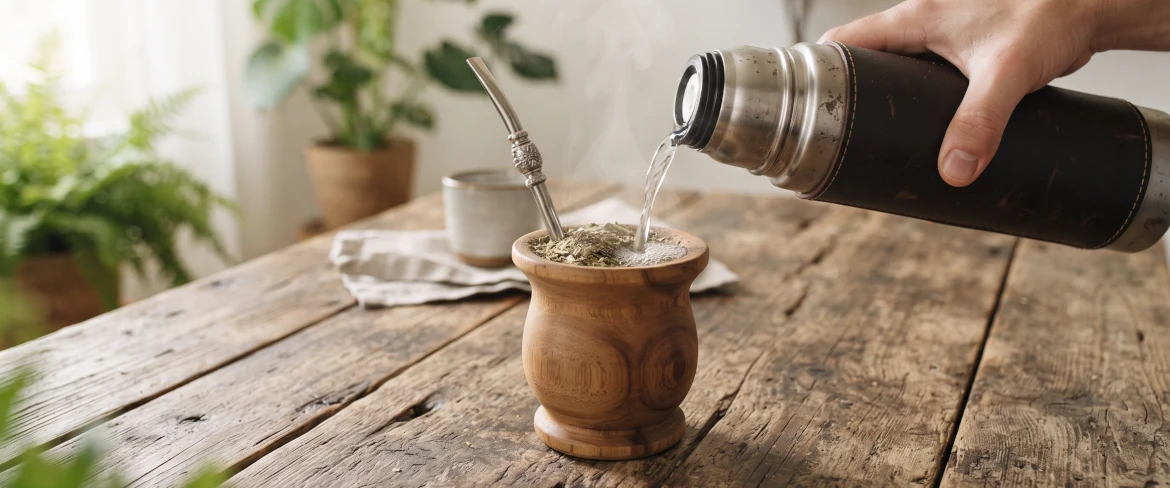
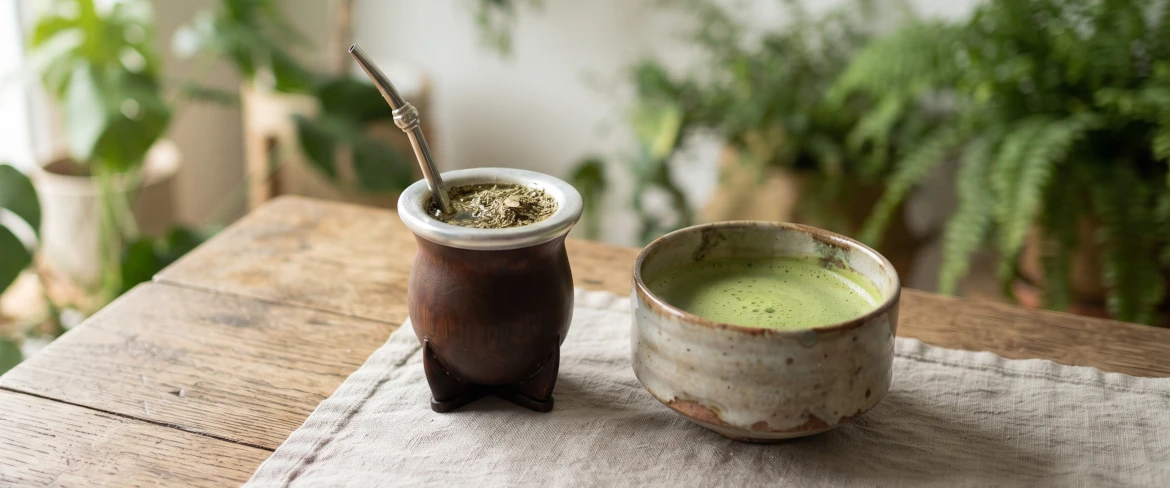
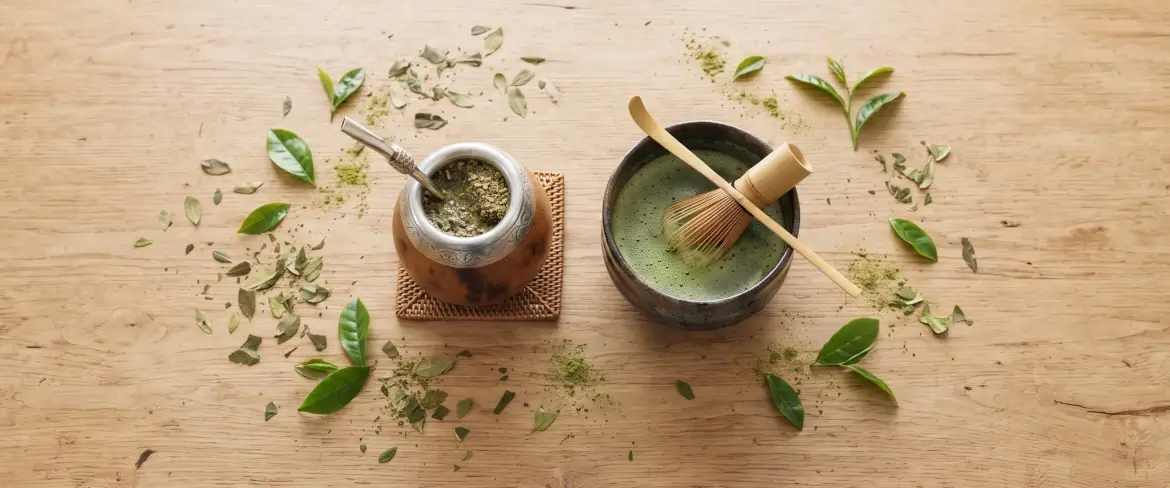
Yerba mate is prepared in a dedicated vessel known as a mate and is drunk through a special metal filtering straw called a bombilla. A relatively generous amount of yerba mate is placed in the vessel, and the same portion of leaves can be infused several times with warm water. Each subsequent infusion may reveal a slightly different flavour profile and provide another amount of caffeine, making yerba mate a drink that can be enjoyed over an extended period.
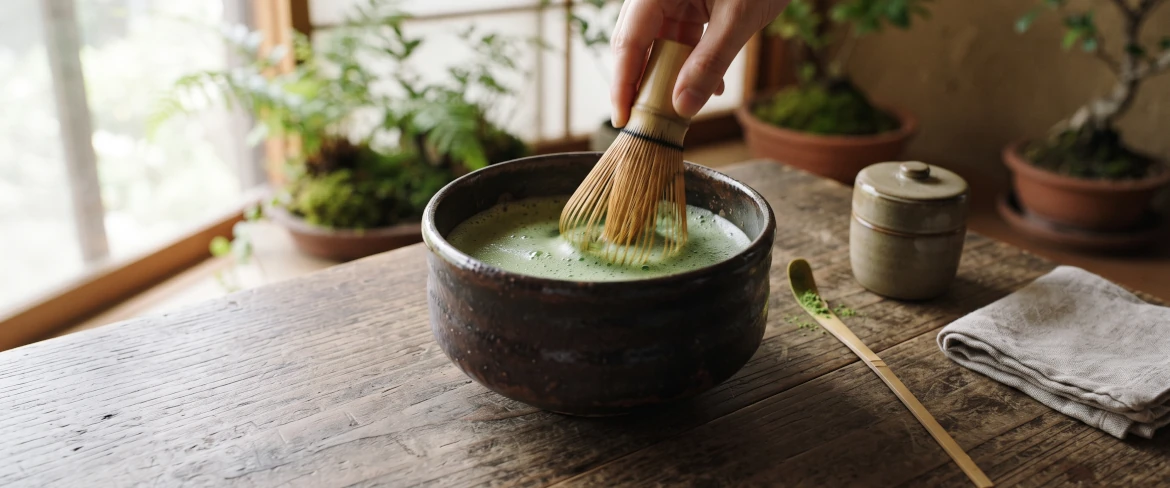
Matcha is prepared differently. A small amount of the finely ground powder, usually around 1-2 grams, is placed in a wide bowl known as a chawan. Water is then added and the mixture is whisked thoroughly with a bamboo whisk called a chasen until it becomes smooth and develops a characteristic layer of foam. Matcha is generally prepared as a single portion and consumed shortly after mixing.
🧐 Infusion vs suspension: One of the main differences between these drinks is the way they are consumed. When drinking yerba mate, you mainly consume a water-based infusion, while most of the leaves remain in the vessel. With matcha, finely ground tea leaves remain suspended in the water and are consumed as part of the drink. This may affect the range and proportions of compounds available in comparison with a traditional tea infusion, although the final composition and absorption depend on many factors.
💬 Scientific source: T. Koláčková et al., The Effect of In Vitro Digestion on Matcha Tea (Camellia sinensis) Active Components and Antioxidant Activity, Antioxidants, 2022.
Yerba mate – properties, flavour and effects
To fully understand the differences between yerba mate and matcha, it is worth taking a closer look at both drinks and their distinctive characteristics. Let us begin with yerba mate, a South American drink enjoyed by people around the world who appreciate its pronounced flavour and caffeine content.
What is yerba mate?
As mentioned earlier, yerba mate is an infusion prepared from the leaves and stems of the yerba mate plant (Ilex paraguariensis). This evergreen plant grows naturally in parts of South America, including Argentina, Paraguay, Brazil and Uruguay. After harvesting, the raw material is traditionally dried and processed and, depending on the product, may then be aged for several months to develop its characteristic profile.
The finished product can vary considerably depending on its country of origin and the way it has been processed. Below, we have selected three popular varieties that demonstrate the diversity of yerba mate:
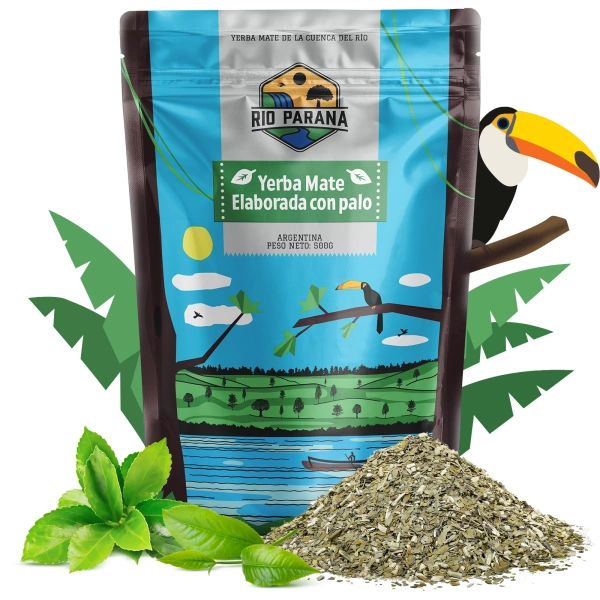
A classic Argentinian yerba mate of the elaborada type, containing leaves, stems and fine particles. Air-dried and aged for approximately 12 months, it has a balanced, relatively gentle profile.
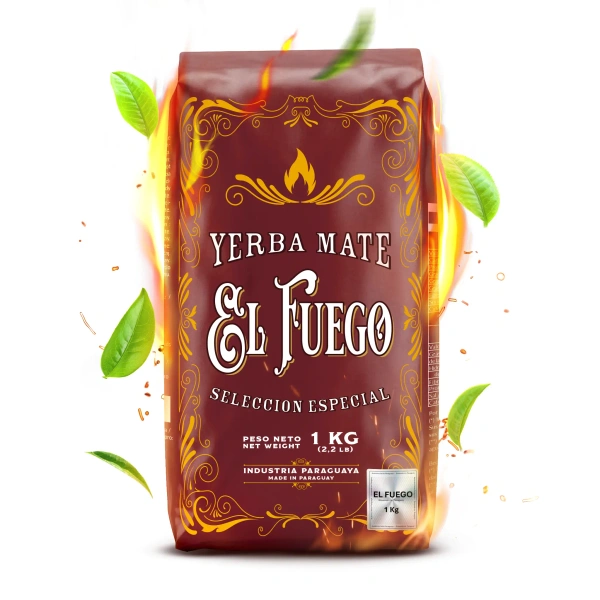
A traditional Paraguayan variety dried using the barbacuá method, which involves fire and smoke. It is aged for as long as 24 months, giving it a particularly intense character. This is a good option for people who enjoy deep, smoky flavours in their infusion.
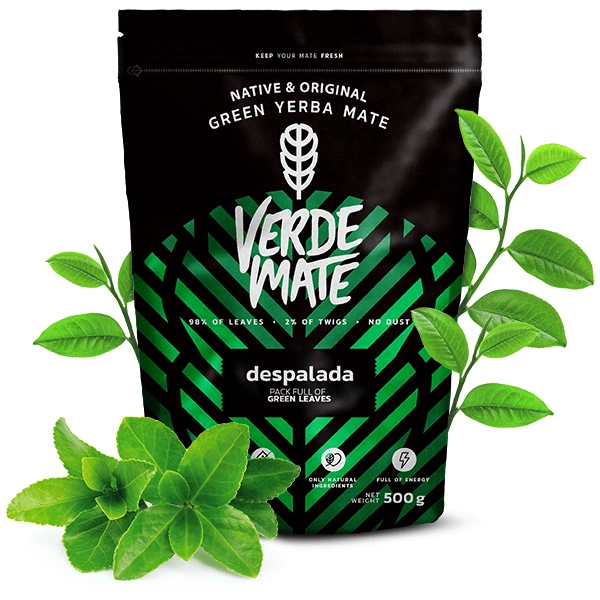
Brazilian yerba mate of the despalada type, with the stems removed. It is dried with hot air and does not undergo an ageing stage, helping it retain a fresh, green character.
What does yerba mate taste like?
The sensory profile of yerba mate is distinctive and forms an important part of the matcha vs yerba mate comparison. A traditional infusion may taste intense, herbal, earthy and distinctly bitter. It can also have a natural astringency, while varieties dried with smoke, including some Paraguayan products, may develop deep smoky and roasted notes.
For people who are new to yerba mate, this flavour can initially seem quite intense. There are also milder options available, including Brazilian mate green varieties such as the one mentioned above. These products are dried using hot air and do not undergo an ageing process, often resulting in a fresher, lighter and more plant-like flavour profile.
How does yerba mate work?
Yerba mate contains caffeine, as well as other naturally occurring alkaloids, including theobromine and theophylline. Caffeine may support alertness and concentration, although the way the drink is experienced depends on the product, serving size, preparation method and individual sensitivity. Some people prefer to drink yerba mate gradually, using several infusions of the same portion, but this does not guarantee a particular pattern of energy or focus.
💡 Did you know? Yerba mate contains a range of bioactive compounds, including derivatives of caffeoyl acids. Research has examined the antioxidant activity of these compounds, while a recent clinical trial explored possible effects of yerba mate on selected cardiometabolic parameters. These findings are interesting, but they should not be interpreted as a guarantee of cardiovascular protection, improved lipid levels or weight loss for every consumer.
💬 Scientific sources:
- L. Bravo et al., Yerba Mate (Ilex paraguariensis St. Hill.) Tea May Have Cardiometabolic Beneficial Effects in Healthy and At-Risk Subjects: A Randomized, Controlled, Blind, Crossover Trial in Nonhabitual Consumers, Molecular Nutrition & Food Research, 2025.
- E. Rząsa-Duran et al., Yerba Mate as a Source of Elements and Bioactive Compounds with Antioxidant Activity, Antioxidants, 2022.
Yerba mate therefore stands out through its variety of products, pronounced flavour and caffeine content, which may support alertness. In the next section, we will look at matcha and consider its origins, flavour, consistency and potential effects. This will make it easier to compare matcha green tea vs yerba mate and decide which drink better suits your preferences.
Matcha – properties, flavour and effects
Japanese green tea in the form of a fine powder has become highly popular among people interested in healthy eating. When considering matcha and yerba mate, you will quickly notice that although both drinks have a vibrant green colour and can be chosen as sources of caffeine, they differ considerably in their composition, preparation and overall drinking experience.
What is matcha and how is it prepared?
Matcha is powdered green tea. Its distinctive character is linked to the way the tea plants are cultivated: several weeks before harvesting, they are shaded from direct sunlight. This changes the plant’s composition and contributes to matcha’s characteristic colour and flavour. After harvesting and gentle drying, the leaves are processed to remove the veins and stems, then ground into an exceptionally fine powder.
Preparing this drink requires suitable proportions and a little technique. The powder is combined with warm, but not boiling, water; a temperature of around 80°C is commonly used. It is then whisked thoroughly – traditionally with a bamboo whisk called a chasen – until smooth and lightly foamy, with no visible lumps. To learn more about the tea plant, matcha’s origins and its preparation, read our dedicated blog article: Matcha from A to Z. What is this tea, what does it taste like and why is it worth drinking?
There are several types of matcha available, differing in their intended use and flavour profile. Below are three popular varieties from the Mary Rose brand:
A practical option for everyday use. Its pronounced flavour makes it suitable for baking, desserts, smoothies and the popular matcha latte.
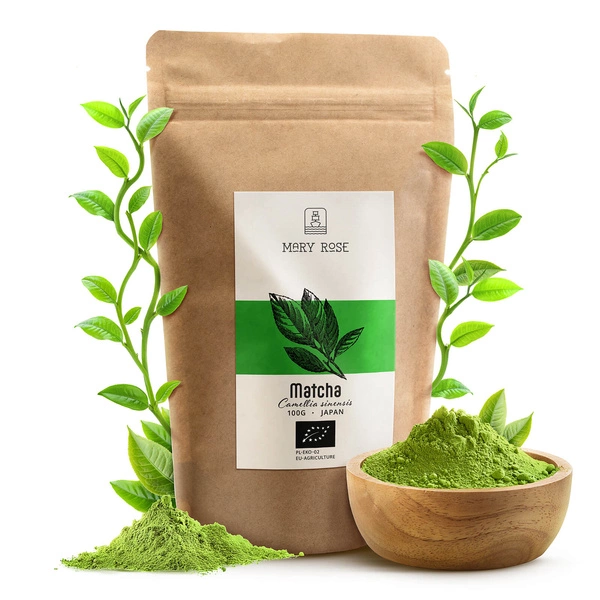
A versatile option positioned between culinary and ceremonial matcha in the informal classification often used for these products. Its milder profile and vivid colour make it suitable for preparing with water, milk or a plant-based drink.
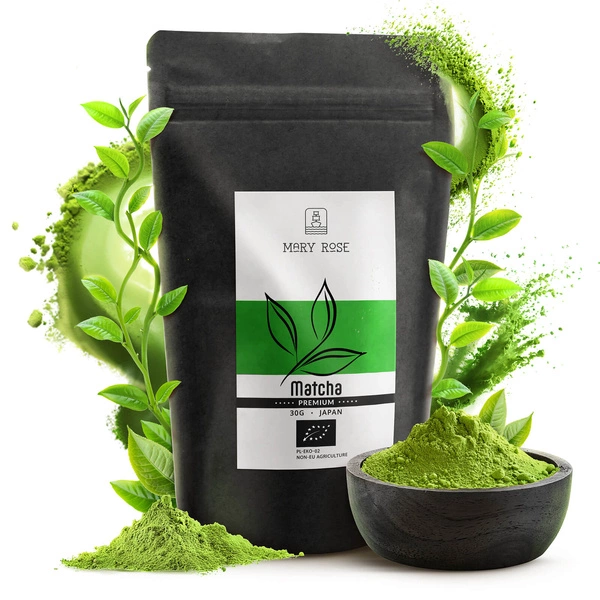
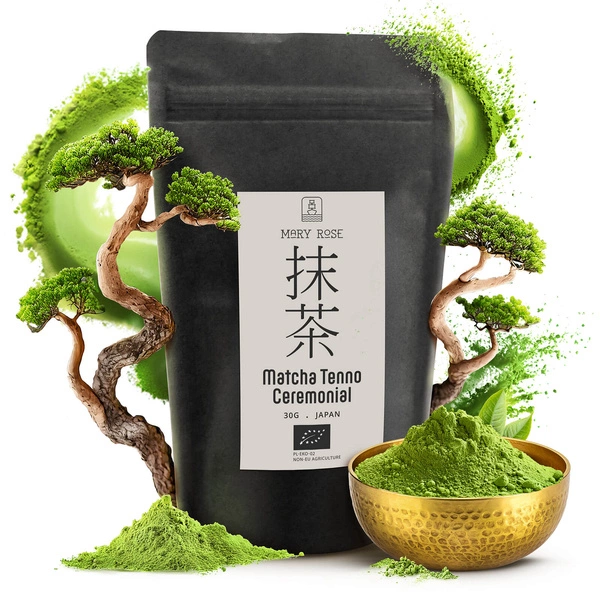
A ceremonial variety intended for traditional preparation with water and a bamboo whisk. It has a deep umami profile and a relatively delicate bitterness, making it suitable for those who enjoy drinking matcha on its own.
What does matcha taste like?
Flavour is another important factor when comparing matcha vs mate. Matcha is known for its rich, grassy and plant-like taste. In products intended for drinking with water, particularly premium and ceremonial varieties, you may notice a savoury umami character, sometimes described as the “fifth taste”. It gives the drink depth and complexity. When prepared correctly, matcha tea has a smooth, creamy consistency, while any bitterness is usually subtle rather than dominant.
How does matcha work?
Both yerba mate and matcha contain caffeine. However, the way people experience the stimulating effect of matcha tea may differ from that of other caffeinated drinks. This is partly related to the presence of L-theanine, an amino acid naturally found in tea leaves. The combination of caffeine and L-theanine may contribute to a distinctive feeling of alertness, although the experience varies from person to person and depends on the product, serving size and preparation method.
💡 Did you know? The combination of caffeine and L-theanine has been examined in a number of scientific studies. Research suggests that matcha may support attention and selected cognitive functions in particular conditions, although this should not be understood as a guaranteed effect. The balance of compounds in the tea leaves, serving size and individual sensitivity all influence the way the drink is experienced.
💬 Scientific sources:
- Y. Baba et al., Effects of Daily Matcha and Caffeine Intake on Mild Acute Psychological Stress-Related Cognitive Function in Middle-Aged and Older Adults: A Randomized Placebo-Controlled Study, Nutrients, 2021.
- K. Unno et al., Stress-Reducing Function of Matcha Green Tea in Animal Experiments and Clinical Trials, Nutrients, 2018.
Yerba mate vs matcha – the key differences
A comparison of yerba mate vs matcha shows that both drinks can be interesting alternatives to coffee, but they offer very different experiences. They differ not only in origin and flavour, but also in the way they are consumed and prepared, as well as in how the body may respond to their caffeine content.
There is no single answer to the question of which drink is better. Factors such as serving size, product type, water temperature, preparation method and individual sensitivity to caffeine all matter. For this reason, a comparison of matcha and yerba mate should be treated as a guide to choosing a drink that suits your preferences, rather than as a ranking.
Caffeine content and level of stimulation
Many people choose these drinks because they are looking for a natural source of energy. Both contain caffeine, although the amount in the finished drink can vary considerably. When considering matcha vs yerba mate in terms of strength, it is important to remember that the final caffeine concentration depends on several factors, including the type of product, serving size, water temperature and infusion time.
💡 Worth knowing: Caffeine content should not be compared solely by looking at the weight of the dry product. Yerba mate and matcha are prepared in different ways, so it is more useful to consider how much product is used for one serving and how much caffeine is released into the finished drink.
It is difficult to identify one clear leader in terms of stimulation, as both drinks contain caffeine and individual responses can vary significantly. If you would like to explore the subject of caffeine in more detail, read our article: Caffeine in yerba mate and coffee – why choose mate tea?
Effects on concentration and energy
The way these drinks are experienced may differ. Yerba mate provides caffeine, which may support alertness and concentration. Some people prefer to drink it gradually, using several infusions of the same portion, although this does not guarantee a stable energy level or prevent tiredness later on. Its suitability during study, desk work or physical activity depends on the individual and the amount consumed.
Matcha also contains caffeine, together with L-theanine, an amino acid naturally found in tea leaves. This combination may be associated with a distinctive feeling of alertness, but the experience varies from person to person. Matcha may therefore appeal to people looking for a focused beverage, although it should not be presented as a guaranteed way to improve concentration, creativity or relaxation.
Flavour, consistency and preparation
Another important aspect of a matcha green tea vs yerba mate comparison is the sensory profile and preparation ritual. The South American infusion has a light, liquid consistency and is filtered through a special straw. Its flavour may be pronounced, earthy, herbal and often astringent. A single portion of yerba mate can usually be infused several times with warm water, allowing the drink to be enjoyed gradually.
Matcha, by contrast, is a thicker, lightly creamy suspension in which finely ground tea leaves remain mixed with the water. Its flavour is typically grassy and plant-like, with umami notes in some higher-grade products. Matcha tea is generally prepared as a single, relatively small serving by whisking the powder in a wide bowl with a bamboo whisk, after which it is usually consumed shortly after preparation.
🧉🍵 Yerba mate and matcha – a comparison of key features
| Feature | Yerba mate | Matcha |
|---|---|---|
| Product form | Dried leaves and stems of the yerba mate plant | Finely ground powder made from tea leaves |
| Flavour | Herbal, intense, astringent and sometimes smoky | Grassy, plant-like and creamy, often with umami notes |
| Consistency | A liquid infusion filtered through a bombilla | A suspension of finely ground tea leaves in water |
| Preparation | Infusing the leaves in a mate gourd; several infusions are possible | Whisking the powder with water, usually as a single serving |
| Basic accessories | Mate cup and bombilla | Matcha bowl and chasen whisk |
Matcha or yerba mate – which should you choose?
The choice between matcha and yerba mate depends entirely on your lifestyle and individual preferences. Both drinks have their own distinctive qualities, but they suit slightly different situations. When deciding between them, consider the flavour profile you prefer, the type of stimulation you are looking for, and how much time you can dedicate to preparing and drinking your beverage.
When is yerba mate the better choice?
Yerba mate may appeal to people who enjoy pronounced, herbal and naturally astringent flavours. Depending on the product, the infusion may also reveal smoky, roasted, earthy or greener plant-like notes. The wide variety of yerba mate available makes it easier to choose a product suited to your preferences, from milder air-dried varieties to more intense yerba mate made using the barbacuá method.
Yerba mate may be a good choice if you enjoy a more involved preparation ritual and want to drink the same beverage over a longer period. Preparing yerba mate in a mate gourd and drinking it through a bombilla creates a ritual that can be spread out over time. The same portion of leaves can be infused several times, making it a practical option for extended periods of work, study or travel.
Yerba mate may be right for you if:
- ✔️ you enjoy intense, herbal and dry flavour profiles;
- ✔️ you want to infuse the same portion of leaves several times;
- ✔️ you appreciate a longer drinking ritual;
- ✔️ you already have, or would like to use, a mate gourd and bombilla;
- ✔️ you prefer a liquid drink filtered as you consume it.
It is worth remembering that preparing yerba mate usually requires more space and accessories than simply adding water to a product in a mug. For some people, this is an additional step; for others, it is an important part of the overall experience.
When is matcha worth choosing?
Matcha may appeal to people looking for a more concentrated, smooth and creamy drink with a plant-like flavour and umami notes. It can be a practical option when you prefer a relatively short morning ritual: prepare one serving, whisk it and drink it shortly afterwards. Matcha powder is also highly versatile. It can be enjoyed with warm water or used as the base for drinks such as matcha latte, served hot or chilled with ice, as well as added to fruit smoothies.
Matcha may be right for you if:
- ✔️ you prefer a concentrated, plant-like and creamy drink;
- ✔️ you are looking for a product with distinctive umami notes;
- ✔️ you want to prepare a single serving without infusing the leaves repeatedly;
- ✔️ you plan to use matcha for matcha latte, chilled drinks or desserts;
- ✔️ you are comfortable preparing the drink in a bowl with a chasen whisk or milk frother.
📌 Summary:
- Choose yerba mate if you enjoy pronounced herbal flavours, a longer drinking ritual and the option to infuse the same portion several times.
- Choose matcha if you prefer a single serving, a creamy consistency and the flexibility to prepare drinks with milk or plant-based alternatives.
Caffeine content is another factor to consider. Both yerba mate and matcha may support alertness, but the amount of caffeine depends on the product, serving size and preparation method. If you are particularly sensitive to caffeine, start with a small serving and observe how your body responds.
You do not have to limit yourself to one drink. Yerba mate may suit a longer drinking ritual, while matcha can be a convenient choice when you want to prepare a single serving or enjoy a matcha latte. Trying different products allows you to compare their flavour, consistency and preparation methods, helping you choose the option that best fits your lifestyle. This is also the most practical way to approach a matcha vs yerba mate comparison.
Matcha and yerba mate – a quick comparison
To sum up the question of which option may suit you better – matcha and yerba mate – both drinks can be appealing choices for people looking for a natural beverage to include in their daily routine. They can serve as alternatives to traditional coffee and provide caffeine alongside a range of naturally occurring plant compounds.
The final choice depends on your personal preferences and daily schedule. If you enjoy a longer preparation ritual and pronounced, herbal flavours, yerba mate may be a good option. If you prefer quick preparation, a creamy consistency and umami notes, matcha may be more suitable. Neither drink guarantees a particular pattern of stimulation or concentration, as individual responses to caffeine vary.
There is also no need to choose only one of them. Many people enjoy a quick serving of matcha tea in the morning and prepare yerba mate later while working or studying. At MateMundo, you can explore a wide selection of products from both categories and compare their flavours, preparation methods and distinctive characteristics for yourself.
Choose the drink that best suits your taste, daily routine and preferred way of preparing it.
❓ FAQ: yerba mate and matcha – frequently asked questions
1. Which provides a stronger stimulating effect: yerba mate or matcha?
2. Which contains more caffeine: yerba mate or matcha?
3. Which should you choose for studying or work: yerba mate or matcha?
4. Is matcha healthier than yerba mate?
5. Which is easier to prepare: matcha or yerba mate?
6. What should you choose instead of coffee: yerba mate or matcha?
7. Can you drink yerba mate and matcha on the same day?
Sources of information:
- L. Bravo et al., Yerba Mate (Ilex paraguariensis St. Hill.) Tea May Have Cardiometabolic Beneficial Effects in Healthy and At-Risk Subjects: A Randomized, Controlled, Blind, Crossover Trial in Nonhabitual Consumers, Molecular Nutrition & Food Research, 2025.
- T. Koláčková et al., The Effect of In Vitro Digestion on Matcha Tea (Camellia sinensis) Active Components and Antioxidant Activity, Antioxidants, 2022.
- E. Rząsa-Duran et al., Yerba Mate as a Source of Elements and Bioactive Compounds with Antioxidant Activity, Antioxidants, 2022.
- Y. Baba et al., Effects of Daily Matcha and Caffeine Intake on Mild Acute Psychological Stress-Related Cognitive Function in Middle-Aged and Older Adults: A Randomized Placebo-Controlled Study, Nutrients, 2021.
- K. Unno et al., Stress-Reducing Function of Matcha Green Tea in Animal Experiments and Clinical Trials, Nutrients, 2018.
Recommended

Yerba Mate BEST FOR START 10x50g FRUIT ONLY

Matcha tea brewing gift set

Yerba Mate Gift Set 10x50g 500g Calabash + Bombilla
