
Brazilian yerba mate – all you need to know about yerba from Brazil
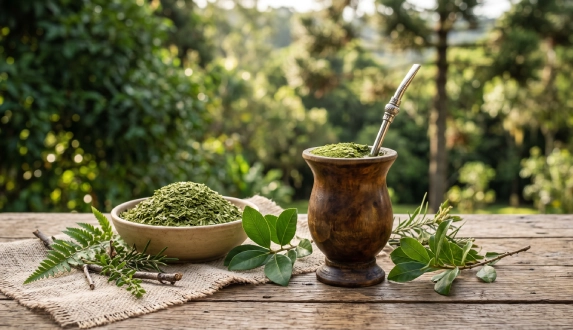
Brazil is a region associated with remarkable biodiversity, lush nature and sunshine. For lovers of natural infusions, however, it is above all the home of a distinctive, vividly green dried leaf. Brazilian yerba mate stands out clearly from the classic products of Argentina or Paraguay, thanks to its form and its mildness. It is not only a refreshing drink, but a true reflection of the richness of the local ecosystems. If you have so far associated yerba mate only with intense bitterness and a heavy, smoky aroma, this one may change how you see the subject.
The differences are noticeable at every stage: from the way the plant is grown in the shade of tall trees, through the rapid processing of the leaves without a long ageing period, to the look, aroma and distinctive way of preparing it. Brazilian producers have developed methods that keep the plant as fresh as possible. This translates directly into a smooth, grassy profile, making Brazilian yerba mate an excellent choice both for people taking their first steps with yerba mate and for experienced connoisseurs looking for a crisp, refreshing taste.
In this post we take you to the southern states of this vast country, where the culture of drinking mate is part of everyday life. We discuss the origin of the raw material, its characteristic flavour and the deeply rooted local traditions. Get your favourite mate gourd ready and learn how to prepare a Brazilian infusion properly, so you can fully understand why it has won such wide recognition around the world.
Contents:
- Yerba mate from Brazil
- What characterises Brazilian yerba mate?
- Green yerba mate – what does it mean?
- Chimarrão – traditional Brazilian yerba mate
- What does Brazilian yerba mate taste like?
- Brazilian yerba mate vs yerba mate from Argentina and Paraguay
- The most common mistakes when preparing Brazilian yerba mate
- How to choose good Brazilian yerba mate?
- FAQ – frequently asked questions about Brazilian yerba mate
Yerba mate from Brazil
When we start exploring the world of yerba mate (Ilex paraguariensis), we quickly notice that every country has its own distinctive style of processing it. Brazil is one of the largest and most important producers of this raw material in the world. Its plantations supply the market with thousands of tonnes of dried leaf a year, meeting both huge domestic demand and growing interest on other continents. If you would like to dive straight into this fresh, grassy world, we recommend the category “Yerba mate from Brazil” in our online shop. You will find a carefully selected range that captures the true spirit of the plant.
What defines products from this region most is an uncompromising focus on keeping the leaves as fresh as possible. Unlike many products from neighbouring countries, Brazilian yerba mate is usually not aged for many months or intensively smoked over open fires. As a result, what reaches your gourd is a product with a vivid colour and a mild, herbal character.
It is worth stating at the outset that Brazil is known for two main, very different types of dried leaf. On one side there is very finely ground chimarrão, deeply rooted in local traditions; on the other, coarsely cut green yerba mate, which has won wide recognition around the world thanks to its crisp profile. We devote separate, detailed sections to both types later in this post.
Yerba mate from Brazil – origin and significance
The custom of preparing infusions from yerba mate in what is now Brazil goes back hundreds of years, to pre-Columbian times, when the Indigenous inhabitants – the Guarani people – discovered the stimulating and nourishing properties of these remarkable leaves. For the local tribes it was not only a way to gain energy before the demands of daily life, but also an important ritual element.
Over the years, Brazilian mate tea became part of the local culture and turned into something more than a drink. In the south of the country, especially among the gauchos (South American herders), drinking the infusion is the foundation of social life. It is traditionally shared among family or friends, who pass around a single vessel. This ritual of drinking together, most often in the form of a very finely ground infusion known as chimarrão yerba mate, is still a symbol of hospitality, unity and building bonds between people.
💡 Fun fact: In the state of Rio Grande do Sul in Brazil, the culture of drinking chimarrão is so strong that it even has its own official holiday! Chimarrão Day is celebrated there on 24 April, which only confirms the great importance of this infusion in local tradition.
Where is Brazilian yerba mate grown?
The vast majority of yerba mate plantations in Brazil are concentrated in the south of the country. It is there that the climate – suitable air humidity and moderate temperatures – and the specific, mineral-rich soils create an ideal environment for the plant to grow.
💡 Fun fact: yerba mate or coffee?
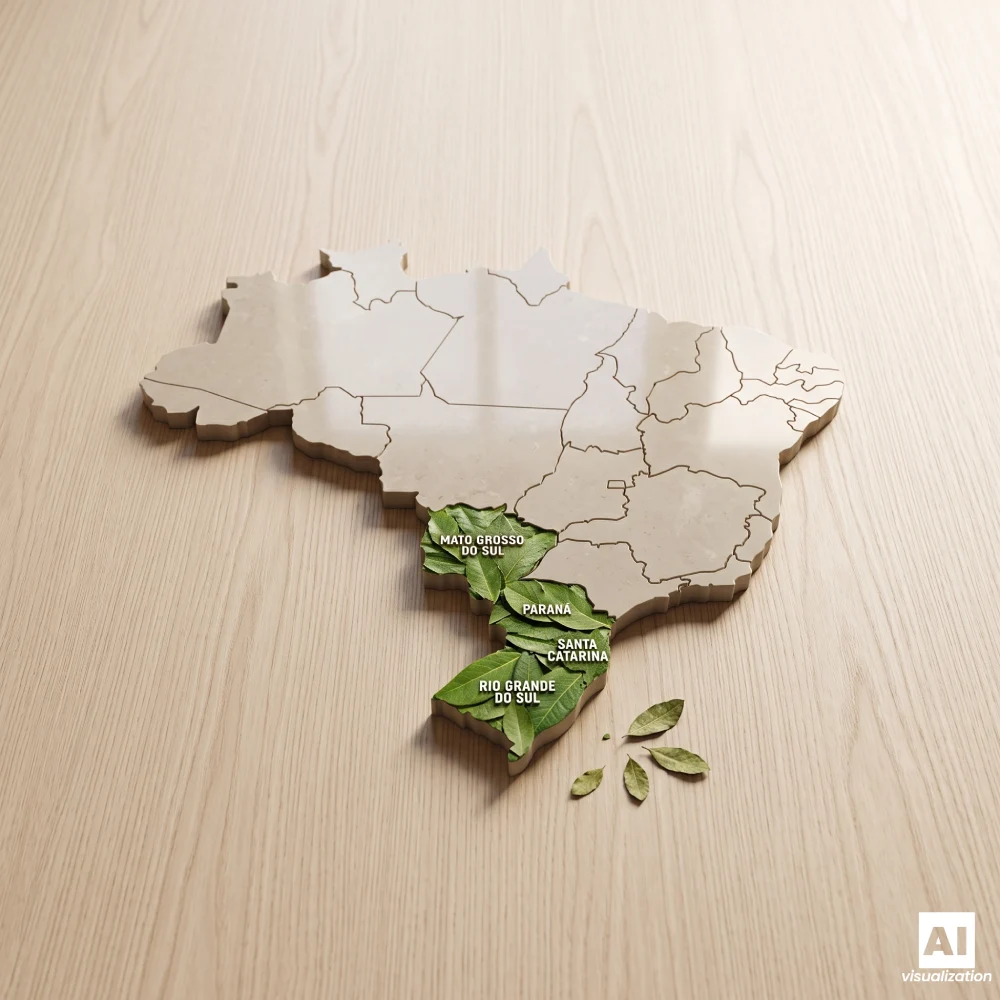
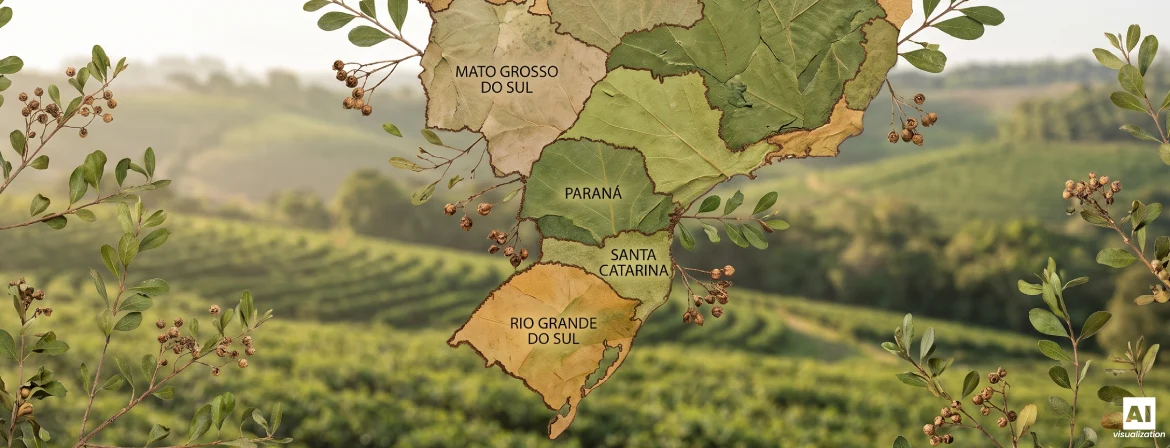
Although Brazilian yerba mate is appreciated around the world, in Brazil itself it is by no means the national drink. A large part of this huge country is firmly coffee territory, and most people there start their day with coffee! The culture of drinking yerba mate is concentrated mainly in the south. On the infographic next to this text we have marked the states that form the real yerba mate heartland of Brazil:
- ✔️ Paraná – a region offering excellent conditions for forest cultivation, often carried out in the shade of tall araucaria trees.
- ✔️ Santa Catarina – an area with a very favourable microclimate, supporting the organic and sustainable growth of the plants.
- ✔️ Rio Grande do Sul – the cultural centre of mate drinking in Brazil, home to a large number of historic plantations, where chimarrão is drunk almost everywhere.
- ✔️ Mato Grosso do Sul – a warm region bordering Paraguay, where, because of the higher temperatures, the refreshing, ice-cold tereré is the favourite above all.
Importantly, the unique chemical composition of the soil in these selected regions directly affects the physicochemical parameters of the plant. It is the terroir that gives yerba mate from Brazil such a mild profile.
Scientific research carried out by the research team of M. C. Marcelo in 2014 confirmed that dried leaf from southern Brazil differs significantly in chemical terms from that from Argentina or Paraguay. These differences result directly from the unique mineral profile of the local soil. By precisely analysing the concentrations of elements such as magnesium, manganese and copper, scientists are able to identify the country of origin of the leaves in laboratory conditions without error. These minerals not only nourish the plant, but also largely shape the final, delicate taste of the infusion.
💬 Scientific source: M. C. Marcelo et al., Classification of yerba mate (Ilex paraguariensis) according to the country of origin based on element concentrations, Microchemical Journal, 2014.
What does Brazilian yerba mate look like?
The look of Brazilian dried leaf can come as a real surprise to someone who has so far only dealt with classic Argentinian or Paraguayan products. Brazilian mate tea looks completely different, which results directly from a different production philosophy.
🌿 Main visual differences
- Intense colour: thanks to the very short time between harvest and drying (often using only hot air) and the absence of ageing, the leaves retain a high content of natural chlorophyll. The result is a beautiful, bright green colour.
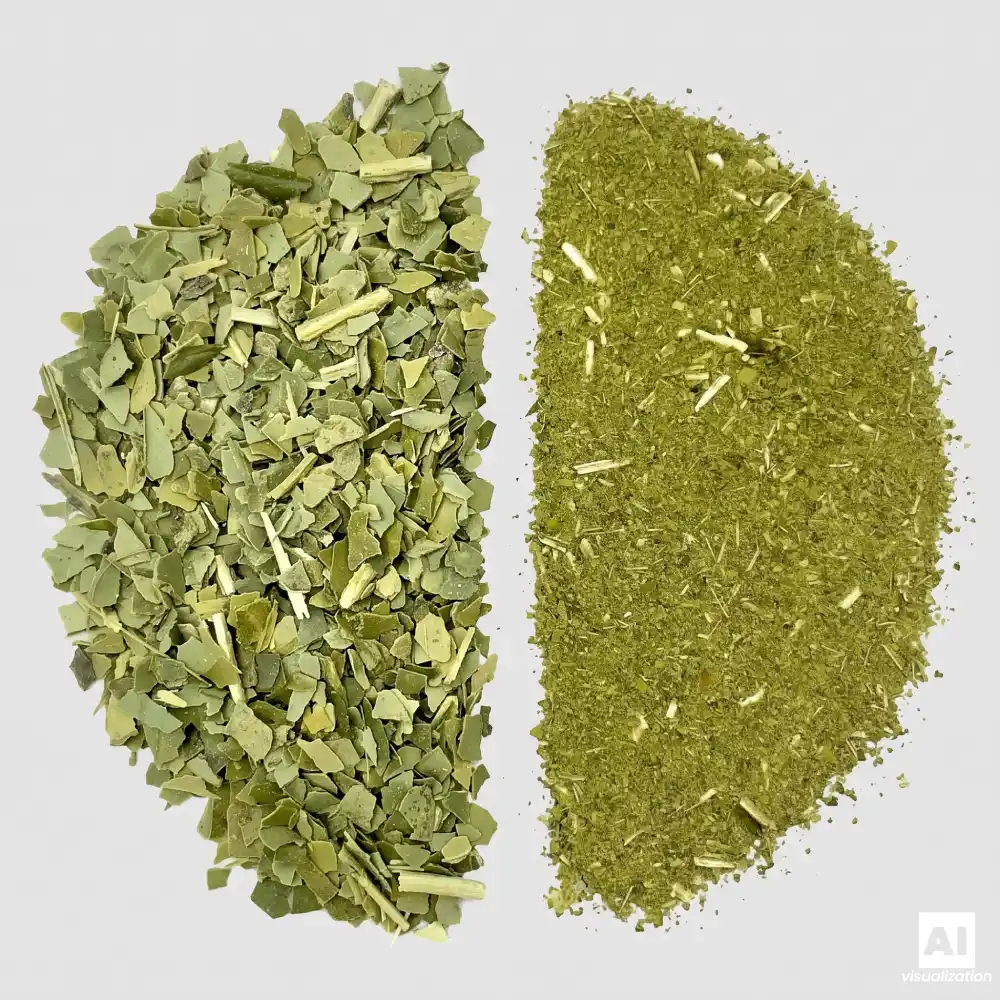
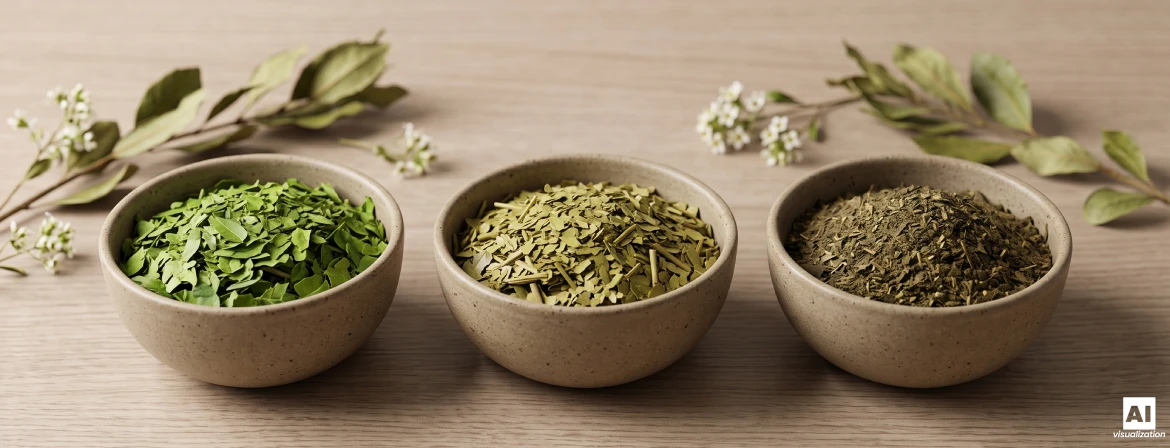
- Structure and fineness: while Argentinian blends consist of medium or coarsely cut leaves with added stems, classic Brazilian chimarrão is ground almost to a smooth powder. Visually, it resembles very fine flour or matcha, the popular green tea.
The image next to this text shows the difference between the structure of green yerba mate and chimarrão.
This particular fineness and vivid colour are the calling card of Brazil among lovers of infusions. They provide not only a pleasing look when preparing a portion, but also call for suitable accessories – above all special filtering straws (bombillas) with a flat, wide and dense strainer, known as a bomba, which can cope with such a large amount of fine dust.
What characterises Brazilian yerba mate?
If we had to describe dried leaf from Brazil in just a few words, they would be: absolute freshness, a vibrant green colour and a plant-like mildness. Brazilian yerba mate is the complete opposite of the heavy, smoky and strongly bitter infusions from neighbouring countries. These unique qualities are not accidental. They result directly from a different philosophy of processing the leaves – above all from drastically shortening, or entirely skipping, the many-month ageing process, which preserves the plant's natural vigour and crispness.
Intense green colour of the dried leaf
The first thing you notice after opening the doypack is the juicy, almost neon colour. Intensely green yerba mate owes its look to rapid heat treatment. Straight after harvest, the leaves are exposed to a short burst of high temperature. This process stops natural oxidation and prevents the loss of chlorophyll. Because Brazilian dried leaf is usually not then sent to warehouses for long maturation, it keeps its original, vivid shade, which catches the eye and promises remarkable freshness in the flavour.
Skipping the ageing stage affects not only the colour, but also the chemical composition hidden in the leaves, which is confirmed by modern laboratory analyses.
💡 Good to know: Research published in 2022 showed that Brazilian yerba mate has the highest antioxidant activity among the dried leaf from Argentina, Paraguay and Brazil available on the market. This is because fresh, unaged leaves retain very high concentrations of valuable organic compounds (including polyphenols). These antioxidants may support the body's natural protection of cells against the harmful effects of oxidative stress.
💬 Scientific source: E. Rząsa-Duran et al., Yerba Mate as a Source of Elements and Bioactive Compounds with Antioxidant Activity, Antioxidants, 2022.
Fine grinding and more dust
Another distinguishing feature is the structure. Traditional South American chimarrão yerba mate looks like very fine, almost fluffy flour. It consists of bright green dried leaf ground to a dust, with larger pieces of stem sometimes added. These coarser pieces are not there by accident – in the gourd they act as a kind of framework that loosens the dense structure and helps the water flow.
This dusty consistency has a major effect on how the infusion behaves. The dust releases flavour slowly and very evenly, which allows the same portion of dried leaf to be infused many times without a sudden loss of aroma. It is worth remembering, however, that this structure calls for suitable accessories. A classic filtering straw would quickly become blocked, so drinking finely ground Brazilian yerba mate requires a so-called bomba – a special bombilla fitted with a wide, flat filter with very fine holes.
Fresh, plant-like and grassy flavour profile
For many lovers of infusions, the unique taste is the greatest asset of dried leaf from this region. Thanks to short processing and skipping the smoking over open fires, Brazilian mate tea offers an exceptionally mild, herbal and distinctly grassy profile, which often brings to mind high-quality green tea. The classic, smoky bitterness is reduced to an absolute minimum. Instead, fresh plant-like notes develop on the palate, and depending on the specific product you can even detect delicately creamy or subtly sweet touches.
This mild, crisp character makes the infusion exceptionally approachable and free of aggressive astringency. For this reason it is an excellent starting point for people taking their first steps with yerba mate, and a great alternative for experienced connoisseurs looking for harmony and refreshment.
📌 Summary of the main features:
- Intense colour: bright, juicy green, the result of rapid drying, halted oxidation and the absence of many months of ageing of the leaves.
- Distinctive structure: traditional dried leaf is a very finely ground dust with added stems, requiring a special, dense bombilla (bomba).
- Mild profile: the taste is characterised by grassy freshness, plant-like notes and an almost complete absence of heavy, smoky bitterness.
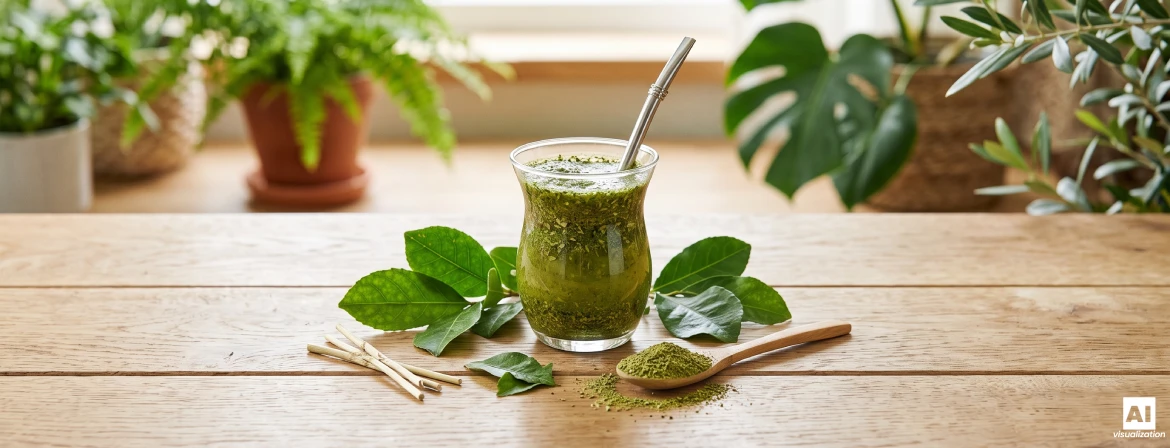
Green yerba mate – what does it mean?
Many beginners browsing shop listings come across the popular term green mate, that is “green yerba mate”. What does it actually mean? Contrary to appearances, it is not a separate botanical species of the plant, but a product category defined by a specific way of processing the leaves. It means we are dealing with dried leaf that has not been aged, and which has kept its original, vivid colour and maximum freshness. If you are looking for crisp, mild flavours, the “Green yerba mate” category in our shop is sure to appeal to you.
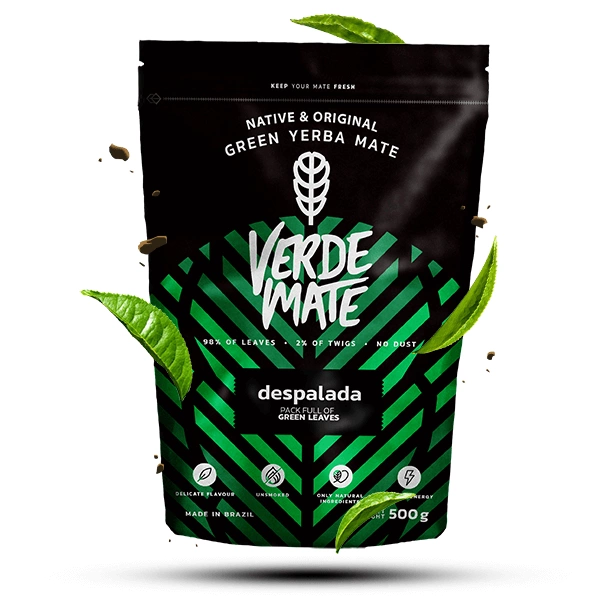
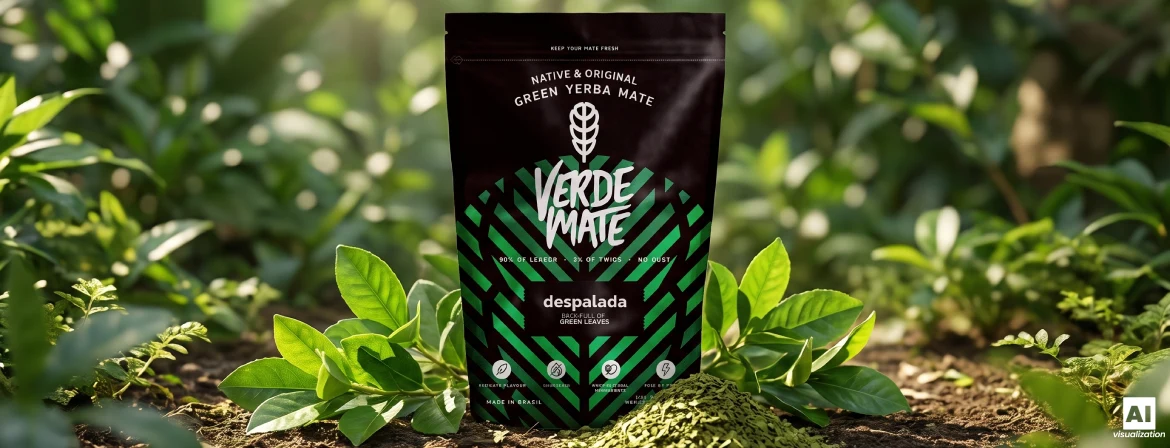
Brazil is the undisputed leader in producing this type of dried leaf. An excellent example that captures the true spirit of this philosophy is the flagship brand Verde Mate Green. It comes from wild, forest plantations in the Brazilian state of Paraná. Thanks to drying with hot air only, it offers an exceptionally smooth and approachable taste. Below we present three very popular products from this range:
A classic, 100% natural green yerba mate with no additives. It consists solely of coarsely cut leaves, free of stems. An excellent base for getting to know the true, grassy taste of Brazilian dried leaf.
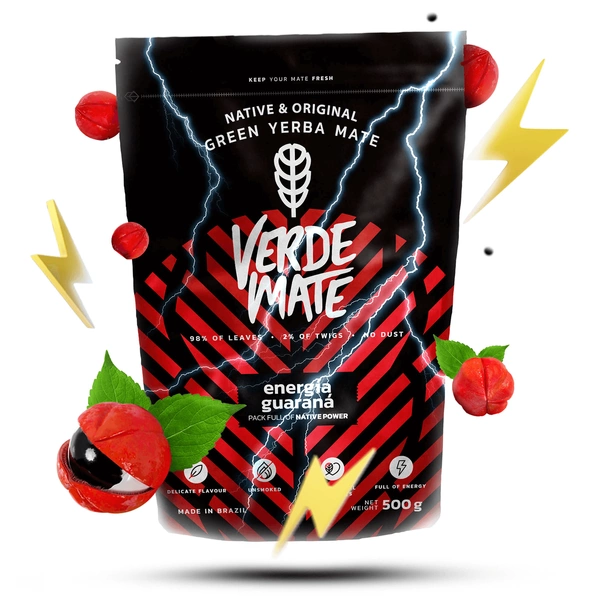
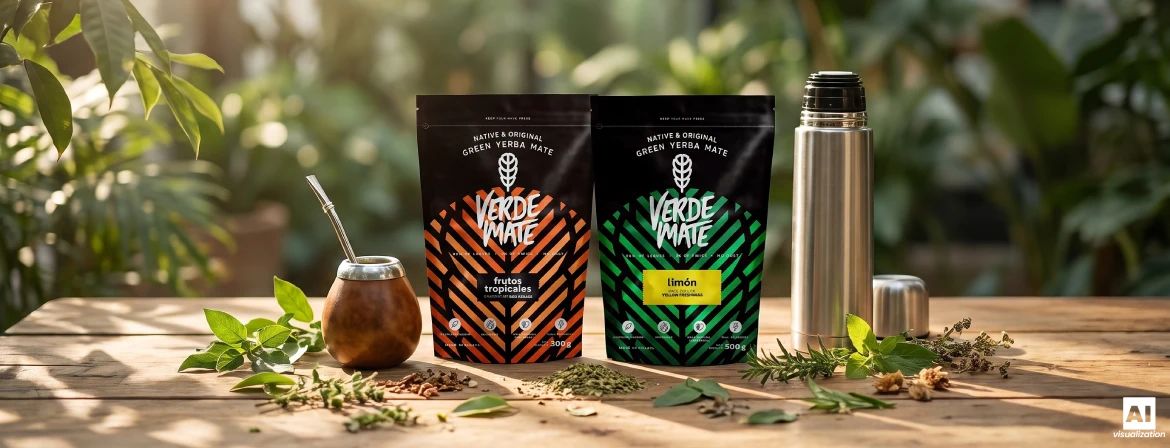
A more strongly energising blend. A combination of a green yerba mate base, stimulating guarana, goji berries and marigold petals. The whole is rounded off with natural orange and raspberry flavourings.
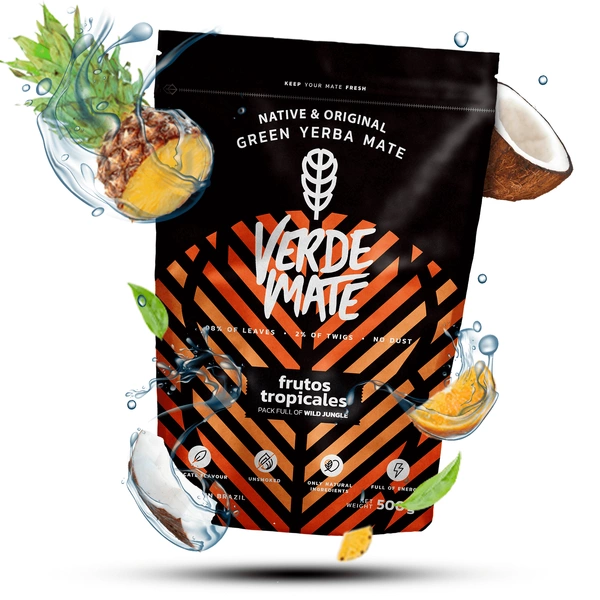
An exceptionally rich, exotic blend. It contains yerba mate with goji berries, candied pineapple and pomelo, orange peel and coconut chips, enriched with natural tropical fruit flavourings.
Why does Brazilian yerba mate have such an intense green colour?
The secret of the vibrant colour that is the hallmark of products from Brazil lies in a specific and very short processing cycle. As soon as the leaves are harvested from the plants, they must go straight to the drying house. With classic Brazilian yerba mate, the smoking over open fire is skipped. Instead, the plant is exposed to clean, hot air (the sin humo method, meaning without smoke).
Such rapid heating of the leaves instantly deactivates the enzymes responsible for oxidation. It works very much like the production of green tea – halting oxidation preserves large amounts of natural chlorophyll in the structure of the plant. It is chlorophyll that gives the intense green that looks so good in the gourd. This colour is characteristic of both coarsely cut green yerba mate and traditional, dusty chimarrão.
How does green yerba mate differ from aged dried leaf?
The differences between fresh yerba mate from Brazil and dried leaf from Argentina or Paraguay are huge and noticeable on many levels. Ageing, that is storing the leaves in special warehouses for anywhere from around a dozen to several dozen months, is a process that completely changes the character of the plant. Its colour changes, some of the natural freshness fades, and in return a deep, often astringent bitterness appears. The summary below shows these two worlds side by side:
🌿 Comparison: green yerba mate and classic aged dried leaf
| Feature | Green yerba mate (not aged) | Traditional aged dried leaf |
|---|---|---|
| Leaf colour |
Bright, juicy green (high chlorophyll content). | Faded green, tending towards yellow, beige or khaki. |
| Drying method | Most often hot air only (no smoke). | Often with fire and smoke, which gives a distinctive aroma. |
| Flavour profile | Crisp, plant-like, grassy, very mild. | Deep, astringent, often with distinct woody and smoky notes. |
| Bitterness intensity | Very low or completely absent. | From moderate to very high. |
Chimarrão – traditional Brazilian yerba mate
While coarsely cut green leaves are growing in popularity worldwide, the real heart of southern Brazil's mate culture is chimarrão. It is not just the name of a specially processed dried leaf, but a whole, deeply rooted cultural ritual. For people living in the southern states, such as Rio Grande do Sul, Paraná or Santa Catarina, drinking this infusion together is the foundation of social life and a symbol of hospitality and of building relationships.
What sets chimarrão yerba mate apart from other products most is its almost unmatched structure. Instead of visible leaves, when you open the doypack you will find bright green, extremely fine dust, which visually resembles premium Japanese matcha tea. Larger pieces of stem may also be hidden in this dense, fluffy mass. As we mentioned, they are there for a reason – they perform the important function of a kind of “framework” that stops the dust from compacting completely and allows the water to flow freely.
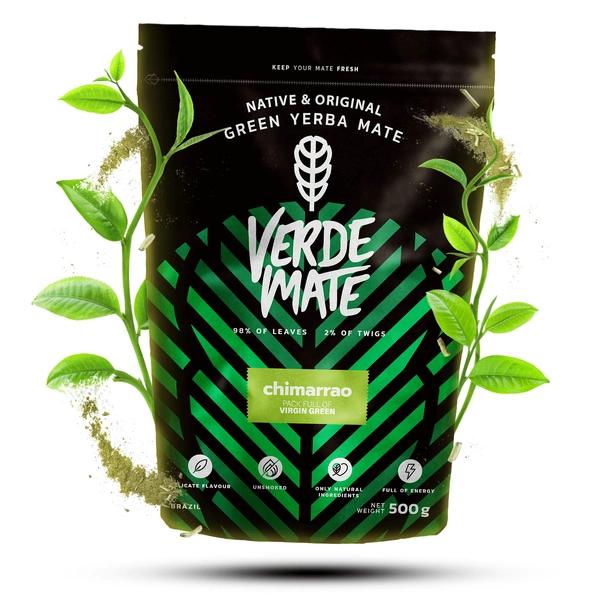
🧉 Verde Mate Green Chimarrão
An excellent example of this unique style is Verde Mate Green Chimarrão. It is a 100% natural yerba mate with no flavour additives, ground to a very fine, dusty flour with a small amount of stems added. Its fresh, grassy aroma and juicy green colour make it an ideal choice for anyone who wants to get to know an authentic southern Brazilian classic in its purest form.
Preparing an infusion from such fine dried leaf is a real art that calls for two key accessories. The first is the cuia – a characteristic vessel made from a natural gourd, with a very wide rim and thick walls. The second, absolutely essential element is the bomba. It is a special filtering straw, often longer and sturdier than a classic bombilla, ending in a large, round, flat strainer with thousands of microscopic holes. Only it can effectively separate the infusion from the thick dust.
The brewing itself requires correctly forming a suitable “mound” against one wall of the vessel. Pouring in water too hastily or using the wrong straw will almost immediately end in a blocked filter. If you would like to learn the finer points of this process and a proven way to brew the dust without problems, be sure to read our extensive guide: Chimarrão. The Brazilian secret of the perfect yerba mate.
💡 Fun fact: why is the dust so important? The Brazilian tradition of grinding the leaves into a fine powder has very interesting chemical properties. Research has shown that the particle size in chimarrão directly affects the release of valuable polyphenols. Surprisingly, traditional dusty dried leaf behaves quite differently from the coarsely cut kind – it releases compounds so steadily that the water temperature (in the range studied, 65-95°C) has no effect on the amount of antioxidants extracted! Although it releases slightly fewer of them in total than coarse leaves, this very stability means that a chimarrão infusion does not suddenly lose its health-supporting properties, however warm the water you use at a given moment.
💬 Scientific source: T. F. F. da Silveira et al., Impact of water temperature of chimarrão on phenolic compounds extraction, Food Science and Technology, 2020.
What does Brazilian yerba mate taste like?
For many people trying products from this region for the first time, Brazilian yerba mate is a big, very pleasant surprise. It is known for an exceptionally approachable and mild profile, which is far from the stereotypical image of an astringent yerba mate infusion. Fresh, plant-like and distinctly grassy notes dominate. A delicate herbal quality is very clear, while the classic bitterness is reduced to a pleasant, barely noticeable background. In contrast to heavy, earthy and smoky dried leaf, Brazilian leaves offer a lightness that often resembles the taste of top-quality green tea.
It is worth stressing that the final sensory profile depends strongly on the specific type of dried leaf. While classic, coarsely cut green yerba mate offers an exceptionally clear and refreshing taste, traditional chimarrão delivers far more complex impressions. Thanks to its dusty consistency, it makes a thick and hearty infusion in which a practised palate can easily detect subtly sweet, and even smooth, creamy touches. Whichever type you choose, with each successive infusion the dried leaf releases its aroma very evenly, so the flavour stays stable and pleasant for a long time.
Of course, the final impressions you experience when tasting are not uniform. Several very important variables affect how a prepared portion finally tastes, and every lover of infusions should keep them in mind.
🧉 What does the flavour of a Brazilian infusion depend on?
- ✔️ Type of dried leaf: coarsely cut Brazilian yerba mate gives a light, very crisp taste, while dusty blends deliver a thicker, creamier experience with a noticeable, natural sweetness.
- ✔️ Freshness of the product: because dried leaf from Brazil is not aged, its greatest asset is natural freshness. The shorter the time from harvest to brewing, the more pronounced its plant-like aromas will be.
- ✔️ Water temperature: this is an absolutely key factor! Water that is too hot will draw unwanted astringency out of the leaves and spoil their delicacy. Using water at 70-75°C will bring out the subtle, natural mildness.
- ✔️ Brewing method: shaping the dried leaf properly against the wall of the vessel means the flavour is released very slowly and harmoniously, letting you enjoy a balanced infusion for many refills.
Brazilian yerba mate vs yerba mate from Argentina and Paraguay
To fully understand the unique character of dried leaf from Brazil, it is best to compare it with products from the two other key countries on the South American yerba mate map. These are, of course, Argentina and Paraguay. Each of these countries has developed, over centuries, its own completely distinct philosophy of harvesting, processing and preparing the infusion. While Brazilian yerba mate focuses on maximum freshness, its neighbours choose processes that completely change the structure and taste of the plant.
⚖️ Comparison: Brazil vs Argentina vs Paraguay
| Country | Brazil | Argentina | Paraguay |
|---|---|---|---|
| Appearance and structure |
Bright green; as a very fine dust (chimarrão) or as coarse leaves without dust. | Faded green; coarsely cut leaves with a moderate amount of dust and stems. | Yellow-green; finely cut leaves with a considerable amount of dust and stems. |
| Flavour profile | Very mild, fresh, plant-like and grassy, almost no bitterness. | Balanced, classic, with a moderate, pleasant bitterness. | Very intense, smoky, with a deep and strong bitterness. |
| Traditional infusion | Hot chimarrão drunk from a wide gourd (cuia) with a filtering bomba. | A classic hot infusion drunk from a natural gourd or a ceramic vessel. | Ice-cold tereré with added herbs, served in a vessel made from horn (guampa). |
As the comparison above shows, the differences are fundamental. If we compare Brazilian dried leaf with products from Argentina, we notice that Brazil's southern neighbour focuses on balance and harmony of flavour. Traditional yerba mate from Argentina is aged for a long time, which gives it its classic bitterness and moderate strength. It is an excellent choice for people looking for the perfect balance between intensity and mildness.
Quite different impressions come from yerba mate from Paraguay. Plantations there focus on producing dried leaf with an extremely strong, smoky character. Paraguayans process the plant over open fire and then age the leaves for a long time. The result is a product with a very high dust content, which works superbly in the form of the ice-cold infusion called tereré. On hot days it is water with ice that brings the best refreshment, whereas hot chimarrão is the most popular in the south of Brazil regardless of the temperature or the time of year.
📌 Summary:
Choosing the country of origin is the key to enjoying yerba mate. Choose sunny Brazil if you value mildness, a grassy taste and a beautiful, vivid colour. Reach for classic Argentina when you fancy a balanced bitterness without extremes. Turn to Paraguay if you need maximum, smoky stimulation or plan to prepare ice-cold tereré.
The most common mistakes when preparing Brazilian yerba mate
Preparing classic infusions from southern Brazil, especially those with a dusty structure, can be a challenge for beginners. Their specific consistency means that Brazilian yerba mate requires the right technique. However, it is enough to learn about and eliminate a few of the most common mistakes to enjoy a perfect taste, without excessive bitterness and without the frustration of a blocked straw.
- ❌ Pouring boiling water: this is the biggest and most common mistake! Water that is too hot instantly releases astringent, unpleasant notes from the leaves, masking their natural, grassy mildness. In addition, high temperature negatively affects valuable organic compounds. Always use water at about 70-75°C.
- ❌ Wrong placement of the dried leaf: tipping the dust into the vessel and pouring water over it flat is a guarantee of failure. Traditional chimarrão requires forming a solid mound against one wall of the gourd. This is the foundation that allows controlled release of flavour and gives the dried leaf room to swell, which protects the filter from blocking.
- ❌ Wrong accessories and a blocked bombilla: trying to drink dusty dried leaf through a classic spoon-shaped straw with large holes very quickly ends in the flow being blocked completely. Finely ground products need a large, round bomba with many microscopic holes, which effectively holds back the particles resembling flour.
- ❌ Stirring the infusion: the basic rule is that a filtering straw is not a teaspoon! Moving it after it has been firmly set at the bottom of the vessel instantly destroys the structure of the mound and pushes dust straight into the filter, blocking it completely.
- ❌ Incorrect storage: because green yerba mate and other Brazilian dried leaf are not smoked or aged for a long time, their greatest asset is natural freshness. Leaving an open doypack in a place exposed to light, oxygen and moisture will cause the leaves to fade quickly through oxidation and lose their crisp aroma. Always store the product in an airtight, dark container.
💡 Fun fact – boiling water ruins the properties of the infusion: The mistake of pouring water that is too hot over the dried leaf has direct chemical consequences. Research from 2024 showed that using boiling water (100°C) results in the release of significantly more tannins, which in excess are responsible for the unpleasant, drying astringency of the infusion. Preparing yerba mate at an optimal temperature of about 70°C, on the other hand, results in a higher content of beneficial polyphenols and stronger antioxidant activity. Keeping the water temperature lower is therefore the key to drawing out the healthiest compounds from the leaves, without the risk of losing their natural properties!
💬 Scientific source: K. Najman et al., Changes in the Physicochemical and Bioactive Properties of Yerba Mate Depending on the Brewing Conditions, Molecules, 2024.
How to choose good Brazilian yerba mate?
The decision to buy your first (or next) doypack of dried leaf from Brazil should be driven above all by your experience and personal taste preferences. Because the market offers a huge variety, we have prepared a set of universal tips to help you make the best possible decision and avoid disappointment when tasting.
- ✔️ Decide on the type of dried leaf: at the very start, decide whether you prefer coarsely cut green yerba mate or traditional, dusty chimarrão. The first option is excellent for beginners because it is very easy to brew. The second is the choice for lovers of thick, creamy infusions who are ready to learn a specific preparation technique.
- ✔️ Pay attention to fineness: read product descriptions carefully. If you choose a very finely ground dried leaf, make sure you have a suitable bombilla with a wide, dense filter. Otherwise, the tasting will end with a blocked straw.
- ✔️ Check for additives: think about what flavour profile you expect. Classic, 100% natural blends let you discover the authentic taste of yerba mate. Variants enriched with fruit, herbs or extra guarana, on the other hand, are a fantastic way to add variety and a great base for preparing a summery, ice-cold refreshment.
- ✔️ Make sure it is fresh: Brazilian yerba mate owes its appeal to a vivid green colour and a grassy aroma. Choose products from trusted producers, check that the doypack is tightly sealed, and after opening store the dried leaf in suitable conditions, away from light and moisture.
The Brazilian approach to processing yerba mate is the complete opposite of the smoky classic. It is a world full of juicy green, freshness and plant-like mildness, where you will hardly come across any astringent bitterness. Whether you opt for the distinctive chimarrão or the easy-to-brew green yerba mate, you get a drink with wonderful properties that will fit perfectly into your daily routine!
Ready to meet the greenest side of yerba mate? Choose your favourite flavour and start your adventure today!
❓ FAQ – frequently asked questions about Brazilian yerba mate
1. What is Brazilian yerba mate?
2. What is chimarrão?
3. Is Brazilian yerba mate strong?
4. What does green yerba mate mean?
5. What is the difference between chimarrão and tereré?
6. What does Brazilian yerba mate taste like?
7. Why does Brazilian yerba mate contain so much dust?
Sources:
- K. Najman et al., Changes in the Physicochemical and Bioactive Properties of Yerba Mate Depending on the Brewing Conditions, Molecules, 2024.
- E. Rząsa-Duran et al., Yerba Mate as a Source of Elements and Bioactive Compounds with Antioxidant Activity, Antioxidants, 2022.
- T. F. F. da Silveira et al., Impact of water temperature of chimarrão on phenolic compounds extraction, Food Science and Technology, 2020.
- M. C. Marcelo et al., Classification of yerba mate (Ilex paraguariensis) according to the country of origin based on element concentrations, Microchemical Journal, 2014.
Recommended

Verde Mate Green Limón 0.5kg

Verde Mate Green Tereré 0.5kg

Yerba Verde Mate Green Chimarrao 0,5kg
