
Cocoa – properties, types and uses. From cocoa beans to real cocoa
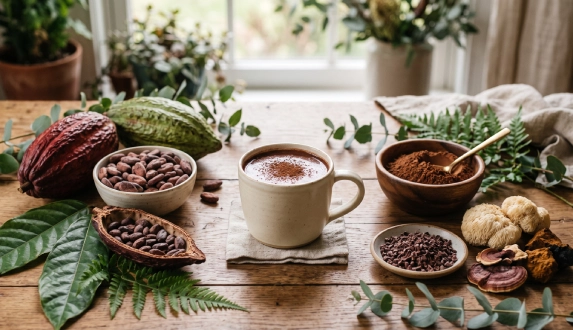
Real cocoa is far more than a sweet drink from childhood. It is a precious gift of nature, full of nutritional value and fascinating in its variety. For centuries it was treated as a sacred plant, and in ancient cultures cocoa seeds even served as currency and a symbol of prestige. Today this remarkable ingredient is returning to favour in its most natural form, delighting people who care about mindful eating all over the world. From the deep tropical forests of the Amazon to your favourite mug, cocoa beans go on a long and complex journey to fully release their potential.
In this article we take a closer look at what cocoa actually is, where it comes from and what valuable properties this raw material holds. Understanding the whole process of its creation – from taking the seeds out of the fruit to roasting them and grinding them into a fine powder – helps you appreciate its unique character. You will learn about the differences between the various forms of this remarkable gift of nature and discover how their degree of processing affects the final flavour, aroma and culinary possibilities.
You will find out, among other things, exactly how natural cocoa differs from alkalised cocoa, what you can do in everyday cooking with crunchy crushed cocoa beans, and why ceremonial cocoa is gaining such huge popularity around the world today. We also cover ready-made blends with added ingredients, including cocoa with mushroom extracts. Enjoy the read – we hope it will reawaken your love of real, chocolatey magic!
Table of contents:
- What is cocoa and where does it come from?
- Properties of cocoa and nutritional value
- Natural cocoa – characteristics and uses
- Alkalised cocoa – what does it mean?
- Cocoa beans and crushed cocoa beans
- Ceremonial cocoa – what makes it special?
- Cocoa blends with added ingredients
- How to choose the right cocoa?
- How to prepare drinking cocoa?
- Cocoa in the kitchen – the most popular uses
- How to store cocoa and cocoa products?
- Which cocoa to choose?
What is cocoa and where does it come from?
Cocoa is a product obtained from the seeds of a tree known as the cacao tree (Theobroma cacao) – a plant that originates from the humid, hot tropical forests of South and Central America. The ancient Maya and Aztec civilisations regarded the cacao tree as a sacred plant. They called it simply the “food of the gods”, and the seeds were used not only to prepare ceremonial drinks but also as a very valuable currency. If you are looking for high-quality ingredients that draw on this centuries-old tradition, take a look at our range of selected add-ins and healthy food, available in our shop.
Although the historical home of real cocoa is the Amazon basin, today cacao trees are grown mainly in the so-called cocoa belt – a zone around the equator with ideal climatic conditions. The largest producers today are the countries of West Africa, such as Ivory Coast and Ghana, although the exceptionally fine varieties prized by connoisseurs still very often come from plantations in Peru, Ecuador and the Dominican Republic.
It is worth adding that the cacao tree is an extremely demanding plant. To grow properly and produce abundant crops, it needs not only constant high temperatures and high air humidity but also shade. For this reason, on plantations it is often planted right next to taller trees, such as palms or banana plants, which act as a natural parasol and protect the delicate leaves of the cacao tree from harsh sun.
Cocoa beans – the start of cocoa's journey
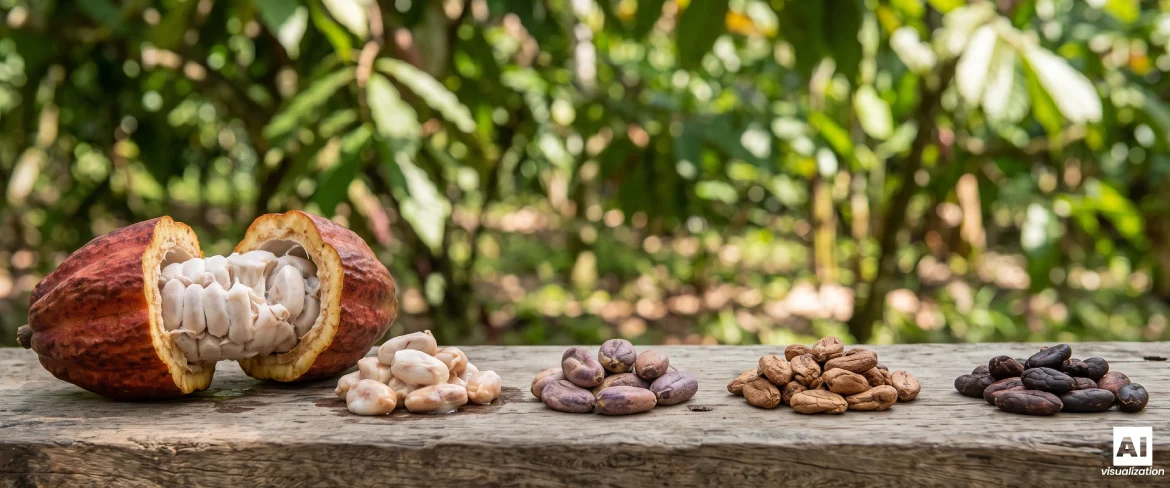
Before the raw material takes the form of a brown powder, everything begins with the fruits of the cacao tree. They are elongated and oval, a little like a rugby ball. As it ripens, the thick husk changes colour from green to bright yellow, orange and sometimes even purple. Inside each fruit is a sweetish, pale pulp in which the cocoa beans are densely packed. A single pod usually contains 30 to 50 of them.
Interestingly, the pale pulp surrounding the seeds is very tasty and refreshing, and in cocoa-producing countries it is often used locally to make juices or drinks. This is a huge contrast with the seeds themselves. In its raw, unprocessed form, each individual cocoa bean holds the full flavour on which the whole chocolate industry is built. It should be stressed, however, that in this raw form the cocoa bean is hard, very astringent, highly bitter and lacks the aroma we commonly associate with chocolate. Only long, multi-stage processing means that cocoa beans can be used as the base for cocoa mass, crunchy pieces and, finally, delicate cocoa powder.
How is cocoa made?
Turning raw seeds taken straight from the fruit into an aromatic product is a fascinating and complex process. Each of the stages below has a decisive effect on the final colour, aroma and acidity of the product:
- ➡️ Fermentation: The seeds removed from the pods (together with the pulp) are placed in special wooden boxes and left to ferment naturally for several days. This is where the key chemical reactions take place that release the precursors of chocolate flavour for the first time, while reducing the natural astringency of the raw material.
- ➡️ Drying: After fermentation the seeds must be thoroughly dried, most often in the sun. This reduces moisture, ensures microbiological stability and slows down further oxidation.
- ➡️ Roasting: The stage at which the full range of aromas is released. The beans are roasted at a carefully chosen temperature, which gives them a deep, distinctive flavour.
- ➡️ Husking and crushing: The roasted seeds have their hard husks removed and are crushed into smaller pieces – this is how the popular crushed cocoa beans are made.
- ➡️ Grinding and pressing: The crushed pieces are ground into a smooth, liquid mass known as cocoa mass. Fat (cocoa butter) is pressed out of the mass. The remaining dry press cake is ground very finely to give the cocoa powder we know from the kitchen.
💡 Fun fact: The processes the raw material goes through have an enormous effect not only on its sensory characteristics but also on the content of natural chemical compounds. Studies show that the fermentation, drying and roasting of cocoa beans determine, for example, polyphenol content. During roasting, thermal degradation causes a noticeable drop in, for example, the amount of reducing sugars. Interestingly, the total polyphenol content (TPC) can even increase during the drying and roasting stages as a result of natural condensation and polymerisation reactions.
💬 Scientific source: R. Listanti et al., The Impact of Processing Cocoa Beans (Theobroma cacao L.) on the Reducing Sugar and Total Phenol Content (TPC), BIO Web of Conferences, 2025.
As you can see, the road that cocoa beans have to travel is long and requires great precision at every step. Each of the stages described is a carefully planned process designed to bring out the best in the raw material. Thanks to this attention to detail on the plantations and in the processing plants, an unassuming, astringent seed becomes real cocoa, which delights with its rich, deep aromatic profile.
However, its amazing flavour and aroma are only the beginning of what this remarkable fruit of nature has to offer. Once processed, the seeds hold a very valuable load of nutrients that has fascinated dietitians and researchers around the world for decades. So let us take a closer look at exactly what properties cocoa has and why it is worth making a regular part of your balanced diet.
Properties of cocoa and nutritional value
When we think of products made from cocoa beans, we often put their distinctive, deep flavour first. It is worth knowing, however, that the properties of cocoa are just as fascinating as its aromatic profile. From a dietary point of view, this raw material is a true treasure trove of valuable compounds. It should be clearly stressed that the final nutritional profile depends on many factors – above all on the chosen type of cocoa (for example natural or alkalised), its degree of processing, and the possible presence of additional ingredients in a ready-made blend.
What does cocoa contain?
Including cocoa in a balanced diet is a great way to provide your body with many desirable substances. Although the exact composition always depends on the specific product (which is why we encourage you to read labels carefully!), good-quality cocoa products contain, among other things:
- ✔️ Dietary fibre: Very important for the healthy functioning of the digestive system; cocoa powder may contain as much as around 30-35g per 100g of product.
- ✔️ Minerals: Cocoa beans are a well-known and valued source of magnesium, as well as potassium, iron, zinc and phosphorus.
- ✔️ Polyphenols and flavanols: Natural plant compounds that show strong antioxidant potential and may help protect cells from oxidative stress.
- ✔️ Alkaloids (theobromine and caffeine): Substances with a mild stimulating effect that may gently stimulate and improve concentration without sudden spikes of energy.
Health benefits of cocoa
Because of this rich composition, scientists have been studying cocoa closely for years. The health benefits of cocoa are the subject of hundreds of independent scientific publications. Remember that no single ingredient can replace a balanced diet and a healthy lifestyle, still less cure disease. However, regularly consuming good-quality cocoa products may offer valuable support for the body in several key areas.
Support for the cardiovascular system
Many researchers point out that the flavanols present in cocoa may stimulate the production of nitric oxide in the vascular endothelium. Studies suggest that this leads to the widening of blood vessels and improved elasticity. This is confirmed by, among others, an extensive 2025 meta-analysis, which showed that regular consumption of products rich in flavan-3-ols (found in cocoa) contributes to improved endothelial function. As a result, including this raw material in your diet may help support healthy blood pressure and look after overall cardiovascular health.
💬 Scientific source: V. Lagou et al., Impact of flavan-3-ols on blood pressure and endothelial function in diverse populations: a systematic review and meta-analysis of randomized controlled trials, European Journal of Preventive Cardiology, 2025.
Cognitive function and concentration
Regularly drinking good-quality cocoa drinks may have a positive effect on how our brain functions. The active compounds they contain cross the blood-brain barrier. It is suggested that they increase blood flow in the cerebral vessels and support the plasticity of neurons, which may translate into more efficient learning, better memory and longer concentration during intense mental effort.
Better mood and support for wellbeing
Many people instinctively reach for chocolate products when their mood dips. This is no coincidence! Cocoa seeds contain, among other things, tryptophan (an amino acid that is a precursor of serotonin, often called the “happiness hormone”) and anandamide, sometimes referred to as the “bliss molecule”. Although these compounds are present in cocoa only in trace amounts, combined with the mildly stimulating theobromine they may have a positive effect on our general sense of wellbeing, supporting relaxation and natural calm.
Gut microbiome balance
The combination of natural dietary fibre and polyphenols means that raw forms of cocoa and minimally processed products show a promising prebiotic effect. This means they may be an excellent food for beneficial bacteria, thereby supporting the natural environment of our digestive system.
💡 Fun fact: Clinical studies suggest that drinking beverages rich in cocoa flavanols has a particularly favourable effect on our microbiome. In one experiment, regular intake of these compounds was observed to stimulate the growth of beneficial bacteria of the Bifidobacterium and Lactobacillus genera, which contributes directly to maintaining an optimal balance in the gut.
💬 Scientific source: X. Tzounis et al., Prebiotic evaluation of cocoa-derived flavanols in healthy humans by using a randomized, controlled, double-blind, crossover intervention study, The American Journal of Clinical Nutrition, 2011.
A glance at these examples is enough to understand that the effect of cocoa on our body is multifaceted and highly complex. It is not just a tasty addition to desserts but, above all, a valuable ingredient of a daily, mindful menu. Remember, though, that the key to making use of its full nutritional potential is making wise consumer choices.
You will gain the most from high-quality products from trusted sources that contain no large amounts of refined sugar or artificial fillers. It is always worth reading labels and choosing products with the highest possible content of pure cocoa.
📌 In short:
- ➡️ Cocoa provides the body with, among other things, fibre, important minerals, powerful polyphenols and mildly stimulating theobromine.
- ➡️ Its nutritional properties depend to a large extent on the final form of the product and on the processing methods used on the plantation and in the factory.
- ➡️ As part of a balanced diet, it may actively support the circulatory system, support cognitive processes and look after the gut microbiome.
Understanding this broad range of properties is only the first step towards including cocoa in your balanced diet. The next, equally important step is finding your way through the maze of products available on the market.
The world of cocoa is extremely varied, and the different types of this raw material can differ considerably in flavour profile, colour and culinary use. To help you make the right decision the next time you shop, let us first look at the most original and least altered form: natural cocoa.
Natural cocoa – characteristics and uses
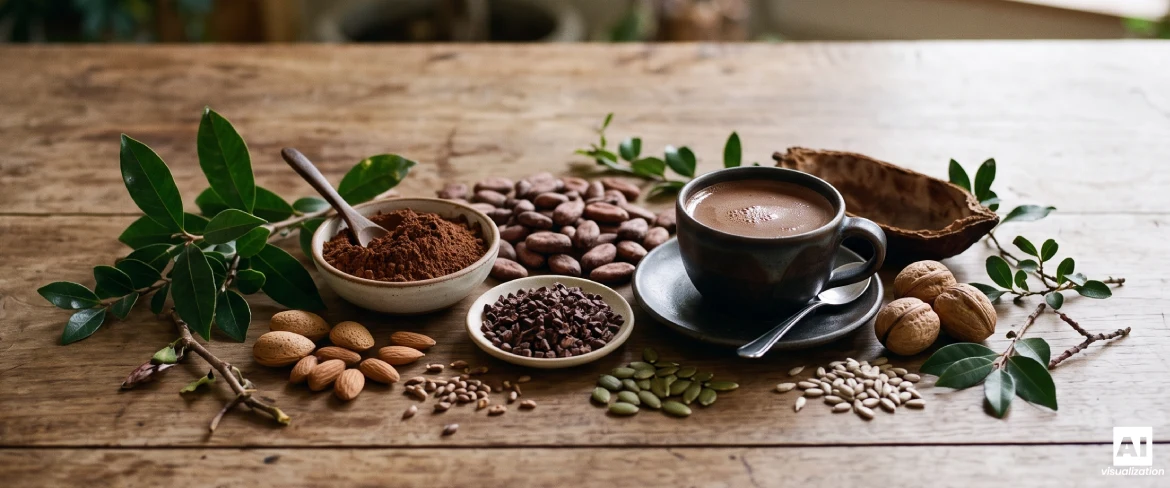
When looking for the ideal product on the shelves, we most often come across classic natural cocoa. It is one of the most traditional forms we meet in everyday use. Thanks to its distinctive profile, this ingredient works very well in many culinary challenges – from aromatic drinks to refined baked goods. Before we move on to how best to use natural cocoa powder, it is worth understanding where its unique characteristics come from.
What is natural, or non-alkalised, cocoa?
To fully appreciate this product, we need to look at how it is made. Natural non-alkalised cocoa is simply dry cocoa powder made by grinding the so-called press cake (that is, defatted cocoa mass) without any additional chemical modification. This means the alkalisation process, which we describe in more detail in the next section, is left out.
Skipping this additional processing step means the product keeps its raw, original character. What makes it distinctive?
- ✔️ Appearance and colour: It usually has a lighter, light-brown shade, often with a hint of reddish tones.
- ✔️ Flavour profile: It is very distinctive, with a noticeable natural acidity. You can often find subtle fruity or floral notes in it, typical of the particular variety of cocoa bean.
- ✔️ Purity of composition: High-quality unsweetened natural cocoa dominates the market, free of any improvers or stabilisers.
It is worth remembering that these characteristics are fairly universal, but the final colour and flavour may vary slightly depending on the country of origin of the beans, how long they were fermented and how long they were roasted. Without doubt, though, the properties of natural cocoa are owed precisely to this minimal processing. The absence of alkaline treatment means that a higher content of natural antioxidants, including valuable cocoa flavanols, remains in the powder compared with more heavily processed products. Exposing the beans to strong alkalis (as happens in chemical processes) degrades a large share of these delicate compounds. For this reason, from the point of view of dietetics and maximising health benefits, it is the non-alkalised version that is most often recommended by nutrition specialists.
💡 Culinary fun fact: Why is the best natural cocoa so popular with master pastry chefs? It comes down to its natural acidity (the pH most often falls between 5.3-5.8). The acidic reaction pairs perfectly with bicarbonate of soda (which is a base), producing bubbles of carbon dioxide. This simple chemical process is what makes baked goods rise beautifully and evenly!
How to use this type of cocoa?
Thanks to its acidity, mentioned above, this product is a highly valued ingredient in baking. If a cake recipe contains bicarbonate of soda, it is safest and most effective to use the non-alkalised version. Because of its pure profile, this powder also works wonderfully in vegan “raw” desserts, such as energy bars or power balls made from dates and nuts, where the absence of heat treatment helps preserve its full value.
Moreover, traditional natural cocoa for drinking made from it will delight anyone who appreciates crisp, slightly dry and very chocolatey notes without excessive, overpowering sweetness. It combines excellently with naturally sweet plant-based drinks such as oat or rice milk, creating a perfectly balanced, nourishing drink for any time of day.
Now that we know what characterises this raw material in its most original form, it is time to move on to a somewhat different production technique. So what is the alkalisation process that is so often mentioned in the industry, and how does it affect the properties of the finished product?
Alkalised cocoa – what does it mean?
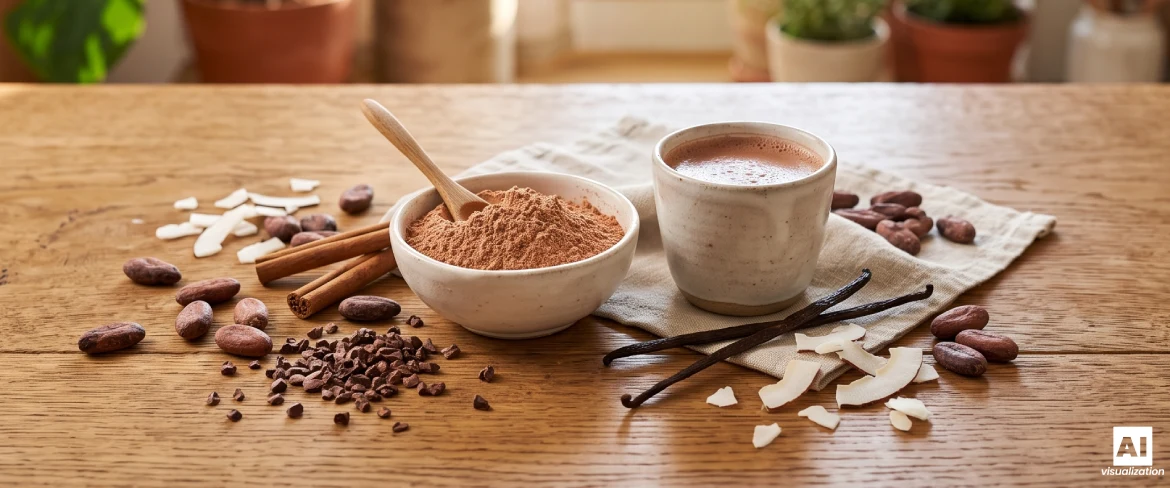
When choosing the ideal ingredient for home baking or warming drinks, you will come across a technical-sounding term on many labels. Many consumers then naturally ask: alkalised cocoa – what is it exactly, and is it worth buying? To make full use of the variety of cocoa products on the market, it is worth understanding what it means for cocoa to be alkalised. This process noticeably changes not only the look and flavour of the powder but also its physicochemical properties and its use in the kitchen.
What does alkalisation of cocoa involve?
To explain what alkalised cocoa is, we need to go back to the 19th century. It was then that the Dutch chemist Coenraad Johannes van Houten developed an innovative method of processing cocoa beans (which is why the process is often called the “Dutch process” around the world – Dutching). Alkalisation involves treating the beans, nibs or cocoa mass with mild alkaline substances, such as potassium carbonate.
The main aim of this treatment is to neutralise the natural acids present in the raw material. Thanks to this process the powder gains a much milder flavour profile with no astringent bitterness. In addition, alkaline treatment visibly darkens its colour – from deep, warm brown to shades verging on black. The structure of the product also changes, so it dissolves more easily in liquids.
💡 Nutrition fun fact: Although alkalisation improves solubility and gives a beautiful colour, it affects the content of natural antioxidants. Scientific studies show that the process significantly reduces the content of valuable polyphenols and flavanols in the finished product. Depending on the degree of alkalisation (from light to strong), the flavanol content of cocoa powder may fall from 60% to as much as 90% compared with raw material that has undergone only classic processing.
💬 Scientific source: K. B. Miller et al., Impact of alkalization on the antioxidant and flavanol content of commercial cocoa powders, Journal of Agricultural and Food Chemistry, 2008.
Alkalised vs non-alkalised cocoa
When shopping, we often face a dilemma: which to choose – alkalised or non-alkalised cocoa? It should be clearly stressed that neither product is “worse” or “better” in itself. Each simply has a different purpose. When weighing up alkalised vs non-alkalised cocoa, it is best to look at a direct comparison of their most important features:
Comparison of types of cocoa powder
| Feature | Natural cocoa (non-alkalised) | Alkalised cocoa |
|---|---|---|
| Colour | Light brown, possibly with rusty highlights. | Dark brown, very intense, sometimes black. |
| Flavour and aroma | Distinctive, astringent, with a noticeable natural acidity. | Mild, rounded, free of acidity and bitterness. |
| Reaction in baking | Requires bicarbonate of soda (to neutralise the acid). | Requires baking powder (it has a neutral pH). |
If maximum intake of polyphenols and antioxidants in your daily diet matters to you, the natural version is the better choice. If, however, your priority is perfect appearance, deep colour and delicate flavour, the variety treated with alkali will do the job perfectly.
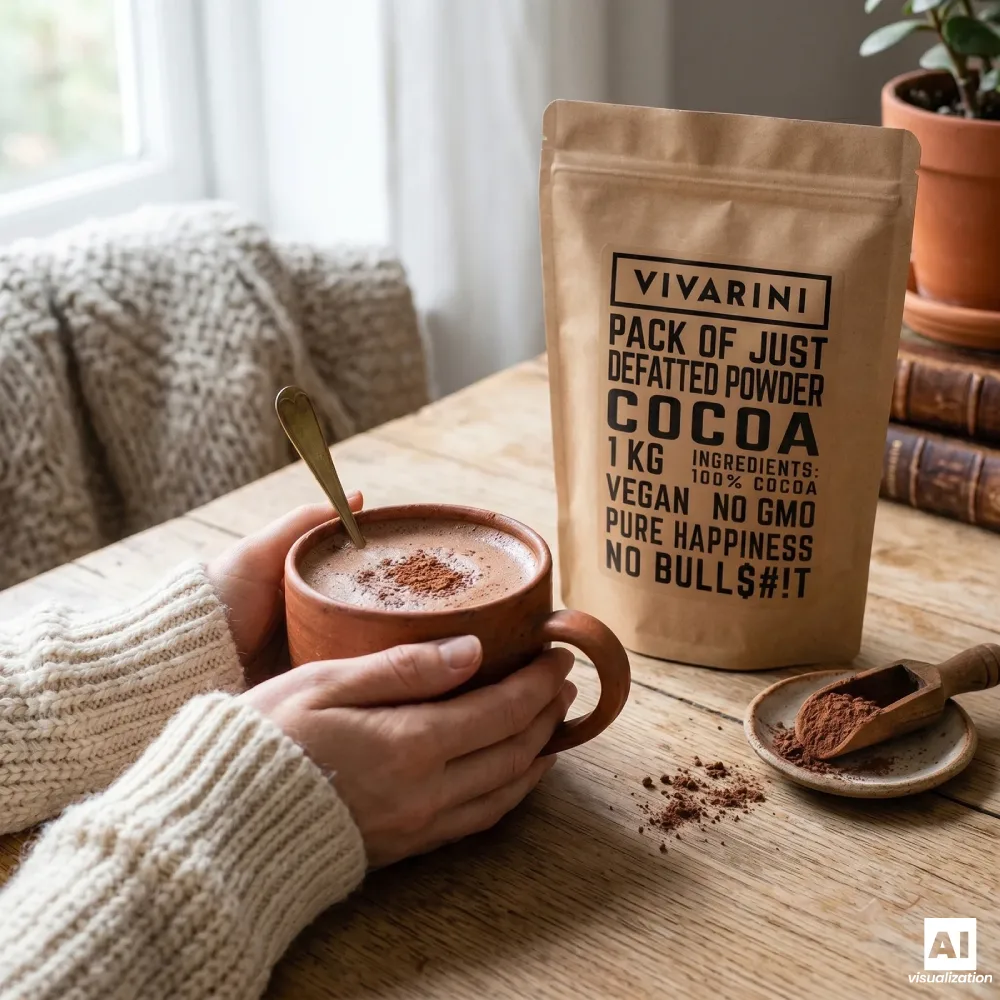
Vivarini – dark alkalised cocoa
Looking for a product that combines excellent culinary properties with a natural composition? Vivarini alkalised cocoa was created for lovers of a deep, chocolatey character without unnecessary bitterness.
- ✔️ Reduced fat content: A great way to add variety to a balanced, mindful diet.
- ✔️ Velvety profile: The alkalisation process has neutralised the acidity, giving a mild flavour and an intense, dark colour.
- ✔️ Excellent solubility: The powder mixes easily with water, milk and plant-based drinks, creating a smooth consistency.
Thanks to the careful selection of beans, Vivarini offers a 100% pure product that will undoubtedly enrich your everyday recipes!
What can you use alkalised cocoa for?
Thanks to its unique physicochemical properties, this product is extremely versatile. In professional and home baking it is used above all in recipes where a very deep, dark visual effect is wanted – for example in classic brownies, rich chocolate sponges or decorative mirror glazes.
Its mild flavour profile also means it pairs ideally with dairy. It is an excellent ingredient for sweet cake fillings, home-made custards and ice cream. It can also be used successfully to make a velvety hot cocoa drink that will please anyone who dislikes astringent, sour notes in their cup. Its excellent solubility makes it easy to blend into fruit smoothies and protein shakes, which people with an active lifestyle will certainly appreciate.
Cocoa beans and crushed cocoa beans
So far we have focused mainly on loose products that are ideal for making drinks. The world of chocolate experiences is much wider, though. If you want a product that is as minimally processed as possible, one that lets you experience the raw material in almost its original form, cocoa beans should catch your eye. They are an excellent alternative to powders, offering a completely different texture and new culinary possibilities.
Crushed cocoa beans – what are they?
When, after fermentation, drying and roasting, the seeds have their hard husks removed, we get 100% natural cocoa beans. Instead of grinding them further into a liquid mass and pressing them to separate the fat (as happens in the production of powder), the seeds are simply broken into smaller, irregular pieces. This is how crushed cocoa beans are made, widely known around the world as cacao nibs.
The fundamental difference between the crushed form and traditional cocoa powder is the presence of natural cocoa butter, which at this stage of production has not yet been pressed out. This makes the pieces extremely crunchy, with a firm, compact structure, and they keep the full value of their original qualities. They stand out for a very deep, dry and highly intense flavour profile, with no trace of sweetness. What matters from a dietary point of view is that skipping the invasive pressing and conching stage makes the crushed seeds a true “superfood”. They retain the maximum amount of their original nutrients, including a generous amount of magnesium, iron and valuable dietary fibre.
💡 Fun fact: Ever wondered why crushed beans have such a powerful, striking smell as soon as you open the pack? The key volatile cocoa compounds (such as pyrazines, esters and alcohols) form and accumulate in the seeds already during fermentation and roasting. The absence of later, highly invasive grinding means the crushed pieces hold on to the maximum of their original, rich aroma.
💬 Scientific source: A. B. de Andrade et al., Under and fully fermented fine and bulk cocoa: A comparative study of volatile profile in different stages of bean-to-bar processing, Food Research International, 2025.
Now that you know where this amazing, deep aroma comes from, it is worth experiencing its intensity for yourself. Opening a pack of high-quality crushed beans is a real feast for the senses, letting you travel in your imagination straight to the tropical plantations. To fully appreciate this raw, unprocessed character, however, choosing the right raw material is key.
The best culinary experiences come from beans from trusted South American plantations that have avoided excessive processing and unnecessary additives. If you are looking for an authentic, crunchy ingredient that has kept the maximum of its natural essence, we have an excellent suggestion for you.
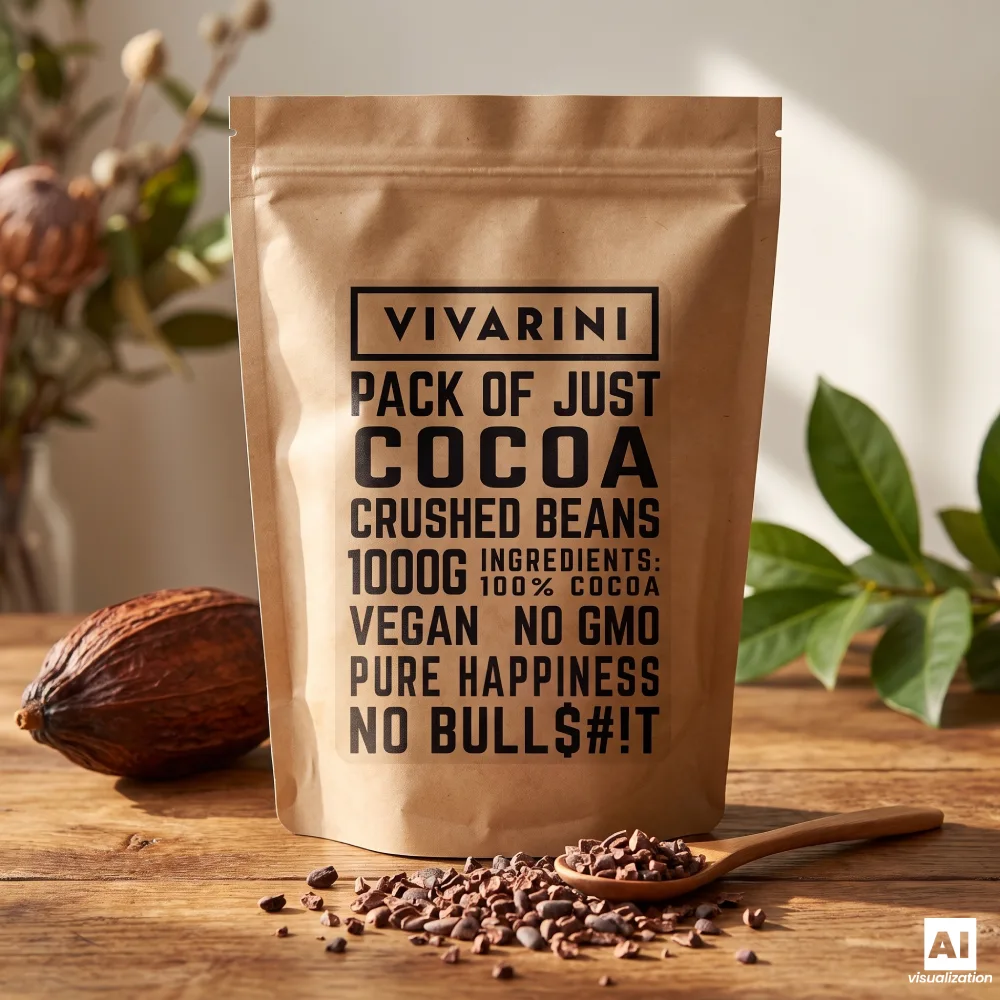
Vivarini – crushed cocoa beans
Want to enrich your everyday meals with the authentic, dry flavour of chocolate and a desirable crunch? Vivarini crushed cocoa beans are a 100% natural product straight from sunny Peru.
- ✔️ Versatile use: It works well both as an ingredient in desserts and in hearty, wholesome breakfasts.
- ✔️ Rich in nutrients: Because of its low degree of processing, it retains plenty of fibre and natural fats.
- ✔️ Clean profile: This product contains no additives, sugars or artificial flavourings.
Vivarini crushed cocoa beans are a wonderful choice for all fans of pure flavour who want to enjoy chocolatey notes in their most natural form!
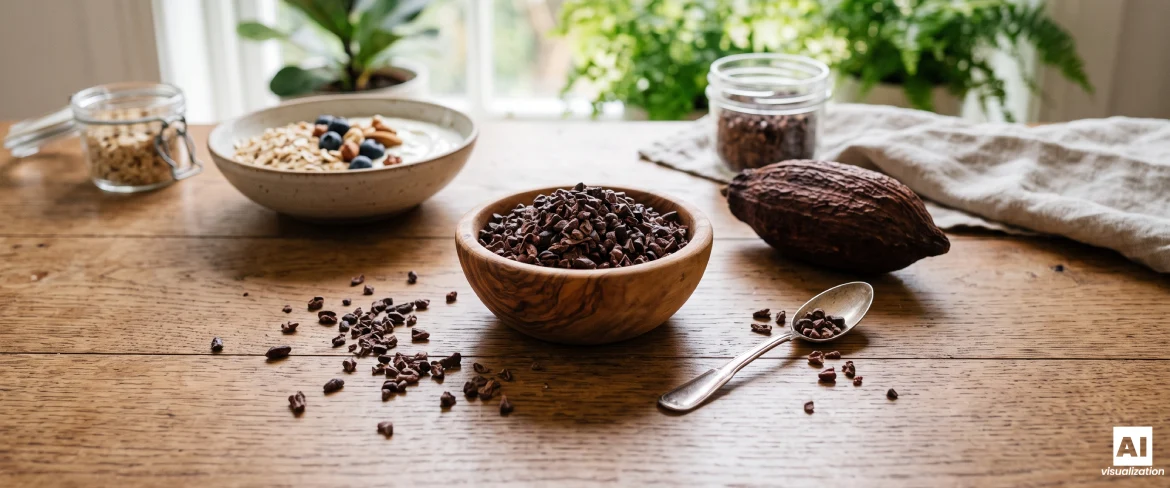
How to use crushed cocoa beans?
It is worth treating this remarkable ingredient in the kitchen much like chopped nuts or hard seeds. Its main job is to break up the texture of a dish and add an intense, crunchy element. Thanks to its pronounced bitterness, it balances very sweet dishes well. It works wonderfully in many everyday recipes:
- ✔️ Porridge and hearty breakfasts: A sprinkling of crushed beans will wonderfully enrich your morning muesli, home-made granola or smooth yoghurt with fruit.
- ✔️ Smoothies and nourishing shakes: Blending them with banana, nut butter and plant-based milk gives the drink a texture reminiscent of popular chocolate-chip ice cream.
- ✔️ Healthy desserts: An excellent natural substitute for sweetened, ready-made chocolate chips in baked goods, home-made energy bars or biscuits.
- ✔️ Savoury dishes: Although they are associated mainly with sweet things, crushed seeds are a secret ingredient of many chefs. They work very well as a crunchy element in salads, as an addition to spicy chilli con carne, or as the base of the traditional Mexican mole sauce served with meat.
- ✔️ Home-made chocolate and pralines: An ideal base for experiments by home confectioners who want to create their own craft “bean-to-bar” chocolate (made from bean to bar).
Raw crunch is not the only unconventional way to enjoy the harvest of South American plantations, however. Let us return for a moment to the liquid form and travel to the world of ancient rituals to uncover the secrets of ceremonial cocoa.
Ceremonial cocoa – what makes it special?
In recent years ceremonial cocoa has been gaining popularity all over the world. For the ancient Maya and Aztecs, this plant was more than just food – the drink called Xococalit had a deep symbolic meaning and was a key element of their rituals. Today this heritage is returning in the form of top-quality products that encourage mindfulness and the celebration of everyday moments.
So how does this variety differ from ordinary powder from the shop shelf? Above all in its form and degree of processing. True, natural ceremonial cocoa is a 100% pure, non-defatted paste (cocoa mass) made from carefully selected, high-quality beans. It is not alkalised, and its natural cocoa butter is not separated out. It is usually sold as hard blocks, bars or thick discs, which you need to crush yourself before preparing. This means the product retains the maximum amount of natural fats and active substances, which give it an extremely thick consistency and a deep aroma once melted.
The secret of the special, relaxing effect of such a paste lies, among other things, in its high theobromine content. This compound stimulates the body in a much milder and steadier way than the classic caffeine in coffee. It is also suggested that it may support the widening of blood vessels, which in practice often translates into a pleasant feeling of warmth, deep relaxation of the whole body and the so-called “heart opening” that fans of a holistic lifestyle so often mention.
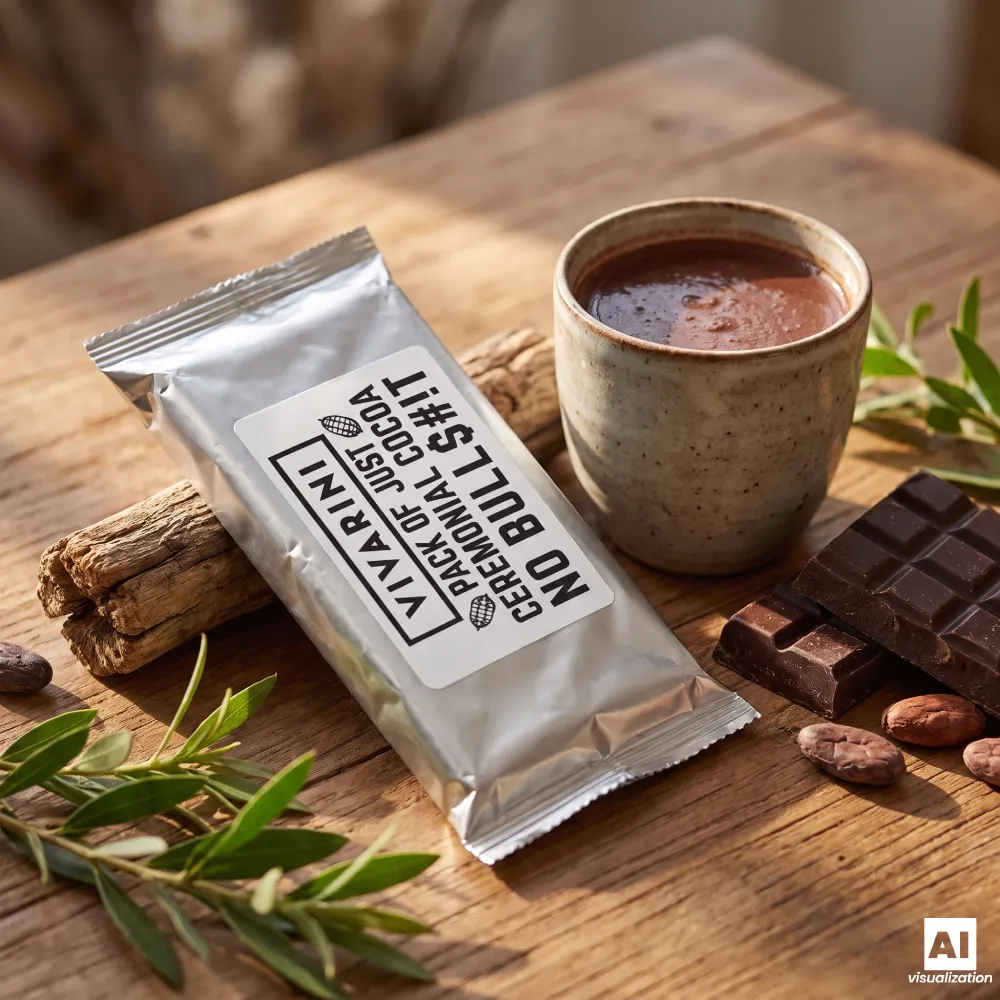
Vivarini – Criollo Ceremonial Cocoa (bar)
Looking for an uncompromising, top-quality experience? Vivarini – Criollo Ceremonial Cocoa (bar) comes as a convenient bar (180g), made from 100% cocoa beans from sunny Ecuador.
- ✔️ Criollo variety: The rarest and finest variety of cocoa in the world, offering a unique sensory profile.
- ✔️ Exceptional flavour: The paste is extremely delicate, almost entirely free of astringent bitterness, with beautifully noticeable notes of tropical fruit.
- ✔️ Rich source of fats: Natural cocoa butter gives the drink a silky, thick texture.
Thanks to the gentle stimulating effect of caffeine and its relaxing aroma, this product can be a wonderful companion to daily meditation or an evening moment of calm.
Understanding what raw material the paste is made from helps you appreciate its unique, craft profile even more. It is worth knowing that there are several main varieties of cacao tree in the world, and each offers completely different sensory impressions in the finished drink.
💡 Fun fact about varieties: The cacao variety called Forastero dominates worldwide and accounts for the vast majority of global production because of its high resistance to disease. Criollo, on the other hand, is an extremely rare, delicate variety that is demanding to grow. It makes up for this with an exceptionally fine, citrusy and floral profile. That is exactly why it is so sought after and valued in craft products. You will find more fun facts about ceremonial cocoa on our blog: The drink of the gods in your cup. What is ceremonial cocoa?
How to prepare ceremonial cocoa?
Making this special drink is a great opportunity to slow down and focus on the present moment. Before you get to the preparation itself, remember that even chopping the hard bar with a knife can be an excellent prelude to relaxation. Instead of rushing, treat it as a mindful moment of calm. Because we are dealing with a solid paste, the process needs a slightly different approach than simply pouring liquid over a ready-made powder. To get the best out of it, it is worth following a few universal rules:
- ✔️ The right portion: It is usually recommended to use 10 to 20 grams of crushed bar (roughly one tablespoon) per serving of drink.
- ✔️ Choice of liquid and temperature: Pour warm, but absolutely not boiling, water or plant-based drink over the paste. The optimal temperature is 60-80°C. It allows the cocoa butter to melt without any trouble while protecting valuable nutrients from thermal degradation.
- ✔️ Thorough mixing: Because of the high content of natural fats, the drink needs vigorous mixing. A small blender or a handheld milk frother works best here, breaking up lumps and giving a perfectly smooth, creamy consistency.
- ✔️ Aromatic additions: You can freely vary the raw, dry flavour of the drink. Traditionally a pinch of cinnamon, cardamom, real vanilla or a little hot chilli is added. If you prefer sweeter notes, you can use a natural sweetener, for example stevia or honey.
Remember that these instructions are general, and the exact proportions should always be adjusted to your own taste and to the producer's recommendations on the product label. A drink prepared this way is not only a culinary pleasure but also a priceless moment of mindful relaxation.
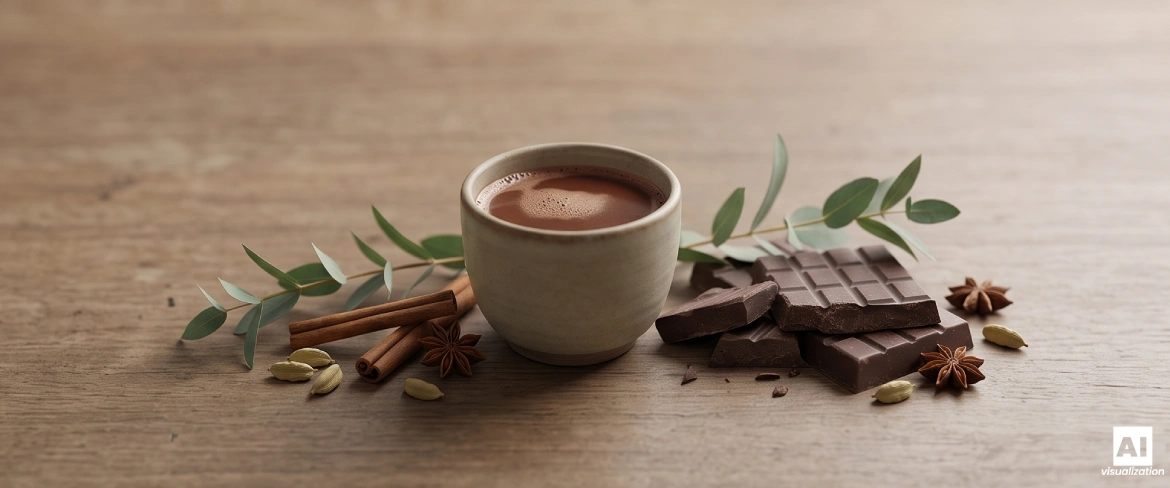
Cocoa blends with added ingredients
Exploring the fascinating world of products made from cocoa beans, we cannot overlook ready-made blends. How does pure cocoa differ from such compositions? A pure product is simply 100% ground bean or cocoa mass, offering a raw, authentic flavour. Ready-made blends, on the other hand, are carefully developed formulas in which cocoa is combined with additional ingredients. The aim is to enrich the flavour profile and make preparation convenient in a single serving.
In our shop you will find many intriguing products in which cocoa plays a very important role. Lovers of hearty meals will certainly like Nustino – Powdered Peanut Butter – Chocolate. It is an innovative product with reduced fat content and very high protein content, enriched with defatted cocoa. It will suit athletes and physically active people perfectly. For those who are looking for a strong energy boost with a delicately dessert-like note, an excellent choice is Guarani Cocoa – a classic Paraguayan yerba mate infusion combined with a cocoa accent and exotic coconut flakes.
Cocoa with mushroom extracts
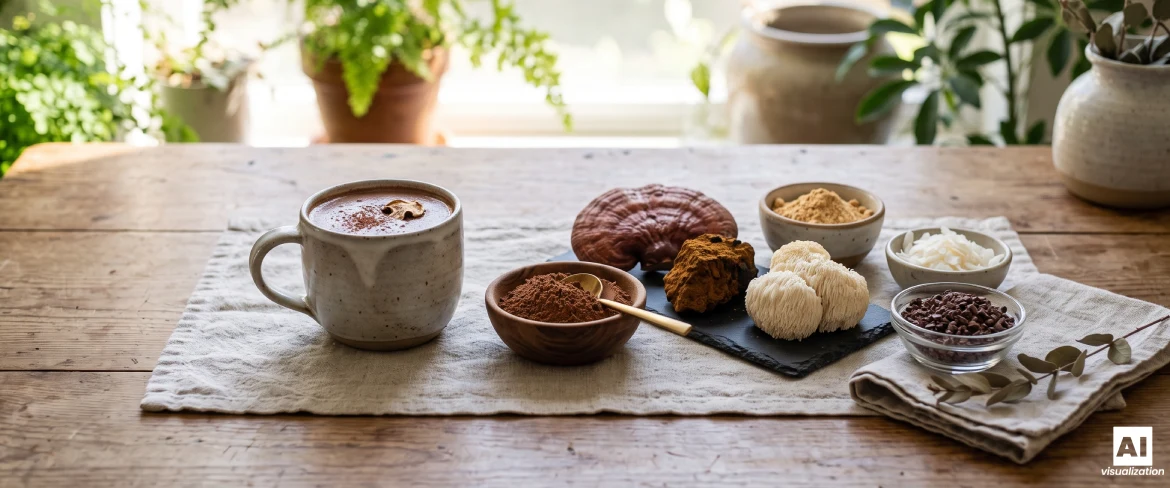
It is also worth looking at the combination of traditional cocoa with mushroom extracts. This is cocoa powder supplemented with extracts from the fruiting bodies of selected mushroom species.
Blends of this type are most often based on alkalised cocoa powder, to which extracts from the fruiting bodies of mushrooms are added, for example lion's mane, reishi or chaga. The cocoa gives such a drink a deep, chocolatey flavour. When choosing products of this type, always follow the information and recommendations given by the producer on the packaging, including the recommended daily serving.
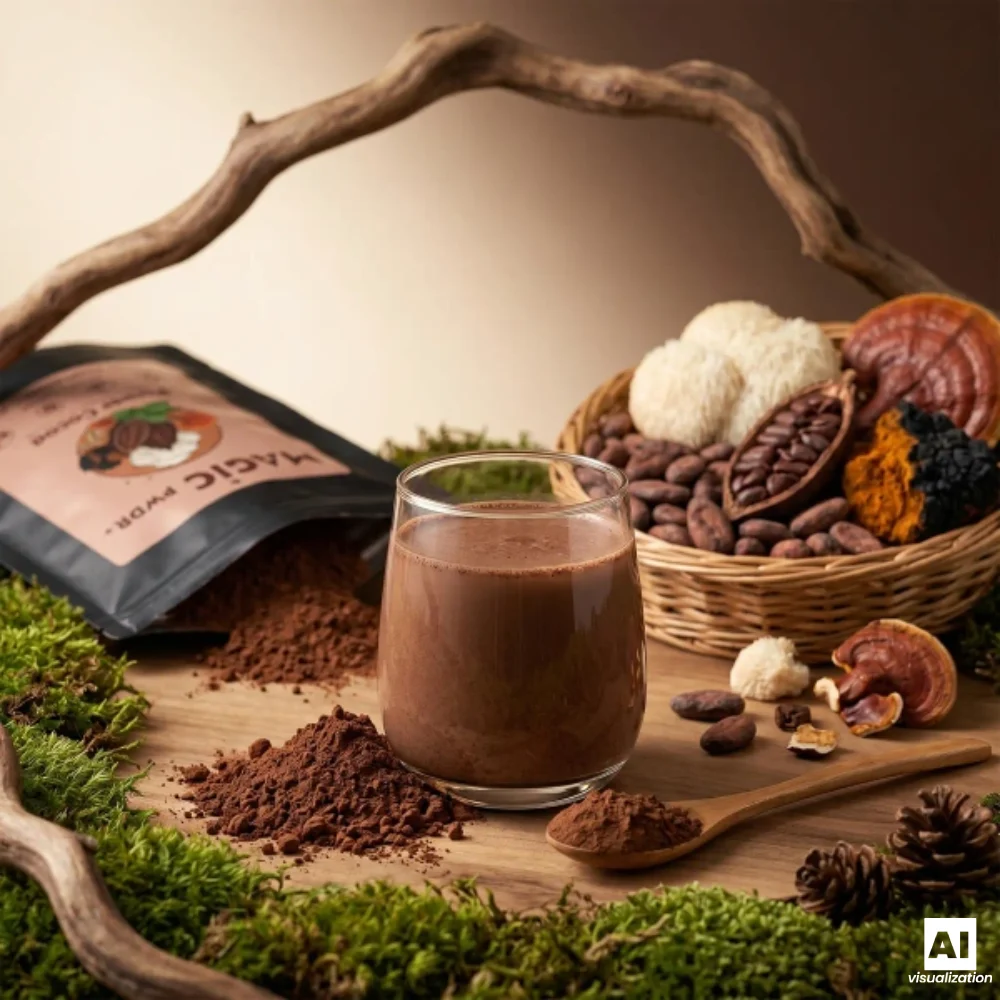
Magic Pwdr – Power Cocoa
Do you like classic cocoa and value a short, transparent ingredient list? Magic Pwdr Power Cocoa is a powdered dietary supplement made on a base of alkalised defatted cocoa, supplemented with mushroom extracts.
- ✔️ Four ingredients: Defatted cocoa (85%) and 10:1 extracts from the fruiting bodies of lion's mane, reishi and chaga (5% each).
- ✔️ Chocolatey flavour: The alkalised cocoa base covers the earthy notes of the mushrooms well, creating a drink with a deep, chocolatey flavour.
- ✔️ Easy preparation: Mix a 5g portion (1 heaped teaspoon) with a little cold milk or plant-based drink into a smooth paste, top up with liquid to 200ml and heat.
You can reach for a cup of Power Cocoa at any time of day – with breakfast, during a work break or as a warm drink on a cool evening.
Including ready-made, carefully developed blends in your diet is an excellent way to save time without giving up high quality. You do not have to measure out proportions yourself – everything you need to prepare a delicious drink is already in one convenient pack.
Whether you choose raw classics, a high-protein option with peanut butter, or decide on a blend with mushroom extracts, cocoa will certainly add variety to your daily menu. Before we move on to the next steps and find out how to match the right product to your own needs, let us gather the most important information in a short summary.
📌 In short:
- ✔️ Pure forms of cocoa deliver authentic flavour, while ready-made blends offer convenience and additional ingredients in a single serving.
- ✔️ Products such as peanut butter powder with added cocoa are a great choice for physically active people who focus on a high protein intake.
- ✔️ Cocoa with mushroom extracts is for people who like a chocolatey flavour and value a short, transparent ingredient list.
How to choose the right cocoa?
With so many different options to choose from, making a final decision while shopping can seem difficult. The most important step is to define your needs and taste preferences precisely, as well as how you intend to use the product. Understanding the specifics of each type will let you fully enjoy their remarkable properties and match them perfectly to your daily menu.
Before adding a product to your basket, it is worth asking yourself about your main goal. If you care above all about supporting your body and a maximum dose of antioxidants, aim for unprocessed, raw products. If your priority is the perfect look of your baking and a mild flavour, processed options will work much better. For evening calm and mindfulness practice, ceremonial forms are ideal.
To help you make the best decision, we have prepared a practical, clear comparison. It gives a short summary of the characteristic features and best use of each of the forms of this remarkable raw material that we have discussed.
Comparison of the properties and uses of cocoa products
| Type of product | Flavour profile and characteristics | Best use |
|---|---|---|
| Natural cocoa (powder) | Light brown, distinctive, with a noticeable acidity. Retains the highest amount of natural antioxidants (including flavanols). | Vegan no-bake desserts, everyday drinks for people looking after their diet, baked goods that use bicarbonate of soda. |
| Alkalised cocoa (powder) | Very dark, mild, free of bitterness and acidity. Stands out for excellent solubility in liquids. | Cake fillings, custards, deeply chocolatey cakes, smooth and delicate milk-based drinks. |
| Crushed cocoa beans | Raw, extremely crunchy and intensely dry. They have a rich aroma and retain natural cocoa butter. | A crunchy addition to porridge, yoghurt and healthy bars, as well as a way to liven up salads and savoury sauces. |
| Ceremonial cocoa | Hard, raw paste (cocoa mass). Thick, rich in fat, with a delicate profile (especially for fine varieties such as Criollo). | Preparing traditional, rich drinks; an excellent complement to mindfulness, meditation and relaxation practices. |
| Blend with added ingredients | A formula enriched with additional ingredients (for example protein in peanut butter or mushroom extracts). | Quick post-workout shakes, warm chocolate-flavoured drinks, an addition to porridge and baking. |
It is worth remembering that a well-stocked kitchen will usually have room for more than one type of this raw material. Variety is a huge advantage, after all. You can, for example, start the day with an energising bowl of muesli sprinkled with crushed beans, refuel during a busy day with a hearty blend based on peanut butter powder, and end a free evening with a calming ritual using the fine Criollo paste.
💡 Useful tip: Whichever form of product you finally decide on, always make a habit of checking labels carefully. Choose products with a short, transparent ingredient list, free of artificial flavourings and large amounts of added sugar. This will give your body the best that nature has to offer.
How to prepare drinking cocoa?
You now know the specifics of the different types of this remarkable raw material, so it is time to move on to practice. Preparing a classic, warming drink is one of the simplest and, at the same time, most enjoyable culinary rituals. Although every product may call for a slightly different approach, there is a universal method that works in most cases – especially if you are using traditional powder (natural or alkalised).
Here is a simple, tried-and-tested way to make the perfect, smooth cup of chocolatey pleasure:
- ✔️ The right proportions: One to two teaspoons of powder per mug of about 250ml is usually enough. It is always worth checking the producer's recommendations on the packaging, though, because the intensity of a specific product can differ considerably.
- ✔️ Choice of liquid base: Traditional cow's milk gives the most classic, thick flavour. If you prefer plant-based options, oat, almond or coconut milk works wonderfully and will naturally add extra, subtle notes to the drink.
- ✔️ The right temperature: Heat your chosen liquid, but never bring it to the boil. The optimal temperature is around 60-80°C. Water or milk that is too hot may reduce some of the valuable nutrients and negatively affect the final flavour profile.
- ✔️ How to mix: To avoid unappetising lumps, first mix the powder with a little liquid (it can be at room temperature) to make a thick paste. Only then slowly pour in the rest of the warm milk and mix thoroughly, preferably with a handheld frother or a small whisk.
- ✔️ Personalising the flavour: This is a great moment for culinary creativity. You can sweeten the drink with natural honey, maple syrup or stevia, and add your favourite spices, such as cinnamon, natural vanilla or a little warming chilli.
Remember that the final result always depends on the type of raw material you choose. The natural version will have a crisp acidity and may need a little more sweetener to keep it balanced. An alkalised variety or a ready-made blend with added ingredients (such as Power Cocoa), on the other hand, will delight with its rounded mildness from the very first sip.

Cocoa in the kitchen – the most popular uses
Although this remarkable raw material is most often associated with a hot, relaxing drink on chilly evenings, its culinary potential is much wider. It is an extremely versatile ingredient that can completely change the character of many everyday dishes. From smooth, liquid creations, through fluffy cakes, to crunchy toppings – each form offers a unique consistency, a different flavour profile and entirely different ways of using it. Discover how to make the most of this richness in your kitchen.
Cocoa in drinks
Classic hot drinks are only the beginning. Finely ground cocoa powder, both natural and alkalised, also works very well in modern, cold creations. It is an excellent base for nourishing shakes and thick, fruity smoothies, adding a deep, chocolatey background and a thicker texture.
To vary your everyday recipes, it is worth experimenting with different liquid bases. Cocoa makes wonderful combinations with plant-based drinks – oat will give it natural sweetness, while almond or coconut will emphasise its dessert-like character. The flavour of the drink can easily be modified by adding a pinch of warming spices, such as cinnamon, cardamom or vanilla, as well as natural additions such as honey or maple syrup.
Cocoa in desserts and baking
It is hard to imagine modern baking without this key ingredient. It is an absolute foundation of many much-loved sweet treats – from heavy, moist brownies, through light muffins, to velvety fillings, home-made puddings and thick glazes. This powder is also a wonderful base for making nourishing energy bars with dried fruit and nuts.
When planning to bake, it is worth consciously matching the type of product to the specifics of the recipe. In recipes that need a very dark, intense colour and a milder flavour without natural acidity, alkalised cocoa is the most common choice. If, however, you want a chemical reaction with bicarbonate of soda or are looking for drier, crisper notes, the natural version will work better. The final use always depends on the guidelines of the specific recipe and the visual effect you want to achieve.
💡 Practical tip: To bring out an even deeper aroma from cocoa powder when baking, it is worth mixing it with a little hot water or melted, warm fat before adding it to the batter. This releases dormant essential oils and makes the finished bake even more distinctive in flavour.
Crushed cocoa beans as a topping
If you are looking for interesting textures and want to break up the smoothness of dishes, it is worth replacing or complementing loose forms with crushed beans. Their hard, crunchy structure and very intense, slightly bitter flavour make them a particularly valued finishing touch in many recipes.
- ✔️ Decorating sweet treats: They look great as a crunchy sprinkle on top of smooth desserts, ice cream, home-made pralines or creamy fillings.
- ✔️ Hearty breakfasts: They add structure to a morning bowl of porridge, give character to home-made granola and go well with natural yoghurt.
- ✔️ Salads and snacks: They can be added successfully to fresh fruit salads, where their dry bitterness balances the natural sweetness of ripe fruit perfectly.
How to store cocoa and cocoa products?
Once you have chosen your ideal product, it is worth making sure it is properly protected. Remember that if you want to enjoy the full benefits of this raw material for as long as possible, the deep aroma and health-supporting properties of the cocoa bean can very easily be lost in unsuitable conditions at home. Whether you have fine powder, crunchy pieces or ceremonial paste, the rules are very similar.
To protect the valuable ingredients from degradation, it is enough to follow a few universal rules:
- ✔️ A dry, cool place: The optimal storage temperature should be around 15-20°C. Avoid cupboards directly above the hob, next to the oven or a radiator, where the product would be exposed to large, sudden changes in temperature.
- ✔️ Protection from light: Sunlight speeds up oxidation, which has a negative effect on the content of natural antioxidants and delicate fats. The safest choice is always a shaded, closed cupboard or a pantry.
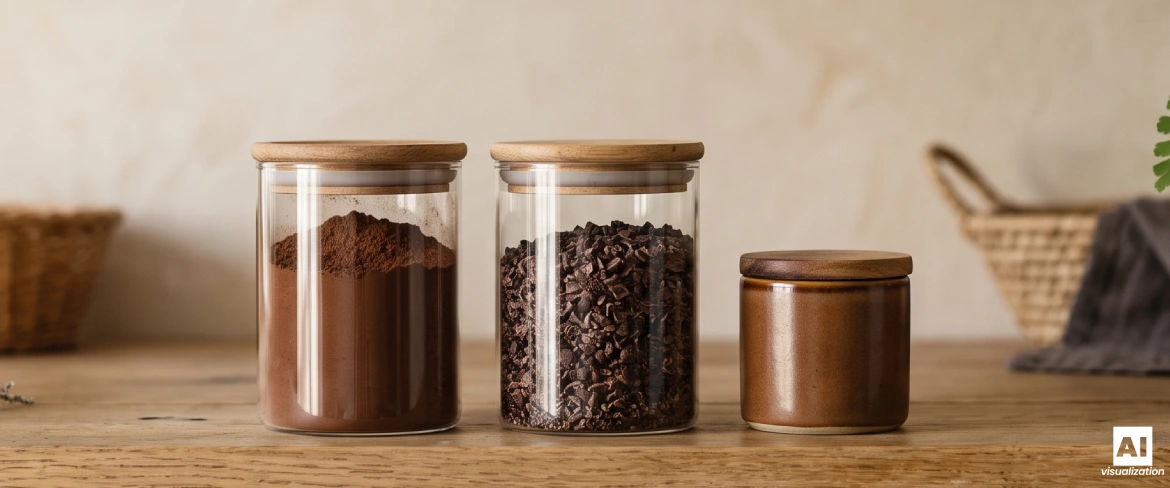
- ✔️ An airtight seal: Cocoa products are strongly hygroscopic, which means they absorb moisture from the surroundings very easily. Always make sure the original packaging (for example one with a zip closure) is tightly sealed. Transferring the product to an airtight container with a gasket is also a good solution.
- ✔️ Isolation from strong smells: The cocoa butter present in the raw material (even in residual form, as in powder) means it readily absorbs foreign aromas. Do not store it right next to very strong spices such as curry, dried garlic or pungent herb blends.
💡 Fun fact: Fearing high temperatures, many people instinctively put chocolate products in the fridge. This can do more harm than good! A fridge has high humidity, which often leads to powder clumping and, in the case of ceremonial bars and crushed beans, to crystallisation of fat on their surface. This phenomenon creates an unattractive white bloom and negatively affects the original, desirable texture.
Which cocoa to choose?
Our journey through the fascinating world of cocoa products is coming to an end. From the raw seed hidden deep in the fruit to fine powder or thick, traditional paste, every form of real cocoa offers completely different sensory experiences and culinary possibilities. In our shop we have gathered carefully selected variants to help you find, easily and conveniently, the one that fits best into your daily habits.
📌 Summary of our range – find your perfect match:
- ✔️ Alkalised cocoa: An ideal choice if you are looking for a mild, deeply chocolatey flavour with no trace of bitterness. It works very well in home baking and classic, smooth milk drinks.
- ✔️ Crushed cocoa beans: A great option for fans of unprocessed food who want to enrich their breakfasts, yoghurts and desserts with a dry, crunchy element full of nutrients.
- ✔️ Power Cocoa: Alkalised defatted cocoa with mushroom extracts: lion's mane, reishi and chaga. A choice for people who like a classic, chocolatey flavour and value a short, transparent ingredient list.
- ✔️ Criollo ceremonial cocoa: An excellent solution for mindfulness enthusiasts looking for a 100% natural, raw paste with a unique, exceptionally fine profile for preparing a thick, rich drink.
Including products made from cocoa beans in a balanced diet is a step towards not only wonderful flavour experiences but also mindful care of your own body. The richness of minerals, valuable fibre and natural antioxidants means that this ancient raw material fully deserves to be called a true superfood.
Do not be afraid to experiment in the kitchen, try new forms and look for your favourite combinations. Whether you need a handful of crunchy energy for your morning porridge, a nourishing post-workout shake or a calming drink before bed, a well-chosen product will certainly meet your expectations.
Immerse yourself in the rich world of real cocoa and treat yourself to a moment of chocolatey pleasure every day!
❓ FAQ – frequently asked questions about real cocoa
1. Is natural cocoa the same as non-alkalised cocoa?
2. How does alkalised cocoa differ from non-alkalised cocoa?
3. What does it mean for cocoa to be alkalised?
4. Can you drink cocoa every day?
5. How can you use crushed cocoa beans?
6. What is ceremonial cocoa?
7. Which cocoa should you choose for drinking?
Sources:
- Wikipedia: Cocoa bean.
- R. Listanti et al., The Impact of Processing Cocoa Beans (Theobroma cacao L.) on the Reducing Sugar and Total Phenol Content (TPC), BIO Web of Conferences, 2025.
- V. Lagou et al., Impact of flavan-3-ols on blood pressure and endothelial function in diverse populations: a systematic review and meta-analysis of randomized controlled trials, European Journal of Preventive Cardiology, 2025.
- A. B. de Andrade et al., Under and fully fermented fine and bulk cocoa: A comparative study of volatile profile in different stages of bean-to-bar processing, Food Research International, 2025.
- X. Tzounis et al., Prebiotic evaluation of cocoa-derived flavanols in healthy humans by using a randomized, controlled, double-blind, crossover intervention study, The American Journal of Clinical Nutrition, 2011.
- K. B. Miller et al., Impact of alkalization on the antioxidant and flavanol content of commercial cocoa powders, Journal of Agricultural and Food Chemistry, 2008.
Recommended

Vivarini – Cocoa (crushed beans) 0.5kg

Nustino – Powdered Peanut Butter – Chocolate (no sugar added) 400g

Magic Pwdr – Power Cocoa 400g
