
Healthy sugar substitute: erythritol or xylitol?

The sweet taste has been with us since childhood, and it’s hard to find someone who could give it up completely. Unfortunately, traditional white sugar, when consumed in excess, has more drawbacks than benefits – it promotes obesity, increases the risk of insulin resistance and type 2 diabetes, and accelerates the ageing process. More and more people seeking a healthier lifestyle are turning to natural sweeteners, such as erythritol and xylitol. No wonder – natural sugar substitutes are becoming a real hit not only in the kitchens of those watching their waistline but also in the diets of athletes, people with diabetes, and everyone aiming to cut down calorie intake.
In today’s post, we take a closer look at the two most popular alternatives – erythritol and xylitol, which you can also find in our shop range! In this article, you’ll learn:
- ➡️ what their properties are,
- ➡️ whether xylitol and erythritol are healthy,
- ➡️ erythritol and xylitol vs. sugar – how do they compare to classic white sugar,
- ➡️ and in which situations it’s better to choose one over the other.
We’ll also mention other natural alternatives such as stevia and maple syrup, to give you a full picture of healthier ways to sweeten your food.
Summary:
- Why are we looking for sugar substitutes?
- Erythritol – what is it?
- Xylitol – birch sugar
- Erythritol or xylitol? Comparison
- The healthiest sugar substitute – which one to choose?
- A healthier life without sugar. Choose natural substitutes!
Why are we looking for sugar substitutes?
Let’s start with the basics – why should we give up traditional sugar at all? There are several reasons:
- Calories and weight gain – one teaspoon of sugar contains about 20 kcal. It may not seem much, but if you drink two cups of coffee or tea daily, each sweetened with several teaspoons, that’s hundreds of extra calories every week. Over time, that adds up to extra weight!
- Impact on blood sugar – sugar has a high glycaemic index, which means it causes sharp spikes in blood glucose levels. This is particularly dangerous for people prone to insulin resistance, diabetes or metabolic disorders.
- Dental health – white sugar is the best friend of tooth decay. The bacteria in your mouth love it as much as we do, but its excess damages the enamel and leads to dental issues.
- Energy and mood – that “energy kick” after a sweet snack quickly turns into a crash, fatigue and… another craving for more sweetness.
No wonder we are increasingly looking for healthy, natural alternatives. Sugar substitutes such as erythritol and xylitol allow you to enjoy sweetness without excess calories and with much less impact on your health. They’re not artificial sweeteners like aspartame – these are naturally derived ingredients that have become extremely popular among people mindful of their diet.
❗ The effects of excessive sugar consumption
Many of us treat sugar as a quick source of energy or a way to lift our mood. However, it’s worth realising that excessive amounts come with serious health consequences. Sugar works a bit like a “silent saboteur” – at first, it brings pleasure, but over time it leads to problems that may be difficult to reverse.
- ❌ Excess sugar is a leading cause of obesity and weight gain.
- ❌ It increases the risk of insulin resistance, type 2 diabetes and heart disease.
- ❌ It worsens oral health – being one of the major causes of tooth decay.
- ❌ It causes rapid insulin spikes, which leads to energy fluctuations and constant hunger.
This is why dietitians and doctors often remind us that cutting down on white sugar is one of the best investments in our health. Fortunately, there are healthy sugar substitutes that let you satisfy a sweet craving without the negative side effects.
Alternatives to sugar – natural and synthetic sweeteners
There are many sweeteners on the market that can replace traditional white sugar. They differ not only in their origin but also in caloric value, impact on the body and flavour:
- 🔹 Natural: honey, maple syrup, stevia, xylitol (also known as birch sugar), erythritol (also called erythrol).
- 🔹 Synthetic: aspartame, acesulfame K, sucralose – common in “light” beverages and processed foods.
The distinction is simple: natural sweeteners occur in nature or are obtained through natural processes (such as fermentation) – like xylitol from birch wood or erythritol from corn. Artificial sweeteners, on the other hand, are produced in laboratories through chemical synthesis. While they significantly reduce calories in the diet, they remain controversial due to their synthetic origin and possible long-term health effects.
It’s also worth noting that xylitol and erythritol belong to natural polyols. Polyols are a group of so-called sugar alcohols – naturally occurring compounds that taste sweet but are metabolised differently from regular sugar. This means they contain fewer (or in the case of erythritol – zero) calories and have a much lower effect on blood glucose levels. Both xylitol and erythritol are therefore considered healthier sugar substitutes. They differ, however, in caloric content and how the body tolerates them. In the following sections, we’ll answer the most common questions people search for on Google: ‘what is erythritol’, ‘what is xylitol’, ‘is erythritol healthy’, ‘xylitol vs sugar’, ‘xylitol and diabetes’, ‘the best sugar substitutes’ and ‘which sweeteners work best in certain situations’.
Erythritol – what is it?
Among the sugar substitutes available on the market, one of the most frequently chosen is erythritol (you may also encounter the name erythrol). This natural sweetener has rapidly conquered the kitchens of health-conscious individuals, as well as those struggling with diabetes or insulin resistance. Its unique properties make it one of the healthiest and most versatile sugar substitutes!
What is erythritol made from?
Erythritol is produced through a natural fermentation process of glucose, most often derived from corn. It may sound technical, but in practice, it’s nothing complicated – this process basically replicates what happens in nature. The sweetener also occurs naturally in certain fruits, such as pears and grapes, as well as in fermented foods like wine and cheese.
Because erythritol has a natural origin, it is not considered an artificial sweetener but a member of the group of natural polyols. This means that it provides a perfect compromise between sweetness and health.
Erythritol – health benefits
So what exactly makes erythritol so popular? The most important health properties include:
- ✔️ No impact on blood sugar and insulin levels – making it an excellent choice for diabetics and those seeking stable glucose levels.
- ✔️ Does not cause tooth decay – unlike white sugar, erythritol does not provide nourishment for oral bacteria, which makes it an ally of a healthy smile.
- ✔️ Gentle on the digestive system – unlike many other polyols, such as sorbitol or maltitol, erythritol is much better tolerated and rarely causes digestive discomfort.
Erythritol is increasingly appearing in recommendations from dietitians and doctors as a healthy sugar substitute, suitable both for everyday use and for weight-loss or diabetic diets.
Erythritol – calories and glycaemic index
This is one of erythritol’s biggest advantages – erythritol = 0 kcal! In practice, this means adding it to your diet does not increase your calorie intake, which is great news for those looking to shed a few pounds. For comparison, ordinary sugar contains 4 kcal per gram!
Equally impressive is its glycaemic index (GI = 0). In other words, it has no effect on blood sugar levels. That’s why erythritol is an ideal sweetener for diabetics, those with insulin resistance, or anyone following a low-GI diet.
💡 Did you know? Unlike xylitol, erythritol provides virtually no energy. The body excretes it unchanged in urine. That’s why people say it’s “sweet but calorie-free”.
Using erythritol in the kitchen
Erythritol is an extremely versatile sugar substitute. Thanks to its heat resistance, it can be used for baking cakes, preparing desserts, and sweetening drinks. If you enjoy sweetened hot beverages, erythritol works brilliantly in coffee. You can also add it to tea or even yerba mate – as a sugar alternative. It sweetens beautifully without altering the drink’s original flavour.
Do note, however, that erythritol has a slightly cooling aftertaste, which may not appeal to everyone. On the other hand, it performs wonderfully in chilled desserts, smoothies or refreshing lemonades, where that cooling effect becomes an advantage.
If you’re looking for the healthiest sugar substitute that is both calorie-free and safe for people with diabetes or anyone on a diet, erythritol is the perfect choice!
Xylitol – birch sugar
Another natural sugar substitute that has gained immense popularity is xylitol, often referred to as birch sugar. It is one of the oldest and best-researched polyols, which for years has held a permanent place in the kitchens of health-conscious people. Its sweetness is nearly identical to regular sugar, making xylitol an excellent choice for those who want to reduce calories without sacrificing taste.
Xylitol – what exactly is it?
Xylitol is a sugar alcohol that occurs naturally in many fruits and vegetables – such as plums, strawberries, raspberries and corn. Originally, it was extracted mainly from birch wood – hence the common name birch sugar. Today, it is more often produced from corn cobs. In both cases, the end product has identical properties – the same sweetness level as sugar, but with additional health benefits.
Thanks to that, xylitol has quickly become one of the most popular answers to the question: “Which is the healthiest sugar substitute?”. It’s no surprise that it is recommended not only for people on weight-loss diets but also for diabetics and everyone who wants to take better care of their oral health.
Nutritional values, calories and glycaemic index of xylitol
In terms of calorie content, xylitol performs much better than ordinary sugar – xylitol = approx. 2.4 kcal per gram, which is about 40% less than the 4 kcal found in sugar. That’s a big difference, especially for everyday use.
Another advantage of xylitol is its low glycaemic index (GI ~7–13). This means it doesn’t cause sharp spikes in blood sugar levels – unlike white sugar or glucose. For that reason, it’s often included in the diets of people with insulin resistance or diabetes. The sweetness of xylitol is also very similar to that of sugar – many users notice almost no difference in taste.
Xylitol – precautions and possible side effects
Although it is considered a healthy sugar substitute, when using xylitol it’s worth remembering a few things. Above all, the human body metabolises it differently from regular glucose. It’s generally well tolerated, but for some people, consuming larger amounts can cause bloating or a laxative effect. Therefore, it’s best to introduce it into your diet gradually to allow your digestive system to adapt.
💡 Did you know? While xylitol is generally safe for people, it is extremely dangerous for dogs. Even a tiny amount can cause a sudden drop in their blood sugar and pose a real threat to life! Always store products containing xylitol out of reach of pets.
In summary: for most people, xylitol is well tolerated and represents a valuable sugar substitute. Those prone to digestive issues should monitor their intake, and pet owners need to take particular care not to expose their animals to products containing xylitol.
Erythritol or xylitol? Comparison
Both of these sweeteners are popular, natural sugar alternatives. Yet they have slightly different properties, meaning that one might be better suited than the other depending on the circumstances. That’s why the answer to the question xylitol or erythritol – which one to choose? isn’t entirely straightforward. See the comparison table below to explore their key differences:
Xylitol and erythritol – comparison
| FEATURE | ERYTHRITOL | XYLITOL |
|---|---|---|
| TASTE: | slightly less sweet than sugar, with a mildly refreshing flavour | taste almost identical to regular white sugar |
| CALORIFIC VALUE: | 0 kcal – ideal for weight‑loss diets | approx. 2.4 kcal per gram – around 40% less than sugar |
| GLYCAEMIC INDEX: | GI = 0 – does not increase blood sugar levels | low GI (7–13) – recommended for diabetics |
| ORAL HEALTH: | does not promote tooth decay | protects the teeth and offers additional antibacterial properties |
| DIGESTIVE TOLERANCE: | gentle on the digestive system, quickly excreted unchanged | may act as a laxative in larger doses |
As you can see, both sweeteners have their strengths. Erythritol performs best when you want a zero‑calorie option that’s completely neutral for blood sugar levels. Xylitol, on the other hand, is ideal for those seeking the authentic sweetness of sugar while additionally supporting oral health.
📌 In short:
If you’re wondering about erythritol vs. xylitol – the answer depends entirely on your needs:
- Erythritol = zero calories and GI 0 → perfect for weight management and diabetics.
- Xylitol = an almost identical taste to sugar plus antibacterial effects in the mouth.
The best option? Have both in your kitchen and use them interchangeably depending on the occasion – for coffee, tea, desserts or baking.
The healthiest sugar substitute – which one to choose?
We already know what properties erythritol and xylitol have and how they differ. Now it’s time to answer a practical question: which sugar substitute will be best for you? The answer is simple: it depends on your goals and daily habits. Both birch sugar and erythrol are healthy sugar alternatives – but it’s worth knowing when each performs best. See our recommendations below.
Erythritol for coffee, xylitol for tea… or the other way round? Which is better?
If you’re wondering whether it makes a difference – xylitol for coffee, maybe tea, or perhaps erythritol – we have good news: both sweeteners work brilliantly! In practice, the choice depends entirely on your goals and flavour preferences:
- ✔️ Erythritol – the best choice for those watching their weight or following a reduced-calorie diet, as it contains no calories. Perfect not just for coffee, but also for tea and infusions such as yerba mate. It adds a refreshingly light sweetness without disturbing the original aroma of the beverage.
- ✔️ Xylitol – taste-wise, it’s almost indistinguishable from regular sugar. It dissolves well in hot drinks, making it ideal as a sweetener for both coffee and tea. If you’re looking for sweetness closest to sugar – this is your go‑to choice!
In short: for your everyday drinks, coffee or tea, it’s worth having both – erythrol for a calorie‑free light sweetness and birch sugar for that classic “sugary” sensation.
Which substitute works better for baking and cooking?
When it comes to sugar in the kitchen, one important factor is whether the sweetener is heat‑stable – i.e. whether it retains its properties at high temperatures. Fortunately, both erythritol and xylitol perform excellently in baking and when preparing hot desserts.
- ✔️ Xylitol – sweeter than erythritol, so you generally need less. It’s a simple one‑to‑one replacement for sugar in most recipes.
- ✔️ Erythritol – highly heat‑resistant, perfect for cakes, biscuits or muffins. In larger amounts, it can produce a light cooling sensation on the tongue – which works wonderfully in cold desserts, ice creams, smoothies or lemonades.
If you love to bake, both will serve you well – experiment and find your personal favourite. Many of our customers like to use them interchangeably – xylitol for traditional recipes, erythritol for lighter “fit” desserts.
Which sugar substitute is best for people with diabetes?
This is one of the most frequently asked questions. Which sweetener is best for diabetics – xylitol or erythritol? The answer is simple:
- ✔️ Erythritol – the clear winner. It has GI = 0, meaning it doesn’t raise blood glucose levels and doesn’t burden the insulin response. It’s the safest sweetener for diabetics.
- ✔️ Xylitol – also a good option for people with diabetes, as it has a low glycaemic index (approx. 7–13). However, larger quantities should be used more cautiously, especially in those with sensitive digestion, due to its mild laxative effect.
In practice, erythritol is the best choice as a primary sweetener for diabetics and those with insulin resistance. Xylitol can be used as a tasteful change – for coffee or desserts – but in moderation.
A healthier life without sugar. Choose natural substitutes!
We’ve thoroughly answered the question: what is erythrol? We’ve explained how it differs from birch sugar and what its main advantages are. Thanks to this article, you now also know the properties of xylitol and why both sweeteners are often listed among the best sugar substitutes. The answer to the question erythritol or xylitol really depends on your needs – are you looking for a flavour almost identical to sugar, or a completely calorie‑free option that’s neutral for blood glucose levels?
One of the most common questions users type into search engines is “is erythrol healthy?” And the answer is a definite yes! It’s one of the best‑researched natural sweeteners, safe both for diabetics and for those watching their figure. Its greatest advantage? It provides no calories, doesn’t affect blood glucose, and is gentle on the digestive system. So, if you’re searching for a healthy sugar substitute you can use every day – erythrol is an excellent choice!
Xylitol, on the other hand, shines in the kitchen – especially if you want to keep that full sugary flavour while taking better care of your teeth. Remember, everyone’s body is different – which is why it’s best to have both sweeteners at home and use them interchangeably, depending on the situation. It’s the simplest way to enjoy sweetness every day in a much healthier, lighter form.
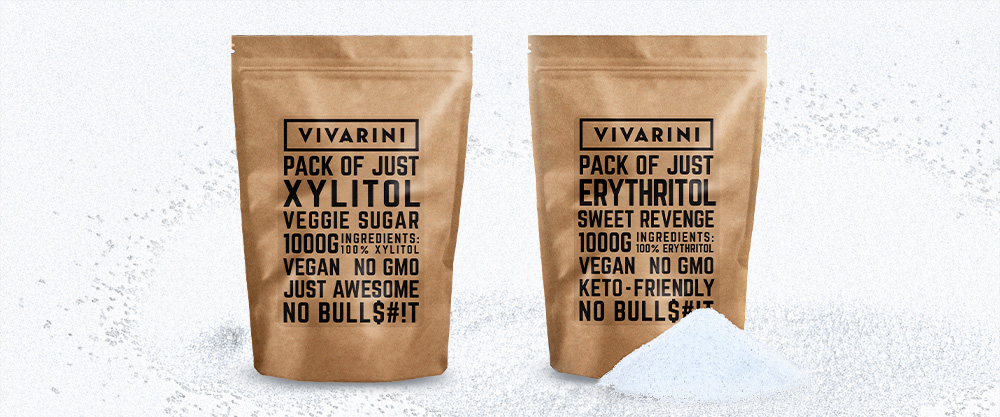
If you’d like to try what erythritol or xylitol taste like, you’ll find them in our range:
Choose your favourite and see for yourself that sweet moments don’t have to mean extra calories!
❓ FAQ – Most frequently asked questions about erythritol and xylitol
1. Erythritol – what is it and how is it made?
2. Xylitol – what is it?
3. Is erythritol healthy?
4. Is xylitol healthy?
5. Which sweetener is best for people with diabetes?
6. Erythritol vs. sugar – what’s the difference?
7. Can you use xylitol and erythritol for baking?
Sources of information:
- Wikipedia: Erythritol, Xylitol.
- K. Priya et al., Natural sweeteners: A complete review, Journal of Pharmacy Research, 2011.
- K. Regnat et al., Erythritol as sweetener-wherefrom and whereto?, Applied microbiology and biotechnology, 2018.
Recommended

Vivarini - Erythritol 1kg
