
Matcha accessories – what to buy to start and what is optional? A practical guide
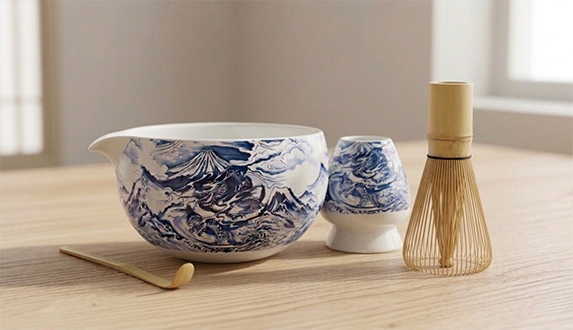
Good matcha is not only about high‑quality powder but also about the way it is prepared. The right matcha accessories influence the flavour, creamy texture, and the characteristic delicate foam that we value so much in this drink. It is the whisking technique and the tools used that determine whether the drink will be smooth and harmonious or rather watery and full of lumps. With matcha tea, the details truly matter – from the width of the vessel to the type of whisk used. That is why choosing the right matcha accessories is not merely a matter of aesthetics but has a real impact on the quality of your daily ritual.
If you are just beginning your matcha journey, you might wonder: do I really need a special bowl? Is a chasen for matcha necessary? Or is a simple milk frother enough? These are very common questions, especially at the beginning. In this article we will organise the topic and show which matcha tea accessories are essential when starting out and which can be treated as convenient extras. We will also explain how traditional preparation differs from modern methods and how the chosen technique influences the taste, texture and overall experience of drinking matcha tea.
Summary:
- Why do the right matcha accessories matter?
- Essential matcha accessories – what to buy to start?
- Useful but optional matcha additions
- How to choose a complete matcha accessories set?
- How to care for matcha accessories?
Why do the right matcha accessories matter?
Unlike traditional tea, matcha is not an infusion made from leaves – you drink the entire powdered green tea leaf. This means the way it is dispersed in water is crucial – the water must combine properly with the powder. If you want to understand exactly what matcha is, how it is produced, and what varieties exist, take a look at our guide: Matcha from A to Z. What is this tea, what does it taste like and why is it worth drinking?
That is precisely why the right matcha accessories play such an important role: from the bowl, through a bamboo whisk, to small additions that improve the comfort of preparing and enjoying the drink.
Why is this so important? Because well‑chosen accessories influence:
- ➡️ the foam structure – fine, creamy, without large air bubbles,
- ➡️ even distribution of the powder in water,
- ➡️ fuller extraction of flavour and aroma,
- ➡️ the comfort of everyday preparation of the drink.
Randomly stirring with a spoon often results in lumps and sediment at the bottom. In contrast, using a proper matcha whisk allows you to aerate the drink and achieve a smooth, velvety texture.
🔍 Worth knowing: Matcha tea contains natural compounds such as catechins and L‑theanine. Research suggests that the way the drink is prepared (water temperature and whisking intensity) can influence the extraction of bioactive compounds and the perceived taste of the beverage.
💬 Scientific sources:
- J. Kochman et al., Health Benefits and Chemical Composition of Matcha Green Tea: A Review, Molecules, 2020.
- S. Li et al., The application of untargeted metabolomics coupled with chemometrics for the analysis of agitation effects on the sensory profiles of matcha tea, Current Research in Food Science, 2024.
How does traditional matcha preparation differ from modern methods?
Traditional matcha preparation relies on several characteristic elements. The most important of these are the matchawan (a wide matcha bowl), the bamboo whisk – chasen – and the chashaku, a narrow bamboo scoop used for measuring portions of matcha powder. These three items form the classic base of matcha tea accessories.
The matchawan allows for free and energetic whisking thanks to its wide base. The chasen, carved from a single piece of bamboo, has dozens of thin prongs that enable the powder to blend thoroughly with water and incorporate air into the drink. Meanwhile, the chashaku helps measure the amount of matcha precisely – which affects both flavour and texture.
Alongside traditional matcha tea accessories, more modern solutions are increasingly appearing. Shakers, blenders or a matcha tea frother allow you to prepare the drink quickly – especially for matcha latte or drinks on the go. They are convenient, compact and fit well into a fast‑paced lifestyle.
The difference between these approaches lies not only in the final result but also in the process itself. Traditional matcha accessories emphasise ritual and mindfulness in preparation, while modern tools prioritise speed and convenience. Both approaches have their place – the choice mainly depends on your preferences and how you most often drink matcha.
Are all matcha accessories necessary?
This is one of the most common questions among people just starting their matcha journey. The answer is simple: not all matcha accessories are essential when starting out. However, it is useful to know which items form the foundation and which simply increase convenience.
If you want to prepare matcha in a way close to the traditional method, the basic set includes:
- ✔️ a chasen matcha whisk – a bamboo whisk used to mix the drink thoroughly,
- ✔️ a matchawan – a wide matcha bowl,
- ✔️ a chashaku or another small spoon for measuring the powder.
This set allows you to fully control proportions, texture and foam structure. Other matcha accessories – such as a powder sieve or a matcha whisk holder (kusenaoshi) – are not essential but can make everyday preparation easier and help maintain the durability of the tools.
In practice, everything depends on how often you drink matcha and in what form you prepare it. For classic ceremonial matcha, a fuller set is recommended. For matcha latte, simpler solutions may be enough. The most important thing is that your matcha tea accessories match your needs – not the other way around.
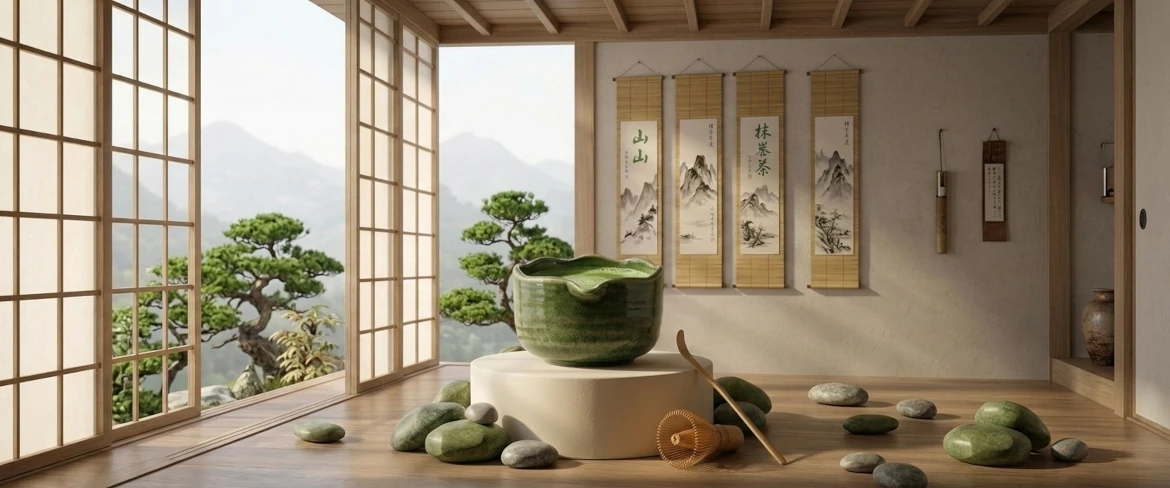
Essential matcha accessories – what should you buy to start?
If you want to prepare matcha in a way close to the traditional method, it is best to begin with the basics. Essential matcha accessories are not complicated – they consist of three elements that form the foundation of the entire process: a matchawan, a chasen matcha whisk, and a chashaku. Thanks to them, you can fully control proportions, the texture of the drink and the structure of the foam.
This basic set transforms matcha preparation from random stirring of powder in water into a mindful, repeatable ritual. Let us take a closer look at each of these elements.
Matchawan – the ideal matcha bowl
Chawan or matchawan is the traditional matcha bowl used for preparing the drink. Its wide base and appropriate depth allow for free, energetic whisking with a chasen. As a result, the powder can combine thoroughly with water and create the delicate foam on the surface that characterises properly prepared matcha.
In the tradition of chanoyu (the Japanese tea ceremony), the chawan also has aesthetic and symbolic meaning – its shape, texture and colour contribute to the atmosphere of the meeting and emphasise the mindful nature of preparing matcha.
What should you look for when choosing a matchawan? Besides appearance and colour, it is worth considering several practical aspects that influence the comfort of preparing matcha:
- ✔️ width of the base – the wider it is, the easier it is to whisk with a matcha whisk;
- ✔️ shape of the base – bowls with a flatter bottom make it easier to perform the characteristic “W” or “M” whisking motion. A wider, stable surface helps distribute the powder evenly and produce foam. Bowls with a rounded base also work but require slightly more practice;
- ✔️ depth – the bowl should not be too shallow so the drink does not splash while whisking;
- ✔️ material – ceramic retains heat well and feels pleasant to use;
- ✔️ spout – useful if you plan to pour matcha into another vessel, for example when preparing matcha latte.
In our offer you will find many types of matchawan – from classic forms to more modern designs. Here are a few examples:
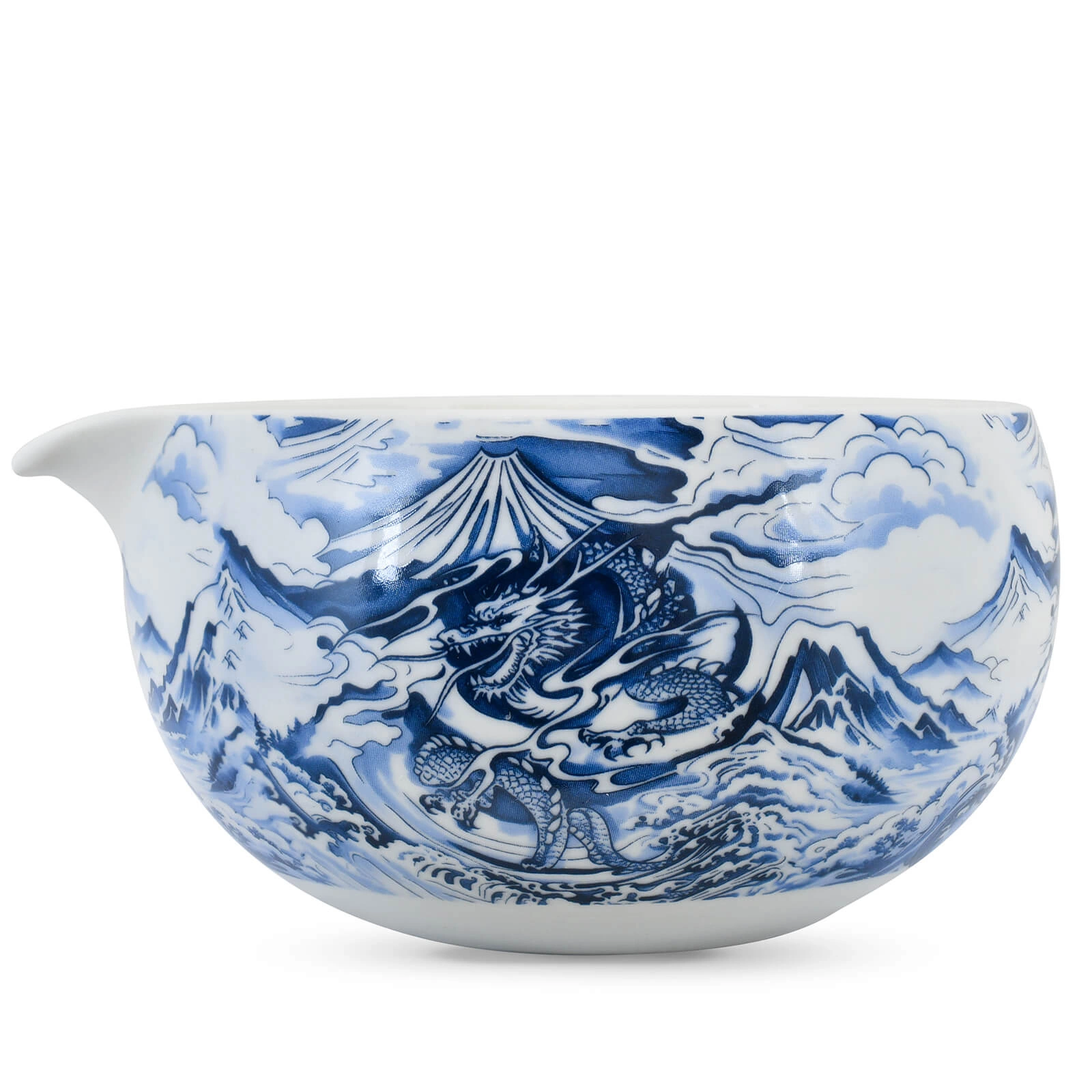
An impressive blue‑and‑white design with a dragon motif – a combination of tradition and bold style.

Light green ceramic with subtle speckles – minimalist and modern.
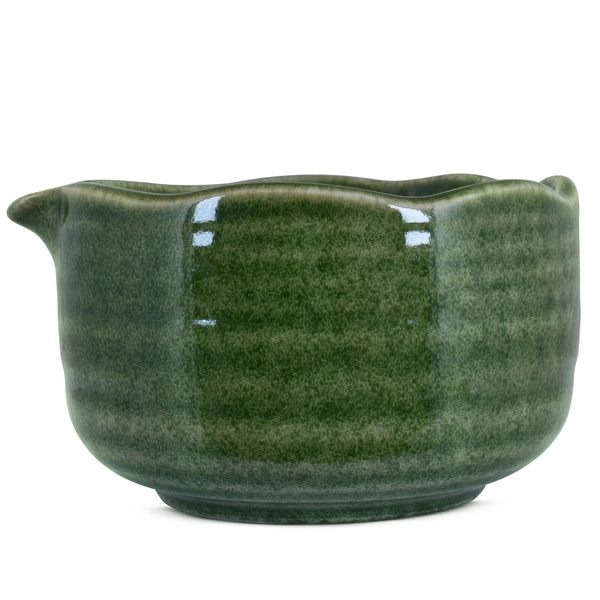
Deep green glaze – an elegant and understated option for everyday matcha rituals.
A well‑chosen matcha bowl or matcha tea cup is the first step in creating your own set of matcha tea accessories tailored to your style and preferences.
Chasen – the essential matcha whisk
The chasen, often called a bamboo matcha whisk or “matcha tea frother”, is the heart of the entire preparation process. It is carved from a single piece of bamboo, whose tip is carefully split into dozens of thin prongs.
These flexible prongs make it possible to whisk energetically using the characteristic “M” or “W” motion. Thanks to this traditional matcha whisk, the drink becomes aerated and achieves:
- ✔️ a smooth, uniform texture,
- ✔️ fine, stable foam,
- ✔️ no lumps.
Different models of chasen can have from around 60 to over 100 prongs – the more there are, the more delicate and creamy the foam can be. This small tool has a huge influence on the final result in your matcha bowl.
In our shop, the chasen is available as part of a practical set together with a chashaku and an additional spoon:
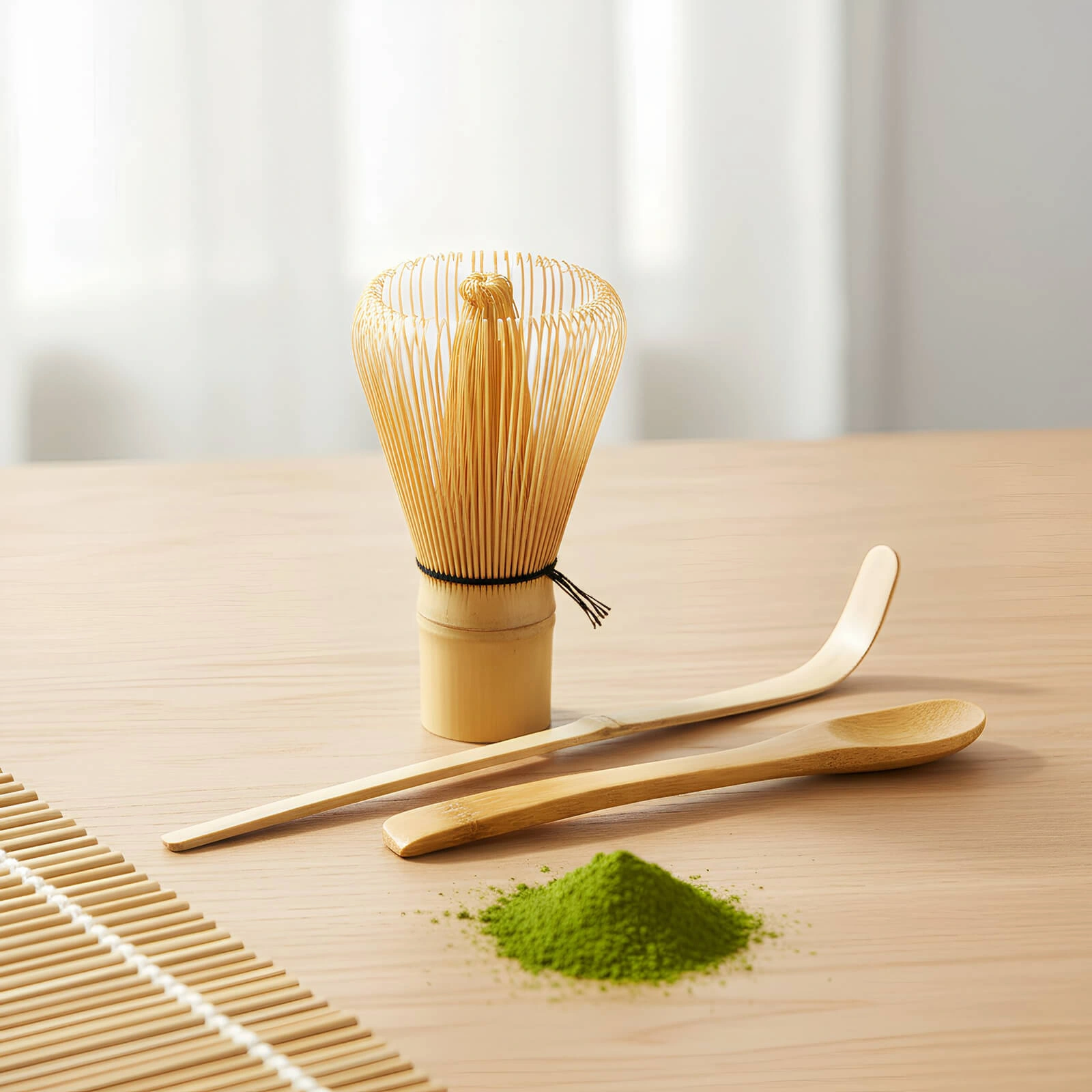
🎋 Bamboo matcha tea accessories set
A chasen matcha whisk, chashaku scoop and spoon – a set that allows you to begin preparing matcha in the traditional way straight away. It is a convenient solution for those who want all essential matcha tea accessories in one kit.
The chasen is carved from a single piece of bamboo, with its tip cut into dozens of fine prongs. This structure is what makes this traditional matcha whisk so effective at aerating the drink and producing a smooth, creamy consistency.
💡 Good to know: before using it for the first time, soak the chasen in warm water for about 1–2 minutes. The bamboo prongs will become more flexible, reducing the risk of breakage and helping produce finer foam. This simple step significantly extends the life of the whisk.
Chashaku – how to measure matcha?
Chashaku is a bamboo scoop used to measure matcha tea powder. Although it looks simple, it plays an important role in maintaining the correct proportions. One scoop of chashaku usually equals about 1 gram of matcha – for a classic serving of the drink, 1–2 scoops are typically used depending on how intense you prefer the flavour.
Why does this matter? Too much powder can make the drink overly strong and thick, while too little can result in a watery taste. Precise dosing is one of the key elements of matcha preparation.
Of course, you can use a regular teaspoon, but a chashaku allows for greater consistency and fits the traditional style of preparing matcha. The bamboo set mentioned earlier is a convenient option if you want to have all the essential matcha accessories in one complete kit.
📌 Summary of this section: The basic matcha set consists of a matchawan, chasen and chashaku. These three items form the foundation of traditional preparation and allow you to fully control the flavour, texture and quality of matcha.
Useful but optional matcha accessories
The basic matcha set allows you to prepare the drink without any difficulty. However, there are also additional matcha accessories that are not essential when starting out but significantly increase convenience and help extend the lifespan of the equipment. These elements make the daily ritual even more comfortable and refined.
Such accessories include, for example, a matcha whisk holder (kusenaoshi), a matcha sieve (furui) or a chashaku stand (chashaku‑oki). It is also worth mentioning modern alternatives such as a matcha tea frother, shaker or blender – particularly if you often prepare matcha latte.
Matcha whisk holder – why is kusenaoshi worth having?
A matcha whisk holder, also known as kusenaoshi or chasentate, is a ceramic stand designed specifically for storing a bamboo matcha whisk. Its purpose is to maintain the proper shape of the whisk’s prongs after washing and drying.
After preparing matcha tea, the chasen should be gently rinsed with warm water and left to dry. If you simply place it on a shelf, the prongs may become deformed. A matcha whisk holder keeps them naturally spread out, which:
- ✔️ helps preserve the correct shape of the matcha whisk,
- ✔️ prevents excessive bending of the prongs,
- ✔️ extends the lifespan of the chasen,
- ✔️ makes storing matcha tea accessories more aesthetically pleasing.
If you want a visually consistent set, you can choose a holder that matches the colour of your matcha bowl. Here are a few examples:

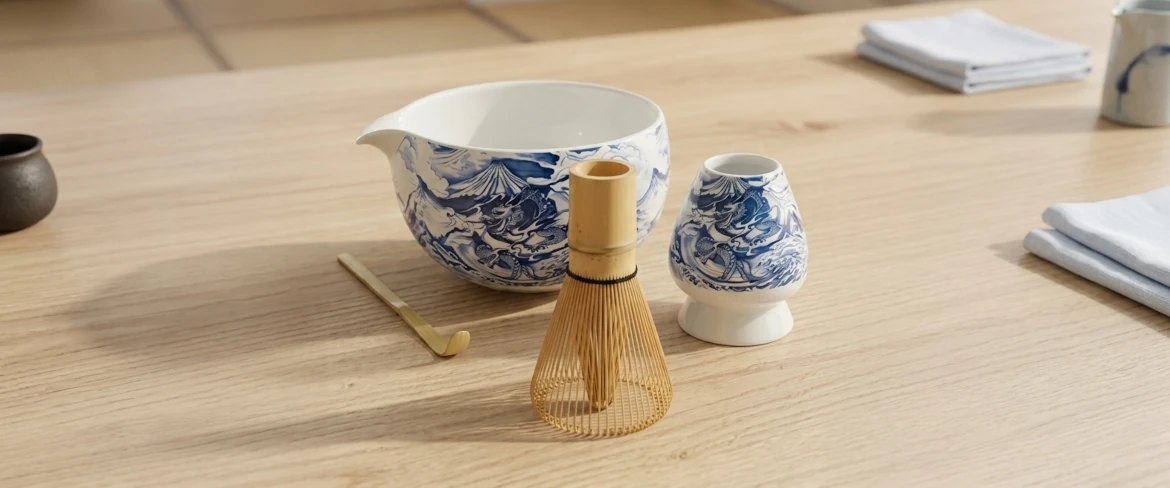
A ceramic matcha whisk holder designed to match the Dragon matchawan – practical and decorative.

A light‑green holder that perfectly matches the Midori matcha bowl.
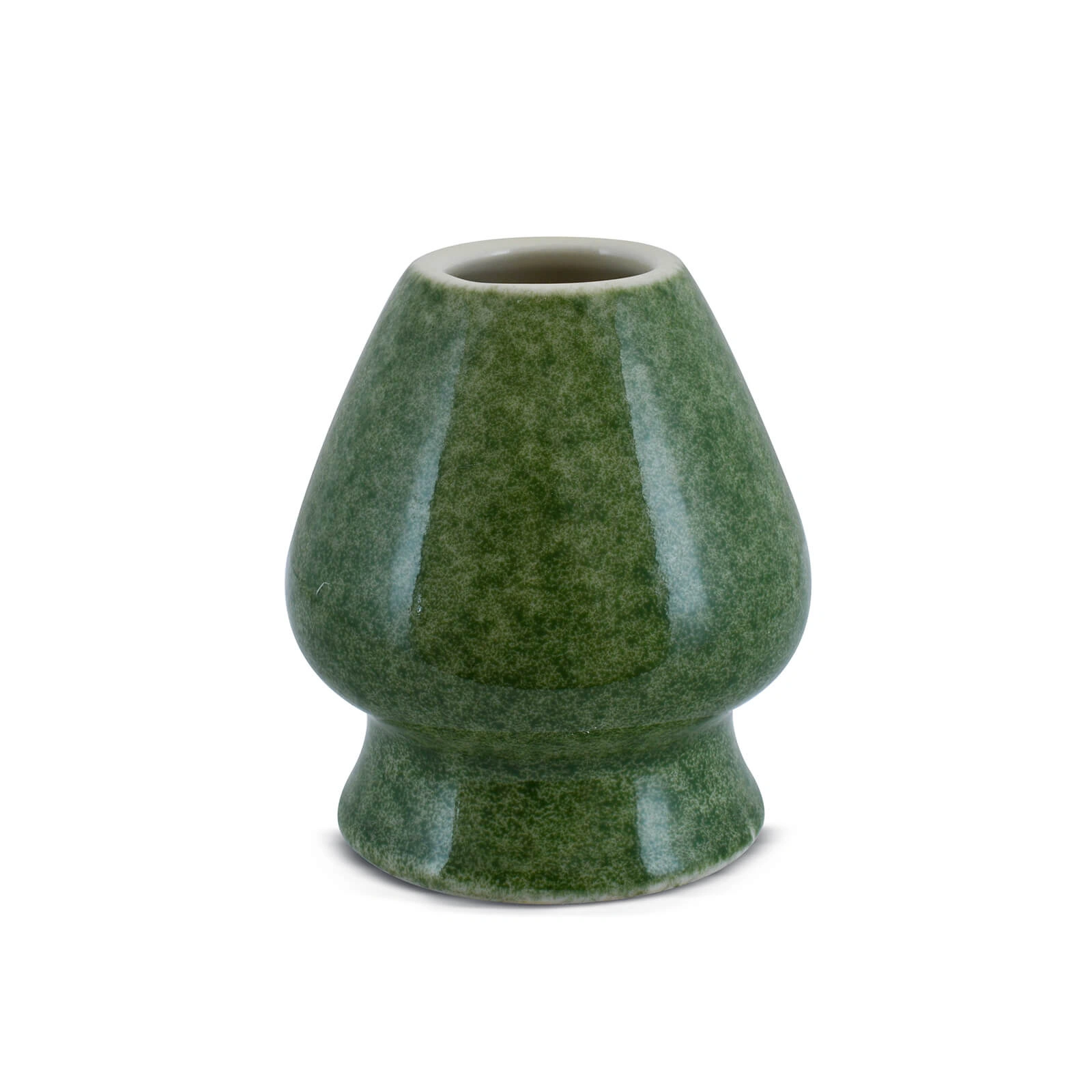
A deep‑green, elegant holder for storing your matcha whisk.
Kusenaoshi may be a small item, but if you use a matcha whisk regularly, you will quickly appreciate its practical value.
Matcha sieve – is it really necessary?
A matcha sieve (furui) is used to sift the powder before adding water. Matcha has a very fine texture, and even high‑quality powder can sometimes form small clumps. Sifting it through a sieve makes the powder fluffier and easier to combine with water. As a result:
- ✔️ you reduce the risk of lumps forming,
- ✔️ you achieve a smoother drink texture,
- ✔️ you can create more even, fine foam.
A sieve is not an essential part of the set, but if you aim for perfect texture – especially in ceremonial preparation – it is worth considering. See the available option in our shop: Furui – matcha sieve.
Additional matcha accessories – what else may be useful?
In our offer you will also find a chashaku‑oki, a small stand for the bamboo scoop. This simple accessory helps keep your workspace tidy during preparation and prevents matcha powder from spilling onto the surface.
And what about modern alternatives? If you often prepare matcha latte, you might reach for a matcha tea frother, shaker or blender. These solutions are quick and convenient – especially for larger portions or iced drinks. However, the traditional bamboo whisk still provides the most authentic foam structure and full control over the preparation process.

How to choose a complete set of matcha accessories?
If you do not want to assemble each element separately, a ready-made set of matcha accessories can be a great solution. It is a convenient option both for beginners and for those looking for an aesthetic set for a daily ritual or a gift.
When choosing a set, it is worth paying attention to a few things:
- ✔️ whether it includes a matchawan, chasen and chashaku – the basic traditional matcha tea accessories;
- ✔️ whether the set contains a matcha whisk holder (kusenaoshi), which helps extend the lifespan of the whisk;
- ✔️ whether the set also includes matcha – a good option when starting out;
- ✔️ whether the elements are colour‑matched and stylistically consistent.
Various matcha sets are available in the shop – from basic configurations (whisk and scoop), through sets with a matcha bowl and whisk, to more extensive gift sets including matcha and additional matcha tea accessories. It is also worth paying attention to sets where the matcha bowl and matcha whisk holder are colour‑matched – for example the Dragon matchawan paired with the Dragon kusenaoshi, or Midori with Midori. Such a cohesive set not only looks attractive but also creates a harmonious whole.
Is it worth investing in premium sets? If you drink matcha regularly and care about build quality and aesthetics, better materials and careful craftsmanship can noticeably improve the comfort of use. For beginners, however, a basic set is perfectly sufficient to learn the technique and discover which matcha accessories suit your needs best.
📋 Overview of matcha accessories – traditional and additional elements
| Accessory | Role | Type | Alternative |
|---|---|---|---|
| Matchawan | a wide matcha bowl used for mixing and whisking matcha; allows the characteristic “W/M” whisking motion | essential | a wide bowl or large cup |
| Chasen | a bamboo matcha whisk used to aerate the drink and create foam | essential | a matcha tea frother, shaker or blender |
| Chashaku | precise measurement of matcha powder portions | essential | a regular teaspoon |
| Kusenaoshi | a matcha whisk holder that helps maintain the shape of the whisk after washing | additional | |
| Furui | a sieve that breaks up lumps and aerates the powder before whisking | additional | a small kitchen sieve |
| Chashaku‑oki | a stand for the scoop that helps keep the preparation area tidy | additional |
As you can see, starting your matcha journey requires only three essential elements. The remaining matcha accessories improve convenience and durability, but you can add them gradually – whenever you decide you want to refine your ritual down to the smallest detail. And if you do not yet have a traditional set, do not worry – many of these tools can temporarily be replaced with simple household alternatives such as a wide bowl, a teaspoon or a frother. The most important thing is simply to start and find a way of preparing matcha that suits you best.

How to care for matcha accessories?
Good matcha accessories can last a long time – provided they are cared for properly. Maintenance does not require complicated procedures but rather consistency and attention. Bamboo, ceramic and steel are durable materials, yet they require slightly different treatment compared with ordinary kitchen utensils.
It is worth viewing the care of your matcha tea accessories not just as a duty but as a natural extension of the preparation ritual. Proper drying, storage and gentle cleaning allow matcha accessories to maintain their shape, appearance and functionality for many months or even years.
How to clean a matcha whisk (chasen)?
The matcha whisk, or chasen, is the most frequently used element of the entire set. It comes into direct contact with water and powder, so after each use it deserves a moment of attention.
The most important rule: do not use detergents. Bamboo easily absorbs smells and chemicals that may later affect the flavour of the drink.
How should you clean a matcha whisk properly?
- ✔️ Rinse the whisk in warm (not hot) water immediately after use.
- ✔️ Gently remove remaining matcha tea without forcing the prongs.
- ✔️ Shake off excess water.
- ✔️ Leave it to dry upright – ideally on a matcha whisk holder (kusenaoshi).
And what are the most common mistakes?
- ❌ Washing it in a dishwasher.
- ❌ Using washing‑up liquid.
- ❌ Drying it flat or inside a closed cupboard without airflow.
A matcha whisk is a natural product – over time its prongs may spread slightly or shorten. This is a normal sign of wear. With regular use, a chasen usually lasts from several months up to more than a year, depending on how frequently you prepare matcha tea.
How to store a matcha bowl and other accessories?
A matchawan, or matcha bowl, is made of ceramic – a durable but fragile material. To preserve its appearance:
- ✔️ store it in a dry place away from moisture,
- ✔️ avoid sudden temperature changes (for example pouring boiling water into a cold bowl),
- ✔️ do not place heavy dishes directly on top of it,
- ✔️ avoid washing it in the dishwasher.
If you store your matcha accessories together, make sure they are not tightly squeezed into a drawer. A bamboo whisk needs air circulation, and the chashaku should not be exposed to constant moisture.
A good idea is to create a small, dedicated space in your kitchen for your matcha set – a shelf or tray where the matcha bowl, whisk and other accessories can be kept. This not only protects the tools but also emphasises the ritual aspect of preparing matcha.
📌 Why is this important? Taking care of matcha accessories is not only about aesthetics. Proper maintenance affects the durability of bamboo, the quality of whisking and the comfort of everyday use. A well‑maintained set ensures consistent results in your matcha cup.
Matcha is a drink that combines flavour, mindfulness and simplicity. Whether you use a full traditional set or choose modern alternatives, the most important thing is that preparing the drink brings you pleasure. Properly selected and maintained matcha accessories will help you fully enjoy this ritual every day.
Choose your set, pay attention to the details and discover how much difference properly prepared matcha can make.
❓ FAQ – frequently asked questions about matcha accessories
1. Can a matcha whisk be replaced with a milk frother?
2. Is a matchawan necessary for preparing matcha?
3. How long does a matcha whisk last?
4. Is a matcha sieve really necessary?
5. How many chashaku scoops are used for one serving of matcha?
6. Can matcha accessories be washed in a dishwasher?
7. Is it worth buying a ready‑made matcha accessories set?
Sources of information:
- Wikipedia: Matcha, Japanese tea ceremony.
- S. Li et al., The application of untargeted metabolomics coupled with chemometrics for the analysis of agitation effects on the sensory profiles of matcha tea, Current Research in Food Science, 2024.
- J. Kochman et al., Health Benefits and Chemical Composition of Matcha Green Tea: A Review, Molecules, 2020.
- T. I. Kastutia, Ch. D. Permatasari, Comparative Study of Chanoyu Tea and Tea Serving in Yogyakarta Palace, IZUMI, 2020.
Recommended

Bamboo matcha tea accessory set: chasen whisk + chashaku scoop + spoon

Matcha tea brewing gift set

Furui – Matcha Tea Sieve
