
Matcha set – which one to choose for a start to avoid mistakes?
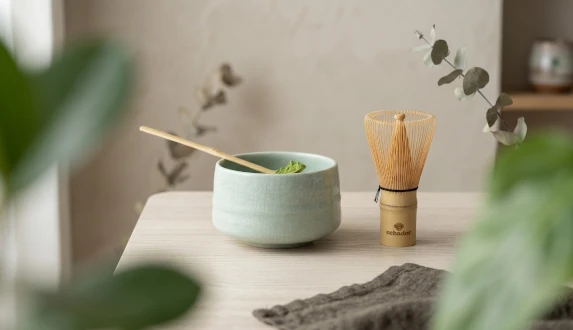
The green powder that is winning the hearts of healthy lifestyle enthusiasts all over the world – matcha is definitely something more than just ordinary tea. It is a real ritual, a moment for yourself, and a wealth of health benefits hidden in an intensely emerald infusion. However, if you have ever tried to mix it with an ordinary spoon in your favourite mug, you know perfectly well that the result was far from ideal. That is exactly why proper tools, which create a coherent and functional matcha set, are so important. If you are wondering which matcha set to choose for a start – this guide will dispel your doubts.
Entering the world of Japanese tea can be a bit overwhelming at first. Exotic names, specific matcha accessories, and preparation rules can raise doubts. What exactly is a traditional matcha tea set and who is it for? In this article, we will guide you through the basics. We will suggest which matcha starter kit will work best for people beginning their tea adventure, show you what it should consist of, and how to use it to avoid the most common traps. Prepare some water for your tea and let's dive into the fascinating world of Japanese tradition!
Summary:
- Matcha set – why is it worth having?
- Basic matcha set – what should it contain?
- Additional matcha accessories – what else might come in handy?
- What to look for when buying a matcha set?
- How to use a matcha set step by step?
- How much does a matcha set cost?
- Where to buy a matcha set?
- A matcha gift set – is it a good idea?
Matcha set – why is it worth having?
Are you wondering if a special matcha kit is actually a necessity, or maybe just a marketing gimmick? The answer is simple: proper tools are the key to success. The difference between randomly preparing a drink and a conscious process is colossal and affects everything – from taste and consistency to your well-being.
A traditional matcha set allows you to achieve a perfectly smooth, velvety texture without unpleasant, bitter clumps of powder at the bottom of the vessel. Moreover, the process of whisking the tea with a special matcha whisk allows you to aerate the infusion, which directly translates into releasing a deep, sweet and grassy flavour and aroma. Having dedicated tools is also an entry into the zone of a specific ritual – a moment of focus while preparing the drink acts like a mini-session of mindfulness in the middle of a busy day.
💡 Good to know: The Japanese tea ceremony chanoyu is a centuries-old tradition based on harmony, respect, and tranquillity. By using traditional accessories in the comfort of your home, you become a part of this beautiful culture. As Okakura Kakuzō wrote in his famous "The Book of Tea" – tea is more than a beverage, it is the art of celebrating everyday life.
Matcha vs ordinary tea – why do you need special accessories?
To understand the phenomenon of these odd-looking bamboo brushes and wide bowls, we must realise one key thing: matcha is not an ordinary loose-leaf tea. It is a finely ground powder from tea bushes shaded before harvest. When you drink it, you do not just consume a water infusion (as in the case of classic loose-leaf or bagged green tea), but you ingest the whole leaves suspended in water. This requires a completely different processing technique.
Classic infusers, strainers, or jugs are completely useless here. Matcha is a powder that does not dissolve in water like instant coffee, but forms a suspension with it. An ordinary metal spoon simply will not cope with it.
- ❌ Mixing with a spoon will cause the powder to clump into unappetising lumps, which, when bitten into, will release an intense bitterness.
- ❌ A tall, narrow mug will prevent you from making the appropriate movements needed to whisk the characteristic green foam.
- ✔️ A matcha set is designed to physically facilitate and optimise the entire process – from scooping the ideal portion to creating an emulsion with a perfect consistency.
💬 Scientific source: J. Kochman et al., Health Benefits and Chemical Composition of Matcha Green Tea: A Review, Molecules, 2020.
According to a publication in the scientific journal Molecules, matcha – as a powdered tea – is an exceptionally rich source of antioxidants (including EGCG), because we consume whole leaves, not just the infusion. That is why its proper preparation is so important, as it allows us to fully utilise its potential.
Is a matcha starter set necessary at the beginning?
Beginner matcha lovers often face a similar dilemma: "I just want to try matcha – do I have to buy a whole matcha starter set right away?". The answer is: you do not have to, but it is definitely worth it. Of course, you can start in the spirit of extreme minimalism – use a breakfast bowl and an electric milk frother, or even an ordinary cake fork. This is a kind of compromise that will allow you to get acquainted with the taste of the green powder at the very beginning.
Unfortunately, the metal rotors of frothers often destroy the delicate structure of the infusion, not aerating it as well as bamboo fibres do. What is more, when gathering accessories on your own, you often lose out on ergonomics. A complete, dedicated set of matcha accessories solves these problems. These tools have evolved over hundreds of years to work perfectly together. By buying a ready-made kit, you can be sure that the whisk will fit the bowl, and you will not get discouraged from matcha tea after the very first, unsuccessful, and clumpy sip.
Basic matcha set – what should it contain?
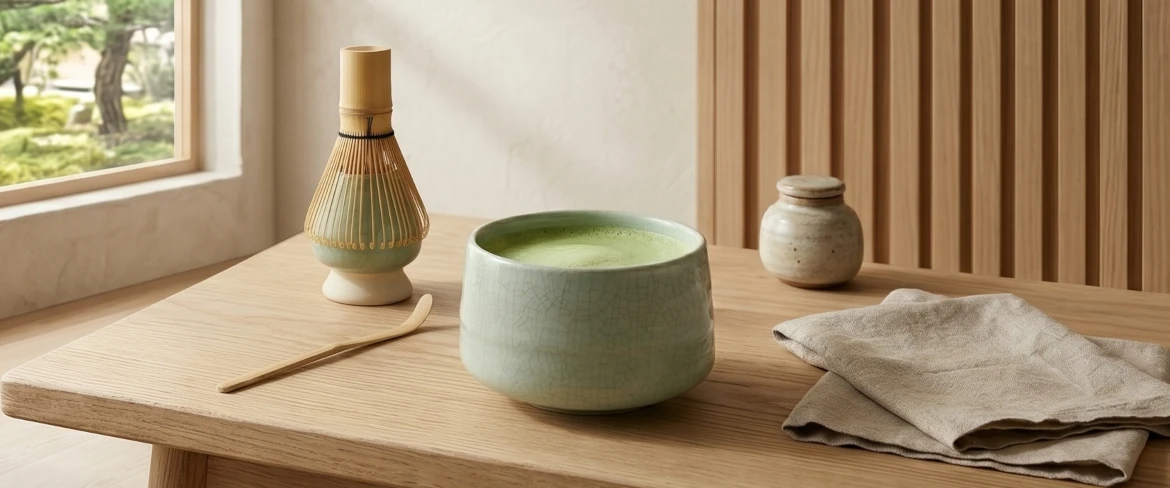
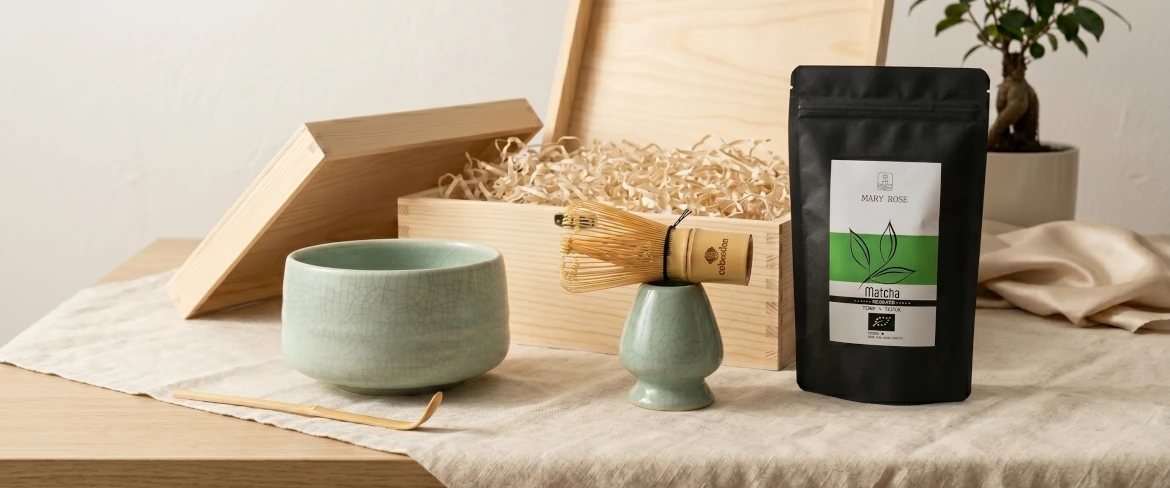
When you start your adventure with Japanese tea, you do not have to immediately invest in dozens of advanced gadgets. A traditional and complete matcha set is based on just a few fundamentals. This is the absolute base that will allow you to prepare an infusion with a perfect consistency and fully enjoy the charms of the tea ritual. Meet the fantastic four of the Japanese chanoyu ceremony: the bowl, the whisk, the spoon, and the special stand.
Below you will find a brief summary of each of these tools. We will focus on their main role and application. However, if you prefer to delve into the topic and learn all the technological details, be sure to check out our comprehensive article: Matcha accessories – what to buy to start and what is optional? A practical guide.
Matchawan (matcha bowl)
In the world of Japanese tea, this vessel is known as a matchawan, and in everyday language, it functions simply as a matcha bowl. Why will your favourite coffee mug not work here? A dedicated bowl has a very characteristic build – it has a properly wide and flat bottom as well as vertical walls. Such a design not only makes it easier to place the measured portion of powder inside, but above all, it allows you to freely perform vigorous wrist movements (in the shape of the letter "M" or "W") while whisking the tea, without the risk of splashing the emerald infusion all over the worktop. It is the foundation of comfort!
Chasen (matcha whisk)
Another inseparable element of the set is the chasen matcha, which is a traditional matcha whisk carved from a single piece of bamboo. Without a shadow of an exaggeration, it can be said that this is the most important tool you will deal with! It is used to thoroughly distribute the powdered tea in water and whisk a thick, fluffy foam on the surface of the drink. Individual whisks differ in build quality and the number of prongs (you will most often encounter models with 80 or 100 fibres) – the more flexible the fibres, the easier and faster you will achieve a velvety emulsion free from any clumps.
Chashaku (matcha spoon)
This element almost always appears in a harmonious duo with the whisk. A traditional, gently curved matcha spoon, originally called chashaku, is an inconspicuous bamboo tool of enormous importance. Its long, ergonomic shape allows you to scoop a precise, perfect portion of green powder from a jar or tin. Usually, two heaped bamboo spoons equal a standard portion of tea (approx. 1-1.5 g). Of course, in emergencies, it can be replaced with an ordinary metal spoon, but then we lose out on accuracy and the unique charm of the authentic ritual. You will find a bamboo whisk and chashaku in our shop in a matcha set, along with a bamboo spoon.
Kusenaoshi (chasen stand)
The last, although from a practical perspective equally valuable element of the set, is the kusenaoshi, which is nothing else but a chasen stand. It is usually made of ceramics and has a specially contoured shape, perfectly matched to the shape of the whisk. What is it used for? Primarily for drying and safely storing the bamboo whisk. By putting a wet whisk on the stand after preparing matcha tea and washing it, you can be sure that its thin, flexible prongs will retain their original, flared shape, and the tool will not go mouldy. It is not an absolutely essential accessory for preparing tea, but it significantly makes life easier and extends the lifespan of the whisk – which in the long run is simply pure savings.
📌 Summary: what does a basic matcha tea set consist of?
- ✔️ Matchawan – a ceramic bowl that facilitates vigorous mixing of the infusion.
- ✔️ Chasen – a bamboo whisk essential for aerating the tea and getting rid of clumps.
- ✔️ Chashaku – a contoured spoon that facilitates precise measuring of the green powder.
- ✔️ Kusenaoshi – a contoured stand taking care of hygiene and the correct shape of the whisk.
Once the entire four traditional tools have settled on your shelf, the tea brewing process becomes simple, hygienic, and highly repeatable. Over time, however, you may feel the desire to perfect your ritual or make everyday activities even easier for yourself. That is when additional accessories step onto the stage. What else is worth adding to your tea arsenal?
Additional matcha accessories – what else might come in handy?
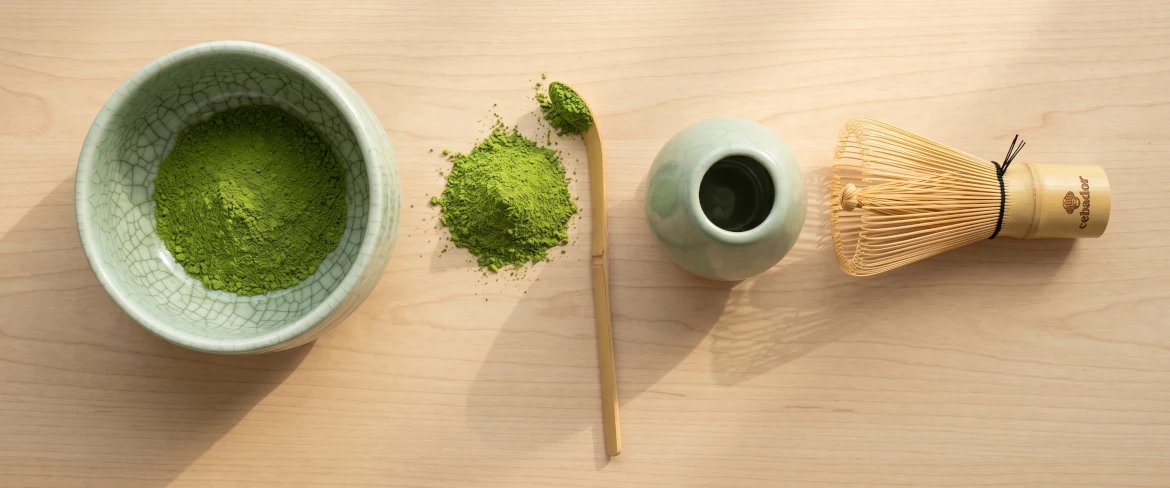
Mastering the basic four is an excellent start. However, as you begin to drink Japanese tea regularly, you might want to enter a higher level of initiation. Additional matcha accessories are not absolutely necessary to brew a good infusion, but they significantly increase the comfort of preparation and make the whole process even smoother. If you already have your basic matcha kit, see what can optionally make your tea life easier.
Matcha strainer – the secret to a perfectly smooth drink
Even the highest quality matcha tea tends to electrify and clump into microscopic lumps during transport or storage. Pouring the powder straight from the tin to the bottom of the bowl sometimes results in having to work hard with the bamboo whisk to break it back into dust. The solution? A fine stainless steel matcha strainer – called furui in Japanese.
Sifting green tea just before whisking is a simple and brilliant trick used by tea masters. Thanks to this, the powder combines with water instantly, and a perfectly smooth, fluffy foam without an ounce of bitterness and sediment forms on the surface.
Chasen vs electric milk frother – can you give up the bamboo whisk?
Many beginners wonder if the classic bamboo matcha whisk – chasen – can simply be replaced with a handheld electric milk frother. Of course, on a quick, rushed Tuesday morning when every second counts, a frother seems like a tempting compromise and will indeed generate a layer of foam on the surface of the drink. You must know, however, that metal rotors are quite aggressive – they can scratch and damage the delicate bottom of a ceramic vessel, and the infusion itself is not as effectively and deeply aerated.
The bamboo chasen, thanks to dozens of springy prongs, acts much more subtly. It whisks the tea into an emulsion with a perfect, velvety texture without damaging the walls of the matchawan. If you care about authentic taste and consistency, the chasen wins hands down – even if you ultimately dream of a homemade matcha latte set with the addition of plant milk, it is always best to prepare the emerald base traditionally.
Matcha accessories for the more demanding
When the ceremony of drinking green tea gets into your blood for good, you can look around for equipment for true connoisseurs. What else is worth investing in to deepen your ritual and get closer to mastery?
- ✔️ Natsume – a matcha container – a small, often intricately decorated wooden tin or box. You pour matcha into it from the original packaging to conveniently scoop it with a chashaku during the ceremony. It definitely elevates the aesthetics of the entire process!
- ✔️ Temperature control kettle – this is basically an absolute gamechanger. Remember that matcha tea poured with boiling water becomes terribly bitter and loses its most valuable health properties. The ideal water temperature is around 70-80°C. A kettle with the function of setting a specific temperature takes away the obligation of standing over a mug with a thermometer in hand and guessing whether the water has cooled down enough.
- ✔️ Chashaku-oki – a chashaku stand – this is a charming, small gadget that serves as a support for the bamboo matcha spoon. It is usually made of ceramics or glass and can take on various, often fanciful shapes – from minimalist mountain peaks, through glass pebbles and ceramic leaves, to joyful cat figurines. The stand takes care of hygiene, preventing the worktop from getting dirty with leftover green powder, and additionally constitutes a beautiful, aesthetic detail diversifying the tea ritual.
What to look for when buying a matcha set?
The decision is made – you are assembling your first tea equipment. You type the appropriate phrase into the search engine and suddenly... you are flooded with a sea of offers. Sets differ in size, colours, materials, and above all – price. How to choose wisely and not get caught out on products that will end up in the bin after a few uses? The key is to pay attention to a few technical details.
First of all, look at the build quality and the materials used. Real, traditional equipment is a nod towards nature. The whisk (chasen) and spoon (chashaku) should be made of high-quality, resilient bamboo. In the case of the chasen, make sure it is made from a single piece of wood, and its prongs are precisely cut – this guarantees adequate flexibility and durability. The matcha bowl (matchawan) and any stand must be ceramic. Avoid plastic substitutes like the plague! Plastic in contact with warm water not only deteriorates faster but also completely strips the whole process of the aesthetics and magic of an authentic ritual.
Another issue is the completeness of the set. Before you add a product to your basket, make sure the package contains the absolute minimum we wrote about earlier: a wide bowl, a bamboo whisk, and a dedicated scoop. Often, offers that look very attractive in terms of price at first glance are actually stripped-down packages lacking a key element, e.g., a chasen stand (which you will want to buy later anyway, paying extra for another delivery). A good, well-thought-out matcha starter kit is an investment in coherent, matching tools.
📌 Beware of traps! What to avoid when buying?
- ❌ Suspiciously cheap whisks – they often have too few fibres or they are thick and stiff. You will have to put a lot of effort into whisking the tea, and the result will still be far from ideal. Poor quality bamboo also likes to shed splinters (and fishing them out of the drink is not pleasant!).
- ❌ Inappropriate bowl shape – some vessels sold in budget sets look more like standard, tall mugs or narrow rice bowls. Remember that the bottom should be flat and wide enough so the whisk can freely move along the bottom and aerate the liquid.
- ❌ Metal accessories in a set with ceramics – although an electric milk frother is undoubtedly a quick and convenient alternative for beginners, combining it with a traditional bowl has its downsides. Above all, such a solution takes away the magic and charm of the authentic ritual, and additionally, hard metal can easily scratch the delicate glaze of the vessel, causing the ceramics to lose their shine faster.
How to use a matcha set step by step?
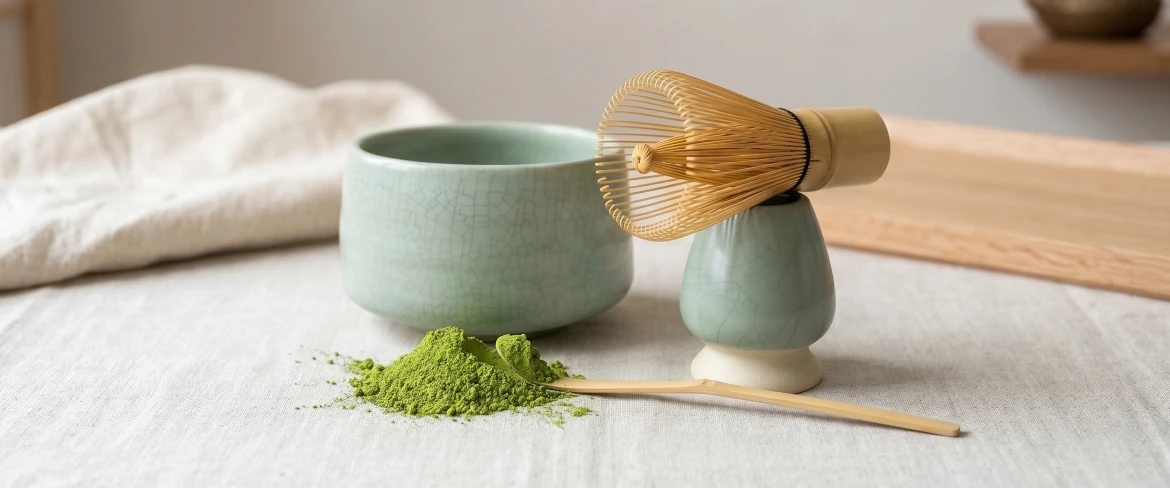
You already have a beautiful, freshly smelling matcha tea set on your worktop, and the water is heating up in the kettle. What next? Remember that even top-class tools will not do all the work for you if you lack the proper technique. Preparing Japanese tea is not difficult, but it requires following a few key rules, the most important of which are temperature and movement technique.
Below we have gathered instructions in a nutshell for you. We focus on the absolute basics so that you can test your new accessories immediately and without stress. However, if you want to delve into the topic, learn the history, flavour profile, and absolutely all the secrets of this green drink, be sure to check out our dedicated article: Matcha from A to Z. What is this tea, what does it taste like and why is it worth drinking?
How to prepare matcha traditionally?
The whole ritual will be completed in just a few minutes. You just need to develop the right habit. Here is how to prepare perfect matcha step by step using a traditional set:
- Measuring: using a bamboo scoop (chashaku), take 2 portions of green powder (approx. 1.5-2 g) and place it at the bottom of the bowl (matchawan). If you have a strainer, sift the tea through it first.
- Pouring: pour a small amount of water over the powder (about 80-100 ml). Note: the water must not be boiling! The optimal temperature is 70-80°C.
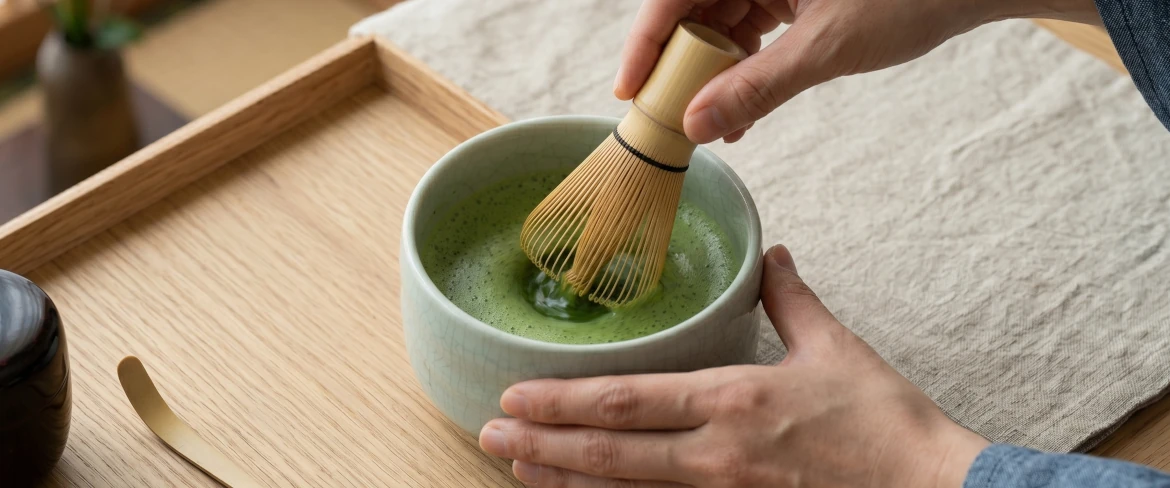
- Whisking: grab the chasen matcha in your hand and submerge it in the water. Do not make circular movements! Instead, vigorously move your wrist back and forth, "drawing" the letter "M" or "W" on the bottom of the vessel.
- Final result: after about 15-20 seconds of vigorous whisking, a thick, jade foam should appear on the surface. At this point, your tea is ready! Now you can pour the tea into a mug or glass and top it up with more water or – if you want to prepare a matcha latte – add frothed plant milk to the tea.
The most common mistakes during preparation?
Even with good equipment, you can have a tea stumble. Fortunately, the most common mistakes can be very easily eliminated. See what to watch out for so as not to spoil your taste and joy of tasting:
🧐 The most common beginner traps
- ❌ Pouring boiling water over the tea: this is a cardinal sin! Water at a temperature of 100°C will instantly "burn" the delicate leaves, killing the antioxidants and releasing a very unpleasant, tart bitterness. Always wait a few minutes after boiling the water.
- ❌ Mixing "in circles": circular movements (like when stirring sugar in coffee) only create a whirlpool in the bowl, but do not aerate the infusion. The powder will stay at the bottom, and no foam will appear on the surface. Stick to the "M" or "W" letter rule.
- ❌ Not sifting the powder and ignoring clumps: if you do not have a strainer, before pouring the full portion of water over the powder, add just a tablespoon of cold water to it and rub it into a smooth paste with a whisk (or chashaku). Only then add warm water and whisk. This way you will avoid bitter surprises at the bottom of the bowl!
- ❌ Hiding a wet chasen in a plastic tube: the plastic packaging in which the whisk arrives is only used for transport. If you close a damp chasen in it after washing, the bamboo will quickly go mouldy. Always dry the whisk in the open air, preferably on a kusenaoshi stand.
Mastering these few simple rules will make preparing Japanese tea your favourite, relaxing habit. You already know what the base consists of, what is worth buying as you develop your passion, and how to properly use individual accessories to enjoy the taste of the perfect green foam. Now all that remains is the most exciting step – moving from theory to practice and assembling your own equipment. Perhaps you are wondering what expense you need to prepare for and where to buy a matcha set? Or maybe you are thinking about giving a tea surprise to a loved one? In the next parts of the entry, we will look at prices, the best places to shop, and why a ready-made matcha gift set is absolutely a perfect idea for a beautiful present.
How much does a matcha set cost?
Are you wondering how much a matcha set costs and what expense you need to prepare for? The price range can be quite wide, and the final amount depends mainly on the quality of the materials used, craftsmanship, and exactly how many elements are included in the kit. When assembling your first equipment, you do not have to spend a fortune right away, but it is always worth aiming for the golden mean and avoiding suspiciously cheap offers, which usually mean low durability.
A basic matcha starter set, usually consisting of a classic ceramic bowl, a bamboo whisk, and a spoon, is a highly affordable option. It is an excellent, budget-friendly choice if you are just checking whether the tea ritual will stay with you for longer. However, if you care about higher quality, unique design (e.g., hand-glazed ceramics), more flexible wood, and additional accessories (such as a kusenaoshi stand or a precise strainer), it is worth preparing for a slightly higher investment. For this premium, you get equipment that not only looks great but, above all, will serve you in perfect condition for many months of intensive use.
Where to buy a matcha set?
The growing popularity of matcha green tea has meant that accessories for its preparation appear almost everywhere today – from popular supermarkets, through giant sales platforms, to homeware chain stores. However, if you are wondering where to buy a matcha set to be absolutely certain about its authenticity and functionality, the answer is one: rely on proven, specialist tea and health food shops, such as our MateMundo.co.uk shop.
By buying in places dedicated to infusion lovers, you gain a guarantee that the products have been tested and selected by experts. You can be sure that the bowl will have a perfectly contoured bottom, and the whisk will not start crumbling upon its first contact with warm water. We recommend great caution when ordering equipment from cheap Asian shipping portals – the quality of ceramics there and the safety of dyes in contact with food are often a great unknown. When assembling your matcha tea set with professionals, you invest not only in beautiful items but above all in your health and the comfort of preparing the infusion.
A matcha gift set – is it a good idea?
Are you looking for an original gift for a loved one? A matcha gift set is an absolute bullseye! Why? By giving someone such a set of accessories, you are not just giving them another mug or a packet of tea. You are giving them a ready-made recipe for a moment of respite, a healthy habit, and a beautiful experience, which is a home tea ceremony. It is an ideal choice for healthy lifestyle enthusiasts, fans of Asian culture, people practising yoga, and all those who live on the run and could use an excuse for a daily morning relaxation.
In the MateMundo shop, we have prepared ready-made compositions that will make it easier for you to choose the perfect kit for yourself or a gift for a loved one – regardless of whether the recipient is just starting their adventure or is already an advanced connoisseur of the green powder. Here are our most interesting proposals:
- ✔️ a simple, basic set with matcha and accessories – a great starting point. You will find everything necessary for a start in it: a package of green tea, a ceramic matchawan, bamboo accessories (chasen, chashaku, and a traditional spoon), and a kusenaoshi stand;
- ✔️ a basic set in aesthetic gift packaging – this is exactly the same, proven matcha starter kit as above, but placed in a beautiful, elegant box. Ready to hand over right after collecting the parcel!;
- ✔️ a set of matcha accessories only – an ideal option for someone who already has their favourite tea but lacks the right tools. The set includes a bowl, chasen, chashaku, a bamboo spoon, and a whisk stand;
- ✔️ a complete premium set – for the most demanding! It contains the highest quality organic ceremonial matcha, a matchawan, a set of bamboo tools, a kusenaoshi, as well as a precise strainer facilitating sifting and a chashaku-oki stand;
- ✔️ A set of 3 different types of matcha from Japan – an excellent complement to the purchased accessories. The package contains Japanese ceremonial, premium, and culinary matcha, allowing you to test the differences between the individual classes of tea on your own taste buds.
Assembling a good matcha tea set is actually the first and most important step towards conscious and healthy self-care. Regardless of whether you buy it for your own pleasure or plan to surprise someone, appropriate, dedicated tools will make preparing the infusion hassle-free, intuitive, and simply beautiful. Choose your favourite kit, prepare hot water, grab the bamboo whisk, and enjoy the magic of emerald, jade foam every day.
Enter the world of Japanese tradition and see for yourself that preparing a perfect infusion has never been so easy!
❓ FAQ – frequently asked questions about matcha sets
1. What should a matcha starter kit contain?
2. Is a matcha kit necessary?
3. How much does a matcha set cost and which one to choose for a start?
4. Can a chasen (matcha whisk) be replaced with a milk frother?
5. How to use a matcha set step by step?
6. Where to buy a good quality matcha set?
Sources of information:
- Wikipedia: Matcha, Japanese tea ceremony.
- J. Kochman et al., Health Benefits and Chemical Composition of Matcha Green Tea: A Review, Molecules, 2020.
Recommended

Matcha tea brewing gift set

Matcha tea brewing set

Matcha tea brewing accessories set
