
Organic products – why they are so valued and is it really worth choosing them?
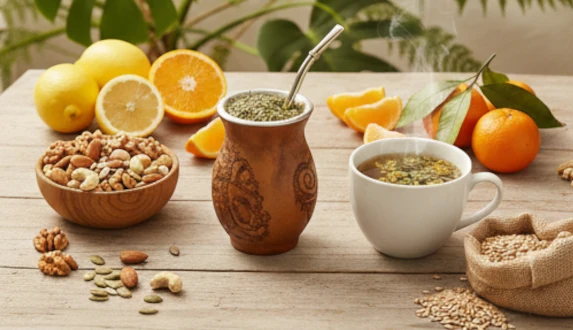
Organic products are currently one of the hottest trends in the world of healthy living. There’s nothing surprising about it – we live in times when we pay more and more attention to what ends up on our plate or in our cup. Customers consciously reach for organic food, giving up highly processed items and instead choosing what is natural and in harmony with the rhythm of nature.
It’s not just a passing trend. The growing popularity of organic food is also the result of expanding knowledge about the impact of chemicals on health, as well as interest in how our daily eating choices affect the environment. Among the most sought‑after organic products are vegetables and fruit, grains, dairy, but also infusions such as organic yerba mate or ecological teas and herbs – and these are exactly the flavours you will find in our store.
Summary:
- What are organic products?
- What are the benefits of organic food?
- How to choose organic products every day?
- Is it worth buying organic food?
What are organic products?
As this term appears more and more often, it’s natural that the question arises: organic products – what does that actually mean? In short, it’s food produced in the most natural way possible, without using synthetic pesticides, artificial fertilisers or genetically modified organisms (GMOs).
The process of their production follows nature’s rhythm, is based on respect for soil, plants and animals, and is subject to strict control. Only then can a product receive certification confirming its organic character. In practice, this means that by choosing organic food, we select food created with both our health and the environment in mind.
How does organic food differ from conventional food?
On a shop shelf it’s often hard to spot the difference at first glance – a carrot is a carrot, and tea is tea, right? But what is invisible to the eye makes all the difference.
Organic products differ from conventional ones primarily in their methods of cultivation and breeding:
- ✔️ No pesticides or chemicals – in organic farming, natural plant protection methods are used (for example, repelling insects with companion plants) instead of chemical agents.
- ✔️ Natural fertilisation – organic farms rely on compost and manure, avoiding artificial fertilisers.
- ✔️ Healthy animal feed – for animal‑origin products, animals are fed natural feed without antibiotics.
- ✔️ Simpler composition – ready‑made food products made from organic raw materials usually contain fewer preservatives, artificial flavours and colourings.
The result? Organic products are closer to what nature offers us in its purest form. This is the real answer to the question: what is organic food in practice.
Organic products and ecological food – are they the same?
Many people wonder whether there’s any real difference between the terms “organic products” and “ecological food”. In practice, both refer to the same type of food – produced according to strict standards, without the use of synthetic pesticides, artificial fertilisers or GMOs.
The difference between these expressions lies mainly in language and naming conventions. In some countries, the term “organic food” is used, while in others – “ecological” or “eco food”. Regardless of the wording, both describe food produced with care for nature, the environment and human health.
So if you come across both expressions – “organic food” and “ecological food” – you can treat them as equivalent. What matters most is that the products carry the right certificates confirming they were created in line with defined quality and safety standards.
💡 Did you know? Although systems for certifying organic and ecological food may differ in details from country to country, their main criteria are very similar – the key point is that the product comes from crops and farms managed in a natural way.
What are the benefits of organic food?
Now that we know what organic products are, it’s time to look at their main advantages. Why do so many people make more conscious choices and increasingly reach for organic food? There are many reasons – from its real impact on health, through its exceptional taste, to the benefits for the natural environment.
Health benefits – less pesticides, more nutrients
One of the most frequently mentioned arguments for choosing organic food is its potential health benefit. Organic products usually contain much fewer pesticide residues and other chemical agents that are often found in conventional crops. This matters, because even small amounts, consumed regularly, can affect the body over time.
Additionally, some studies suggest that organic food often has higher levels of certain nutrients – vitamins, micro‑elements or antioxidants. These support the body’s natural regenerative processes and protect cells from oxidative stress. In everyday terms, this means that by choosing, for example, organic teas or organic yerba mate, we provide ourselves not only with unique flavours but also a portion of natural support for the body.
Taste and quality of organic products
This is one argument that many consumers appreciate most: taste. Organic products often stand out thanks to their more intense aroma and fuller flavour. That’s because their growth rate is not artificially accelerated using chemical fertilisers or growth regulators. They grow in more natural conditions and ripen at the right pace.
Thanks to this, organic fruit and vegetables are not only healthier – they’re also juicier and more fragrant. The same goes for organic infusions such as yerba mate or tea – the leaves, dried with respect for nature, retain their natural rich aroma. For many people, it’s the taste itself that becomes the strongest argument for choosing organic food.
Impact on the environment and ecology during organic food production
We shouldn’t forget that choosing organic food is a decision that has a real impact on the environment. Organic farming supports soil protection, helps maintain its natural fertility and reduces pollution of both water and air. The absence of aggressive chemicals in farming allows farmers to take care of the natural balance of ecosystems.
Moreover, organically managed farms often focus on species diversity and smaller, more sustainable crops. This has a significant impact on biodiversity – from pollinating insects and microorganisms living in the soil to the entire local environment. By choosing organic products, we support a type of agriculture that works with nature rather than exploiting it.
💡 Did you know? According to organisations promoting sustainable agriculture, organic farms can use up to several dozen percent less energy compared to conventional food production methods.
How to choose organic products every day?
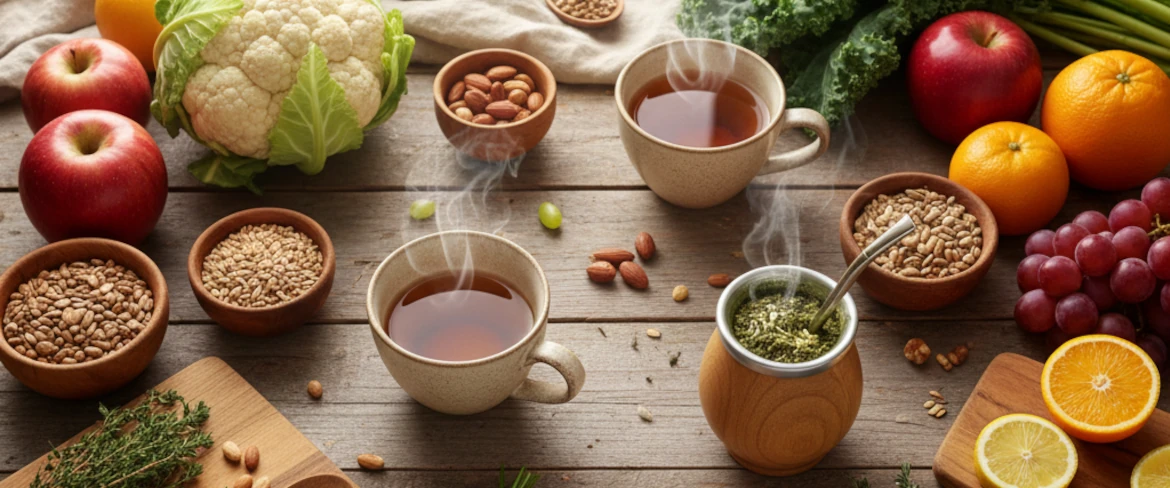
More and more people are looking for organic food, but it’s not always clear what to pay attention to when shopping. Shops are full of colourful labels, catchy slogans and claims that can often confuse rather than help. That’s why it’s worth knowing a few basic rules that will make choosing organic products easier and more conscious.
- ✔️ Look for certification and labels – they are the best confirmation that a product really comes from organic farming.
- ✔️ Buy from trusted shops – both online and stationary. This ensures that the food meets strict quality standards.
- ✔️ Read the ingredient lists – the shorter and simpler they are, the more likely it is that you’re dealing with genuine organic food.
- ✔️ Embrace diversity – by choosing both fruit and vegetables as well as infusions (for example, organic yerba mate or teas), you can gradually introduce healthy changes into your lifestyle.
Certificates and labels of organic products
One of the key aspects of conscious shopping is understanding organic food certifications and labels. Thanks to them, the consumer can be sure that the product placed in the basket has been produced in accordance with ecological standards.
🍃 Certificates and labels
The most common symbol is the distinctive logo showing a green leaf made of stars on a rectangle background, known as the “Euro Leaf”. It is the official marking for organic food within the European market, confirming that the product meets strict standards for cultivation, breeding and processing. Similar systems operate worldwide – they may differ in graphic design, but their goal remains the same: to ensure that a given product truly deserves to be labelled “organic” or “eco”.

In addition to EU and international logos, many countries also have their own national organic certificates, awarded by local organisations that monitor farming and production. Looking for such symbols ensures that you’re reaching for genuine organic products rather than falling for a marketing gimmick.
This is why, when choosing for example organic yerba mate, eco‑friendly teas or herbs from our shop, you can be certain that the products offered are properly certified and meet the highest quality standards.
Is it worth buying organic food?
Finally, the key question arises: since organic food often costs a bit more – is it really worth it? The response from many conscious consumers is clear – yes!
Even though the price may be higher and the availability not always as wide as that of conventional products, the advantages are hard to overstate. Organic food is an investment in yourself and in the planet – one that pays off in the long run, both for your health and for the environment.
🌱 Why choose organic products?
- ✔️ You gain the certainty that the food on your table is free from artificial chemicals.
- ✔️ You choose food richer in natural nutrients and antioxidants.
- ✔️ You support more sustainable farming and breeding methods that protect the environment.
- ✔️ You discover a better taste and higher quality appreciated by an ever‑growing number of consumers.
This is why more and more people treat buying organic products as an investment – in their health, wellbeing, and the future of our planet. If you want to give it a try, start with small steps: reach for organic tea, organic yerba mate, or natural herbs. You’ll quickly notice the difference and realise that it’s worth it.
Choose organic quality and feel the difference – both in flavour and in everyday wellbeing!
❓ FAQ – frequently asked questions about organic food
Sources of information:
- Wikipedia: Organic food, Organic certification.
- V. Vigar et al.: A Systematic Review of Organic Versus Conventional Food Consumption: Is There a Measurable Benefit on Human Health?, Nutrients, 2019.
- B. Jiang et al.: The effects of organic food on human health: a systematic review and meta-analysis of population-based studies, Nutrition reviews, 2024.
- What Is Organic Food, and Is It Better Than Non-Organic Food?, healthline.com.
Recommended

Soul Mate Orgánica Elaborada 0.5kg (organic)

Vivarini - Lemongrass (organic) 0.5kg

Mary Rose – Lavender 25 g (organic)
