
Green tea vs matcha – how do they differ and which one is healthier?
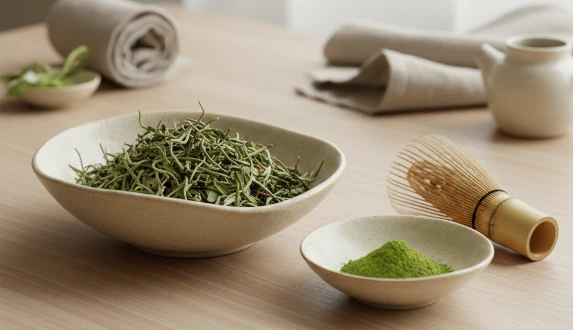
Although at first glance both teas look similar, in reality green tea and matcha are two completely different worlds of flavour, properties and preparation methods. No wonder many people consider whether green tea and matcha are actually the same thing. Both drinks come from the same shrub, but their journey “from leaf to cup” looks completely different.
In this article, we will answer the most frequently asked questions: matcha – what is it?, what is matcha made of?, green tea – what are its effects? We will also explain what makes powdered green tea stand out compared to traditional loose leaf green tea. Along the way, we will check is green tea healthy, is matcha healthy and which of the two may fit your lifestyle better.
Ready? Let’s dive into the world of tea aromas and scientific insights!
Summary:
- What is green tea?
- What is matcha? Is it just powdered green tea?
- Matcha vs green tea – key differences
- Health properties of green tea and matcha
- How to drink green tea and matcha?
- Green tea vs matcha – summary of differences
What is green tea?
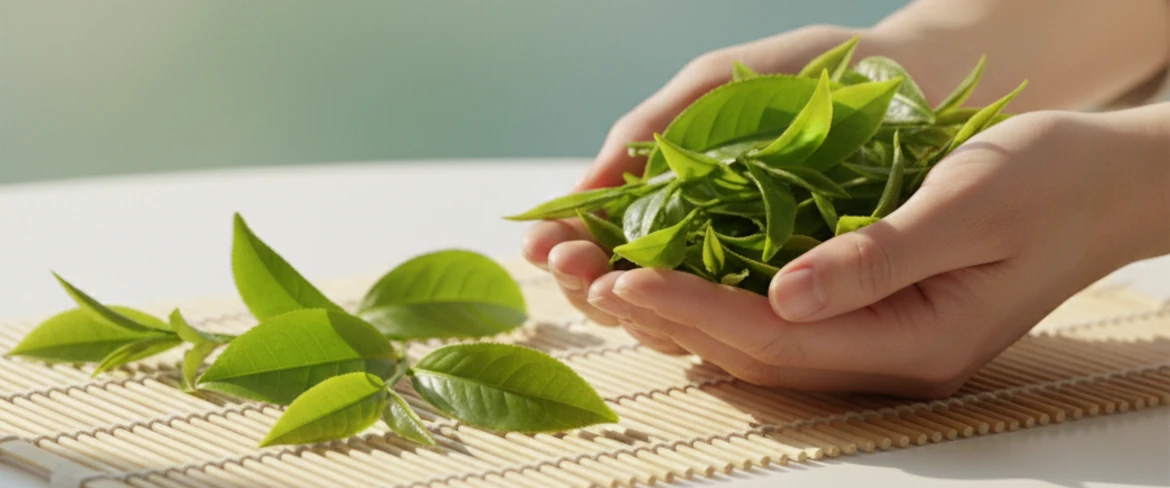
Green tea is one of the oldest beverages in the world, valued for its characteristic taste, gentle stimulating effect and natural antioxidants. In its traditional loose leaf green tea form, the infusion is made from minimally processed leaves of the tea plant – Camellia sinensis. Thanks to this, it retains a fresh, vegetal flavour and a rich profile of active compounds, often mentioned in discussions about green tea properties.
Green tea – origin and production process
Green tea is made from the leaves of Camellia sinensis, but what makes it unique is the production method. Unlike black tea, it does not undergo fermentation, which helps preserve the natural green colour of the leaves and the full spectrum of antioxidants. The process starts already on the plantation – the first stage is plucking. Leaves are picked by hand or machine, typically from the upper parts of the shoots, where the youngest and most delicate leaves grow.
After harvesting, the next stage begins – withering. Freshly picked leaves are spread out to lose part of their moisture (approx. 35%) and become more flexible for further processing. The next step is enzyme deactivation (kill green), which prevents oxidation. Depending on regional traditions, this is done via:
- high-temperature steam (Japanese method) – gives the tea a fresh, grassy note,
- pan-firing (Chinese method) – results in subtly nutty or slightly sweet notes.
After stopping oxidation, the leaves are rolled and shaped. Depending on the shaping method, we get various types of green tea: needle-like, twisted or flat. The final stage is drying – the leaves are dried (e.g. in ovens or in the sun) until their moisture content drops to a few percent, ensuring long-term storage.
Minimal processing means that green tea retains many natural active compounds, including catechins, L-theanine and chlorophyll – key elements often cited in research discussing green tea health properties.
Green tea and its health properties
Loose leaf green tea is often chosen by people who enjoy a delicate flavour and a beneficial profile of bioactive compounds. Its effects are primarily linked to catechins – powerful antioxidants. The most important one is EGCG (epigallocatechin gallate), extensively described in the review “Green Tea Catechins” (2022). Studies suggest that EGCG supports the body’s natural protective mechanisms against oxidative stress.
💬 Scientific source: M. Farhan, Green Tea Catechins: Nature’s Way of Preventing and Treating Cancer, International Journal of Molecular Sciences, 2022.
Many people ask: green tea – what is it good for? Most often, it is associated with gentle stimulation, support for concentration and the presence of natural antioxidants that benefit the body’s protective processes.
In addition to catechins, green tea contains:
- ✔️ L-theanine – an amino acid linked to focus and relaxation,
- ✔️ caffeine – though milder than in coffee,
- ✔️ flavonoids and phenolic acids – supporting natural antioxidant processes,
- ✔️ chlorophyll – its amount depends on cultivation and shading.
Thanks to the synergy of caffeine and L-theanine, green tea is appreciated for gentle, stable stimulation without the sudden “spike” typical of coffee. Numerous studies confirm that this combination improves reaction time, alertness and cognitive task performance.
💬 Scientific sources:
- A. A. Sohail et al., The Cognitive-Enhancing Outcomes of Caffeine and L-theanine: A Systematic Review, Cureus, 2021.
- E. R. Payne et al., The effects of tea (Camellia sinensis) or its bioactive compounds L-theanine or L-theanine plus caffeine on cognition, sleep, and mood in healthy participants: a systematic review and meta-analysis of randomised controlled trials, Proceedings of the Nutrition Society, 2024.
How much caffeine is in green tea and how does it affect the body?
The caffeine content in green tea varies depending on the variety, for example:
- Sencha – moderate caffeine, ideal for everyday drinking;
- Gyokuro – one of the strongest-stimulating teas due to shading;
- Bancha – very mild, suitable for those sensitive to caffeine.
So, how much caffeine is in green tea? On average 15-40 mg per cup – less than coffee, but still enough for a subtle energy lift.
👉 Read more about classic green tea here: Green tea – the elixir of health in a cup
What is matcha? Is it just powdered green tea?
Matcha has been stirring curiosity for years – its intensely green colour, creamy consistency and unique preparation method make many people wonder whether matcha is simply powdered green tea. Indeed, matcha and classic green tea come from the same shrub, Camellia sinensis, but their production processes are completely different. This is why discussions about matcha vs green tea almost always highlight deeper distinctions than taste alone.
Shading the tea bushes before harvest, followed by the special processing of Tencha leaves, gives matcha its distinctive profile, flavour and matcha properties.
In the following subsections we will explain precisely: what is matcha, what is matcha made of, how it is produced, and what sets it apart from traditional loose leaf green tea.
Matcha – what is it? What is matcha made of?
Matcha is a finely ground, bright green powder obtained from the leaves of Tencha – a special type of green tea that is grown in the shade. Both Tencha and classic green tea come from Camellia sinensis, but the differences between them begin long before harvest. This is why matcha is considered a unique form of powdered green tea.
A few weeks before harvesting, the tea bushes undergo a process of shading. This leads to:
- an increase in L-theanine (affecting flavour and effect),
- higher levels of chlorophyll (hence the deep green colour),
- greater amounts of caffeine (relevant for anyone asking: “does matcha contain caffeine?”),
- a reduction in tannins, making the flavour smoother and more creamy.
After harvesting, the leaves are steamed, dried and stripped of veins and stems. This produces delicate Tencha, which is then ground in traditional stone mills into an ultra-fine powder – this is what we call green tea matcha.
This is why the answer to the question what is matcha made of? is simple: it is made from the highest quality Tencha leaves, not just any green tea. Importantly, when drinking matcha, you consume the entire leaf, not just the infusion – unlike with traditional green tea. This means that more bioactive compounds reach the body, and the matcha properties are significantly more concentrated.
How does matcha differ from regular green tea?
Although matcha is a type of green tea, the differences between them are substantial – from cultivation and processing to the way the drink is consumed. With regular green tea, you drink the infusion; with matcha, you consume the whole leaf in powdered form. This is crucial in all comparisons of matcha vs green tea, especially when considering flavour, nutrition and caffeine.
The most important differences between matcha and green tea are:
- Cultivation: matcha is made from shaded leaves – this increases L-theanine, chlorophyll and caffeine.
- Processing: matcha is stone-ground into a powder; green tea remains in leaf form.
- Consumption method: when drinking matcha, you consume the entire leaf, resulting in stronger effects.
- Composition: matcha contains higher concentrations of catechins, especially EGCG, and amino acids.
- Effect: the stimulating effect is stronger but also smoother, thanks to L-theanine.
📌 Important clarification: Matcha is one type of green tea – it comes from the same plant, Camellia sinensis. However, not every green tea is matcha. Only teas that are shade-grown, processed into Tencha and ground into an ultra-fine powder can be called matcha. This is why matcha is so unique in composition, colour and method of consumption.
So it can be said that green tea and matcha differ not in the plant, but in their entirely different production journeys. This is why matcha is highly valued when discussing matcha properties and nutritional benefits.
What does matcha taste like and how to prepare it?
The taste of matcha is unique and completely different from classic green tea. This is why one of the most common questions is: what does matcha taste like? It is usually described as a combination of intense vegetal notes, gentle sweetness and a characteristic umami tone. High-quality ceremonial matcha tastes creamy, smooth and velvety, while culinary-grade matcha (for lattes and desserts) tends to have a more pronounced flavour.
The taste of matcha is:
- creamy – due to its high L-theanine content,
- fresh and vegetal – reminiscent of young leaves and fresh-cut grass,
- umami-rich – especially in ceremonial varieties,
- slightly sweet – without noticeable bitterness.
The flavour depends on the quality of the leaves, shading methods and grinding technique. High-quality matcha has a vivid green colour, a powder-fine texture and a pleasant, full-bodied taste.
How to prepare matcha traditionally?
Traditional preparation is not just a brewing method – it is a small ritual that helps appreciate matcha’s aroma and properties. Here is a step-by-step method:
- Sift 1-2 g of matcha into a matchawan bowl (to prevent clumping).
- Add around 70-80 ml of water at 70-80°C.
- Whisk vigorously using a bamboo whisk (chasen) in an “M” or “W” motion.
- When a bright green, silky foam appears – the matcha is ready.
This method highlights the natural flavour and texture of matcha and gives the drink its signature foam.
Modern ways to prepare matcha – latte, smoothie, iced
Matcha is extremely versatile – which is why it appears in many drinks and desserts. If the traditional form is too intense for you, try one of these methods:
- ✔️ matcha latte – with milk or plant-based milk, hot or iced,
- ✔️ iced matcha – shaken with cold water or milk and ice,
- ✔️ matcha smoothie – combined with banana, yoghurt or plant milk,
- ✔️ added to baked goods or desserts – gives a natural green colour and mild flavour.
This is a great way to include matcha in your daily routine – especially if you want to enjoy its benefits in a milder, more indulgent form. Its intense colour and creamy texture make it perfect both with water and milk.
👉 If you want to learn more about matcha varieties and their flavours, visit our detailed guide: Matcha from A to Z – what is matcha, what does it taste like and why is it worth drinking?
Matcha vs green tea – key differences
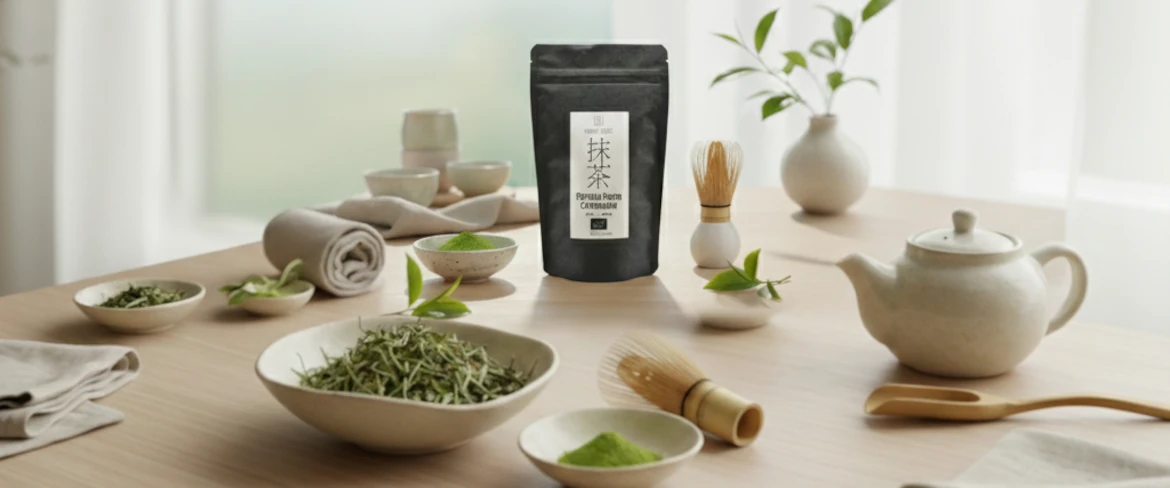
Although matcha and green tea come from the same plant, Camellia sinensis, the differences between them are far greater than one might expect. They concern almost everything – from cultivation methods and leaf processing to flavour, aroma, colour, caffeine content and nutritional value. This is why comparisons such as matcha vs green tea are so popular among tea lovers.
In this section, we will explain all the key differences – matcha vs green tea – step by step, helping you decide which one is better suited to your daily routine. And, contrary to appearances, the choice is not obvious at all!
Comparison of the production process of green tea and matcha
The differences between matcha and classic green tea begin already on the plantation. The way each drink is produced plays a major role in its flavour, colour and green tea properties or matcha properties.
How green tea is produced:
- Leaves are harvested by hand or machine.
- They undergo withering to reduce moisture.
- They are heat-treated (steamed or pan-fired) to stop fermentation.
- They are rolled, shaped and dried.
- The final product is a loose leaf tea used to prepare an infusion.
As a result, green tea is made from dried leaves. Only what dissolves during steeping enters the infusion and reaches the body.
How matcha is produced:
- 3-4 weeks before harvest, the bushes are shaded with special mats.
- Shading increases chlorophyll, L-theanine and caffeine, while reducing tannins.
- Leaves are harvested, steamed, dried and stripped of veins and stems (creating Tencha).
- Tencha is then ground into an ultra-fine powder using stone mills.
Matcha is therefore a high-grade powdered green tea that is consumed in its entirety. This is the key difference that affects both nutritional value and matcha properties.
💡 Scientific insight: A 2022 study showed that shading the tea bushes significantly increases the content of L-theanine, caffeine and chlorophyll in the leaves designated for matcha. It also reduces the level of certain catechins, resulting in a milder, creamier flavour and the characteristic intense green colour of matcha powder.
💬 Scientific source: X. Chen et al., Effect of Shading on the Morphological, Physiological, and Biochemical Characteristics as Well as the Transcriptome of Matcha Green Tea, International Journal of Molecular Sciences, 2022.
Differences in caffeine content and stimulating effect. How much caffeine is in matcha compared to green tea?
Another fundamental difference between green tea and matcha is caffeine content. Green tea contains noticeably less caffeine – usually between 15 and 40 mg per cup. Matcha contains more caffeine not only because the bushes are shaded, but primarily because you consume the whole leaf.
- Green tea: approx. 15-40 mg of caffeine per cup.
- Matcha: approx. 60-70 mg of caffeine per serving (1-2 g of powder).
These values are important for anyone asking how much caffeine is in green tea or how much caffeine is in matcha. In general, matcha contains more – sometimes comparable to a small espresso – but its effect differs significantly.
Thanks to its high L-theanine content, matcha provides a smoother, more stable stimulation – without the abrupt “caffeine crash” often associated with coffee. Studies (Sohail 2021, Payne 2024) confirm that the synergy of caffeine and L-theanine supports concentration, alertness and cognitive performance. This aligns with scientific discussions of matcha properties and green tea properties.
If you're wondering does matcha contain caffeine? – the answer is yes, quite a lot, but its effect is more harmonious and long-lasting thanks to L-theanine.
Flavour, colour and nutritional values – what distinguishes matcha from green tea?
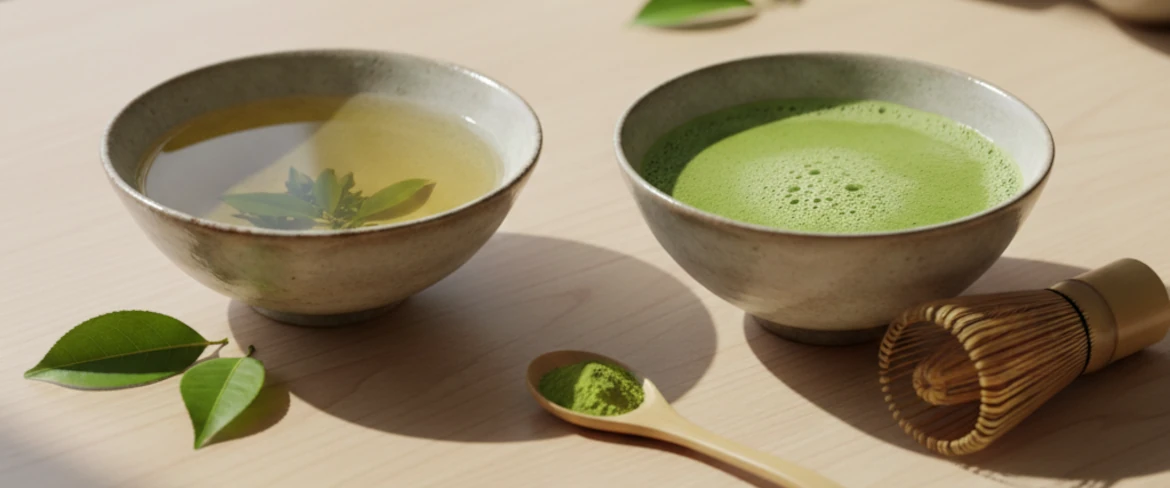
For many people, the most visible difference is the appearance of the drinks. Green tea infusion has a yellow‑green or golden colour, is translucent, and its taste is usually delicate, vegetal or slightly nutty (depending on the variety).
Matcha, on the other hand, is characterised by an intense, almost neon green colour due to its high chlorophyll content. Its texture is velvety and frothy (because we drink the powder, not an infusion), and the taste is creamier, deeper and richer in umami. It also has a fuller aroma because the entire leaf is consumed.
Additionally, because you consume the entire leaf rather than just an extract, matcha contains higher concentrations of catechins (including EGCG), L‑theanine, chlorophyll, caffeine and antioxidants overall. This explains its popularity among those researching the nutritional aspects of green tea and matcha.
Matcha or green tea – which is healthier?
This is one of the most frequently asked questions: is matcha healthier than green tea? The answer is: it depends.
Green tea is an excellent choice if you want a mild, everyday drink that gently stimulates, supports focus, is light on the stomach and provides catechins, amino acids and antioxidants.
Matcha offers a more concentrated dose of active compounds because you consume the whole leaf. This means a higher level of caffeine, L-theanine, chlorophyll and catechins, especially EGCG.
Therefore, matcha may be a better choice if you are looking for stronger stimulation, a higher antioxidant intake, or a natural alternative to coffee. At the same time, green tea also has well-documented health-supporting effects. Ultimately, the choice depends on your needs and taste preferences.
Health properties of green tea and matcha
Although green tea and matcha differ in production methods, how they are consumed and the intensity of their effects, they also share many similarities. Both come from Camellia sinensis and both contain natural bioactive compounds that have been appreciated for centuries for supporting vitality and overall well-being. Scientific studies on polyphenols, L-theanine and chlorophyll show that these drinks can support the body on many levels – from concentration and metabolism to natural antioxidant processes. This reflects wide discussions about green tea health properties and matcha properties.
But instead of repeating what we have already discussed, let’s focus on how both drinks work in practice – and why green tea and matcha complement each other so well.
Antioxidants and detoxifying effects in green tea and matcha
When it comes to antioxidants, both drinks offer a great deal – although in slightly different ways. Green tea provides strong antioxidant compounds known as catechins, the most important of which is EGCG. According to scientific reviews, EGCG has one of the highest antioxidant activities among natural polyphenols and is central to discussions of green tea properties.
Matcha also contains EGCG and other catechins, but because you drink the entire powdered leaf rather than an infusion, the concentration of these compounds in matcha is usually higher. Additionally, matcha is notable for its exceptionally high chlorophyll content. This has been confirmed by research using HPLC-MS² – an advanced laboratory technique that precisely measures the content of individual compounds in tea leaves – which showed that matcha contains significantly more chlorophyll than sencha or gyokuro. This further explains many matcha properties related to antioxidant potential.
💬 Scientific source: M. Herrera et al., HPLC–MS2 Analysis of Chlorophylls in Green Teas Establishes Differences among Varieties, Molecules, 2022.
Why does this matter?
- Catechins help neutralise free radicals – supporting the body’s natural defence mechanisms.
- Chlorophyll binds certain metabolic by-products, supporting natural cleansing processes.
- EGCG is one of the most extensively studied compounds, with dozens of publications describing its antioxidant action.
The result? Regular consumption of green tea or matcha may support the body’s natural detoxifying processes and help protect cells from oxidative stress. Matcha, thanks to consuming the whole leaf, provides a more concentrated profile of these compounds – but both drinks can be valuable additions to a balanced diet. This is central to discussions about is green tea healthy and is matcha healthy.
Influence on concentration, metabolism and the immune system
Both green tea and matcha are associated with a sense of “clean”, stable energy and focus. This is no coincidence: researchers consistently emphasise the synergistic effect of caffeine and L‑theanine. According to scientific analyses, the combination of these two compounds supports:
- ✔️ improved reaction time,
- ✔️ better concentration,
- ✔️ increased alertness,
- ✔️ all without the overstimulation typical of coffee.
Matcha has a stronger effect – due to its higher caffeine and amino acid content – but green tea also helps maintain stable energy levels and clarity, which is appreciated by many people working or studying.
In the context of metabolism, it’s not just about caffeine. Catechins, particularly EGCG, also play an important role. Many metabolic studies (mainly in laboratory and animal models) suggest they support fat oxidation and thermogenesis. This is often mentioned when explaining green tea what is it good for in terms of daily wellness.
It is also worth mentioning the immune system. Antioxidants found in both green tea and matcha – including polyphenols and chlorophyll – may support the body’s natural defence mechanisms. They are not medicines, but as part of a daily diet, they may help maintain oxidative balance.
📌 In summary:
- Green tea – mild, versatile, ideal for daily drinking.
- Matcha – more concentrated, with higher levels of caffeine, theanine and chlorophyll.
- Both support natural antioxidant processes and may enhance focus.
- The choice depends on your needs: gentle stimulation or a stronger effect?
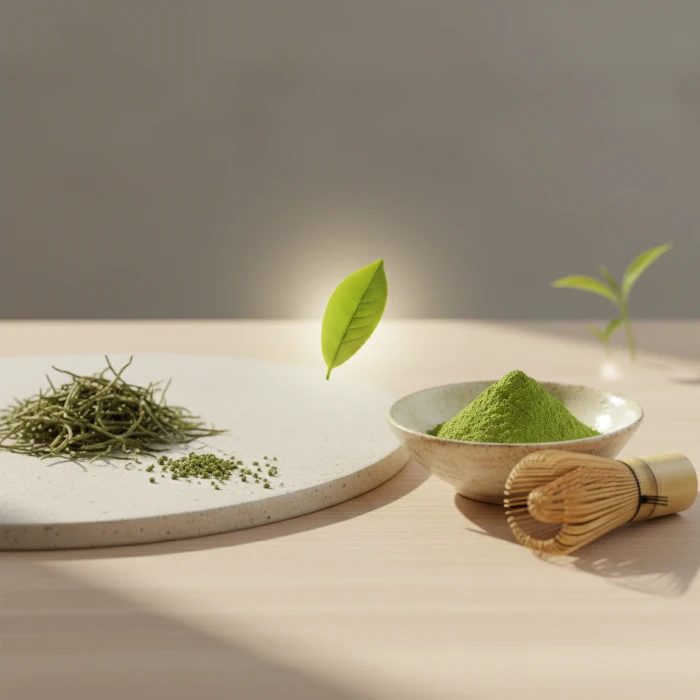
How to drink green tea and matcha?
Although both teas come from the same plant, the way they are prepared is completely different. Green tea is brewed like a classic infusion, whereas matcha – as a powdered green tea – is mixed with water, creating a smooth, thick drink. In this section, we will discuss the simplest and most effective methods of preparing both beverages so that you can preserve their flavour, aroma and green tea health properties or matcha properties.
We will also provide a few practical suggestions on which products to choose if you are just starting your adventure with green tea and matcha.
How to brew green tea to preserve its properties?
Green tea is delicate – both in terms of flavour and the structure of the leaves. To avoid bitterness and preserve its natural compounds, it is important to follow a few simple rules. Proper brewing truly works wonders: the same tea, prepared correctly, can taste completely different.
Basic rules for brewing green tea:
- ✔️ Water temperature: 70-80°C – boiling water can “burn” the leaves and spoil the taste.
- ✔️ Brewing time: 1.5-3 minutes – longer brewing extracts bitterness.
- ✔️ High water quality – preferably soft or filtered water for a cleaner taste.
- ✔️ Correct amount of leaves – usually 2-3 g per 200-250 ml of water.
- ✔️ Second infusion – many varieties of loose leaf green tea taste great when brewed again.
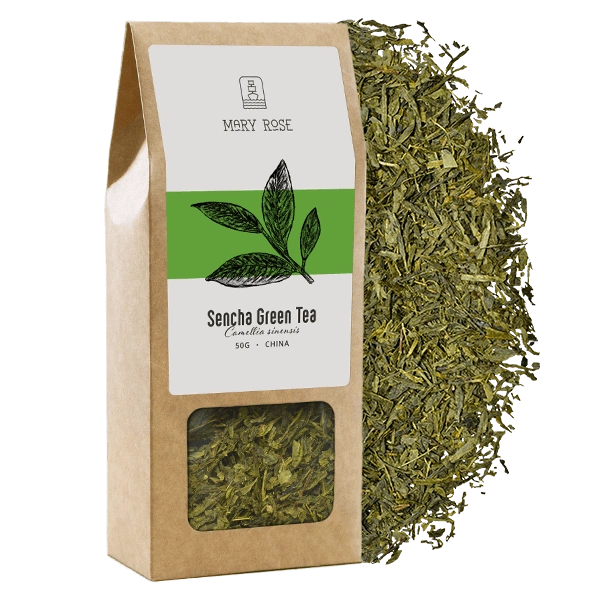
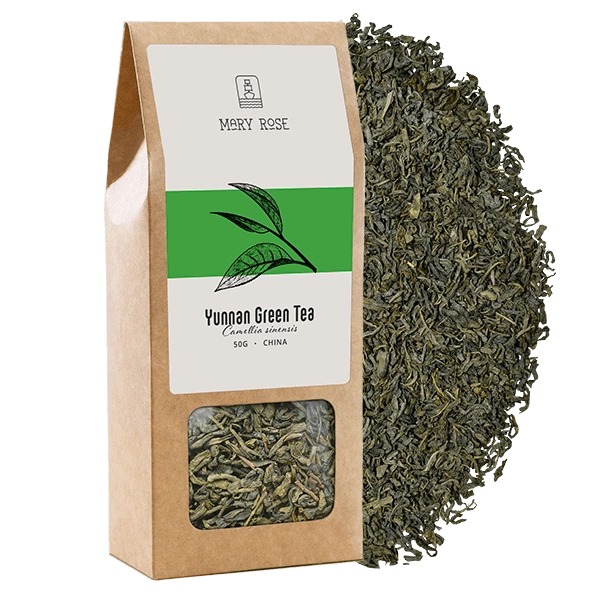
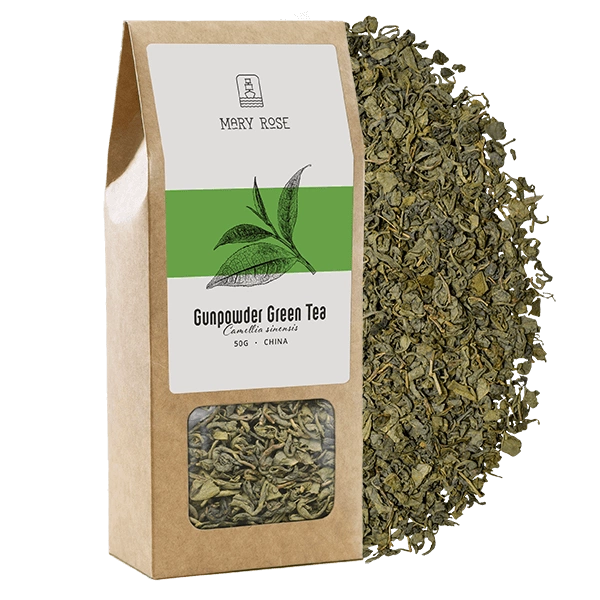
A frequently asked question is: which green tea is the healthiest? In practice, it depends on leaf quality, freshness and proper brewing. If you are preparing green tea for the first time, start with classic varieties such as sencha, yunnan or gunpowder. These are excellent for discovering regional and processing differences in flavour.
Delicate, fresh and vegetal. Perfect for learning how to brew green tea properly.
Smooth, subtly sweet – ideal for those who prefer mild, balanced green tea flavours.
Known for its rolled leaves and bold flavour. A great choice if you enjoy stronger green tea profiles.
👉 You can find more green teas here: Green tea – full selection.
Ways to prepare matcha
Preparing matcha is different from brewing green tea because matcha is not steeped – you consume the entire powdered leaf. This is one of the reasons why discussions on matcha vs green tea often highlight differences in bioavailability.
We have already described the traditional ritual, but here we present more practical, everyday-friendly methods – and several alternatives perfect for beginners.
1. Traditional method using a chasen:
- Sift 1-2 g of matcha into a matchawan bowl.
- Add 70-80 ml of water at 70-80°C.
- Whisk vigorously using a bamboo whisk (chasen) in an “M” or “W” motion.
- When a silky, bright-green foam forms, the matcha is ready – adjust water to taste.
2. Quick method in a shaker:
- Put 1-2 g of matcha into a shaker.
- Add 150-200 ml of cold or slightly warm water.
- Shake vigorously for 10-15 seconds – ready!
The same method works perfectly for making iced matcha – simply add ice cubes.
3. Matcha latte – the most popular option:
- Prepare a matcha concentrate (1-2 g matcha + 50 ml hot water).
- Add 150-200 ml of milk or plant-based milk.
- Optionally sweeten with syrup or honey.
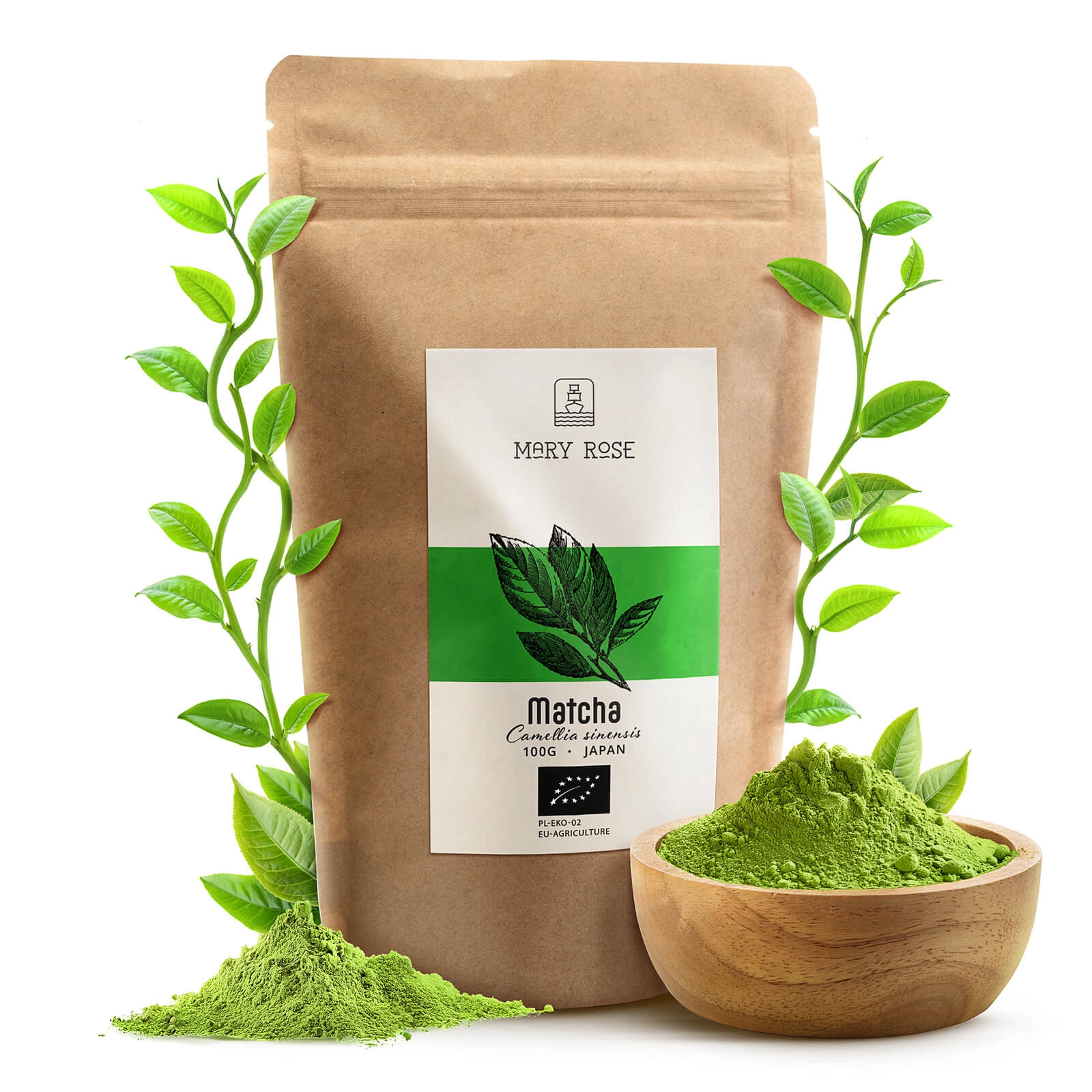
Intense and expressive. Perfect for matcha latte, smoothies, baking and desserts. A great choice if you enjoy experimenting with powdered green tea.
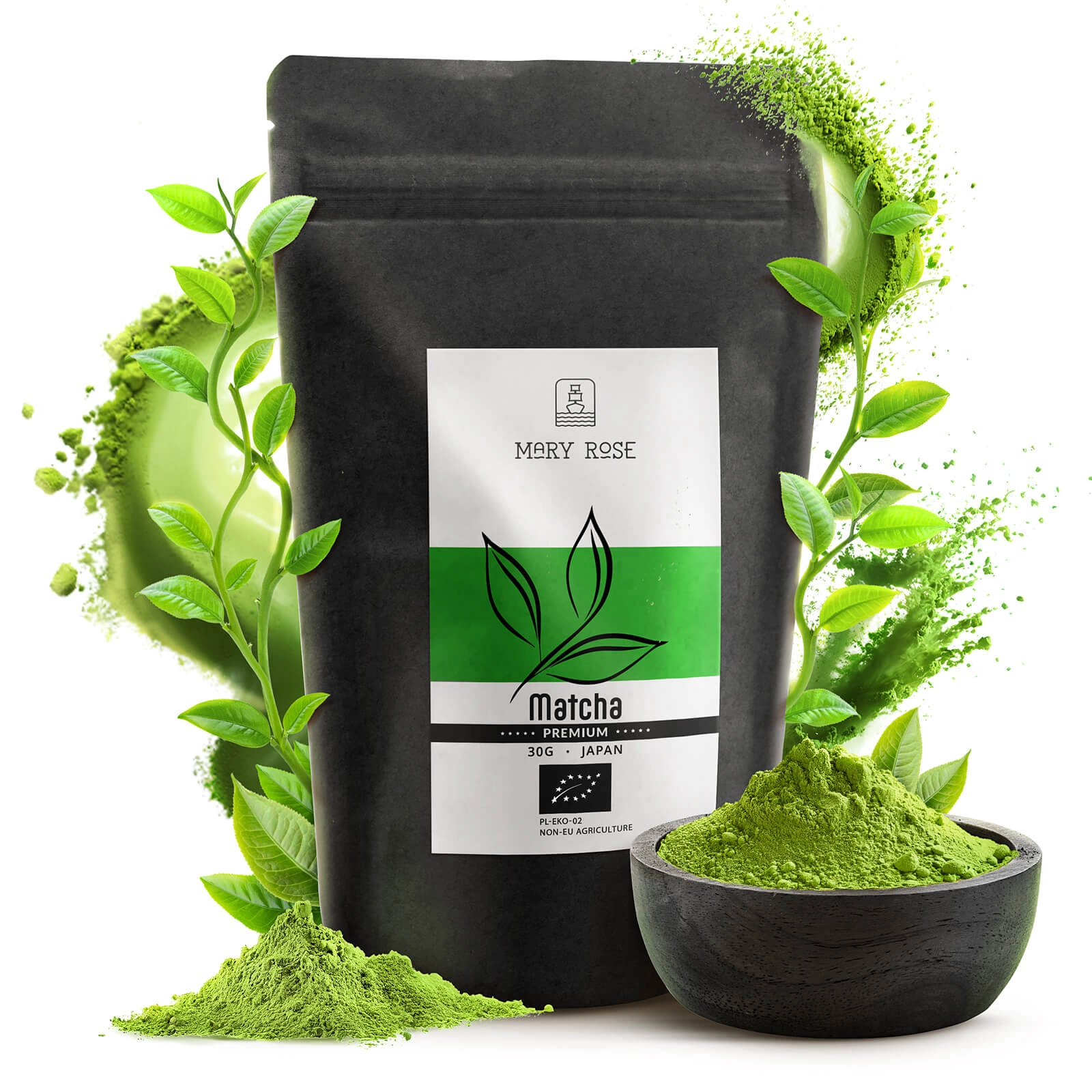
Balanced flavour, vivid colour and velvety texture. Ideal for everyday drinking and premium lattes.
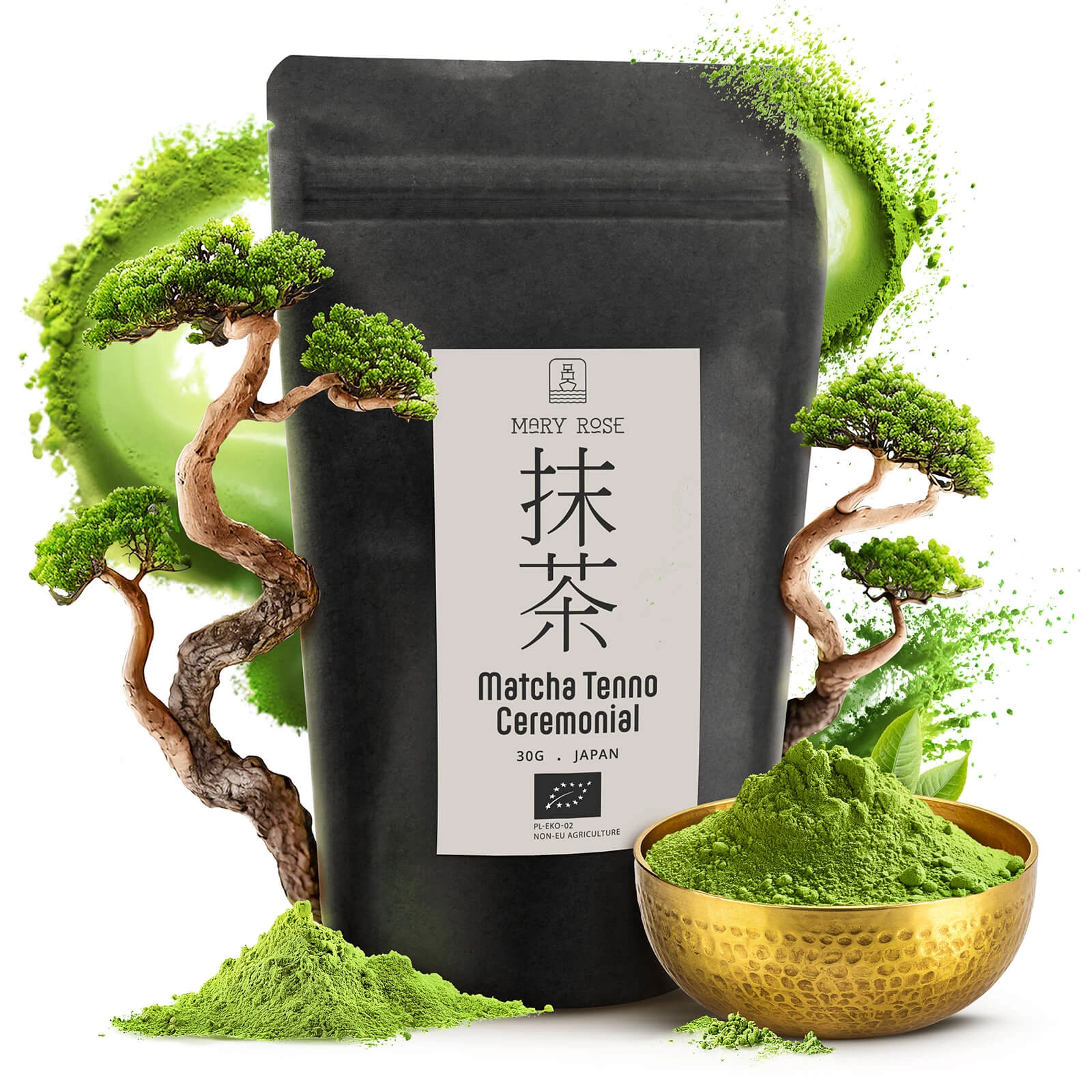
The smoothest, sweetest and most delicate matcha. Perfect for traditional preparation with water.
👉 See the full matcha category here: Matcha – full range. And if you’re looking for a starter set with accessories, check out: Matcha sets
Green tea vs matcha – summary of differences
We have reached the end of our guide – time to summarise the main conclusions. Although green tea and matcha come from the same plant, they differ in flavour, composition, preparation methods and the intensity of their effects. Below you will find a brief comparison that will help you remember the key differences and choose the product best suited to your lifestyle.
To make comparing green tea and matcha easier, we have prepared a clear table – thanks to it you can quickly see what sets both teas apart. This section also reflects many common search queries such as matcha vs green tea or is matcha healthy.
Matcha vs green tea – comparison
| Parameter | 🍃 Green tea | 🍵 Matcha |
|---|---|---|
| Form | loose leaf, brewed | powdered green tea (you consume the whole leaf) |
| Preparation | brewed with water at 70-80°C | mixed with water or milk |
| Caffeine content | low to moderate | higher (approx. 60-70 mg per serving) |
| Flavour | delicate, vegetal, lightly sweet | creamy, intense, umami-rich |
| Composition | catechins, L-theanine, antioxidants | higher concentrations of catechins, theanine and chlorophyll |
| Stimulation | gentle, subtle | stronger, but stable thanks to L-theanine |
Which one to choose – matcha or green tea?
After reviewing the differences, it's time to answer the key question: which one is better for you? Of course, it depends on your needs, lifestyle and taste preferences, but here are some helpful guidelines – often searched under queries like green tea what is it good for or which green tea is the healthiest.
- want a light everyday drink,
- prefer delicate, vegetal flavours,
- enjoy mild stimulation,
- like traditional brewing methods.
- stronger but stable stimulation,
- higher levels of catechins and chlorophyll,
- an intense, creamy flavour,
- a versatile product for drinks, desserts and cooking.
Regardless of your choice – both green tea and matcha can be valuable additions to your daily routine. It is worth trying different varieties, experimenting with flavours and discovering your personal favourites.
If after reading this article you feel like trying one of them – here are convenient shortcuts to the categories:
Thank you for reading – we hope the world of green tea and matcha is now even more fascinating for you!
❓ FAQ – frequently asked questions about matcha and green tea
1. Does matcha contain caffeine?
2. Can you drink matcha every day?
3. Why does green tea sometimes taste bitter?
4. Is matcha the same as green tea?
5. Is matcha healthier than green tea?
Sources of information:
- Wikipedia: Green tea, Matcha.
- J. Kochman et al., Health Benefits and Chemical Composition of Matcha Green Tea: A Review, Molecules, 2021.
- A. A. Sohail et al., The Cognitive-Enhancing Outcomes of Caffeine and L-theanine: A Systematic Review, Cureus, 2021.
- M. Farhan, Green Tea Catechins: Nature’s Way of Preventing and Treating Cancer, International Journal of Molecular Sciences, 2022.
- X. Chen et al., Effect of Shading on the Morphological, Physiological, and Biochemical Characteristics as Well as the Transcriptome of Matcha Green Tea, International Journal of Molecular Sciences, 2022.
- M. Herrera et al., HPLC–MS2 Analysis of Chlorophylls in Green Teas Establishes Differences among Varieties, Molecules, 2022.
- E. R. Payne et al., The effects of tea (Camellia sinensis) or its bioactive compounds L-theanine or L-theanine plus caffeine on cognition, sleep, and mood in healthy participants: a systematic review and meta-analysis of randomised controlled trials, Proceedings of the Nutrition Society, 2024.
Recommended

Mary Rose – Sencha Green Tea - 50g

Mary Rose - Yunnan Green Tea - 50g

Mary Rose – Japanese Matcha Green Tea (BIO) Premium 30g
