
Jasmine tea – properties and effects. How to brew aromatic jasmine tea?
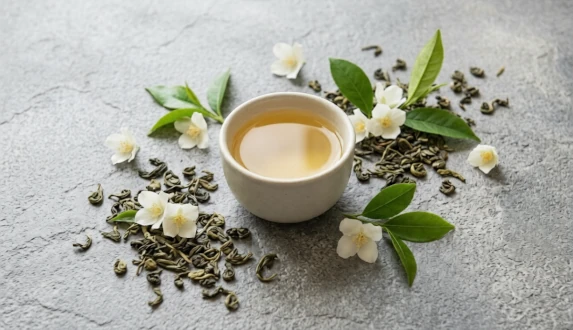
Some teas delight with intense flavour, others stimulate like a morning coffee. Jasmine tea stands out for something else entirely – an exceptionally delicate, floral aroma that can put you in a calm, relaxed mood from the very first sip.
Most often, it is green jasmine tea, meaning tea leaves scented with jasmine flowers. This results in an infusion that is light, fresh, and elegant in taste. It is precisely this subtle balance that makes jasmine tea one of the most popular scented teas in the world.
So let’s explore how jasmine tea is made, what its properties are, and how to brew jasmine tea properly to bring out everything it has to offer.
If you enjoy discovering new tea flavours, it’s also worth visiting the “Tea” category in our shop – you’ll find various loose-leaf teas there, including aromatic jasmine blends.
Summary:
- What is jasmine tea?
- Types of jasmine tea
- Jasmine tea – properties and effects
- Jasmine tea – contraindications
- How to brew jasmine tea?
- Best jasmine tea – how to choose high-quality leaves?
What is jasmine tea?
Jasmine tea is one of the most well-known scented teas in the world. It is made by combining tea leaves – most commonly green, less often white or black – with jasmine flowers, which give the infusion its characteristic floral aroma.
Jasmine tea is therefore not a drink made solely from flowers. Its base consists of leaves from the Camellia sinensis plant – the same plant used to produce all traditional teas. Jasmine acts as a natural fragrance, giving the infusion its light, fresh, and highly pleasant character.
The most common variety is green jasmine tea, meaning green tea scented with jasmine flowers. Depending on the quality of the leaves and the production method, it can vary greatly in character – from delicate, almost creamy infusions to more expressive blends with fresh, slightly vegetal notes.
This harmony between the taste of tea and the aroma of flowers is what has made green jasmine tea one of the most recognisable tea beverages worldwide.
How is jasmine tea made?
The most traditional Chinese jasmine tea is produced through a process known as scenting. This involves layering freshly picked jasmine flowers together with tea leaves. The flowers typically open at night and release the most essential oils at that time – which is why the process often takes place overnight.
The tea leaves gradually absorb the floral aroma, after which the flowers are removed. In high-quality teas, this scenting process may be repeated several times to achieve a deeper and more complex fragrance.
Interestingly, in the case of the best jasmine tea, you often won’t find actual flowers in the final product. Their role is simply to transfer aroma to the leaves – leaving them in the blend could introduce unwanted bitterness.
🧐 Good to know: Nowadays, many jasmine teas available in shops are produced in a simpler way – by adding dried jasmine flowers or natural jasmine flavouring to tea leaves. This allows for a pleasant floral profile at a more accessible price while still maintaining the characteristic aroma.
Jasmine tea in Chinese tradition
Although jasmine leaf tea is now popular worldwide, its origins lie in China. As early as the Tang dynasty (7th–10th century), experiments were conducted with scenting tea using flowers, and the production of jasmine tea flourished in later centuries.
Initially, it was considered a luxury product reserved for the imperial court. Over time, however, its popularity grew, and during the Ming dynasty it began to be exported to Europe. For many Europeans, it was one of the first scented teas they encountered.
To this day, one of the most famous production regions remains the Chinese province of Fujian, where highly regarded varieties of Chinese jasmine tea are produced. In Chinese culture, this tea symbolises elegance, harmony, and hospitality – which is why it is often served to guests during gatherings and tea ceremonies.
💡 Fun fact: One of the most famous varieties is tea rolled into small pearls – known as Jasmine Dragon Pearls. During brewing, the pearls gradually unfold in the cup or teapot, releasing an intense jasmine aroma.
Types of jasmine tea
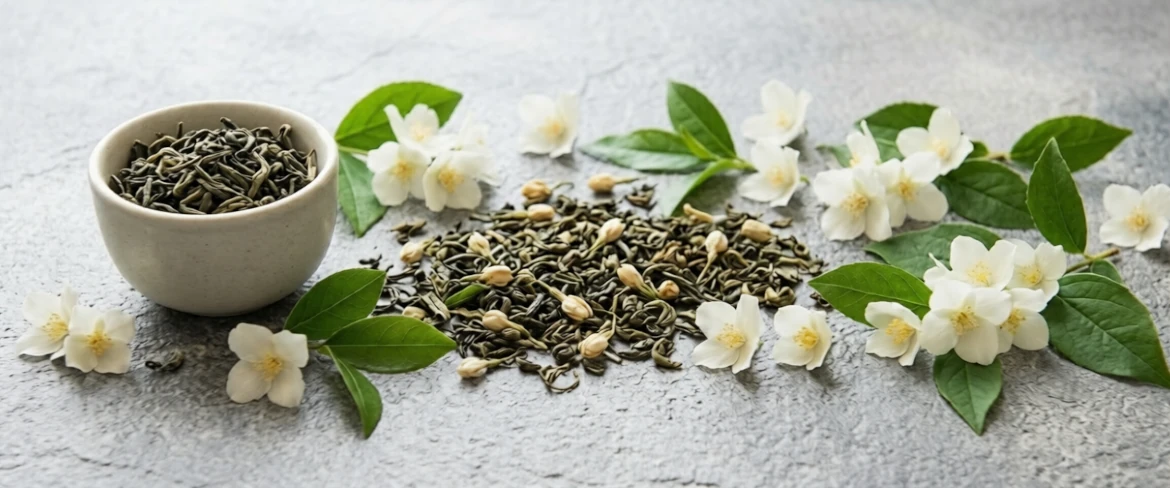
Although we often simply say “jasmine tea”, in reality this term covers several different types of infusion. It all depends on which type of tea is used as the base for the jasmine blend.
The most classic option is, of course, green jasmine tea, but you can also find more delicate blends based on white tea or slightly stronger variations made with black tea. In all these cases, the jasmine aroma gives the infusion its characteristic floral profile, although the taste and intensity can vary significantly.
It is worth remembering that modern jasmine teas can be produced in various ways – from traditional teas scented with fresh jasmine flowers to blends that include dried flowers or natural flavouring. This results in a wide range of infusions – from very delicate and subtle to more intense and aromatic.
Green jasmine tea – the most popular variety
Green jasmine tea is by far the most common type of this tea. Its base consists of green tea leaves that are scented with jasmine flowers during production. The result is an infusion that combines the freshness of green tea with an elegant, floral aroma.
Jasmine leaf tea based on green tea is the variety most often found in shops and tea houses. If you would like to explore other classic green teas, it is worth visiting the “Green teas” category, where you will find various loose-leaf teas with fresh and vegetal characteristics.
What characterises green jasmine tea?
The flavour profile of green jasmine tea is very distinctive. It is based on the slightly vegetal taste of green tea, which often brings a gentle, pleasant bitterness to the infusion. The jasmine aroma softens this note and adds a subtle floral sweetness.
The result is a tea that is fresh, light, and aromatic. That is why many people consider it one of the most versatile teas for everyday drinking – suitable both in the morning and during a relaxing moment later in the day.
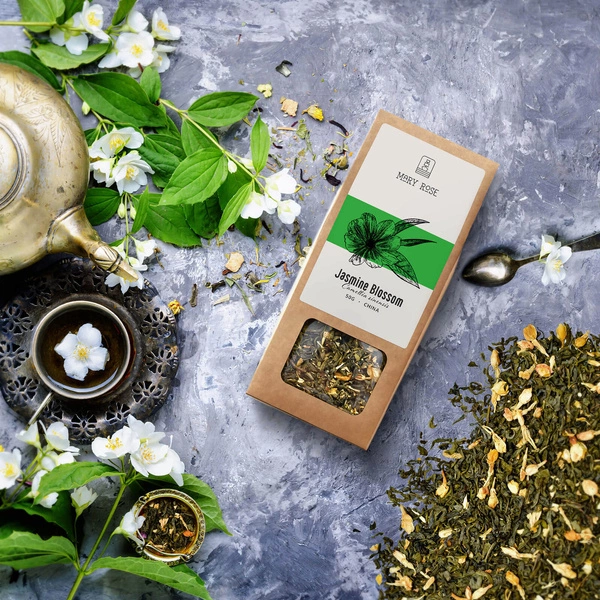
🍵 Jasmine tea by Mary Rose
A good example of a blend combining green tea with jasmine is Mary Rose Jasmine Blossom. It is a green tea from the Yunnan region enriched with jasmine flowers and natural jasmine flavour.
Thanks to this, the infusion retains the fresh character of green tea while gaining a distinct, pleasantly floral aroma. It is an interesting option for those who want to try a classic combination of green tea with jasmine.
White jasmine tea
Another popular variety is white jasmine tea. In this case, the base consists of young buds and the youngest tea leaves, which undergo a much gentler processing method than green tea.
The infusion is usually more subtle and delicate in flavour. White tea often has a naturally slightly sweet profile, which pairs very well with the floral aroma of jasmine.
Compared to the green version, white jasmine tea is typically less intense and more refined in character. If you are interested in this type of delicate tea, it is worth exploring the “White teas” category, where you will find various varieties of this exceptional tea.
Jasmine tea – properties and effects
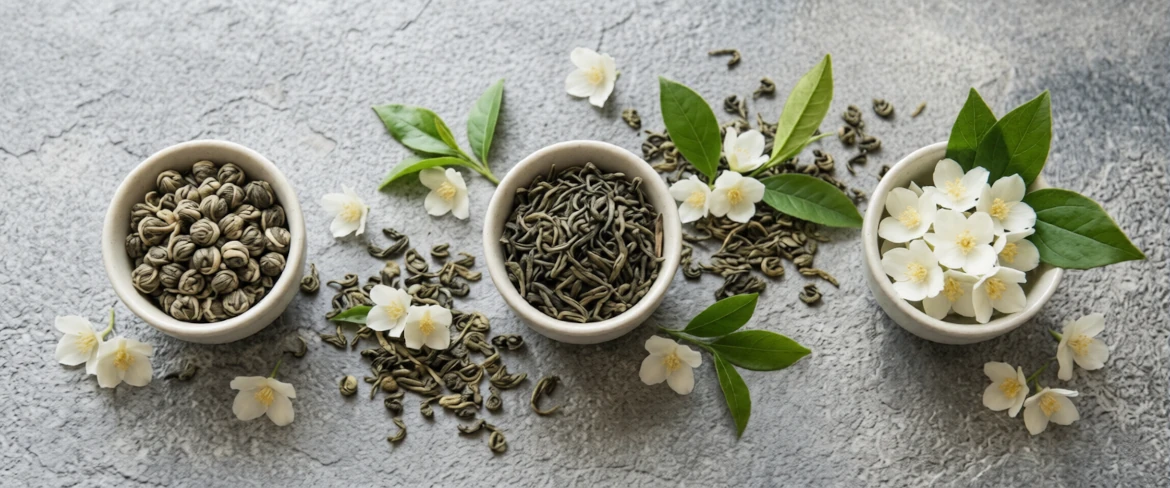
Jasmine tea is valued not only for its delicate aroma but also for its properties resulting from the presence of natural plant compounds. Many of the benefits associated with this tea come primarily from its base, which is most often green tea.
Green tea leaves contain numerous bioactive substances – including polyphenols, catechins, and small amounts of caffeine (theine). These compounds largely determine the jasmine tea effects. Combined with the aroma of jasmine flowers, they create an infusion that may support the body in various ways while also promoting relaxation.
📌 Main jasmine tea properties:
- ✔️ presence of antioxidants supporting cell protection
- ✔️ gentle stimulation due to natural caffeine content
- ✔️ aroma promoting relaxation and improved mood
- ✔️ potential support for digestive processes
- ✔️ a light and refreshing drink suitable for daily consumption
Jasmine tea properties
Jasmine tea properties mainly result from the combination of green tea with the natural aroma of jasmine. This composition makes the infusion rich in antioxidants while also offering a mild stimulating effect.
Regular consumption of jasmine tea is often associated with:
- support for the body's natural protective processes,
- gentle stimulation and improved concentration,
- relaxation and improved well-being,
- a refreshing effect after meals.
However, it is worth remembering that, as with other plant-based beverages, tea should be seen as part of a balanced diet and healthy lifestyle.
Antioxidants and support for the body
One of the key elements responsible for jasmine tea properties is the presence of antioxidants. Green tea contains mainly polyphenols and catechins – plant compounds known for their antioxidant activity.
These substances help neutralise free radicals in the body, which may contribute to oxidative stress in cells. For this reason, jasmine leaf tea based on green tea is often considered a valuable addition to a balanced diet supporting overall well-being.
💬 Scientific sources:Research suggests that tea – especially green tea – contains numerous bioactive compounds such as polyphenols, catechins, and polysaccharides, which may exhibit antioxidant activity and help neutralise free radicals under laboratory conditions.
- S. M. Chacko et al., Beneficial effects of green tea: A literature review, Chinese Medicine, 2010.
- Y. Tang et al., Novel Antioxidant and Hypoglycemic Water‑Soluble Polysaccharides from Jasmine Tea, Food, 2021.
Impact on mood and relaxation
The jasmine tea effects are also influenced by the aroma of jasmine itself. In many Asian cultures, this flower has long been associated with calming and relaxing properties.
The delicate scent of jasmine, combined with the mild stimulation provided by caffeine, may support:
- a moment of relaxation after a busy day,
- improved mood,
- better concentration during work or study.
If you are interested in how different teas affect alertness, it is worth reading our article: Does tea stimulate? Which tea has the most caffeine and which works the strongest?
💡 Scientific insight: In a study published in the journal Nutrients, researchers analysed the effects of jasmine tea on rats subjected to chronic stress. The results suggest that jasmine tea may alleviate depressive-like behaviour in an animal model, possibly through its influence on gut microbiota and the gut–brain axis.
💬 Source: Y. Zhang et al., Jasmine Tea Attenuates Chronic Unpredictable Mild Stress-Induced Depressive-like Behavior in Rats via the Gut-Brain Axis, Nutrients, 2021.
Jasmine tea – what does it help with?
Many people wonder what jasmine tea helps with. The most commonly mentioned benefits include gentle stimulation, support for digestion, and an overall feeling of freshness and relaxation after drinking the infusion.
Like other green tea-based infusions, jasmine tea contains small amounts of caffeine. As a result, it may gently stimulate the body, improve concentration, and help reduce fatigue – although its effect is typically milder than that of coffee.
Jasmine tea for digestion and gut support
One of the commonly cited reasons for drinking jasmine tea is its potential impact on the digestive system. Infusions based on green tea may support natural digestive processes, which is why many people drink them after meals.
For this reason, jasmine tea is sometimes associated with digestive comfort – especially in terms of feeling lighter after eating. In traditional Chinese tea culture, jasmine tea was often served after meals.
Green jasmine tea properties supporting metabolism
Green jasmine tea properties are mainly derived from its green tea base. The catechins and small amounts of caffeine it contains may support the body's natural metabolic processes and overall activity.
For this reason, green tea – including green jasmine tea – is often chosen by people who are looking for a light, refreshing drink to complement an active lifestyle.
Jasmine tea – contraindications
Although jasmine tea is generally considered a light and well-tolerated beverage, in some situations it is worth consuming it in moderation. This mainly applies to cases related to caffeine content and individual sensitivity to tea infusions.
Like other teas made from Camellia sinensis, green jasmine tea contains natural caffeine. For most people, moderate consumption is safe, but in certain situations – such as pregnancy or a sensitive digestive system – caution is advised.
📌 When to be cautious – jasmine tea contraindications:
- ✔️ increased sensitivity to caffeine,
- ✔️ during pregnancy or breastfeeding,
- ✔️ in case of a sensitive stomach or digestive discomfort,
- ✔️ when consuming large amounts of tea daily.
Caffeine content in green jasmine tea
It is important to remember that jasmine tea contains natural caffeine derived from green tea leaves. Its content is usually lower than in coffee, but it can still affect the body – especially in individuals sensitive to caffeine.
In practice, this means that green jasmine tea may:
- gently stimulate and increase alertness,
- support concentration,
- reduce feelings of fatigue.
At the same time, excessive caffeine intake may cause symptoms such as difficulty sleeping, irritability, or increased heart rate in some people. Therefore, if you are sensitive to caffeine, it is best to limit your intake or drink tea earlier in the day.
Jasmine tea and pregnancy or a sensitive digestive system
Particular caution with caffeine-containing beverages – including jasmine tea – is recommended for pregnant women. It is generally advised to limit overall caffeine intake, so it is worth paying attention to how many cups of tea are consumed daily.
People with a sensitive digestive system may also notice that green tea infusions – especially when consumed on an empty stomach – can cause discomfort or irritation. In such cases, it is best to drink tea after meals or choose milder infusions.
In most cases, however, moderate consumption of jasmine tea – for example one or a few cups per day – is well tolerated and can be an enjoyable part of a daily routine.
How to brew jasmine tea?
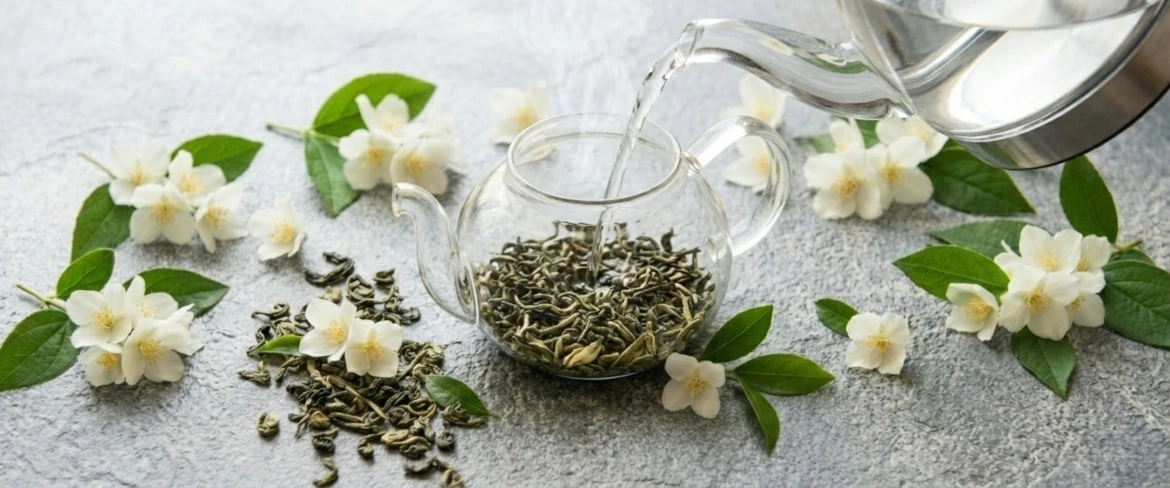
To fully appreciate the flavour and aroma that jasmine tea offers, the brewing method is crucial. The right water temperature and brewing time allow you to extract the delicate floral aroma while avoiding excessive bitterness that may occur with overly hot water.
It is worth remembering that in most cases, jasmine tea is based on green tea. This means its leaves are more delicate than those of black tea and require slightly lower water temperatures.
Water temperature and brewing time for jasmine tea
The best results are achieved by brewing jasmine tea with water at around 70–80°C. Water that is too hot may cause the infusion to become bitter and lose some of its delicate aroma.
The brewing time depends on the type of tea and personal preference, but for most blends, 2–3 minutes works well. Shorter brewing produces a more subtle, floral infusion, while longer brewing brings out more vegetal notes from the green tea.
🍵 Jasmine tea – how to brew
- ✔️ Tea amount: approx. 2–3 g (1 teaspoon) per 200–250 ml of water
- ✔️ Water temperature: around 70–80°C
- ✔️ Brewing time: 2–3 minutes
- ✔️ Teaware: teapot, gaiwan, or loose-leaf tea infuser
- ✔️ Re-steeping: high-quality leaves can be brewed multiple times
Prepared this way, green jasmine tea retains its fresh taste and delicate floral aroma.
How many times can you brew green jasmine tea?
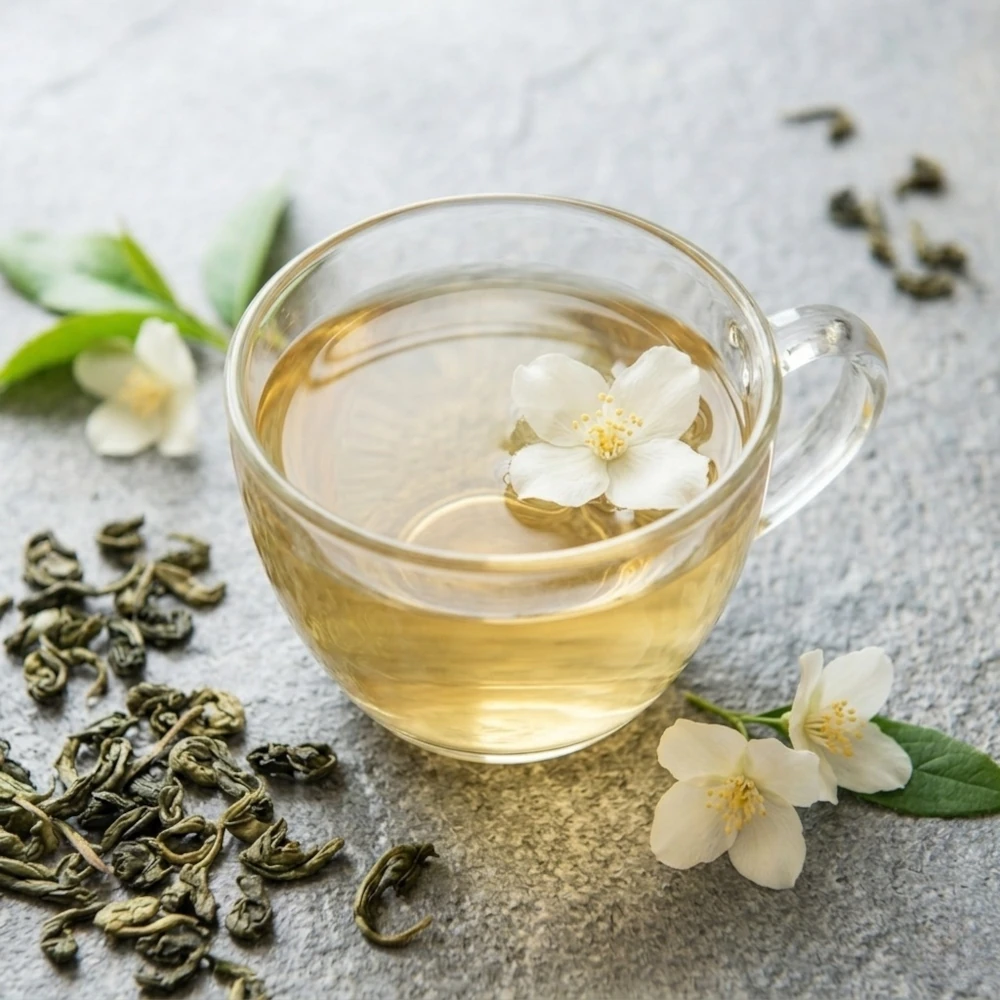
High-quality jasmine leaf tea can be brewed more than once. Premium green jasmine tea leaves often allow for 3–4 infusions.
Each subsequent brew may slightly change the character of the tea:
- the first infusion is usually the most aromatic and distinctly floral,
- the second and third infusions tend to be milder, fresher, and more vegetal,
- later brews become more delicate but still retain a pleasant aroma.
For subsequent brews, it is recommended to extend the brewing time slightly – usually by about 30–60 seconds. This allows the tea leaves to gradually release different layers of flavour.
This is why many tea enthusiasts believe that green jasmine tea is best enjoyed when brewed slowly and repeatedly – discovering new nuances of aroma with each infusion.
Best jasmine tea – how to choose high-quality leaves?
There are many different types of jasmine tea available on the market – from traditional Chinese jasmine tea scented with fresh flowers to modern blends with dried flowers or natural flavouring. If you are wondering: ”jasmine tea – where to buy and how to choose wisely?”, it is worth paying attention to several factors that indicate quality.
A good jasmine leaf tea should primarily offer a natural aroma and high-quality tea base. In practice, this means that even in flavoured blends, the quality of the underlying green or white tea is essential.
It is also worth remembering that, as with other teas – such as black or green – flavour and aroma depend not only on additives but also on the origin of the leaves and how they are processed. If you are interested in tea properties in general, you may also enjoy this article: Is black tea healthy? Discover its properties and nutritional values.
What to look for when buying jasmine tea?
When choosing the best jasmine tea, it is worth paying attention to several aspects:
- ✔️ leaf appearance – high-quality tea usually consists of whole or slightly twisted leaves rather than dusty particles,
- ✔️ tea base quality – most often green tea, so its origin and leaf structure matter,
- ✔️ blend composition – good teas often contain real jasmine flowers or natural flavouring,
- ✔️ origin – traditional Chinese jasmine tea typically comes from regions such as Fujian,
- ✔️ aroma – it should be fresh, floral, and natural rather than artificially intense.
You can also experiment with different ways of preparing and presenting tea. For example, serving tea in decorative forms can be an interesting experience – more inspiration can be found in the article: Isomalt tea bombs – a spectacular way to brew tea and discover new flavours.
🌿 Not only tea – other jasmine-based infusions
The aroma of jasmine pairs beautifully not only with traditional tea. It is also commonly found in blends with other plant-based infusions.
- Yerba mate with jasmine – a combination of traditional mate with a delicate floral note.
- Guayusa with jasmine – an Amazonian infusion from Ilex guayusa with gentle stimulation and a fresh aroma.
These blends allow you to discover a completely new dimension of jasmine flavour and explore how it pairs with different types of infusions.
Jasmine tea is a beverage that combines rich tradition, a unique aroma, and a delicate taste. Whether you choose classic green jasmine tea, subtle white jasmine tea, or modern blends – selecting high-quality leaves and brewing them properly will allow you to fully appreciate its character.
If you are just beginning your journey and wondering: “jasmine tea – where to buy?” – it is best to start with trusted blends and gradually explore different variations of this aromatic tea.
Brew a cup of jasmine tea and discover how exceptional the aroma of jasmine flowers can be in your everyday infusion.
❓ FAQ – frequently asked questions about jasmine tea
1. What properties does jasmine tea have?
2. How to brew jasmine tea?
3. Does jasmine tea contain caffeine?
4. How many times can jasmine tea be brewed?
5. Does jasmine tea have any contraindications?
Sources of information:
- Wikipedia: Jasmine tea.
- H. Chen et al., Chinese Jasmine Tea: The Harmonious Intertwining of Tea and Jasmine Fragrance, Comprehensive Reviews in Food Science and Food Safety, 2025.
- Y. Tang et al., Novel Antioxidant and Hypoglycemic Water-Soluble Polysaccharides from Jasmine Tea, Food, 2021.
- Y. Zhang et al., Jasmine Tea Attenuates Chronic Unpredictable Mild Stress-Induced Depressive-like Behavior in Rats via the Gut-Brain Axis, Nutrients, 2021.
- S. M. Chacko et al., Beneficial effects of green tea: A literature review, Chinese Medicine, 2010.
Recommended

Guayusa Pachamama Jazmín 100g (organic)

Verde Mate Green Guayusa Jazmín 0.5kg

Mary Rose - Jasmine Blossom Green Tea - 50g
