
Yerba mate benefits and effects on health – what you should know
Are you wondering whether yerba mate is healthy and which yerba mate benefits you can realistically expect? This South American infusion has attracted great interest for centuries, not only for its unique grassy, smoky flavour, but above all for its rich biochemical composition. In short: yes, for many people it can be a very valuable addition to their diet.
Keep in mind, however, that this infusion contains quite a high dose of caffeine and a number of other natural bioactive compounds. Is yerba healthy in your particular case, and how will it affect the way you feel? That depends on many factors – the amount of dried yerba mate you use, how often you drink it, the water temperature and your individual tolerance to stimulants. In this complete guide, we take a detailed look at the secrets of this fascinating drink.
Table of contents:
- What is yerba mate and what does it contain?
- Yerba mate benefits and effects
- Yerba mate and health
- Yerba mate instead of coffee – is it a good choice?
- How many times a day can you drink yerba mate?
- Is yerba mate carcinogenic?
- Who should be careful when drinking yerba mate?
What is yerba mate and what does it contain?
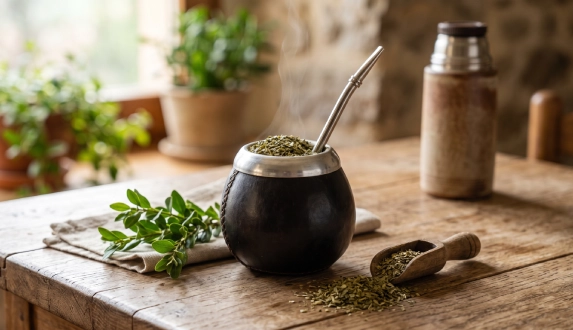
Yerba mate is a traditional infusion made from dried, suitably crushed leaves and stems of Ilex paraguariensis – an evergreen tree that grows naturally in South America. The classic way of preparing it is a ritual in itself. The dried yerba mate is poured into a special vessel (most often a natural mate gourd) and topped up with water at a temperature not exceeding 70-80°C. The drink is sipped through a metal straw with a built-in filter, called a bombilla.
The key to understanding how this drink works is that the properties of yerba mate and the intensity of its effects are never the same. They vary depending on many factors: the type of dried yerba mate chosen (e.g. the ratio of leaves to stems or the ageing time), the degree of roasting or smoking, the amount used per serving and the temperature of the water used for brewing.
The main components of yerba mate
The unique effects of yerba mate are down to its complex chemical profile. The leaves of Ilex paraguariensis contain a remarkable range of natural substances, the most important of which include:
- ✔️ Caffeine – the main alkaloid, with a strong stimulating effect, known for stimulating the central nervous system. It is largely responsible for the feeling of increased alertness and a surge of positive energy.
- ✔️ Polyphenols (above all chlorogenic acid) – powerful natural antioxidants. Scientific research suggests that they may support the neutralisation of free radicals in the body, and in this way help protect cells against oxidative stress.
- ✔️ Theobromine and theophylline – alkaloids with a somewhat milder effect than caffeine. They may gently support the relaxation of blood vessels and have a positive effect on general wellbeing.
Keep in mind that these substances play a supporting role in the proper functioning of the body, and they must not be attributed any direct medicinal properties. It is thanks to the unique synergy of these compounds that the health benefits of yerba mate have fascinated scientists around the world for years.
💬 Scientific source: C. I. Heck, E. G. de Mejia, Yerba Mate Tea (Ilex paraguariensis): a comprehensive review on chemistry, health implications, and technological considerations, Journal of Food Science, 2007.
Yerba mate – vitamins and minerals
Many enthusiasts of this drink look for specific information, exploring the question of “vitamins in yerba mate”. It is a very good lead, because the infusion is much more than just a source of caffeine and antioxidants. The dried leaf also contains certain amounts of vitamins and minerals. These include B vitamins (B1, B2, B3, B5), vitamin C, as well as minerals that are valuable for the body, such as potassium, magnesium, manganese, zinc and phosphorus.
Bear in mind, however, that their actual concentration in the infusion you drink varies and depends on how it is brewed. Remember too that although yerba mate has very promising health properties, no drink can ever replace a balanced, nutritionally complete diet or targeted supplementation recommended by a doctor. It is simply a great addition to a healthy lifestyle, but not a substitute for it. If you would like to explore this topic further and learn about the full nutritional profile of the infusion, see our detailed blog post: Yerba mate – a treasure-trove of vitamins and minerals in your mate gourd!
📌 Summary:
The effects and strength of yerba mate depend on many variables, such as the quality of the dried yerba mate or the brewing temperature. This drink is a valuable source of caffeine, antioxidants (mainly polyphenols) and selected vitamins and minerals, which makes it a worthwhile element of a healthy, active lifestyle.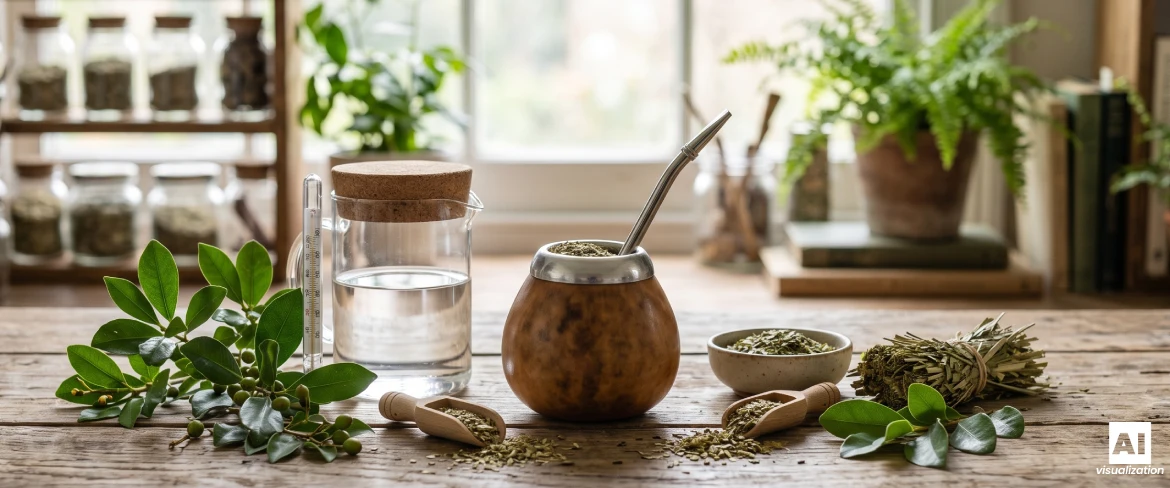
Yerba mate benefits and effects
To fully understand the potential of yerba mate, it is worth combining knowledge of its chemical composition with the specific effects we notice after drinking it. The properties of yerba mate are a direct result of a unique combination of natural active substances. When asking how yerba mate works, it is worth remembering that its effect on the body is multifaceted. If you are interested in a comprehensive overview of this topic, be sure to see our dedicated post: Properties of yerba mate Below, we look at the most important aspects of its effect on everyday life.
The stimulating effect of yerba mate
The main reason so many people around the world reach for this drink is its stimulating potential. The stimulating effect of yerba mate is down mainly to caffeine, which, together with other natural alkaloids (such as theobromine and theophylline), works in a slightly different way – often described as more stable – than stimulants from other popular sources. A properly brewed serving may bring a number of noticeable benefits:
- ✔️ a noticeable increase in alertness,
- ✔️ a subjective reduction in the feeling of physical tiredness,
- ✔️ support in maintaining a stable level of energy throughout the day.
There is, however, one very important caveat. People who are sensitive to caffeine, or who drink an infusion that is too strong (made with a large amount of dried yerba mate), may experience unwanted reactions. These include anxiety, irritability, shaky hands and a noticeable racing heartbeat. The key is always moderation, adjusting the amount of dried yerba mate to your own preferences and carefully observing your body – especially at the start of your journey with this drink.
Yerba mate, concentration and tiredness
Thanks to its high caffeine content and its synergy with valuable plant compounds, the infusion may have a positive effect on cognitive function in the broad sense. This mechanism is based on the action of natural stimulants on the relevant receptors in the nervous system, which may translate directly into a longer ability to focus and greater mental sharpness.
In addition, regular drinkers often notice that drinking the infusion delays the onset of subjective weariness when performing monotonous or highly demanding tasks. This is why yerba mate is so readily chosen as natural support during long hours of study, complex mental work in front of a computer screen, or periods of increased cognitive effort, when we want maximum mental clarity.
The antioxidant properties of yerba mate
Another very important element is the antioxidant properties of the infusion. Yerba mate is rich in polyphenols, which act as strong antioxidants. Their main task is to neutralise free radicals, which may help protect cells against the negative effects of oxidative stress. It is worth stating clearly, however, that the presence of these substances does not mean that yerba mate prevents disease or can in any way replace professional medical treatment. It is simply a valuable complement to a balanced diet.
If you would like to explore the topic of antioxidants in the infusion, we invite you to read the article: Polyphenols and saponins in yerba mate – natural compounds supporting health and everyday balance.
💡 Good to know: Clinical studies suggest that regular intake of yerba mate extracts may show strong antioxidant properties, supporting the activity of the body's natural protective enzymes and contributing to an increase in the antioxidant capacity of plasma.
💬 Scientific source: M. Gawron-Gzella et al., Yerba Mate – A Long but Current History, Nutrients, 2021.
Yerba mate and metabolism
The question of the infusion's effect on metabolism attracts just as much interest. The caffeine found in Ilex paraguariensis may potentially have a small effect on the body's energy expenditure and may encourage spontaneous physical activity. In some people, drinking the infusion is also associated with a subjective feeling of reduced appetite.
It must be clearly stated, however: yerba mate on its own is not a slimming aid. No infusion will cause weight loss without an appropriate calorie deficit. It can be an excellent natural support for physically active people, but it in no way replaces a balanced, healthy diet or regular exercise.
📌 Summary of the main properties:
- ✔️ Long-lasting stimulation: thanks to caffeine (with the support of other alkaloids), the infusion effectively helps to keep energy at a stable level.
- ✔️ Support for concentration: bioactive compounds may have a positive effect on cognitive function, reducing the feeling of weariness during study and mental work.
- ✔️ Antioxidant potential: the high polyphenol content supports the body in its fight against oxidative stress.
- ✔️ Positive effect on activity: the drink is a great complement to a healthy diet and an active lifestyle, although on its own it does not cause weight loss.
Yerba mate and health
Moving on to more detailed information about how yerba mate affects specific systems of our body, we need to start with a very important caveat. The reaction to caffeine and other bioactive compounds in the dried yerba mate is always highly individual. It depends on age, state of health, genetics and general tolerance to stimulants. The comprehensive effect of yerba mate on the body includes both potential, wide-ranging benefits and certain limitations and possible side effects that are worth being aware of.
Yerba mate and the circulatory system
Drinking caffeinated beverages naturally has an effect on the work of the heart and the circulatory system. In most people, a moderate amount of caffeine delivered in a serving of the infusion does not cause any cardiac problems. However, people with increased sensitivity to stimulants may feel temporary heart palpitations or increased stimulation. It must be clearly stated that yerba mate is not a medicine – it does not treat heart disease and is not used to mechanically regulate blood pressure, although its components may be one element of prevention within a healthy lifestyle.
Does yerba mate raise blood pressure?
Many consumers ask themselves: does yerba mate raise blood pressure? It is true that in some people caffeine may cause a short-lived, temporary rise in blood pressure, especially when we drink a very strong infusion (made with a large amount of dried yerba mate) or when our natural tolerance to this substance is low. The issue of yerba mate and high blood pressure requires a responsible approach. People diagnosed with hypertension should definitely discuss regular drinking of the infusion with their doctor. There is no single, universal answer that would work for everyone. You will find more details on this topic in our article: Is yerba mate healthy? How does it affect cholesterol and blood pressure?
💡 Interesting fact: New scientific research suggests that regular, moderate drinking of yerba mate may have an interesting effect on cardiometabolic parameters. In an 8-week study, it was observed that daily consumption of an infusion rich in polyphenols may have a beneficial effect on a mild reduction in blood pressure parameters and on a decrease in some inflammatory markers in healthy people and in people at moderate cardiometabolic risk. Let us remember, however, that this is a supporting effect, not a medicinal one.
💬 Scientific source: L. Bravo et al., Yerba Mate (Ilex paraguariensis St. Hill.) Tea May Have Cardiometabolic Beneficial Effects in Healthy and At-Risk Subjects: A Randomized, Controlled, Blind, Crossover Trial in Nonhabitual Consumers, Molecular Nutrition & Food Research, 2025.
Yerba mate and the digestive system
Another important aspect is the effect of the infusion on the stomach and intestines. Compounds found in the leaves may stimulate the production of stomach acid and speed up intestinal peristalsis. For many people this is a desirable effect that supports the natural digestive processes. In some consumers, however, a strong infusion – especially one drunk on an empty stomach in the morning – may cause discomfort, nausea or heartburn. In such cases, it is worth reducing the amount of dried yerba mate, pouring over cooler water and avoiding drinking on an empty stomach. We have described this issue in more detail in the text: How does yerba mate affect digestion?
Yerba mate and acid reflux
The question of yerba mate and acid reflux is an important topic for people who experience stomach and oesophageal problems. In some people, caffeine may relax the lower oesophageal sphincter, which may worsen reflux symptoms such as heartburn or an uncomfortable burning sensation behind the breastbone. The risk increases when the infusion is very hot, drunk on an empty stomach or immediately before going to bed. People prone to reflux are advised to start with very gentle infusions, avoid drinking while lying down and, if symptoms are severe, consult a specialist doctor.
Yerba mate, sleep and the nervous system
The high caffeine content means that yerba mate has a strong effect on the central nervous system. On the one hand, this allows you to enjoy better concentration and energy during the day, but on the other, it carries a risk if consumed in excess. If we give the body too many stimulants, negative side effects may appear:
- ✔️ difficulty falling asleep and insomnia,
- ✔️ noticeable inner anxiety and irritability,
- ✔️ shaky hands and tension headaches.
The reaction of the nervous system depends on the total amount of caffeine taken in during the day from various sources, the individual rate at which it is metabolised and the time of drinking. It is usually recommended to avoid the infusion in the late afternoon and evening so as not to disturb the natural daily rhythm. If you would like to learn more about how to fit the ritual of brewing yerba mate to your lifestyle, read our post: Yerba mate in the morning or evening? The key to a healthy sleep.
📌 Summary:
Yerba mate can be a valuable element supporting a healthy lifestyle, with a positive effect on energy and metabolism. The key, however, is to observe your own body – in the case of hypersensitivity to caffeine, blood pressure problems or digestive problems (e.g. acid reflux), adjust the strength of the infusion and the time you drink it and, if in doubt, seek a doctor's advice.
Yerba mate instead of coffee – is it a good choice?
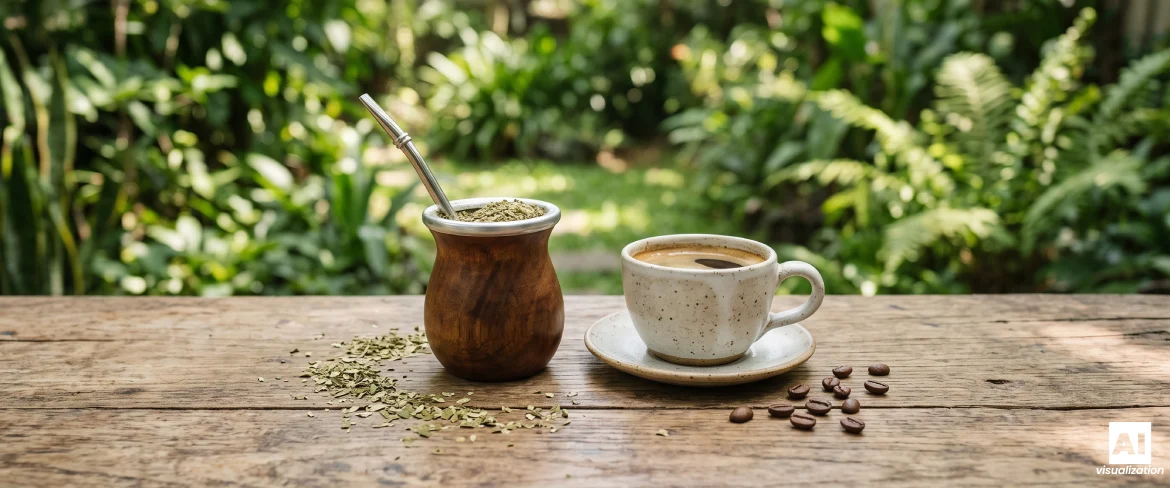
Many lovers of hot drinks sooner or later ask themselves whether yerba mate instead of coffee is a good choice for them. Both drinks share a common denominator: a high caffeine content and a noticeable stimulating effect. However, there are fundamental differences between them that mean the body may react to them in completely different ways.
🧉☕ Comparison of the main features of the two drinks
| Feature | Yerba mate | Coffee |
|---|---|---|
| Stimulating effect | Gradual and long-lasting, usually without a sudden drop in energy | A quick, intense boost of energy, often followed by a noticeable feeling of tiredness |
| Method of preparation | Repeated infusions of the dried yerba mate in a mate gourd, sipped through a straw with a filter | A single extraction (espresso machine, moka pot, traditional brewing) |
| Time of consumption | Sipped slowly, often over several hours during everyday activities | Usually drunk relatively quickly as a single serving |
Keep in mind that the total amount of caffeine delivered to the body by each of these drinks varies. In a cup of coffee, it depends on the type of beans, the degree of roasting and the brewing method used. In the case of the yerba mate infusion, the key factors are the amount of dried yerba mate used, the ratio of leaves to stems and the number of refills of water added to the same gourd. If you want to explore in depth the content of stimulants and the mechanisms of their action, read our post: Caffeine in yerba mate and coffee – why choose mate tea?
The final conclusion of this comparison, however, is not black and white. Although for very many people the yerba mate infusion is an excellent, more stable alternative, this absolutely does not mean that it is automatically healthier or suitable for everyone. The decision to change your habits should always be based on individual taste preferences, personal tolerance to caffeine and careful observation of how your body reacts to a given drink.
📌 Summary:
The choice between yerba mate and traditional coffee is a highly individual matter. Yerba mate offers long-lasting, balanced stimulation and a distinctive brewing ritual, but there is no universal rule that replacing coffee with it will work for everyone. It is best to try both and match them to the needs of your own body.
How many times a day can you drink yerba mate?
Now that we know how yerba mate compares with classic coffee, another important question naturally arises: how many times a day can you drink yerba mate? The answer may seem a little disappointing, but there is no single, rigid rule that could be applied to every user. The safe and optimal amount of infusion depends on a great many individual variables. If you are looking for detailed guidelines on this subject, we encourage you to read our post: Yerba mate – how often can we drink it? Are there any contraindications?
The most important criterion to follow is the total amount of caffeine taken in over 24 hours. Before you decide to pour water over another serving of dried yerba mate, take the following factors into account:
- ✔️ Strength of the prepared infusion: it depends directly on the amount of dried yerba mate put into the gourd – the more there is, the higher the stimulant content of the drink.
- ✔️ Number of refills: the traditional way of brewing involves pouring water over the same leaves many times. The first 2-3 infusions extract the most caffeine, and with each subsequent refill the amount steadily falls.
- ✔️ Other sources of caffeine in your diet: remember to add to your daily total the cups of coffee, strong tea, energy drinks and even dietary supplements containing stimulants.
For beginners, the most important rule is: start with smaller amounts. At first, it is enough to use a smaller portion of dried yerba mate, e.g. 15-20 grams, and pour water over it only a few times a day. It is worth carefully observing your body's reactions. Symptoms such as insomnia, shaky hands, inner anxiety, irritability or unnatural heart palpitations may clearly indicate that your individual limit for stimulants has been exceeded, and that in the following days you should reduce your caffeine intake.
💡 Good to know: According to the general guidelines of the European Food Safety Authority (EFSA), the safe daily caffeine intake for a healthy adult is up to about 400mg from all sources combined (provided that caffeine is not consumed in a single dose exceeding 200mg). For classically brewed yerba mate of standard strength, this usually leaves a safe margin for drinking one to two servings prepared in the morning (including several refills). Studies show that a serving of infusion prepared by the traditional method may contain from about 60mg to even more than 200mg of caffeine.
💬 Scientific source: based on the review of studies cited earlier, published in the journal Nutrients (2021).
In practice, many experienced yerba mate enthusiasts prepare just one solid portion of dried yerba mate in the morning. Instead of brewing fresh gourds again and again, they simply top up with warm water from a thermos over several hours, until the infusion has completely lost its flavour. In the South American tradition, this state is called lavado, which literally means "washed out" yerba mate.
With this method, caffeine is released very slowly and gradually, and we avoid sudden spikes of energy. Spreading the brewing and drinking over time is the simplest and at the same time the safest way to enjoy the benefits of the infusion without worrying about accidentally exceeding the daily limit of stimulants.
📌 Summary:
There is no universal number of servings of yerba mate that can be drunk in a day. The key is to control your total caffeine dose (taking into account the strength of the infusion, the number of refills and other drinks) and to match it to your own individual tolerance. If side effects occur, such as heart palpitations, you should immediately reduce the amount of stimulants you consume.
Is yerba mate carcinogenic?
This is one of the questions most often asked by people who are only just starting out with yerba mate. The controversy around the question is yerba mate carcinogenic has appeared in the media for many years, causing understandable concern among consumers. To learn the truth, however, we need to clearly separate the properties of the plant itself from the way the infusion is prepared and consumed. If you are interested in an in-depth analysis of this issue from a historical and scientific point of view, be sure to read our detailed article: Yerba mate – health elixir or carcinogenic trap?
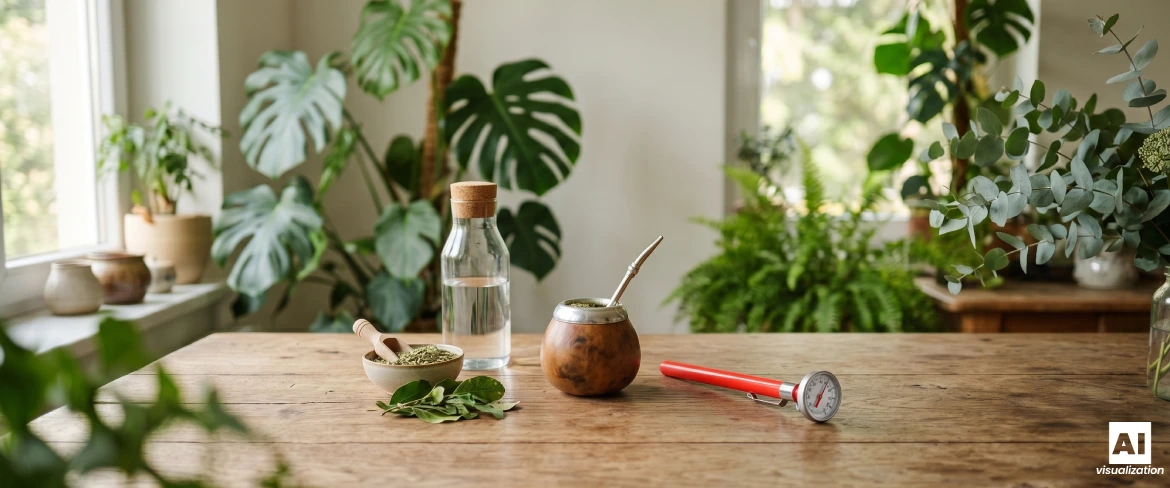
The main source of concern is not the dried yerba mate itself, but the temperature of the liquid consumed. Traditionally, the infusion is drunk using hot water – at a temperature of around 80°C. Regularly flushing the oesophagus with liquids at extremely high temperatures may lead to repeated thermal micro-injuries of the mucous membrane. It is precisely this physical irritant – regardless of whether we drink yerba mate, black tea or plain water – that scientists have identified as a factor increasing the risk of serious oesophageal diseases.
💡 Interesting fact: In 2016, the International Agency for Research on Cancer (IARC), an agency of the WHO, re-evaluated yerba mate. Experts clearly classified drinking very hot beverages (at a temperature above 65°C) as probably carcinogenic to humans (Group 2A). At the same time, it was noted that yerba mate infusion drunk at safe, lower temperatures was not classified as a carcinogenic agent (Group 3), because the dried yerba mate itself does not show such properties.
💬 Scientific source: IARC Monographs Working Group, Carcinogenicity of drinking coffee, mate, and very hot beverages, The Lancet Oncology, 2016.
Another, less frequently mentioned factor is the traditional method of drying the leaves using smoke from a fire, which releases certain amounts of polycyclic aromatic hydrocarbons (PAHs). To enjoy the infusion in a fully safe way, it is enough to follow two simple rules:
- ✔️ Control the temperature: never pour boiling water over the dried yerba mate. Use water at a maximum temperature of 70-80°C. In addition, wait a moment before taking the first sip through the bombilla, so that the liquid has time to cool slightly.
- ✔️ Choose smoke-free dried yerba mate: if you want to minimise contact with smoke-derived substances, reach for products labelled sin humo (dried only with hot air), which are widely available in our shop's range (including products from the Verde Mate Green or Soul Mate brands).
📌 Summary:
The myth that yerba mate is carcinogenic stems from a misunderstanding. It is not the plant that poses a risk, but the habit of drinking very hot, scalding liquids. By taking care to use a moderate water temperature when brewing and by choosing dried yerba mate that has been dried without smoke, you can safely enjoy the potential benefits of this drink without unnecessary worry.
Who should be careful when drinking yerba mate?
Yerba mate is a wonderful, natural drink with great potential. Before you include it permanently in your daily routine, however, it is worth realising how strong and multifaceted the effect of yerba mate on the human body can be. Because of its high caffeine content and other active biochemical compounds, there are several groups of people who should approach drinking it with a great deal of caution.
The following people should pay particular attention to the amount of infusion they drink:
- ✔️ People with cardiovascular disease: including patients with diagnosed hypertension, heart rhythm disorders (arrhythmia) or other cardiac conditions. Caffeine delivered in large amounts may temporarily raise blood pressure and speed up the heart rate.
- ✔️ People with acid reflux and a sensitive digestive system: stimulants may contribute to the relaxation of the lower oesophageal sphincter, which may worsen the unpleasant burning behind the breastbone and heartburn.
- ✔️ People struggling with sleep problems: hypersensitivity to caffeine, or consuming it in the afternoon and evening, can significantly make it harder to fall asleep and reduce the quality of night-time rest.
- ✔️ Pregnant and breastfeeding women: health organisations recommend a significant reduction in daily caffeine intake during this period, and a strong yerba mate infusion can very quickly use up this safe limit.
- ✔️ Children: the developing nervous system in childhood is extremely sensitive to stimulants, which is why giving this type of drink to the youngest is not recommended.
- ✔️ People taking medication on a regular basis: compounds found in the infusion may potentially interact with certain medicines (e.g. medicines for high blood pressure, sedatives or medicines that stimulate the nervous system).
In each of the above cases, we strongly advise against assessing the safety of regularly drinking this beverage on your own. The most sensible and safest step will always be to consult your doctor or an experienced pharmacist, who will help you make the right decision based on your individual state of health.
📌 Summary of the guide:
Ilex paraguariensis is a plant with a rich composition and a fascinating tradition. It can be an excellent complement to a balanced diet for most healthy adults. Remember, however, that the key is moderation, choosing a moderate water temperature for brewing and listening carefully to your own body. Adjust the strength of the infusion to your preferences and lifestyle, and enjoy its potential with full awareness!
If, after reading the above information, you feel that yerba mate is for you, it is worth starting with gentler, milder-tasting varieties and smaller portions of dried yerba mate. This way, you can calmly test how your body reacts to a new dose of natural energy during the day.
Finding your favourite flavour and developing your own morning brewing ritual can bring a great deal of satisfaction. Choosing the right accessories, such as a comfortable mate gourd or a well-shaped bombilla, will certainly make every moment spent with this exceptional drink even more pleasant.
Ready for your first sip of green energy from South America? Welcome to MateMundo, where you will find the perfect dried yerba mate and accessories for you!
❓ FAQ – frequently asked questions about the effects of yerba mate on health
1. Is yerba mate healthy?
2. Does yerba mate contain caffeine?
3. Can you drink yerba mate every day?
4. Can you drink yerba mate in the evening?
5. Does yerba mate dehydrate you?
6. Is yerba mate suitable for everyone?
Sources of information:
- L. Bravo et al., Yerba Mate (Ilex paraguariensis St. Hill.) Tea May Have Cardiometabolic Beneficial Effects in Healthy and At-Risk Subjects: A Randomized, Controlled, Blind, Crossover Trial in Nonhabitual Consumers, Molecular Nutrition & Food Research, 2025.
- M. Gawron-Gzella et al., Yerba Mate – A Long but Current History, Nutrients, 2021.
- IARC Monographs Working Group, Carcinogenicity of drinking coffee, mate, and very hot beverages, The Lancet Oncology, 2016.
- C. I. Heck, E. G. de Mejia, Yerba Mate Tea (Ilex paraguariensis): a comprehensive review on chemistry, health implications, and technological considerations, Journal of Food Science, 2007.
Recommended

Verde Mate Green Más IQ 0.5kg

Soul Mate Orgánica Siempre 0.5kg (organic)

Rio Parana Naranja 0.5kg
