
Colourful matcha: is it really matcha? We check colourful alternatives to matcha
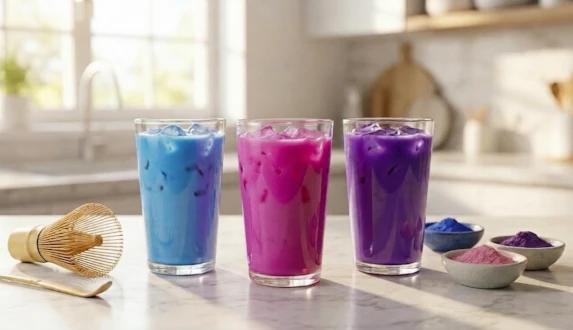
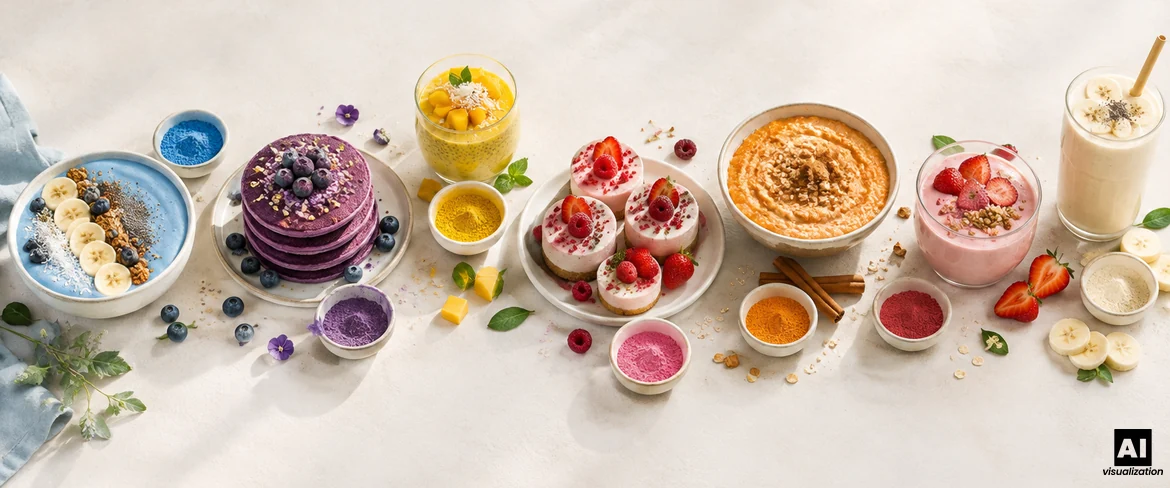
Blue, pink, purple, and also yellow, orange, red and white – pastel lattes in glasses look like a painter's palette. They all share one name: colourful matcha. Yet when you look at the ingredients of the variants we describe, you will not find a single tea leaf. Instead of tea, there are fruit, vegetables and spices, ground into a fine powder. But is it really matcha? We check what colourful matcha alternatives really are, how they taste and what they are good for.
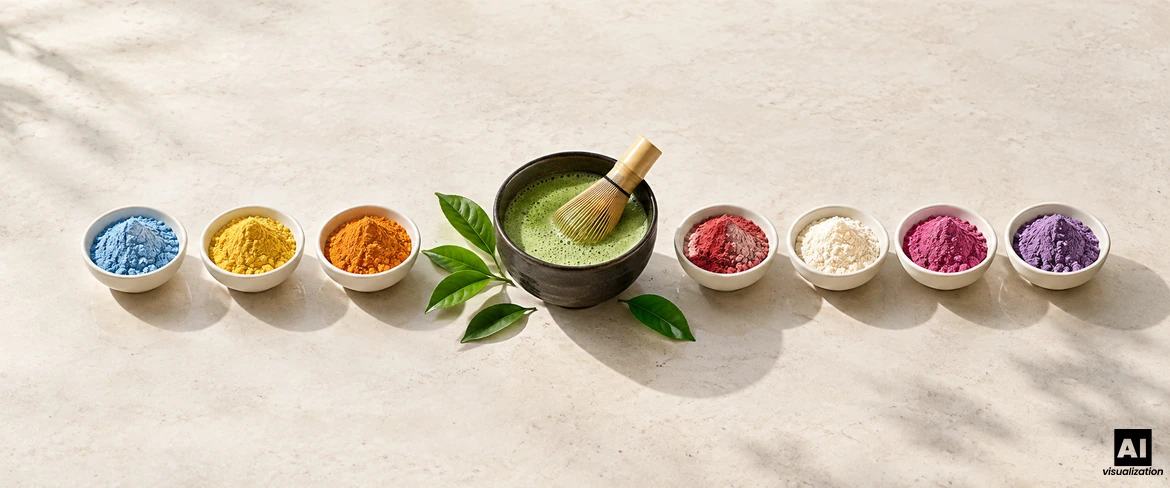
In this post, we take a close look at seven variants: blue matcha with banana and blue spirulina, mango matcha, orange matcha with pumpkin and a pumpkin spice flavour, also known as pumpkin spice matcha, red matcha with freeze dried strawberry powder, banana white matcha, pink matcha made from dragon fruit and purple matcha with powdered ube. We explain what each of them is made from, whether it contains caffeine, how to prepare a drink from it and how to use the colourful powder in the kitchen. At the end, you will find a table that gathers all the variants in one place.
Table of contents:
- What is colourful matcha?
- Classic green matcha vs colourful alternatives
- Blue matcha with banana and blue spirulina
- Mango matcha – a fruity alternative to classic matcha
- Orange matcha – pumpkin spice
- Red matcha with strawberry
- White matcha – powdered banana
- Pink matcha – freeze dried dragon fruit
- Purple matcha – powdered ube
- How do I prepare colourful matcha?
- How can I use colourful powders in the kitchen?
- Colourful matcha – comparison of the variants
What is colourful matcha?
Colourful matcha is a common name for a group of powdered plant products from which drinks in the style of matcha are prepared. Each variant has a different base. It can be a fruit (mango, strawberry, banana, dragon fruit), a vegetable (pumpkin), a tuber (ube), a blend of spices or an ingredient that adds colour, such as blue spirulina extract. They have three things in common: a fine, powdery form, an intense colour and a way of preparing them that resembles the ritual known from Japan.
In the colourful matcha category at MateMundo, you will find the Matcha Alternative line from the brand Mary Rose: seven colours with completely different characters. Before we describe each of them, let us explain three basic questions: is it tea, where does the name come from and what about caffeine.
Is colourful matcha real tea?
No. Tea is an infusion of the leaves of the tea plant (Camellia sinensis), and classic matcha is exactly those leaves, ground into a powder. Colourful alternatives contain no tea leaves, so from a botanical point of view colourful matcha is not tea. The word “matcha” describes here, above all, the form of the product, meaning a very fine powder, and the way it is turned into a drink.
It is a bit like plant-based drinks that we call oat or almond “milk” in everyday speech. The name tells you how to use the product, not what it is made from. It is the same with pink, blue or yellow matcha: you know at once that you put the powder into a bowl, add liquid and froth it.
Where does the name matcha alternative come from?
Producers often add the word alternative to the name. It is an honest hint: matcha alternative is a product that replaces classic matcha in your cup, not a tea in a different colour. This is also the name of the whole Mary Rose line, for example Blue Matcha Alternative or Pink Matcha Alternative.
It shares its method of preparation with the original. You mix the powder with a small amount of water, milk or plant-based drink and froth it until you get a smooth base without lumps. You can use an electric milk frother or a bamboo whisk called a chasen, the same one used for green matcha. Then you add the rest of the liquid, hot or with ice.
Does colourful matcha contain caffeine?
The variants described in this post do not contain caffeine. They are made from fruit, vegetables, tubers and spices, not from tea leaves, so they have no source of this substance. That is why you can drink them at any time of day, including in the evening, which matters for people who limit their caffeine intake.
There is one reservation, though. There are also blends on the market that combine a colourful powder with green matcha, cocoa, coffee or another source of caffeine. Such a product may already be stimulating. That is why you should always check the ingredients on the label before buying. The Mary Rose Matcha Alternative variants in our range contain no tea, coffee or cocoa.
📌 In short:
Colourful matcha is made of powdered fruit, vegetables, tubers or spices, not tea. It owes the name “matcha” to its powder form and the way it is prepared. The variants described here do not contain caffeine, but it is always worth checking the ingredients of a specific product on the label.
Classic green matcha vs colourful alternatives
To understand colourful powders well, it is worth starting with the original. Traditional Japanese matcha is powdered green tea. The plants that the leaves come from are shaded from the sun for a few weeks before harvest. Shading increases the amount of chlorophyll, caffeine and the amino acid L-theanine in the leaves. Thanks to this, matcha has an intensely green colour and a distinct umami flavour: a deep, slightly savoury, broth-like taste with a grassy note and a delicate bitterness.
When you drink matcha, you consume the whole ground leaf, not just an infusion, so you also get all the caffeine it contained. According to data collected in a scientific review, one gram of matcha powder can contain from about 19 to about 44 mg of caffeine, depending on the product. Classic matcha is therefore a stimulating drink, while the colourful alternatives from the MateMundo range are not. But the differences do not end there.
💬 Scientific source: J. Kochman et al., Health Benefits and Chemical Composition of Matcha Green Tea: A Review, Molecules, 2021.
🍵 Want to know more about green matcha? We explain how it is made, what it tastes like and how it differs from ordinary green tea in the posts Matcha from A to Z. What is this tea, what does it taste like and why is it worth drinking? and Green tea vs matcha – how do they differ and which one is healthier?
The most important differences between green matcha and colourful alternatives
Green matcha and its colourful counterparts have a similar, powdery form, but they are completely different products. The differences are easiest to show in five points:
- ➡️ Source: classic matcha is the leaves of the tea plant. Colourful alternatives are freeze dried fruit (mango, strawberry, banana, dragon fruit), pumpkin with spices, ube tuber or banana with blue spirulina extract.
- ➡️ Caffeine: green matcha contains it and is stimulating. The Mary Rose Matcha Alternative variants are caffeine-free.
- ➡️ Flavour: matcha is savoury and grassy, with a note of umami and a slight bitterness. Colourful powders taste like the fruit, vegetable or spice they are made from: from sweet banana and mango, through tangy strawberry, to spiced pumpkin and dessert-like ube.
- ➡️ Colour: the green of matcha comes from chlorophyll. In colourful alternatives, the colour comes from natural pigments of fruit and vegetables or from a colouring ingredient, for example spirulina extract, black carrot concentrate or beta-carotene.
- ➡️ Use: classic matcha is mainly drunk as a tea infusion or a latte. Colourful powders also work very well in lattes, but just as often they end up in desserts, porridge and smoothies as a natural colouring ingredient.
✔️ powdered green tea leaves,
✔️ contains caffeine and is stimulating,
✔️ grassy flavour with a note of umami,
✔️ a good drink for the morning.
✔️ powdered fruit, vegetables or tubers,
✔️ caffeine-free (not stimulating),
✔️ fruity, spiced or dessert-like flavour,
✔️ good at any time of day and as a natural colouring.
Now that you know the reference point, it is time for the specific colours. We start with one of the most popular variants, blue matcha.
Blue matcha with banana and blue spirulina
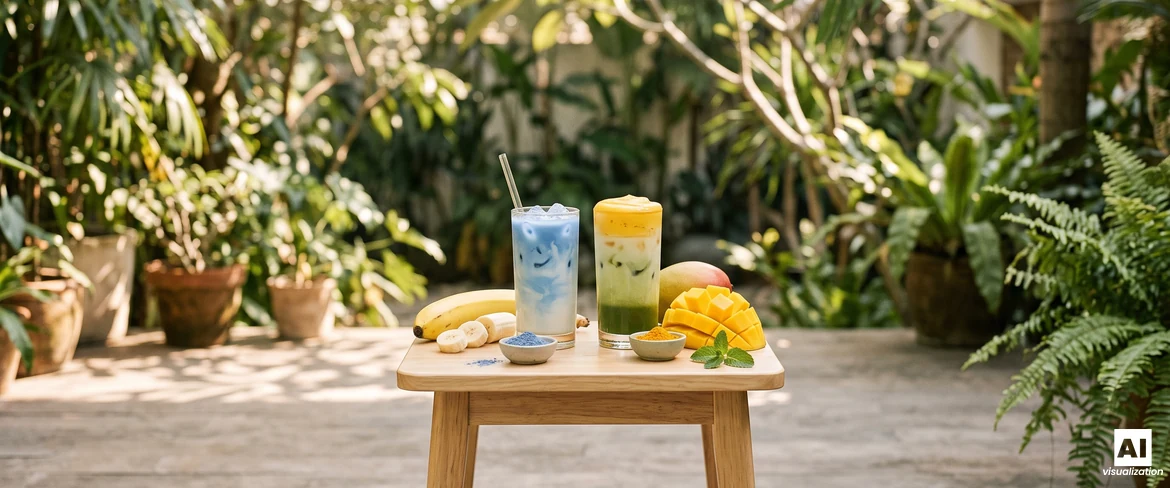
Blue matcha catches the eye with the colour of a tropical lagoon. In the MateMundo range, it is Mary Rose Blue Matcha Alternative – Banana: powdered banana with blue spirulina extract. The base of the product is freeze dried banana, which makes up more than 90% of the ingredients and gives the flavour. The blue colour comes from the second ingredient, an extract of blue spirulina (6.1%). Bamboo fibre completes the ingredients. The product has no added sugars or flavourings and, like the other variants, it is not tea and does not contain caffeine.
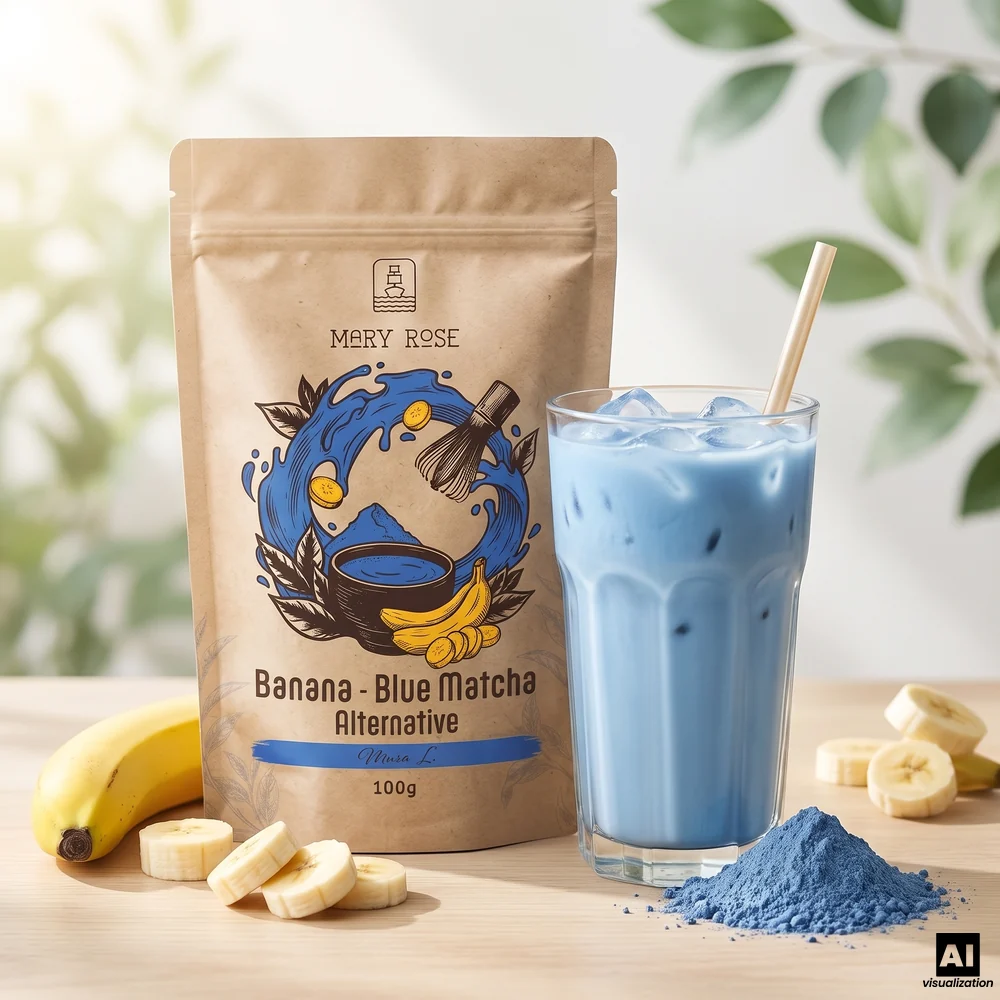
💙 Mary Rose – Blue Matcha Alternative – Banana
A creamy banana drink in an intensely blue colour. Blue Matcha Alternative from Mary Rose is freeze dried banana with blue spirulina extract, which you can prepare hot or with ice.
- ✔️ Short ingredients list: banana, blue spirulina extract and bamboo fibre.
- ✔️ No added sugars or flavourings, caffeine-free.
- ✔️ For lattes, smoothie bowls, porridge, yoghurt and cold desserts.
Blue spirulina – where does the blue colour come from?
Spirulina is a microscopic cyanobacterium that many lovers of green smoothies know. However, it also contains a pigment with an intensely blue colour: phycocyanin. When it is separated from the rest of the cyanobacterium, the result is blue spirulina extract. Such an extract gives drinks and desserts a pure blue colour. In blue matcha, it plays exactly this role: it is a natural colouring ingredient, while the flavour comes from the banana. Online, you will also find similar drinks under the names blue spirulina matcha or spirulina matcha.
Phycocyanin is sensitive mainly to high temperature. That is why you will get the most intense colour in drinks made with cold or warm, but not hot, milk, and in desserts that do not go into the oven. During baking, the colour may fade or change shade.
🔬 Fun fact: Researchers who gathered the results of many studies on phycocyanin report that this pigment is most stable below about 45°C and at a slightly acidic pH, around pH 5.5-6. Strongly acidic additions and long exposure to light can weaken the blue. This is a useful practical tip: it is worth storing blue matcha tightly closed and away from the sun, and not adding boiling water to the drink.
💬 Scientific source: A. Adjali et al., Physicochemical degradation of phycocyanin and means to improve its stability: A short review, Journal of Pharmaceutical Analysis, 2022.
What does blue matcha with banana taste like?
If you expect the grassy bitterness of green matcha, a pleasant surprise awaits you. The flavour of blue matcha with banana is mild, naturally sweet and creamy, like a ripe banana in a smoothie. The product has no added sugar, and you can taste the sweetness best when you combine it with milk or an oat, coconut or soya drink.
To prepare a drink, you need 2 small teaspoons of powder (about 5.6 g) and 100 ml of cold or warm milk or plant-based drink. You froth everything with a frother or a chasen whisk. The banana flavour goes well with vanilla, cocoa, coconut and other fruit. If you like eye-catching drinks, you can also pour frothed green matcha onto blue milk with ice. This makes a two-colour latte which, unlike blue matcha alone, contains caffeine from the tea.
Mango matcha – a fruity alternative to classic matcha
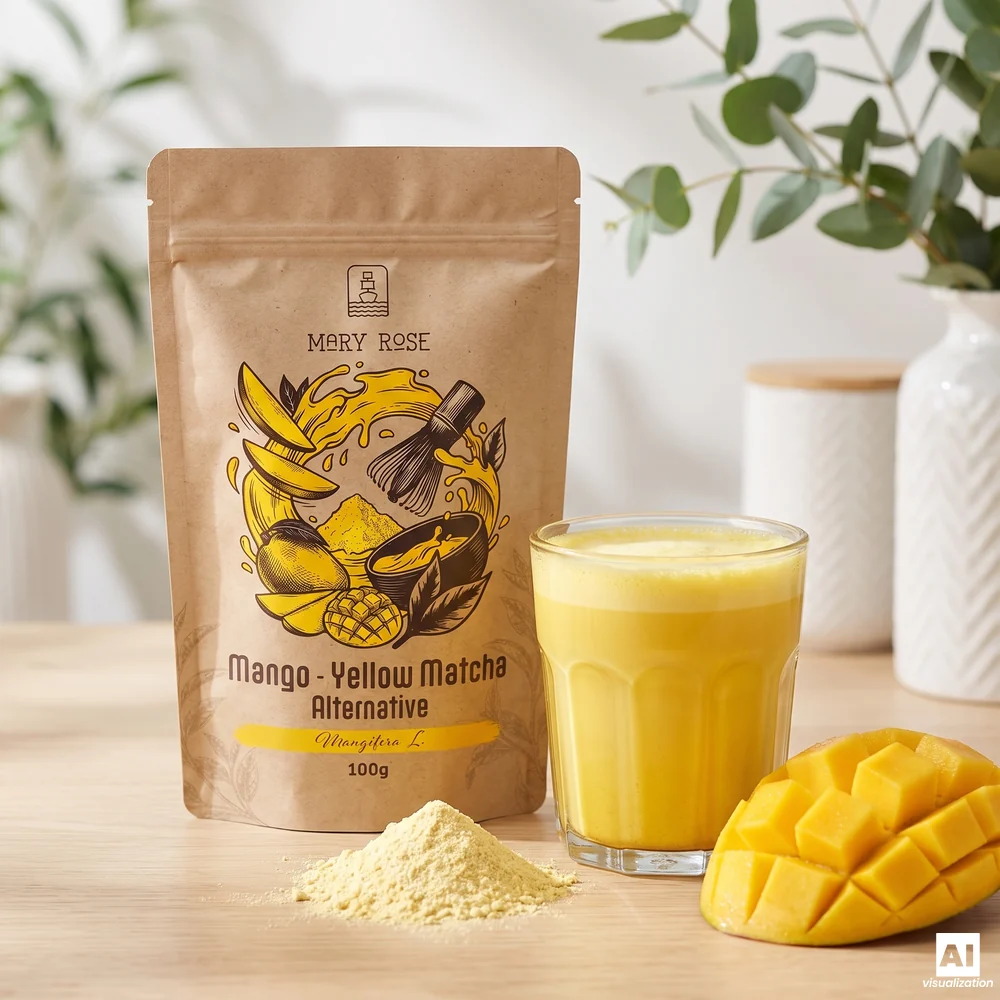
If blue matcha brings a lagoon to mind, mango matcha takes you straight to a tropical beach. In our shop, you will find it as Mary Rose Yellow Matcha Alternative – Mango. The ingredients list is as short as it can be: 100% freeze dried mango, ground into a fine dust, with no added sugar, colourings or flavourings. The powder has an intensely sunny, yellow colour, which is why this variant is also called yellow matcha. Like the other alternatives, it contains no tea or caffeine.
It is worth knowing that the phrase “mango matcha” means two different things online. Sometimes it refers to powdered fruit alone, prepared like matcha, meaning a caffeine-free alternative such as the Mary Rose product. Sometimes it refers to a drink that combines mango with real green matcha. The second version contains caffeine from the tea. We describe both below.
💛 Mary Rose – Yellow Matcha Alternative – Mango
A sunny colour and the sweet flavour of a ripe fruit. Yellow Matcha Alternative from Mary Rose is pure, freeze dried mango powder, from which you can prepare a fruity drink, a mango latte or a naturally yellow dessert.
- ✔️ Ingredients: 100% freeze dried mango.
- ✔️ No added sugar, colourings or flavourings, caffeine-free.
- ✔️ For hot and iced drinks, porridge, yoghurts, smoothies and creams.
What does mango matcha taste like?
Mango matcha tastes like a ripe, juicy fruit: it is tropical, naturally sweet and clearly fruity. It has no grassy note or bitterness of green tea, so it is a good choice for people who simply do not like classic matcha. The sweetness comes only from the sugars naturally present in the fruit, so the drink usually does not need sweetening.
Mango goes well with coconut milk and oat drink, which highlight its creaminess. Vanilla, lime juice, fresh mint and other tropical fruit, such as passion fruit or pineapple, also suit it. You can prepare a drink from about 11 g of powder (4 flat teaspoons) and 100 ml of warm, but not boiling, water. After thorough frothing, you can add milk or a plant-based drink and serve it hot or with ice.
Mango matcha latte – with classic matcha or caffeine-free?
Under the name mango matcha latte, you will find two different drinks. The first is a caffeine-free mango latte: mango powder alone, frothed with milk or a plant-based drink. It is a fruity, creamy drink that you can also have in the evening.
The second is a layered mango matcha latte with classic green matcha added. It is made in layers: you pour frothed green matcha (about half a teaspoon of powder) into the bottom of a glass with ice, and on top you add a yellow foam made of cold milk whipped with 1-2 teaspoons of mango powder. Such a drink combines the grassy note of tea with fruity sweetness, but it contains caffeine from the green matcha. We explain step by step how to froth matcha with milk well in the post Matcha latte – what is it and how to make the perfect matcha with milk at home?
💡 Good to know: If you are more interested in ready-made green matcha with a fruity flavour than in a colourful powder, take a look at the post Mary Rose matcha latte – flavoured matcha with fruit and coconut. These drinks are based on real tea, so they contain caffeine.
Orange matcha – pumpkin spice
An orange colour and the smell of cinnamon immediately bring to mind cool days, a warm blanket and a mug in your hands. That is exactly the effect of orange matcha, which in our shop is Mary Rose Orange Matcha Alternative – Pumpkin Spice. The base of the powder is freeze dried pumpkin (81.7% of the ingredients). It is supplemented by a blend of warming spices: cinnamon, ginger, nutmeg and cloves. The intensely orange shade is boosted by an added colouring, beta-carotene (the same compound that gives pumpkin and carrots their colour), and the ingredients list ends with bamboo fibre.
Pumpkin spice is the name of a blend of warming spices that is traditionally added to pumpkin pie. This set of flavours has become a symbol of autumn drinks and desserts. In orange matcha, the spices meet real pumpkin, so the drink is both spiced and gently sweet.
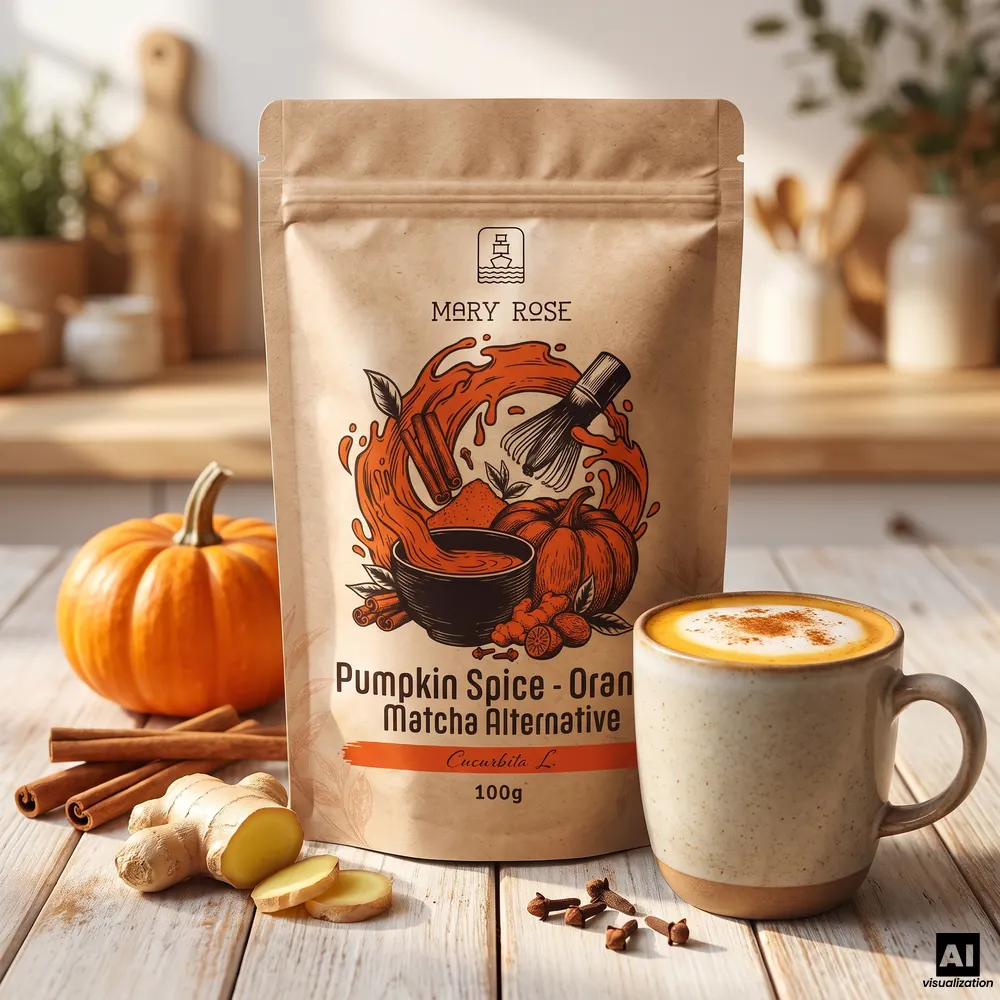
🧡 Mary Rose – Orange Matcha Alternative – Pumpkin Spice
Pumpkin, cinnamon and ginger in one mug. Orange Matcha Alternative from Mary Rose is freeze dried pumpkin with warming spices, from which you can prepare a warming latte or an orange dessert.
- ✔️ Ingredients: pumpkin, cinnamon, ginger, nutmeg, cloves, beta-carotene, bamboo fibre.
- ✔️ No artificial flavourings or added sugar, caffeine-free.
- ✔️ For hot and iced lattes, porridge, creams and spiced biscuits.
What does pumpkin spice matcha taste like?
Pumpkin spice matcha combines two worlds. Pumpkin gives a mild, natural sweetness and a thick, velvety texture. The spices add depth: the cinnamon is distinct and warm, the ginger gives a slight tingle, and the nutmeg and cloves leave a spiced aftertaste. The whole drink is warming and dessert-like, but with no added sugar, so you can adjust the sweetness to your taste.
Cinnamon makes up almost one tenth of the powder, so its flavour is clearly noticeable in the drink. If you like this spice, take a look at our post Cinnamon – a spice of remarkable properties. What is cinnamon good for and where to use it? Orange matcha suits cooler days especially well, but it also works very well with ice.
How do I make an orange matcha latte?
Making an orange matcha latte is simple:
- ✔️ Put about 2 small teaspoons of powder (about 5.4 g) into a mug or a bowl.
- ✔️ Add about 100 ml of water, milk or a plant-based drink, hot or cold.
- ✔️ Mix thoroughly with a frother or a chasen whisk until the powder combines with the liquid.
- ✔️ Add more frothed milk if you prefer a milder, bigger latte. For a cold drink, add ice cubes.
On top, you can add frothed milk or whipped cream and dust it with cinnamon. A little vanilla syrup also suits it. You can make an eye-catching, two-colour version by slowly pouring frothed green matcha onto orange milk. Such a drink already contains caffeine from the tea.
Red matcha with strawberry
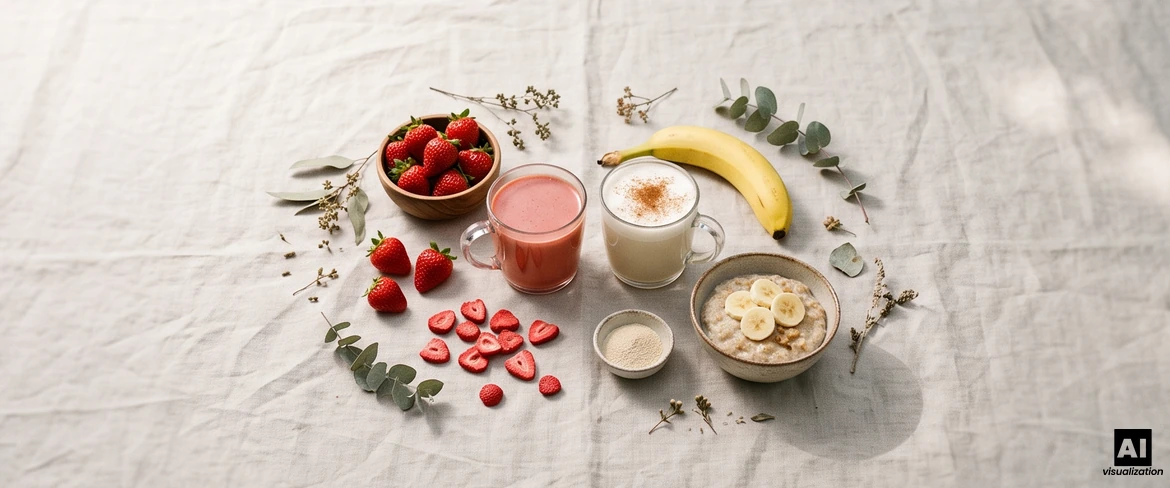
The ruby colour and the smell of strawberries make this drink remind you of summer. In our shop, red matcha is Mary Rose Red Matcha Alternative – Strawberry. It is not a tea at all, but a fruit powder based on freeze dried strawberry, which replaces classic matcha in your cup.
❤️ Mary Rose – Red Matcha Alternative – Strawberry
Sweet strawberry with a slightly tangy note and a deep, red colour. Red Matcha Alternative from Mary Rose is freeze dried strawberry powder, from which you can prepare a strawberry latte, a fruity iced drink or a red dessert cream.
- ✔️ Ingredients: 72.1% freeze dried strawberry, black carrot concentrate, citric acid.
- ✔️ No artificial colourings or preservatives, caffeine-free.
- ✔️ For lattes, shakes, yoghurts, porridge, creams and ice cream.
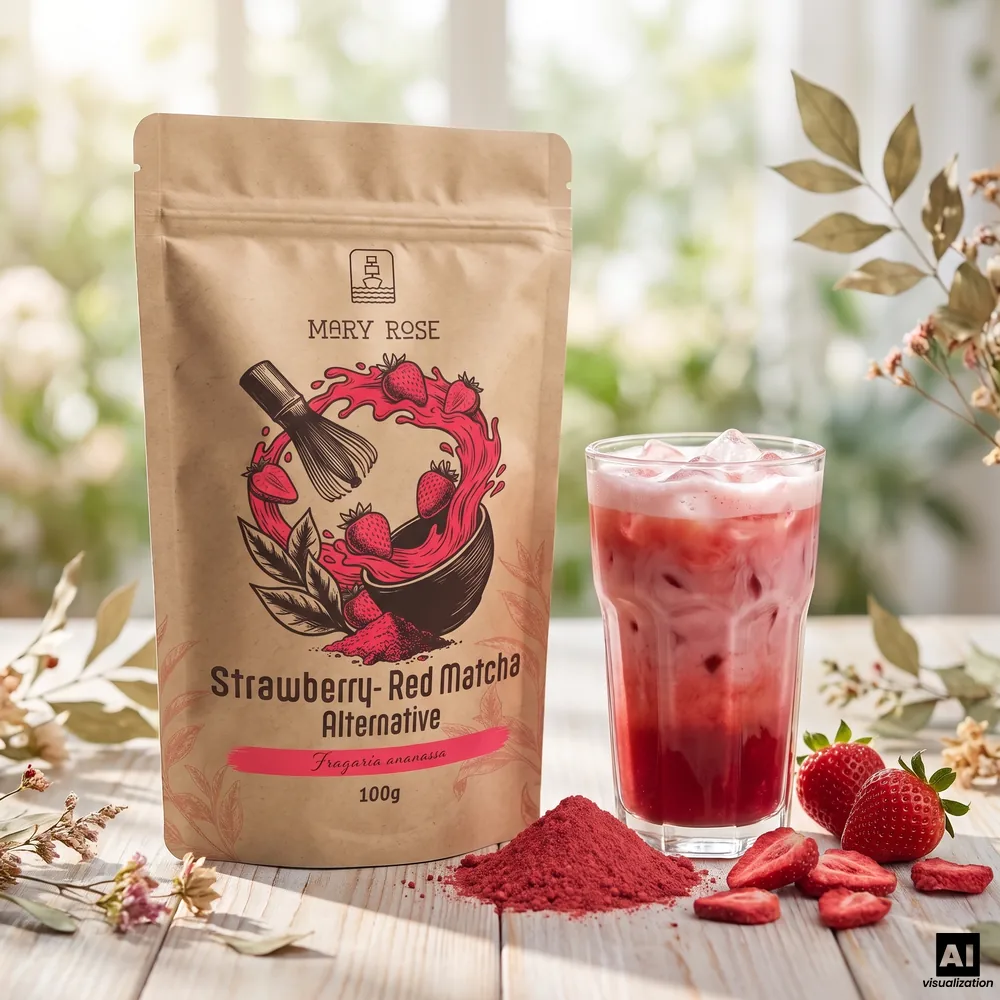
Freeze dried strawberry powder and a natural red colour
The base of red matcha is freeze dried strawberry powder. It gives the drink its flavour and aroma. Freeze drying is drying by freezing: the fruit is first frozen, and then the water is removed from it in a vacuum and at a low temperature. The ice turns straight into water vapour, skipping the liquid phase. This produces a light, crisp dried fruit which, once ground, gives a free-flowing powder that combines easily with milk. We write more about this method in the post Freeze-dried fruit – what does it mean, are freeze-dried fruits healthy and how to eat them?
🔬 Fun fact: Freeze drying usually preserves the colour, aroma and flavour of fruit better than drying with hot air. However, it is much more demanding: according to a review of studies, it uses about 4-10 times more energy.
💬 Scientific source: J. Yao et al., Novel Efficient Physical Technologies for Enhancing Freeze Drying of Fruits and Vegetables: A Review, Foods, 2023.
So that the drink has a deep, saturated shade of red, the strawberry base is supplemented with black carrot concentrate, a plant ingredient that strengthens the red colour. Black carrot contains anthocyanins, which are pigments found, for example, in blueberries and red cabbage. Black carrot concentrate also works in other products: in one study, a yoghurt with 1.5% of such a concentrate resembled a strawberry yoghurt in colour and appearance.
💬 Scientific source: B. Baria et al., Colouring properties and stability of black carrot anthocyanins in yoghurt, Journal of Food Science and Technology, 2021.
What does red matcha taste like?
The flavour of red matcha is naturally strawberry: sweet, fruity and slightly tangy. It resembles a strawberry shake, not a fruit tea. It is best brought out by milk or a plant-based drink, for example oat or coconut. Vanilla, coconut, ice cubes and fresh strawberries also go well with red matcha.
You can prepare a drink from about 4.3 g of powder (about 3 flat teaspoons) and 100 ml of warm water or milk. You froth everything, and if you like sweeter flavours, you add a little honey or syrup. With frothed warm milk, you get a pink-red strawberry latte. With cold milk and ice, you get a refreshing drink for hot days. You can also whip the powder with a small amount of cold milk into a thick foam and put it on top of green matcha with ice. This makes a layered strawberry matcha latte (with caffeine from the tea).
White matcha – powdered banana
Not every colourful matcha has to be bright. White matcha, or Mary Rose White Matcha Alternative – Banana, is one of the simplest variants in the line: 100% freeze dried banana, ground into a fine, fluffy powder. No added sugar, colourings or preservatives. After it is combined with water or milk, the drink has a light, creamy, almost white colour. Natural sweetness and no caffeine make it a good base for mild drinks and an addition to breakfasts and desserts.
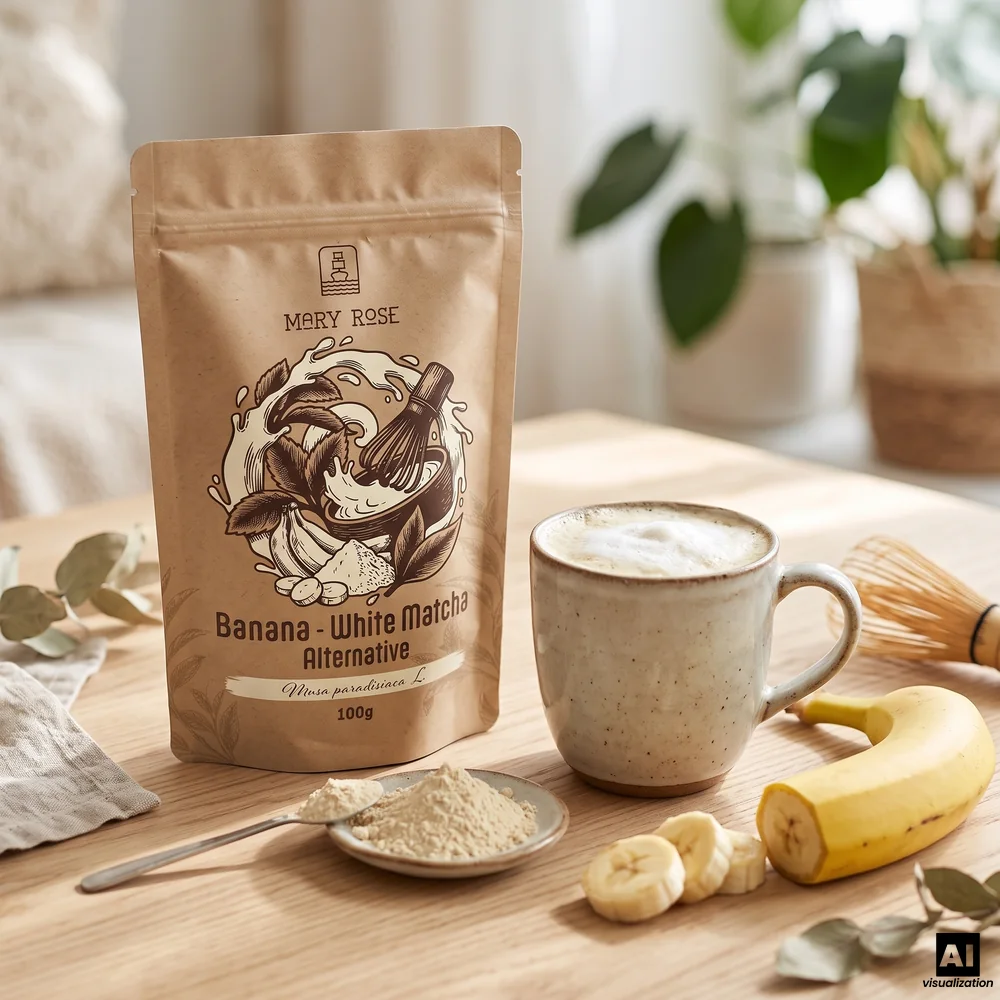
🤍 Mary Rose – White Matcha Alternative – Banana
Just banana, nothing more. White Matcha Alternative from Mary Rose is powdered, freeze dried banana, from which you can prepare a creamy banana latte, as well as a sweet addition to porridge, pancakes or a shake.
- ✔️ Ingredients: 100% freeze dried banana.
- ✔️ No added sugar, colourings or preservatives, caffeine-free.
- ✔️ For lattes, smoothies, porridge, pancakes, shakes and desserts.
Freeze dried banana as a base for a caffeine-free drink
Freeze dried banana is a fresh fruit from which the water has been removed by the freeze drying method described in the previous section. After grinding, it becomes a light, free-flowing powder. In this form, banana combines easily with water and milk, and you do not need a blender or fresh fruit to prepare a drink. A teaspoon and a frother are enough.
The sweetness of white matcha comes only from the sugars that occur naturally in banana. There are no tea leaves in the ingredients, so the drink does not contain caffeine and you can have it at any time. If you wonder how white matcha differs from blue matcha: both have a banana base, but white matcha is only fruit. Blue matcha also contains blue spirulina extract, which gives it its blue colour.
What does white matcha taste like?
The flavour of white matcha is an intense, naturally sweet and fruity banana. After it is combined with milk or a plant-based drink, the drink becomes thick and creamy, similar to a homemade banana shake. Because banana is very sweet, the drink usually does not need sweetening.
To prepare a drink, you need about 5.6 g of powder (2 flat teaspoons) and 100 ml of warm water or milk. If you prefer a creamy banana latte, mix the powder in a small amount of water, and then add frothed milk or oat drink. You can also whip the powder with cold milk into a thick foam and put it on top of green matcha with ice. This makes a banana matcha latte (with caffeine from the tea). Powdered banana also works well in the kitchen:
- ✔️ in porridge and yoghurt, as a naturally sweet addition,
- ✔️ in smoothies and shakes,
- ✔️ in pancake batter and in desserts, to which it gives a banana aroma.
Pink matcha – freeze dried dragon fruit
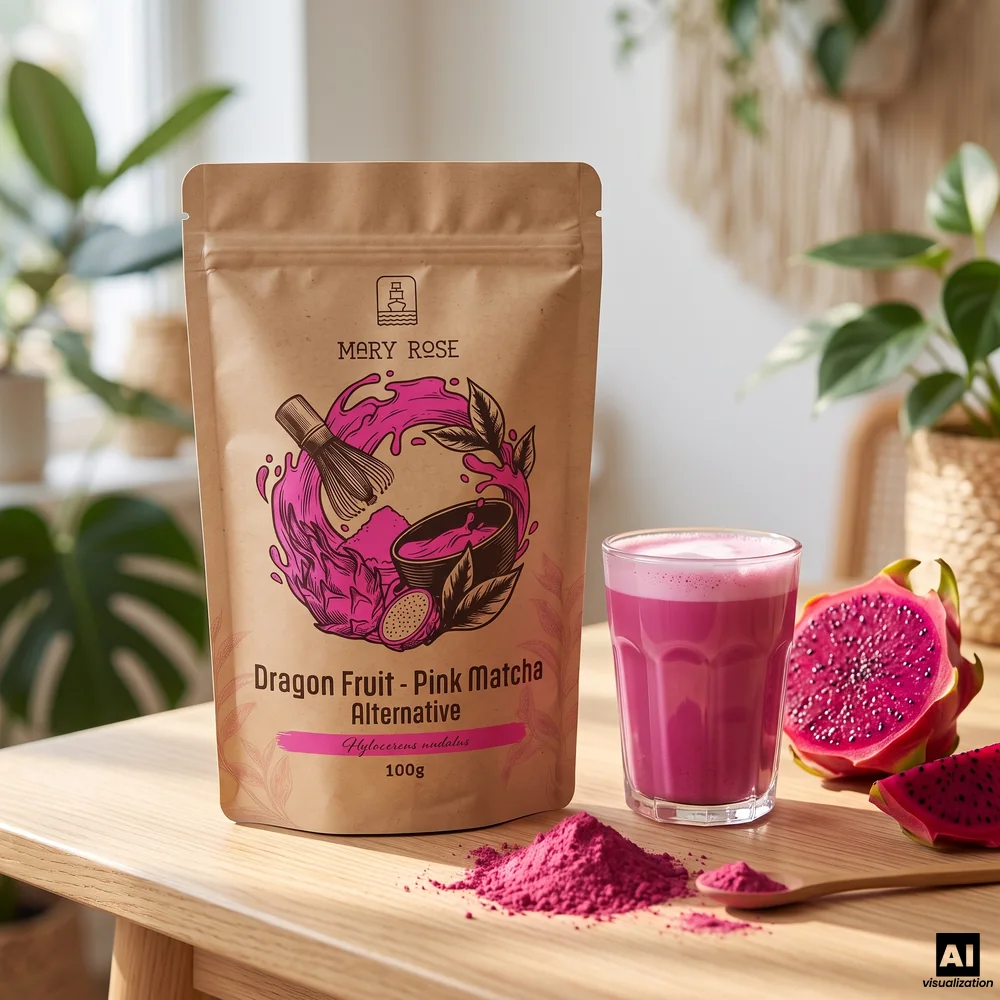
Intense magenta is the hallmark of pink matcha. In our shop, it is Mary Rose Pink Matcha Alternative – Dragon Fruit, which is 100% freeze dried dragon fruit, finely powdered, with no added sugar, colourings or preservatives. The colour and flavour of powders of this type depend on the raw material: only pitaya with red flesh gives a pink shade, and that is the kind used in the Mary Rose product.
💖 Mary Rose – Pink Matcha Alternative – Dragon Fruit
A magenta colour and a delicate, fruity flavour. Pink Matcha Alternative from Mary Rose is powdered pitaya with red flesh, from which you can prepare a pink latte, an iced drink or a naturally pink dessert.
- ✔️ Ingredients: 100% freeze dried dragon fruit.
- ✔️ Pure fruit with no additives, caffeine-free.
- ✔️ For lattes made with a plant-based drink, smoothies, yoghurts, porridge and cold desserts.
What is pink matcha?
Pink matcha is not tea, but a fruit powder from which colourful drinks and desserts are prepared. Its base is pitaya, or dragon fruit. It is the edible fruit of several species of cactus. On the outside, it looks like a pink ball with green scales, and inside it has flesh that is white or intensely red-pink, in both cases with small, black seeds. The variety with red flesh is used for pink matcha.
The seeds also remain in the powder. If you notice small, black dots in it or in the finished drink, those are the seeds. They are edible, may crunch slightly and are a natural part of the fruit. Freeze dried fruit powder easily absorbs moisture, so it may form lumps. Store it tightly closed, and crush any lumps with a spoon.
🔬 Fun fact: The pink colour of pitaya does not come from anthocyanins, as in blueberries or black carrot, but from betacyanins. These are pigments from the same group as the ones in beetroot. The researchers found red pitaya juice suitable for natural food colouring. In their experiment, the pigment tolerated short heating fairly well, but it gradually broke down during long cooking.
💬 Scientific source: F. Vaillant et al., Colorant and antioxidant properties of red-purple pitahaya (Hylocereus sp.), Fruits, 2005.
What does pink matcha taste like?
Although the colour is very intense, the flavour of pink matcha is mild. The powder is naturally, delicately sweet and subtly tropical. Its profile is most often compared to a combination of pear and kiwi. Thanks to this, pink matcha does not overpower other ingredients and works well as a base for colourful compositions.
You can prepare a drink from about 2 g of powder (1 flat teaspoon) and 70-100 ml of warm, but not boiling, water. After frothing, you can add more water or a plant-based drink. For a pink latte, the manufacturer recommends plant-based drinks: oat, coconut or almond. Dragon fruit is naturally rich in vitamin C and fruit acids, which can make cow's milk curdle when combined with it. If you prefer a more intense flavour, add more powder. Pink matcha also goes well with:
- ✔️ coconut milk, which highlights the tropical character of pitaya,
- ✔️ fresh fruit, for example strawberries, raspberries, mango or banana,
- ✔️ yoghurt, chia pudding, smoothies and cold desserts.
Purple matcha – powdered ube
At the end of our overview of colours, we have the most dessert-like variant. In the MateMundo range, purple matcha is Mary Rose Purple Matcha Alternative – Ube: freeze dried and powdered ube, the purple tuber of the greater yam. It is not tea, but a root vegetable with a deep purple colour and a slightly sweet flavour. The purple powder is especially popular in desserts, creams, ice cream and drinks inspired by Asian cuisine.
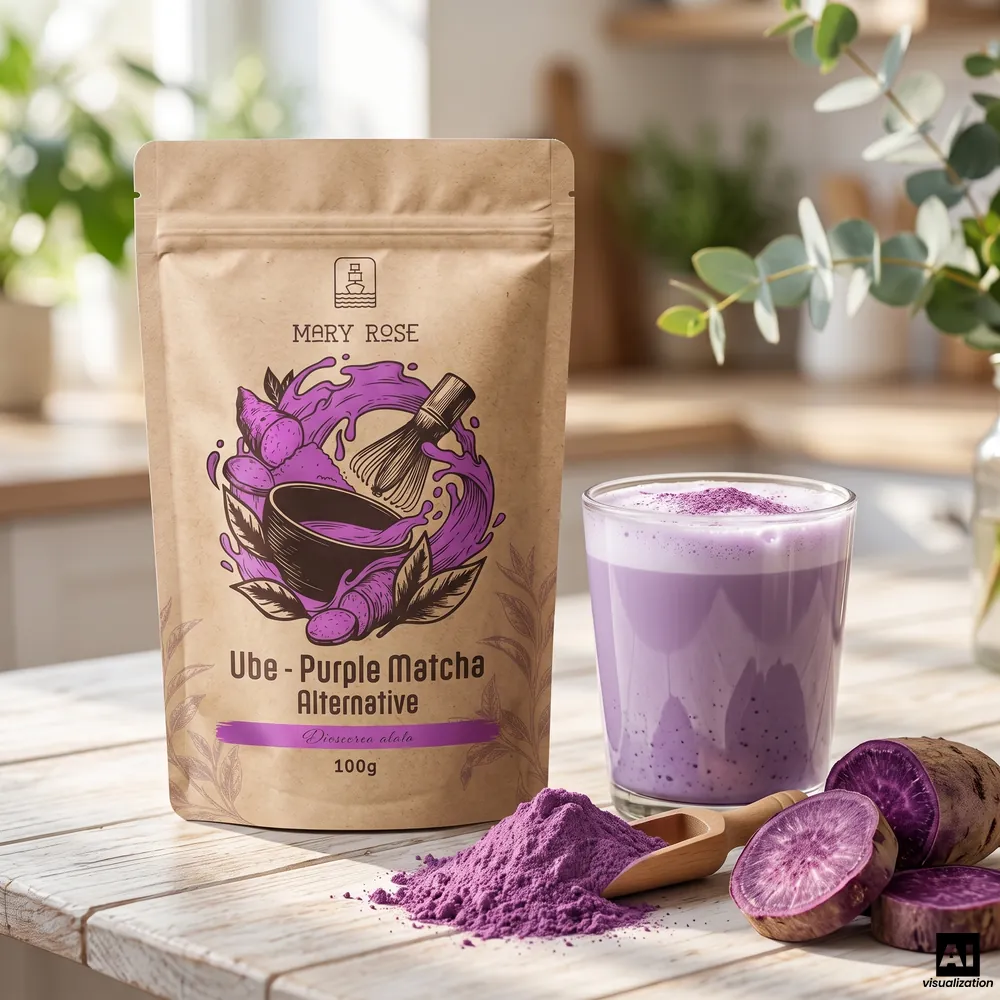
💜 Mary Rose – Purple Matcha Alternative – Ube
A deep purple and a creamy, dessert-like flavour with a note of vanilla and nuts. Purple Matcha Alternative from Mary Rose is powdered ube, from which you can prepare an ube latte, as well as purple creams, porridge and baked goods.
- ✔️ Ingredients: 100% freeze dried, powdered ube.
- ✔️ No artificial colourings, flavourings or preservatives, caffeine-free.
- ✔️ For hot and iced lattes, desserts, porridge and pancakes.
What is purple matcha?
Ube is the Filipino name for the greater yam (Dioscorea alata), an edible tuber with purple flesh. The plant is most closely associated with the cuisine of the Philippines, where it has long been used in sweet desserts, but it is also grown in many other parts of Asia. After it is dried by freeze drying and ground, ube turns into a fine, purple powder known as powdered ube. It gives dishes an intense colour and a characteristic, dessert-like aroma.
Ube is often called a purple sweet potato, and you may also come across it under this name in product descriptions. However, this is a common name. From a botanical point of view, the greater yam is not a relative of the sweet potato (Ipomoea batatas): the sweet potato belongs to the morning glory family, and the yam to the yam family. What they share is the purple colour: in both tubers it comes from anthocyanins. Ube is also sometimes confused with taro, but that is a completely different plant.
🔬 Fun fact: The main pigment of the purple yam is an anthocyanin called alatanin C. The amount of anthocyanins in the tubers depends on the variety and the age of the plant, so the shade of ube can vary.
💬 Scientific source: S. Srivichai, P. Hongsprabhas, Profiling Anthocyanins in Thai Purple Yams (Dioscorea alata L.), International Journal of Food Science, 2020.
What does purple matcha taste like?
Purple matcha is a variant for lovers of sweet flavours. The flavour of purple matcha is creamy, slightly sweet and mild, with distinct notes of vanilla and nuts. Some people also detect a delicate note of white chocolate in it. While green matcha is savoury and pink matcha is fruity, ube matcha tastes like a dessert.
To prepare a drink, you need about 2 g of powder (a scant teaspoon) and 100 ml of hot water at a temperature of 90-95°C. Ube is rich in starch, so the powder needs vigorous frothing so that no lumps form. Then you add more water or milk, preferably a plant-based drink: oat, almond or coconut. If you like a more intense flavour, use 3-4 g of powder. A delicate sediment at the bottom is a natural property of the tuber's starch. Powdered ube also works well as an ingredient in:
- ✔️ a creamy ube latte, hot or with ice,
- ✔️ creams, ice cream and cheesecake, to which it gives a purple colour,
- ✔️ pancakes, waffles and sweet porridge.
How do I prepare colourful matcha?
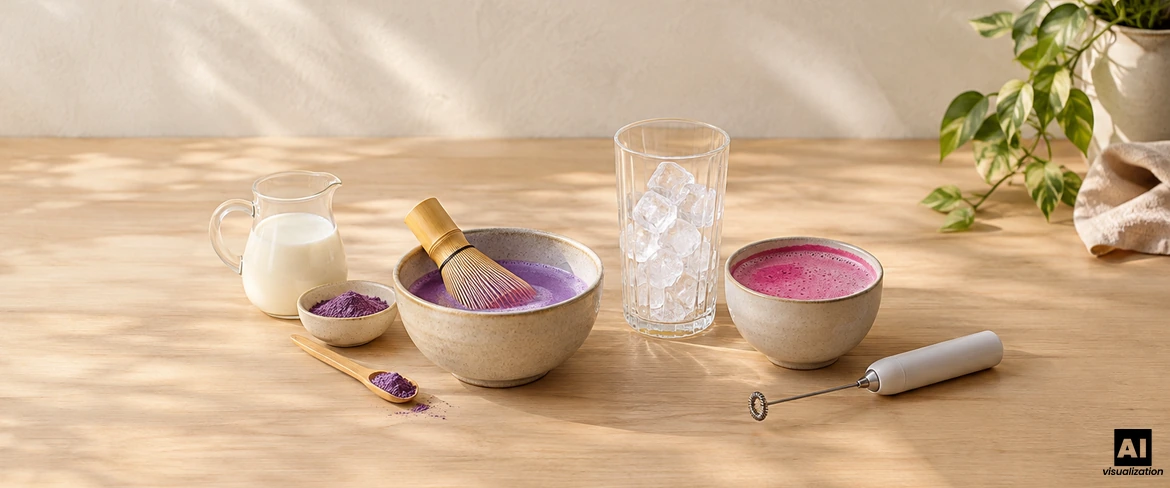
Each variant has slightly different proportions, but the preparation of colourful matcha always follows the same pattern. All you need is powder, liquid and something to froth with. The whole procedure takes less than two minutes:
- Measure the powder. Usually it is from 1 to 4 flat teaspoons for about 100 ml of liquid. You will find the exact amount for a given variant on the label and in the table at the end of the post.
- Add a small amount of liquid. Pour in a little warm (not boiling) water, milk or plant-based drink. The exception is ube, which the manufacturer recommends preparing with hot water at 90-95°C.
- Mix thoroughly. Froth the powder with a bamboo chasen whisk in an M-shaped motion or with an electric frother until you get a smooth base without lumps.
- Add the rest of the liquid. Add frothed warm milk if you are making a latte, or cold milk and ice cubes if you prefer a cold drink.
- Adjust the flavour. Mary Rose colourful powders have no added sugar. If you like sweeter drinks, add a little honey or syrup, for example vanilla or maple.
Remember that these are powdered fruit and vegetables, not instant soluble drinks. Plant particles do not dissolve completely, so after a while a sediment may appear at the bottom of the mug. This is a natural effect: just stir the drink before the next sip. When choosing the liquid, follow the tips from the sections on the individual variants. For example, pink matcha is best combined with plant-based drinks, and blue matcha should not be mixed with hot liquid.
🎋 Good to know: Colourful powders need the same accessories as classic matcha: a chasen whisk, a bowl and a frother. We describe what is worth buying to get started and what is optional in the post Matcha accessories – what to buy to start and what is optional? A practical guide. You will find ready-made sets in the Matcha sets category.
How can I use colourful powders in the kitchen?
A latte is only the beginning. Colourful powders are also a convenient, natural way to add colour and flavour to dishes. Instead of a liquid or gel colouring, a teaspoon of powdered fruit or vegetable is enough. Here are some ideas for how to use them in the kitchen:
- ✔️ Breakfasts: porridge, millet porridge, plain yoghurt, chia pudding or batter for pancakes and waffles. Mango, banana and ube will add sweetness to them, and pitaya and strawberry fruity freshness.
- ✔️ Smoothies and smoothie bowls: a teaspoon of powder will highlight the flavour of the fruit and give the drink an intense colour. Try adding mango to a green smoothie, and blue matcha to a banana one.
- ✔️ Shakes and cold drinks: colourful powders spread well in cold milk, plant-based drinks or coconut water. Frothed with milk, they also make colourful foams for the top of drinks.
- ✔️ Cold desserts: creams, mousses, ice cream, no-bake cheesecakes and cream cakes. This is the best place for blue matcha, because the colour of spirulina does not tolerate high temperature.
- ✔️ Baked goods: sponge cakes, biscuits and muffins. The manufacturer recommends ube for baking, for example for sponge cakes, as well as pumpkin powder with spices for spiced biscuits. Remember that in the oven the colour may become less intense.
If you are looking for inspiration for sweet recipes with classic green matcha, take a look at the post Matcha desserts – the best recipes for matcha cakes, cheesecakes, and sweet inspirations. In many of them, you can replace green matcha with a colourful powder and get a dessert in a completely different colour, without caffeine.
🎨 Fun fact: EU rules distinguish between colours (additives with an E number) and so-called colouring foods. According to the European Commission guidance, a powdered fruit or vegetable added to a dish for its colour may be treated as an ordinary ingredient, not as an additive. The condition is that the colouring has not been selectively extracted from the raw material. This is the case, for example, in Yellow Matcha Alternative and Pink Matcha Alternative: their ingredients are simply freeze dried mango or freeze dried dragon fruit.
💬 Source: European Commission, Guidance notes on the classification of food extracts with colouring properties, 2013.
Colourful matcha – comparison of the variants
Seven colours with different characters and not a gram of caffeine. To make it easier to choose a variant for yourself, we have gathered the most important information in one table. At the top of the table, shown separately, is classic green matcha as a reference point. The ingredients and portions given apply to the Mary Rose Matcha Alternative products from our range. For other products, always check the ingredients and the recommended portion on the label.
📌 Colourful matcha – comparison of the variants
| Variant | Main ingredient | Colour | Flavour | Use | Portion per approx. 100 ml | Caffeine |
|---|---|---|---|---|---|---|
| 🍵 Classic green matcha | powdered tea leaves (Camellia sinensis) | green | grassy, umami, slightly bitter | tea, matcha latte | depends on the product | yes |
| 💙 Blue matcha | freeze dried banana + blue spirulina extract | blue | mild, sweet, creamy banana | lattes, smoothies, cold desserts | about 5.6 g (2 small teaspoons) | no |
| 💛 Mango matcha | freeze dried mango | yellow | tropical, sweet, fruity | mango latte, porridge, yoghurts | about 11 g (4 flat teaspoons) | no |
| 🧡 Orange matcha | freeze dried pumpkin + warming spices | orange | spiced, warming, dessert-like | pumpkin spice latte, porridge, biscuits | about 5.4 g (2 small teaspoons) | no |
| ❤️ Red matcha | freeze dried strawberry + black carrot concentrate | red | sweet, fruity, slightly tangy | strawberry latte, iced drinks, creams | about 4.3 g (3 flat teaspoons) | no |
| 🤍 White matcha | freeze dried banana | light, almost white | intense, sweet banana | banana latte, porridge, pancakes | about 5.6 g (2 flat teaspoons) | no |
| 💖 Pink matcha | freeze dried dragon fruit (pitaya) | pink (magenta) | mild, slightly sweet, tropical | lattes made with a plant-based drink, smoothies, desserts | about 2 g (1 flat teaspoon) | no |
| 💜 Purple matcha | freeze dried ube (greater yam) | purple | creamy, vanilla, nuts | ube latte, creams, ice cream, baked goods | about 2 g (a scant teaspoon) | no |
As you can see, each colour has its own character. If you like sweet, creamy drinks, start with banana blue or white matcha or with dessert-like ube. You will find fruity and refreshing flavours in mango, strawberry and pitaya, and for cooler days, spiced pumpkin works best. What they all share is that they contain no caffeine and you prepare them in the same simple way. Colourful matcha is therefore not tea, but a caffeine-free alternative to matcha that you can drink at any time of day, use in the kitchen and combine in your own way.
Which colour will you choose first? Mix, froth and create your own colourful compositions!
❓ FAQ – the most frequently asked questions about colourful matcha
1. Does colourful matcha contain caffeine?
The colourful alternatives described in this post do not contain caffeine, because they are made from fruit, vegetables, tubers and spices, not from tea leaves. However, there are blends on the market with added green matcha, cocoa or coffee, which may contain caffeine. That is why it is always worth checking the ingredients of a specific product on the label.
2. Is pink matcha healthy?
Mary Rose pink matcha is 100% freeze dried dragon fruit, with no added sugar, colourings or preservatives. Its intense colour comes from the natural pigments of the fruit, betacyanins. It contains naturally occurring fruit sugars, and the portion for a drink is small, about 2 g. It can be a tasty, caffeine-free part of a varied diet, but it will not replace fresh fruit and vegetables.
3. What does ube matcha taste like?
Ube matcha has a creamy, slightly sweet and mild flavour with distinct notes of vanilla and nuts. Some people also detect a note of white chocolate in it. Unlike grassy green matcha, it tastes like a dessert and goes well with oat, almond or coconut drink.
4. Is colourful matcha real green tea?
No. Classic matcha is made from ground leaves of the tea plant (Camellia sinensis). Colourful variants are powdered fruit, vegetables and tubers, for example mango, strawberry, banana, pumpkin, dragon fruit or ube. The word “matcha” refers here to the fine, powdery form of the product and the way the drink is prepared.
5. What is powdered ube?
Powdered ube is a freeze dried and finely ground tuber of the greater yam (Dioscorea alata), a plant with purple flesh, associated above all with the cuisine of the Philippines. Ube is often called a purple sweet potato, although botanically it is not a sweet potato. The powder gives drinks and desserts a purple colour and a dessert-like aroma.
6. How do I prepare colourful matcha at home?
Put a portion of powder into a mug or a bowl, add a small amount of warm (not boiling) water, milk or plant-based drink and froth thoroughly with a chasen whisk or a frother. When you get a smooth base without lumps, add the rest of the liquid: frothed warm milk or cold milk with ice. You will find the portion for a specific variant on the label.
7. How is blue matcha different from white matcha?
Both have a base of freeze dried banana and a similar, sweet flavour. White matcha is only banana, so the drink has a light, almost white colour. Blue matcha also contains blue spirulina extract, which gives it its blue colour, and bamboo fibre.
8. Why does blue matcha lose its colour?
The blue comes from phycocyanin, a pigment from blue spirulina that is sensitive to high temperature, strongly acidic additions and light. That is why you will get the most intense colour in cold drinks or warm, but not hot, ones, and in no-bake desserts. It is best to store the powder tightly closed, away from the sun.
Sources of information:
- Wikipedia: Matcha, Spirulina (dietary supplement), Pitaya, Dioscorea alata.
- J. Yao et al., Novel Efficient Physical Technologies for Enhancing Freeze Drying of Fruits and Vegetables: A Review, Foods, 2023.
- A. Adjali et al., Physicochemical degradation of phycocyanin and means to improve its stability: A short review, Journal of Pharmaceutical Analysis, 2022.
- J. Kochman et al., Health Benefits and Chemical Composition of Matcha Green Tea: A Review, Molecules, 2021.
- B. Baria et al., Colouring properties and stability of black carrot anthocyanins in yoghurt, Journal of Food Science and Technology, 2021.
- S. Srivichai, P. Hongsprabhas, Profiling Anthocyanins in Thai Purple Yams (Dioscorea alata L.), International Journal of Food Science, 2020.
- European Commission, Guidance notes on the classification of food extracts with colouring properties, 2013.
- F. Vaillant et al., Colorant and antioxidant properties of red-purple pitahaya (Hylocereus sp.), Fruits, 2005.
Recommended

Set for Preparing Purple Matcha

Set for colourful Matcha Latte: Matcha + Orange Matcha + accessories

Set for colourful Matcha Latte: Matcha + Blue Matcha + accessories
