
Matcha desserts – the best recipes for matcha cakes, cheesecakes, and sweet inspirations
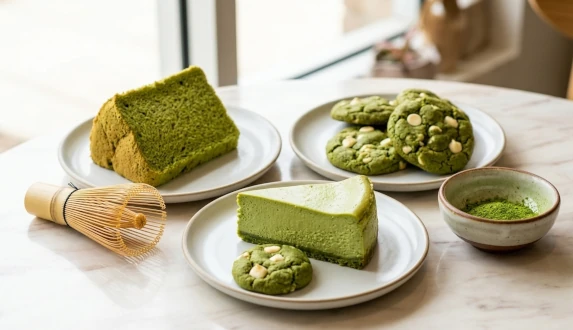
Japanese powdered green tea has been the undisputed king of the culinary world for several years now. You have certainly noticed those appetising, intensely green baked goods in the display cases of modern cafes. Desserts with matcha are not just a passing trend – it is a true revolution of flavour that combines business with pleasure. Why are they gaining such immense popularity? Primarily due to the unique, deep flavour full of umami, which perfectly cuts through the sweetness of sugar, as well as its delightful, joyful colour.
In this article, we have prepared proven matcha recipes for you, which you can easily recreate in the comfort of your own home. Whether you are in the mood for classic, fluffy matcha cakes or prefer quick no-bake options, you will find something for yourself here. But before we move on to culinary inspirations, let's dive into the world of this green powder together. We will explain what matcha is suitable for, how its various grades differ, and how to work with it to achieve confectionery success.
Summary:
- What is culinary matcha and why does it work well in desserts?
- Most popular matcha desserts – inspirations
- Why is it worth making desserts with matcha?
What is culinary matcha and why does it work well in desserts?
Although the traditional tea ceremony (known as chanoyu) requires the highest quality, delicate leaves, the rules of the game change slightly in the world of baking. This is where culinary matcha steps onto the stage. It is a type of powdered green tea specially selected for thermal processing and combining with other food ingredients.
Why does an average matcha dessert taste so good? This tea has a very distinct, slightly grassy, and slightly tart flavour profile. While this bitterness might bother some in the infusion itself, when combined with butter, double cream, sugar, or white chocolate, it creates an absolutely perfect harmony. What is more, good quality culinary tea allows you to achieve an incredible, fully natural, emerald colour in cakes and fillings.
Before you start planning your matcha desserts, it is worth knowing that in our shop's offer you will find different grades of this tea, sourced from Japan and China. To make your choice easier, we have categorised them clearly:
- 🍵 Chinese culinary matcha – an excellent base for everyday baking and kitchen experiments.
- 🍵 Chinese premium matcha – slightly more delicate, great both for drinking (e.g., as a matcha latte) and for more expensive, demanding desserts.
- 🌿 Japanese culinary matcha (BIO) – certified, organic tea straight from Japan, perfect for baking.
- 🌿 Japanese premium matcha (BIO) – organic, with a balanced flavour, the most versatile option.
- 🏆 Japanese ceremonial matcha (BIO) – the highest grade tea, intended exclusively for classic brewing (we do not recommend it for baking due to its excessive delicacy and high price).
Culinary matcha vs ceremonial matcha – which one to choose for baking?
If you are wondering why the most expensive ceremonial tea is not used to create a delicious matcha cake, the answer is simple – it is a matter of flavour profile, temperature resistance, and colour stability.
Ceremonial matcha comes from the first spring harvests. The leaves are very young and shaded for a long time before harvesting, which gives them plenty of sweetness (umami) and very little bitterness. Unfortunately, this subtle flavour would simply disappear under the weight of flour, sugar, and eggs. Culinary matcha, on the other hand, is harvested from the second, and sometimes even the third, harvest. Its flavour is stronger, more tannic (astringent). What might seem too intense in a bowl of tea becomes a distinct, tea-like accent in a cake. Furthermore, culinary matcha withstands thermal processing much better. Delicate ceremonial matcha quickly loses its charm and turns grey under the influence of baking temperatures, whereas the culinary grade guarantees the preservation of a beautiful, green shade in baked goods.
💬 Scientific source: J. Kochman et al., Health Benefits and Chemical Composition of Matcha Green Tea: A Review, Molecules, 2020.
As the researchers emphasise, the unique chemical profile of matcha is due to the traditional shading of the bushes, which stimulates the accumulation of, among others, L-theanine, chlorophyll, and catechins. It is the differences in the concentration of these compounds – depending on the harvest time – that affect the final profile of the tea. The higher catechin content in matcha from later harvests gives it a distinct, slightly tannic flavour which, unlike delicate ceremonial matcha, punches perfectly through sweet baked goods.
How to use matcha in desserts and baking?
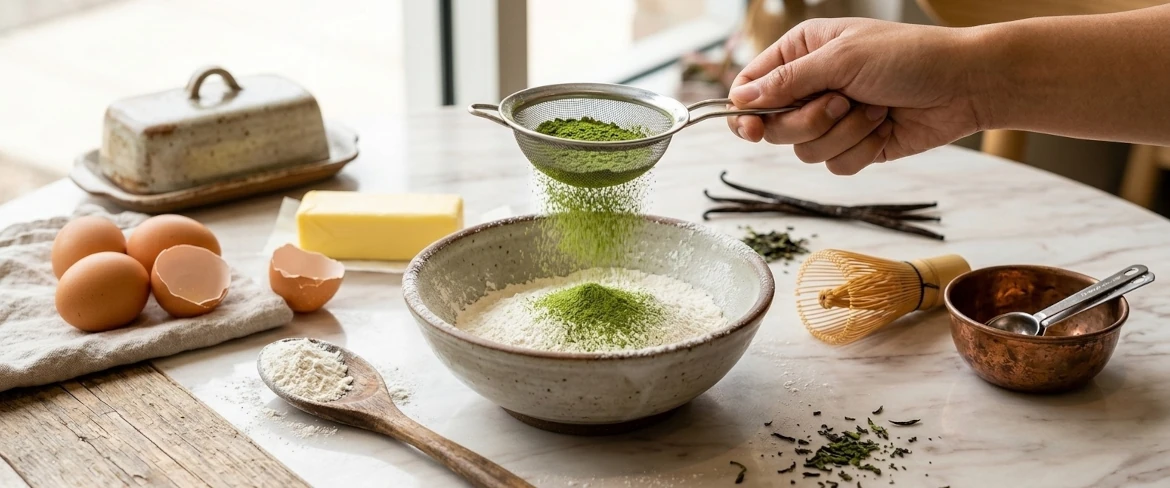
Using matcha in a home bakery is simple but requires knowing one golden rule: matcha loves to clump. If you simply pour the green powder into wet ingredients (e.g., when preparing a matcha cream), unsightly and bitter lumps will almost certainly form.
How to avoid this? Always sift your matcha through a fine sieve. For baked cakes (e.g., when making a fluffy sponge), mix the sifted powder with other dry ingredients, such as flour, baking powder, or salt, before combining them with liquids. However, if you are making creams, no-bake cheesecake bases, or ice cream, it is best to rub the matcha in a small bowl with a little warm (but not boiling!) water or dissolve it in a small amount of warm fat (e.g., melted butter or double cream), creating a smooth paste.
How much matcha to add to a cake or cream?
The amount of powder used is always a matter of individual preference, but it is worth sticking to proven proportions. Pastry chefs and culinary experts suggest the following values:
- ✔️ For baked cakes: about 1 to 2 teaspoons of matcha tea per cup of flour. This amount will provide a distinct flavour and a beautiful colour without the bitterness dominating too much.
- ✔️ For creamy and no-bake desserts: from 1 to 3 grams (about half to one teaspoon) per dessert portion. For example, when preparing a cake with matcha and mascarpone, 2-3 tablespoons of powder will be enough for a standard bowl of cream.
- ✔️ When white chocolate is involved: treats like matcha biscuits with white chocolate can handle a bit more matcha. White chocolate consists largely of cocoa butter and sugar, which perfectly neutralises the tea's astringency.
How to keep the intense green colour in matcha desserts?
Here is the challenge of every home baker: you put a beautiful, green raw batter into the oven, and you take out a bake in drab, earthy colours. Why does this happen and how to remedy it?
📌 3 rules for a beautiful colour in baked goods with matcha
- Control the baking temperature: chlorophyll, which is responsible for the green of matcha, is very sensitive to high temperatures. Bake your cakes at temperatures below 180°C. If the top starts to brown, cover the tin with aluminium foil.
- Ensure acidity stabilisation (for no-bake desserts): if you are preparing a no-bake matcha cheesecake or matcha ice cream, add just a few drops of lemon juice to the mixture. A low pH helps stabilise the colour and prevents it from fading due to oxidation.
- Combine with light bases: matcha gives the best visual effect when combined with light ingredients. A matcha cheesecake, cream mixtures, or meringues will work perfectly. Using dark muscovado sugar or a large number of egg yolks will make the green lose its noble shade.
You already know why culinary matcha is the undisputed queen of baking and how to work with it to avoid bitter lumps and maintain an enchanting, emerald colour. These few simple rules are the key to confectionery success, which will allow you to conjure up treats straight from the best cafes in your own home. We have the theoretical foundations behind us, so it is time for what you are certainly waiting for the most – specifics and delicious inspirations!
In the further part of the post, we will prove that green tea successfully finds its place not only in a matchawan. You will see how perfectly this ingredient works both in classic, well-known baked goods and in modern desserts straight from Japan. Prepare your bowls, preheat the oven, and let yourself be carried away into the world of green, culinary fantasies!
The most popular matcha desserts – inspirations
Are you wondering where to start your culinary adventure? The green powder offers endless possibilities. Although in Japan it has accompanied the traditional tea ceremony for centuries (which requires the appropriate matcha accessories, such as a bamboo whisk chasen or a bowl chawan), modern cuisine has adapted it on its own sweet terms. Matcha desserts are a fantastic bridge between Eastern tradition and Western confectionery. Below we have gathered for you a compilation of the most popular treats – from fluffy matcha cakes, through creamy cheesecakes, to sensational no-bake desserts.
Matcha cake – a classic green dessert
A fluffy matcha cake is an absolute hit in cafes all over the world. Its phenomenon lies not only in its intriguing, emerald colour, but above all in its flavour. The slightly grassy, refreshing note of green tea wonderfully balances the sweetness of a sponge or pound cake. It is a perfect matcha dessert for people who do not like overly sweet treats and are looking for a more savoury, multidimensional background in their baked goods.
🍵 Recipe: fluffy matcha cake
Ingredients:
- 1.5 cups of plain flour
- 2 level tablespoons of culinary matcha
- 1 cup of sugar
- 4 eggs (at room temperature)
- Half a cup of vegetable oil or melted butter
- 1.5 teaspoons of baking powder
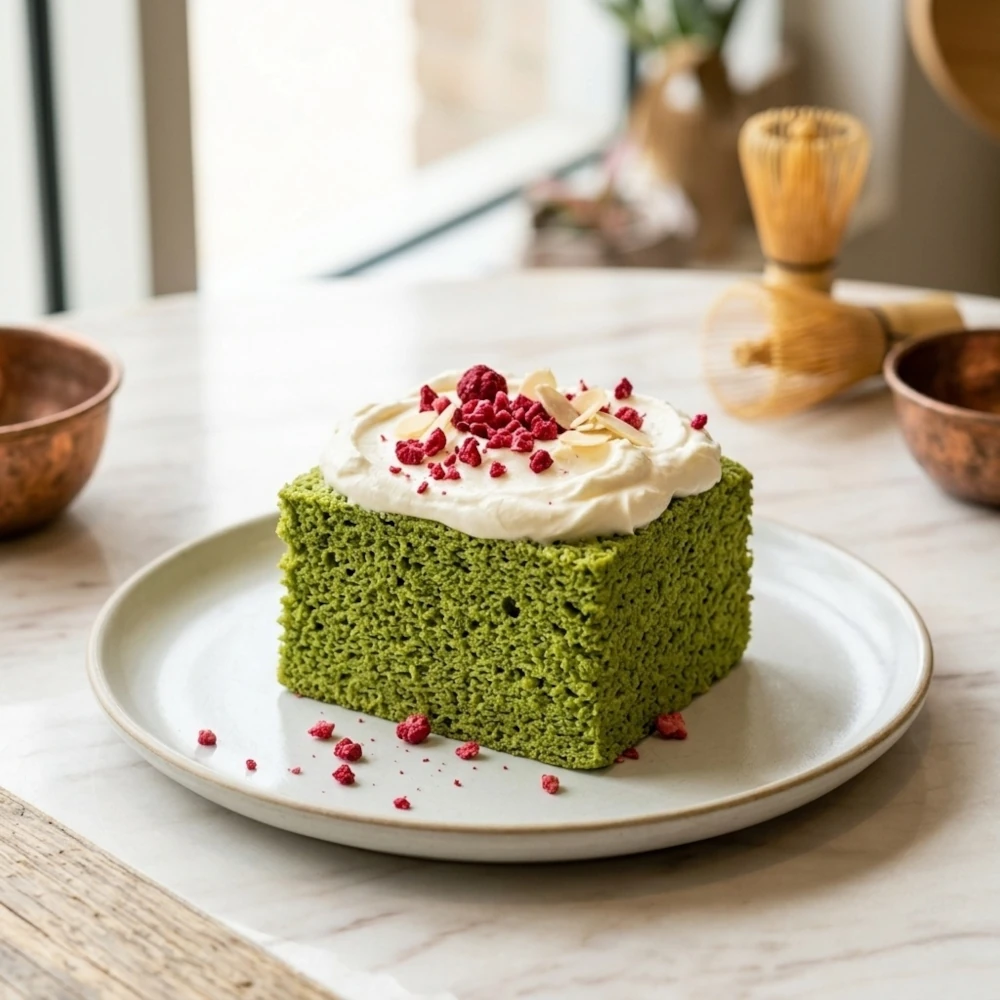
Preparation: Sift the dry ingredients (flour, matcha, and baking powder) through a sieve. Beat the eggs with the sugar until light and fluffy. Slowly pour in the oil, mixing continuously. Finally, gently fold in the dry ingredients with a spatula. Bake at 170°C (remember not to exceed 180°C!) for about 40-45 minutes, until a skewer comes out clean.
Matcha cake – a basic recipe
The above recipe is a perfect base. A classic matcha tea cake has a light, sponge-like structure. Its preparation is trivially simple, and thanks to its expressive colour, it makes an incredible impression on guests. However, before you put the baking tin in the oven, it is worth knowing a few confectionery tricks that will guarantee you spectacular success.
Secrets of the perfect matcha cake:
- ✔️ Egg temperature: this is an absolutely crucial point! Eggs at room temperature aerate much better when beaten. Combined with baking powder, this gives an effect of incredible fluffiness.
- ✔️ A pinch of salt: although it is not in the basic list of ingredients, you must add it while beating the eggs. Salt brilliantly enhances the flavour of matcha and perfectly balances the sweetness of the sugar.
- ✔️ Gentle mixing: with this proportion of ingredients, the mixture will be quite thick after adding the flour. Ditch the mixer in favour of a spatula and mix very gently. Too vigorous movements will knock the air bubbles out of the eggs and the cake will lose its lightness.
- ✔️ Warm fat: if the oil or butter is slightly warm (but not hot!), the matcha will release its colour and full aroma even better.
Such a basic dessert can be served simply dusted with icing sugar or with a delicate lemon icing, but if you want a "wow" effect – both in terms of flavour and visuals – you must go crazy with the decoration. How to finish a green bake?
- ✨ Freeze-dried fruit (e.g., raspberry or strawberry) – this is an absolute hit! The intense pink or red of the fruit against the bright green of the cake looks very exclusive. Additionally, the tartness of raspberries perfectly cuts through the "grassy" and sweet profile of matcha. Crush them in your hands and sprinkle on top over a thin layer of icing.
- ✨ Roasted sesame (black or white) – this, in turn, is a classic combination straight from Japanese patisseries. Sesame adds a nutty, deep aroma that harmonises incredibly well with the umami contained in the tea, and the black seeds add a modern touch.
- ✨ Flaked almonds or finely chopped pistachios – nuts add the necessary crunch that the fluffy sponge lacks. Pistachios will unbeatably emphasise the green character of the dessert, while almonds will introduce a subtle, milky sweetness. Sprinkle them over the cake just before baking so they form a crunchy crust.
- ✨ Candied ginger or lemon peel – this is a proposal for those seeking refreshment. Lemon brilliantly enhances the tea aroma, and ginger adds a slight spiciness that perfectly "warms up" the cool taste of green tea.
- ✨ Edible flower petals – cornflower, marigold, or rose petals give the dessert visual lightness and an "Instagram-worthy" aesthetic. They do not significantly alter the flavour but build an aura of a beautiful, natural bake.
Matcha and mascarpone cake
If you want to take your baking to the next level, you must prepare a matcha and mascarpone cake. Cutting a green sponge and filling it with a thick layer of creamy filling is a bullseye! A light green matcha cream (just add a little sifted powder to whipped mascarpone and double cream) will create a beautiful, pastel contrast. The sweet, rich cheese perfectly mellows the botanical character of the tea.
Matcha cake with white chocolate
This is probably the most beloved combination by sweet tooths! Matcha cake with white chocolate is a guarantee of success. Cocoa butter and the sweetness of chocolate neutralise the slight bitterness of the tea. A brilliant variation of this combination is a matcha brownie (often called a matcha blondie). Instead of dark chocolate, you use white, combining it with butter, eggs, flour, and the green powder. As a result, you get a dense, moist, and incredibly chewy cake with an insane flavour.
Matcha cheesecake – a creamy dessert with green tea
Quark, cream cheese, and green tea? Although it sounds innovative, a matcha cheesecake is a true culinary masterpiece. The moist, dense structure of the cheese simply begs to be broken up by something expressive, and matcha works perfectly in this role. Whether you choose the baked version or opt for a no-bake matcha cheesecake, the visual and taste effect will delight everyone.
🍰 Recipe: simple matcha cheesecake
Ingredients for the cheese mixture:
- 1 kg of cheesecake curd cheese (from a bucket, good quality)
- 2 tablespoons of matcha (preferably rubbed with 2 tablespoons of warm double cream)
- 3/4 cup of caster sugar
- 4 eggs
- 1 tablespoon of potato starch
Preparation: All ingredients should be at room temperature. Briefly mix the curd cheese with the sugar and starch. Add the eggs one by one, without stopping the mixing (but on low speed, so as not to aerate the mixture too much). Finally, pour in the matcha paste and mix until a uniform, green colour is achieved. Pour onto your favourite base (e.g., made of crushed biscuits) and bake in a water bath at 160°C for approx. 60 minutes.
Matcha cheesecake – a classic recipe
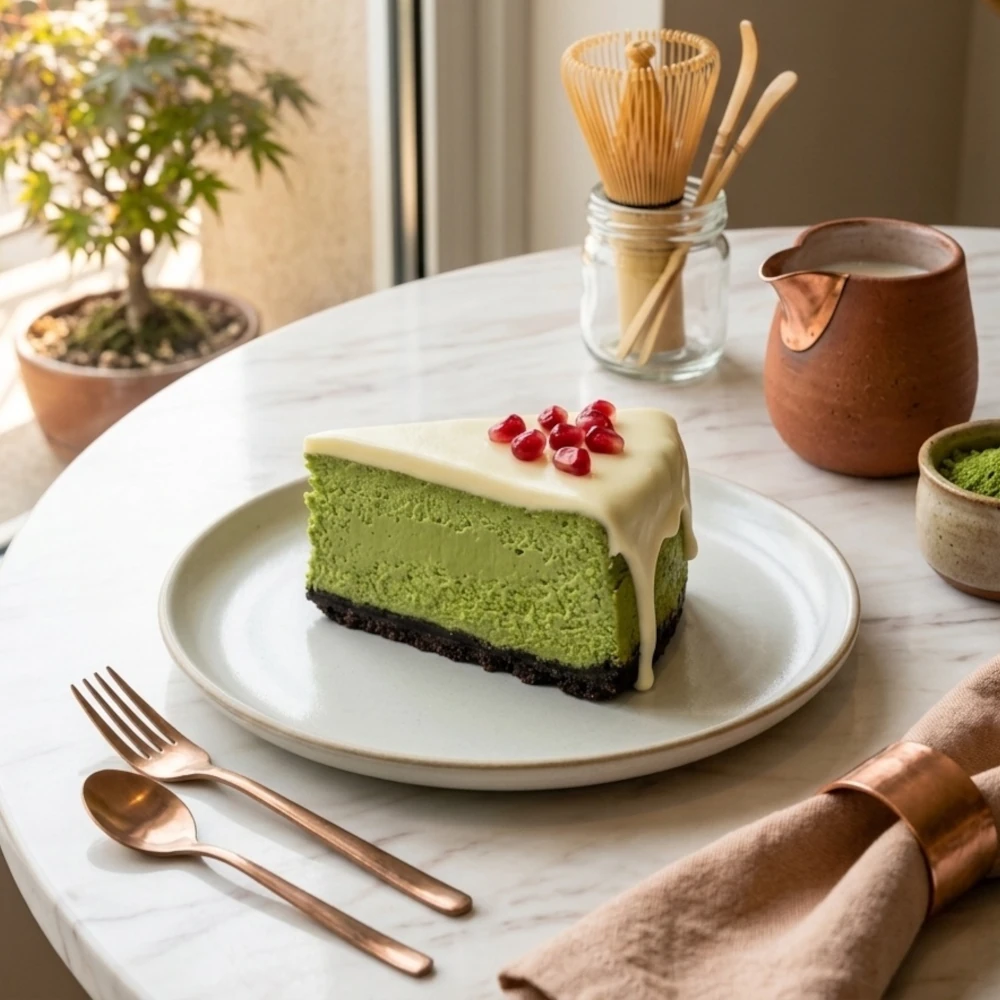
A classic baked matcha cheesecake captivates with its velvety consistency. Thanks to the use of the green powder, the dessert gains a slightly smoky, tea-like finish, which means the cheesecake does not seem bland. The golden rule? Bake it slowly and at a relatively low temperature, which will allow you to maintain a perfectly moist centre and will not discolour the green on the edges.
To earn your bake the title of a true confectionery masterpiece, you must put the following professional tricks into practice:
A guarantee of success, or the secrets of a green cheesecake:
- ✔️ Matcha and cream paste: this is an absolute foundation. Matcha added directly to the dense cheese mixture can create unappetising "lump-traps". Mixing it beforehand into a smooth paste with two tablespoons of warm double cream guarantees a perfectly uniform, neon-green colour without unsightly streaks.
- ✔️ Water bath: this is the gold standard of cheesecake baking. The steaming water ensures the matcha cheesecake does not dry out and – most importantly – protects its top from over-browning. Thanks to this, the cake will remain beautifully green and will not turn brown.
- ✔️ Low mixing speeds: a cheesecake that is too aerated will first rise violently in the oven, and then collapse with a bang and crack. Mixing only until the ingredients are combined will ensure an even, perfect surface.
- ✔️ Cooling and resting: do not take the cheesecake out immediately after baking. Ajar the oven door and let it cool down for approx. 30 minutes to prevent thermal shock. Also, remember that cheesecakes need time to "mature" – this dessert is best sliced and tasted after a minimum of 8-12 hours in the fridge.
- ✔️ Appropriate base: dark cocoa biscuits (creating a beautiful, dramatic contrast of black and green) or classic butter biscuits with a pinch of salt, which perfectly balances the sweetness of the mixture, go perfectly with a green cheesecake.
How to decorate the finished matcha dessert? You can successfully use the same proven patents as for the fluffy matcha cake – freeze-dried raspberries, roasted sesame, crunchy pistachios, candied ginger, or edible flowers (e.g., marigold or cornflower) will look phenomenal on it. Cheesecakes, however, also love slightly heavier, dedicated toppings. Here are a few suggestions practically made for the cheese mixture:
- ✨ fluffy cream rosettes – traditional, heavily whipped double cream without much sugar, piped onto the edges of the cake, will give it lightness. You can delicately flavour it with vanilla pods,
- ✨ matcha dusting – this is a nod to Japanese minimalism. Place a paper stencil (e.g., with a leaf motif) on top of the finished cheesecake and gently dust the whole thing with green powder using a fine sieve,
- ✨ fresh pomegranate seeds – the dense, creamy structure of the cheesecake contrasts fantastically with the bursting, juicy fruit. The red pomegranate seeds look like small, precious gems against the green background.
Matcha cheesecake with white chocolate
If you like desserts with a higher sweetness content, a matcha cheesecake with white chocolate is the proposition just for you. Melted chocolate poured into the cheese mixture replaces part of the sugar and gives it a unique, buttery smoothness. An excellent culmination of such a bake can also be a fluffy matcha mousse placed on top right before serving – light as a cloud, it will sensationally enhance the tea profile of the cake.
Matcha biscuits
Don't have time for complicated baking? You can make matcha biscuits in less than half an hour! It is a perfect and very quick snack that will successfully replace shop-bought sweets. A small, green bake is a wonderful companion for an afternoon moment of relaxation.
And speaking of relaxation... What goes better with a green biscuit than a delicious, warming drink? Matcha Latte! If you want to create the perfect set, check out our blog guide: Matcha latte – what is it and how to make the perfect matcha with milk at home? We guarantee that such a combination will transport you straight to the heart of Tokyo!
🍪 Recipe: matcha biscuits with white chocolate
Ingredients:
- 120 g of softened butter
- 100 g of soft brown sugar
- 1 egg
- 200 g of plain flour
- 1 tablespoon of matcha
- Half a teaspoon of baking powder
- 100 g of chopped white chocolate (or chocolate chips)
Preparation: Cream the butter with the sugar until fluffy. Add the egg and mix until combined. Pour in the sifted flour, baking powder, and matcha – knead only until the ingredients come together. Finally, fold in the chocolate chunks. Form walnut-sized balls, flatten them on a baking tray, and bake for approx. 10-12 minutes at 170°C. They will be soft upon removal but will harden as they cool.
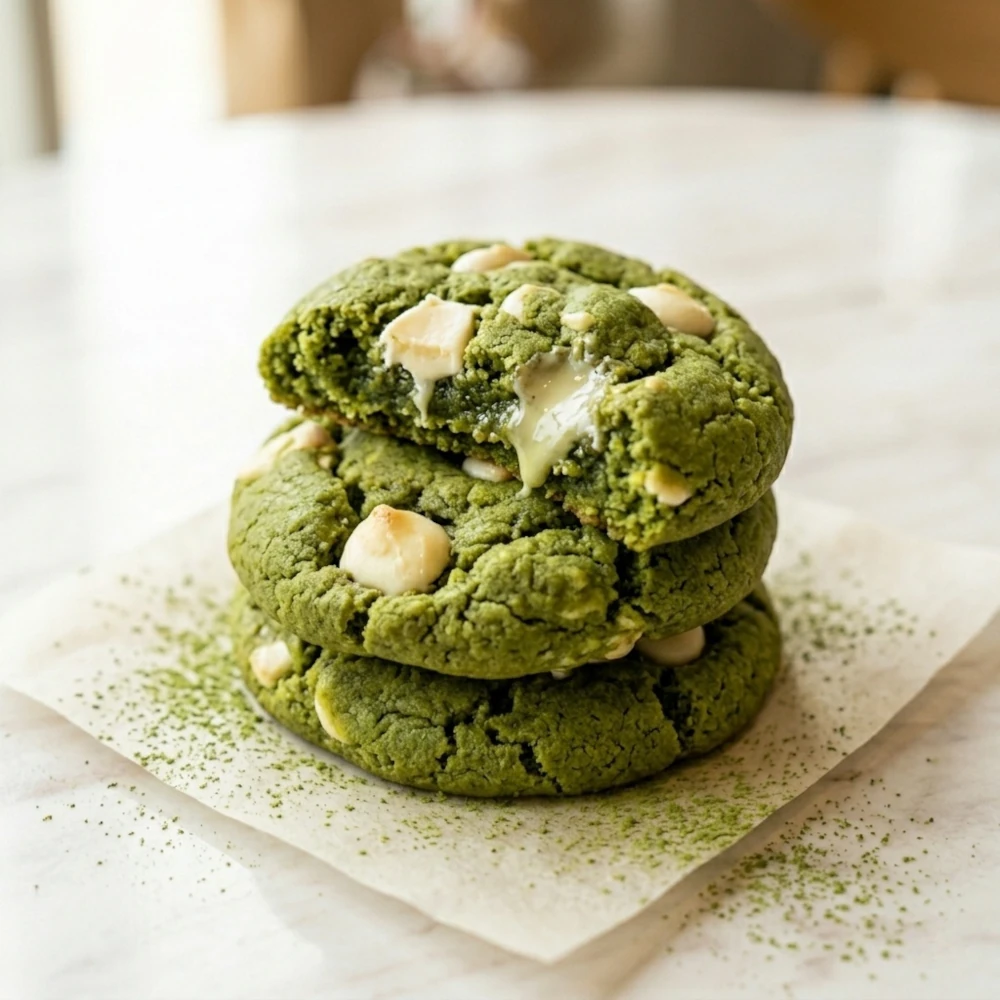
Matcha biscuits – a simple recipe
Soft on the inside, crispy on the edges – classic matcha biscuits are second to none. Why is this recipe almost flawless and succeeds every time? The secret lies in the perfect balance. The right proportion of butter to flour means that the matcha biscuits do not spread out into flat pancakes on the tray, retaining a delicious butteriness. The use of soft brown sugar is another bullseye – thanks to the molasses content, it gives the bakes a chewy structure and a caramel aftertaste that brilliantly cuts through the botanical note of green tea.
Also remember the iron rule of baking shortcrust goods: 10-12 minutes at 170°C is the absolute sweet spot. This allows you to bake matcha biscuits with white chocolate without losing their beautiful colour. The most common mistake beginners make is waiting for the biscuits to be hard while still in the oven. Take them out when they are very soft – they will only gain their perfect structure while cooling.
To impress your guests with baked goods like from an artisan patisserie, it is worth implementing a few simple but extremely effective tricks:
Pro-tips for perfect matcha biscuits:
- ✔️ Chilling the dough: before you put the tray in the oven, place the formed dough balls in the fridge for 30-60 minutes. Chilled butter will give the biscuits a much better texture, stop them from spreading to the sides, and maintain a more intense colour.
- ✔️ A visual trick with chocolate: do you want your biscuits to look like they are from a culinary magazine? Save 1/3 of the chopped white chocolate and press a few pieces into the top of the balls right before baking. Thanks to this, the chocolate will not hide inside the dough but will contrast beautifully with the green background.
- ✔️ A pinch of sea salt: matcha, white chocolate, and salt are a truly perfect trio. Sprinkle the finished, still warm biscuits with a few grains of coarse sea salt. A targeted hit of sweet and salty flavour perfectly balances the characteristic bitterness of the tea.
Of course, you can modify the base – if you prefer crispier biscuits, simply omit the addition of baking powder and slightly increase the amount of flour. However, there is no doubt that regardless of the version, these green sweets disappear from the plate in the blink of an eye!
No-bake matcha desserts
Is the oven busy, or perhaps you simply prefer cooler sweets? Cold matcha desserts are a category that saves lives during heatwaves or unexpected visits from guests. The green powder dissolves brilliantly in dairy, which is why it works sensationally in creams, mousses, or puddings.
🍧 Recipe: express matcha tiramisu
Ingredients:
- 250 g of mascarpone cheese
- 200 ml of double cream (30% fat)
- 2 tablespoons of icing sugar
- About 15 sponge fingers (savoiardi)
- For soaking: 1.5 teaspoons of matcha dissolved in 150 ml of warm water
- Optional: a splash of amaretto liqueur for the infusion
Preparation: Whip the double cream with the icing sugar until stiff, then gently fold in the mascarpone. Dip the sponge fingers in the green matcha infusion for 1-2 seconds. Arrange them at the bottom of dessert glasses or a small tin. Cover with a layer of cream and repeat the process. Dust the top generously with sifted matcha through a small sieve. Chill in the fridge for a minimum of 3 hours.
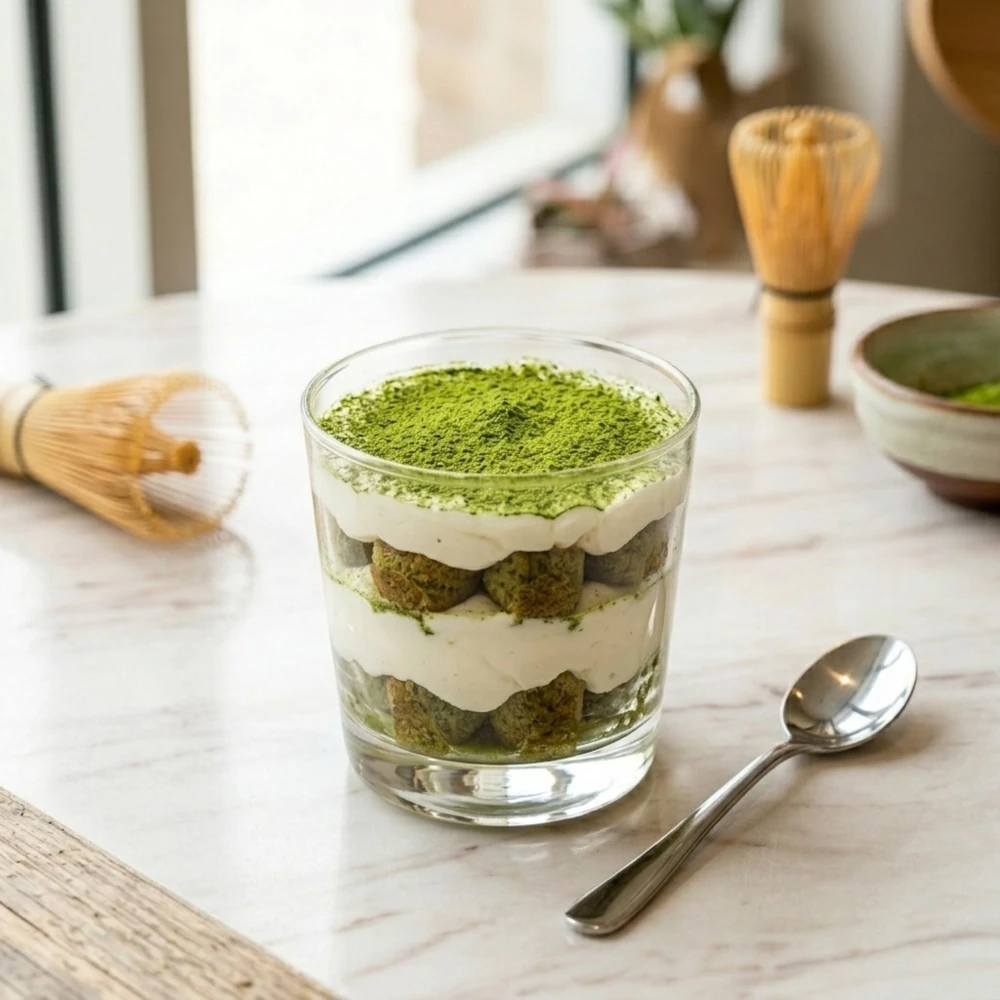
Matcha tiramisu
This Italian classic in a Japanese edition is a real sensation! Matcha tiramisu is an excellent alternative for people who do not drink or do not like coffee. Soaking the biscuits in an intense tea infusion (instead of espresso) makes the dessert lighter on the palate. Matcha tiramisu tempts not only with its taste but also with its incredible, green-and-white cross-section, which looks extremely elegant.
However, before you start creating this delicious matcha dessert, you must take into account a few technical nuances that will guarantee your confectionery success and protect you from the most common mistakes:
Secrets of the perfect matcha tiramisu:
- ✔️ Cream temperature: remember that both the double cream and the mascarpone cheese must be very cold (preferably taken straight from the fridge). Otherwise, the cream may curdle while whipping and lose its fluffy structure.
- ✔️ Cool infusion and express soaking: before you submerge the biscuits, make sure the matcha infusion is completely cooled down (a warm liquid will cause the biscuits to fall apart). The sponge fingers themselves absorb liquid like a sponge, so dip them in the tea for a maximum of 1-2 seconds.
- ✔️ Alcoholic twist: amaretto works perfectly in a classic tiramisu, but in the green version, its strong, marzipan aroma may slightly overwhelm the tea. If you want the matcha to play the first fiddle, opt for an alcohol that will enhance its freshness – an orange liqueur, neutral Japanese sake, white rum, or even coconut liqueur (Malibu) will be ideal, allowing you to create an exotic version of Matcha Colada Tiramisu!
- ✔️ Decoration right before serving: matcha sprinkled on moist cream will absorb water, darken, and lose its beautiful appearance after a few hours in the fridge. Dust the top of the dessert right before serving. To make the topping even more stable, mix a teaspoon of the green powder with a teaspoon of icing sugar – the sugar will ensure the green does not become damp so quickly.
Matcha ice cream and other no-bake inspirations
Are you looking for other cold culinary inspirations? An absolute hit straight from Japan, where green tea-flavoured sweets can be bought on every corner, is matcha ice cream. You can prepare a homemade version of this frozen dessert very simply – just whip 500 ml of thick double cream with a tin of sweetened condensed milk and add 1 heaped tablespoon of our culinary heroine. Such a dessert refreshes perfectly, and the ice cream pairs brilliantly with small shavings of white chocolate or real vanilla seeds.
But it does not end there! The green powder is an endless source of possibilities for cold desserts. If you want to surprise your loved ones, you must try these quick inspirations:
- ✔️ fluffy matcha mousse – based on melted white chocolate, whipped egg whites, and double cream. An incredibly light, almost cloud-like dessert,
- ✔️ green tea panna cotta – a classic of Italian cuisine in a new, intriguing edition, which looks phenomenal topped with a raspberry mousse,
- ✔️ matcha chia pudding – an instant and very healthy option, where chia seeds swell in your favourite plant milk with the addition of expressive green tea.
📌 The most popular matcha desserts
Here is a compilation of the most eagerly prepared and most spectacular sweets with the addition of Japanese powdered green tea:
- classic matcha cake – fluffy, in the form of a pound cake or a light sponge,
- matcha cake with mascarpone and white chocolate – the perfect combination of tea bitterness and creamy sweetness,
- baked matcha cheesecake – velvety, dense, with a slightly smoky aroma,
- matcha brownie (blondie) – an exceptionally moist cake based on butter and white chocolate,
- matcha biscuits – simple to make, slightly chewy on the inside,
- matcha tiramisu – an Italian classic in the form of a no-bake dessert with sponge fingers soaked in a tea infusion,
- matcha ice cream – a refreshing and trivially simple to prepare Japanese cold dessert.
Why is it worth making desserts with matcha?
You already know how to prepare a fluffy cake, a velvety cheesecake, chewy biscuits, or an express matcha tiramisu. These recipes will certainly add variety to your home menu, but why exactly is it worth inviting green tea into your kitchen for good? Desserts with matcha are more than just a culinary curiosity and a passing social media trend. It is a brilliant way to break the confectionery routine!
Most traditional European sweets are based on a simple combination of sugar, fat, and vanilla, which in the long run can seem a bit bland. The use of culinary matcha introduces a breath of Asian freshness to baked goods. The green powder opens up completely new possibilities for home bakers to create original flavour compositions that surprise, intrigue, and most importantly – are not overly sweet.
The flavour and colour that distinguish matcha desserts
What undoubtedly puts every matcha dessert on a culinary pedestal is its multidimensional profile. The slightly grassy, refreshing note with the characteristic umami (the so-called "fifth taste") fantastically balances the heaviness of butter or mascarpone. It is this subtle, tea-like bitterness that makes us want another piece immediately after eating one slice of green cake.
We must also not forget the insane visual aspect. The intense, emerald colour provided by good quality matcha is completely natural – you do not need artificial colourings to create a bake that will look like a million dollars! Green desserts incredibly catch the eye, are extremely photogenic, and make a wonderful decoration for any table.
And if, after successful culinary experiments, you fancy a traditional bowl of frothy tea to serve with your green bake, you will certainly need the right tools. Be sure to read the post on our blog: Matcha accessories – what to buy to start and what is optional? A practical guide – you will learn from it how to complete your perfect tea set.
📌 Summary: why will you love matcha desserts?
- ✔️ Balance of flavours: the tea's astringency perfectly cuts through excess sugar.
- ✔️ Colour without chemicals: you will achieve a neon, emerald green without using artificial food colourings.
- ✔️ Wealth of antioxidants: unlike ordinary cocoa or vanilla, matcha brings a powerful dose of polyphenols and catechins to desserts.
- ✔️ Exclusive character: even a simple matcha cake or shortcrust biscuits look and taste like they are from an expensive, artisan patisserie.
We hope that our culinary inspirations have awakened your desire to act and soon a delicious matcha cake will make an appearance in your oven. Remember that the key to success is good quality culinary tea, which you will, of course, find on our virtual shelves. Preheat your ovens, grab your mixers, and let yourself be carried away by the green fantasy!
Ready for a green, culinary revolution in your own kitchen? We keep our fingers crossed for your baking and wish you the most delicious results!
❓ FAQ – most frequently asked questions about matcha desserts
1. Is matcha suitable for baking and desserts?
2. Which matcha is best for desserts?
3. How much matcha to add to a cake or cream?
4. What does matcha pair best with in desserts?
5. Does matcha go well with no-bake desserts?
6. Why did my matcha cake lose its green colour during baking?
Sources of information:
- Wikipedia: Matcha.
- J. Kochman et al., Health Benefits and Chemical Composition of Matcha Green Tea: A Review, Molecules, 2020.
Recommended

Mary Rose – Chinese Matcha Green Tea 100g

Mary Rose – Chinese Matcha Green Tea 200g

Mary Rose – Japanese Matcha Green Tea (BIO) 100g
