
Tea brewing accessories – which ones to choose?
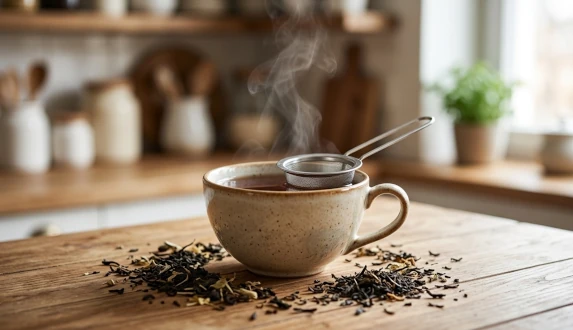
There is nothing better than a moment of relaxation with a mug of steaming, aromatic brew. However, true tea lovers know that this magical moment is not only due to high-quality leaves but also the way it was prepared. Wondering why your green tea is sometimes bitter, and your black tea lacks depth? The leaves themselves are not always the culprit. Very often, proper tea brewing accessories are the key to success!
Whether your adventure with infusions is just beginning, or you are already a passionate tea drinker looking to reach a higher level of initiation – properly selected equipment is an absolute must. A plain mug and boiling water poured "by eye" can strip the brew of what is most valuable: its rich aroma and health-promoting properties. In this post, we will take a closer look at how to use professional gadgets, how to brew loose leaf tea without making mistakes, and which tea accessories are really worth investing in to enjoy a brew just like from a real teahouse.
Summary:
- The most important tea accessories
- Tea infuser – which one to choose?
- Teapot with tea infuser or a kettle – which is better for brewing tea?
- Tea accessories that make a difference
- How to use tea accessories to extract the full flavour?
The most important tea accessories
The world of tea gadgets can be overwhelming. From simple infusers to fancy jugs, advanced kettles and thermometers – it is easy to get lost! However, before you throw yourself into a shopping spree, it is worth understanding that you do not need to buy everything at once. High-quality loose leaf tea will reward you with a wonderful flavour if paired with the absolute minimum equipment, but if you care about precision and consistency, additional gadgets will be invaluable.
The tea accessories category is generally divided into essential ones, which simply help create a grounds-free brew, and those that improve the comfort and accuracy of preparation. Remember that the key to success lies in two parameters: proper water temperature and the freedom the leaves have during brewing. A tea infuser that is too tight will prevent the dried leaves from fully expanding, and consequently – from releasing their aroma.
💬 Scientific sources:As studies on the optimisation of leafy infusions show, temperature and brewing time directly affect the extraction of polyphenols and antioxidants, which determines the final taste. Moreover, analyses emphasise the immense importance of leaf freedom (e.g., in large baskets instead of tight bags), which allows for the full development of valuable aromatic compounds and the avoidance of unpleasant bitterness.
- C. Astill et al., Factors affecting the caffeine and polyphenol contents of black and green tea infusions, Journal of Agricultural and Food Chemistry, 2001.
- F. Hajiaghaalipour et al., Temperature and Time of Steeping Affect the Antioxidant Properties of White, Green, and Black Tea Infusions, Journal of Food Science, 2016.
Basic tea making set
If you are just putting together your home tea corner, your first tea making set does not have to be complicated at all. However, it should consist of three solid pillars that will guarantee you a perfect brew every day. What should be included in a tea base?
- ✔️ Tea infuser – this is the absolute heart of every tea ceremony (even the quickest morning one). When choosing a loose leaf tea infuser, make sure it has adequate capacity. Leaves can increase their volume several times after being poured with hot water! A tight little ball might not work well with large leaves, whereas a large, open filter or a basket tea infuser will hit the jackpot.
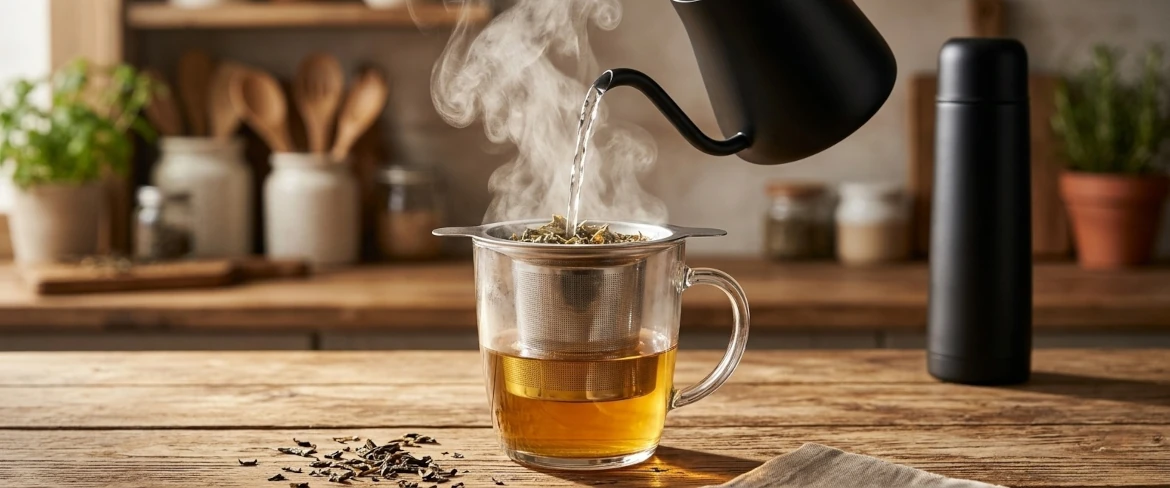
- ✔️ Tea kettle – sounds trivial, right? But beware! A standard kettle brings water to a boil, and most teas (like green, white, or oolong) simply cannot stand boiling water. Therefore, an absolute game-changer in the kitchen is a temperature controlled kettle. Thanks to it, you can precisely set the water to 70, 80, or 90°C and never "burn" your favourite leaves again.
- ✔️ Suitable vessel (a mug or a tea jug) – size matters! If you are brewing tea only for yourself, a large, favourite mug is enough. However, if you plan to host friends or spend a long evening with a book, a larger tea jug will be irreplaceable. It will help maintain the temperature of the brew for longer and beautifully display the colour of the prepared drink.
Once we have these basics, the rest of the process becomes simple and incredibly pleasant. Remember that investing in good equipment quickly pays off – mostly in the form of a smile after every sip of a perfectly balanced brew.
📌 Summary: the base for every tea lover
- To create a good brew, you need freedom for the leaves – get yourself a capacious tea infuser.
- Water temperature is crucial – a temperature controlled kettle makes life easier and protects the tea from spoiling its flavour.
- Adjust the size of the vessel to your needs – your favourite tea mug or a tea jug.
- Invest in high-quality tea brewing accessories to take your daily ritual to the next level.
Tea infuser – which one to choose?
Since we already know that well-chosen tea accessories can elevate our daily ritual to a completely new level of flavour and comfort, the question arises: what exactly is worth testing? The choice on the market is huge, and the decision about which tea infuser you invite into your kitchen depends primarily on your personal preferences and lifestyle. There is no single, universal solution for everyone. Different models of tea infusers will work in different situations – you might take one to the office, use another during a lazy Sunday morning, and give yet another as a gift to a loved one.
Classic tea infuser
Let's start with the basics. A classic tea infuser is usually a simple structure that has reigned in our homes for years – e.g., resembling tongs with a strainer or a simple, steel egg on a chain. It is a universal option, extremely easy to use, and budget-friendly. These types of infusers will be perfect for beginner tea drinkers who are just abandoning express tea bags in favour of loose leaves and are looking for a simple, undemanding gadget "for a start".
Cup tea infuser
Are you rushing to the office in the morning, turning on your computer, and your favourite blend lands on your desk? In such situations, a cup tea infuser is a lifesaver! It is an incredibly convenient option for everyday, intensive use. You place it directly in the vessel, pour water over it, and after measuring the appropriate time – you simply take it out without dirtying half the kitchen. In office and home environments, ready-made cups with tea strainers also work brilliantly (for example, the "Mystea" mug with infuser available in our store), which you can also successfully use as practical herbal tea mugs. The infuser is perfectly matched to the edge of the vessel and often comes in a set with a lid that helps maintain the temperature (and serves as a saucer for the wet strainer once removed).
Loose leaf tea infuser – what to look for?
When choosing the perfect model, it is worth asking yourself how to use a tea infuser depending on what you intend to brew in it. Genuine, high-quality tea can be very capricious. If you aim for dried leaves consisting of rolled, large pieces that expand under the influence of hot water and increase their volume, your loose leaf tea infuser must meet specific requirements:
- ✔️ size (capacity) – tea leaves need space to unfold. A small tea infuser will cause the leaves to clump into a hard lump, preventing water from reaching the inside, resulting in a watery and flat-tasting brew;
- ✔️ water flow – the micro-holes in the strainer must, on the one hand, retain the finest fractions (dust), and on the other – allow free circulation of water between the leaves;
- ✔️ material quality – the material from which the accessories are made must be 100% neutral to taste and safe in contact with high temperatures.
Types of infusers: steel, silicone, glass
The choice of material is not only a matter of aesthetics, but also durability and convenience. What options do we have?
Steel tea infuser
A definite favourite in terms of durability. Stainless steel does not absorb odours – which is crucial if you drink strongly flavoured Earl Grey in the morning and delicate green sencha in the evening. It is easy to clean and practically indestructible. A steel tea infuser is an investment for years!
Silicone tea infuser
Colourful sloths, divers, or animals hanging from the edge of the mug – a silicone tea infuser usually takes the most fancy shapes! It is a great gift idea and a cool gadget that will brighten up the morning. However, you must be careful: always choose top-quality silicone (BPA free), dedicated for contact with food, to avoid a chemical aftertaste. A downside? They sometimes cope worse with water circulation due to fewer holes and can be more difficult to wash thoroughly.
Glass tea infuser
A synonym for elegance. A glass tea infuser (often in the form of an elegant tube with slits) looks phenomenal, allowing you to admire the process of leaves expanding. Glass is 100% neutral to taste. Its only drawback is its fragility – it requires gentle handling, which is why it works less well when travelling or in a dynamic office.
💡 Good to know: Metal and silicone accessories do not affect the water temperature, but a cold mug does! Pouring 90°C water into a cool, thick ceramic vessel can cause you to immediately lose a few degrees. Therefore, when preparing teas requiring high temperatures (e.g., black teas), it is worth scalding the mug or jug with a little hot water beforehand.
Infuser shapes – basket, ball on a chain, and tongs
The shape of the infuser in which we brew our tea is of immense importance! Let's take a look at the three most popular forms of steel infusers that most often and most willingly land in our mugs:
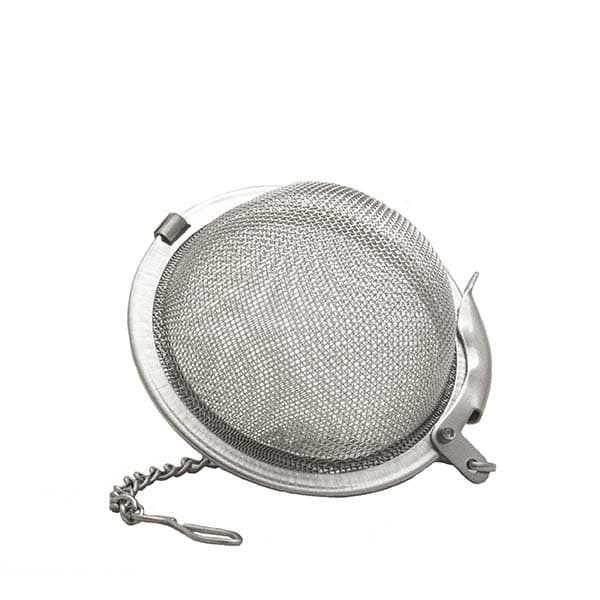
- ball tea infuser on a chain – an absolute classic of the genre. It is usually a snap-closure mesh in the shape of an egg or a ball. We throw it into the vessel, and the hook at the end of the chain allows you to safely attach it to the edge of the mug. It handles fine leaves brilliantly, but if you use large leaves, remember not to pack them too tightly – water must flow freely!;
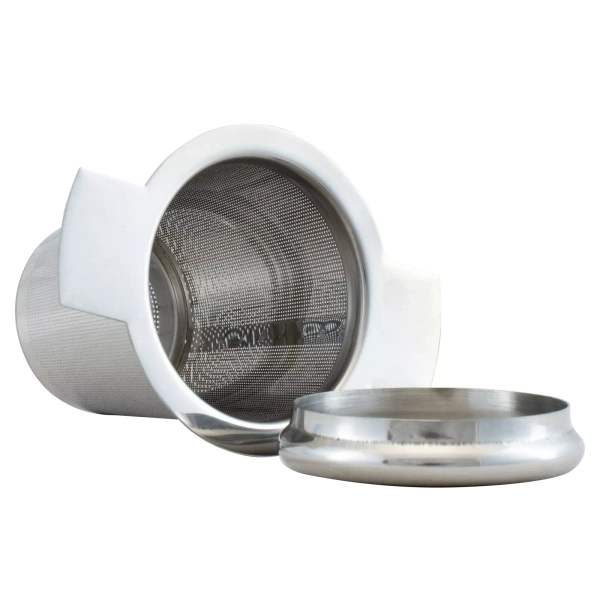
- basket tea infuser – this is our definite favourite. A large, spacious basket (most often placed directly on the rim of a mug or jug) provides maximum space for leaves, guaranteeing the fullest flavour. It is easy to fill, remove, and wash. It is often additionally equipped with a lid that helps maintain the brew's temperature, and after removal serves as a convenient saucer for the wet strainer;
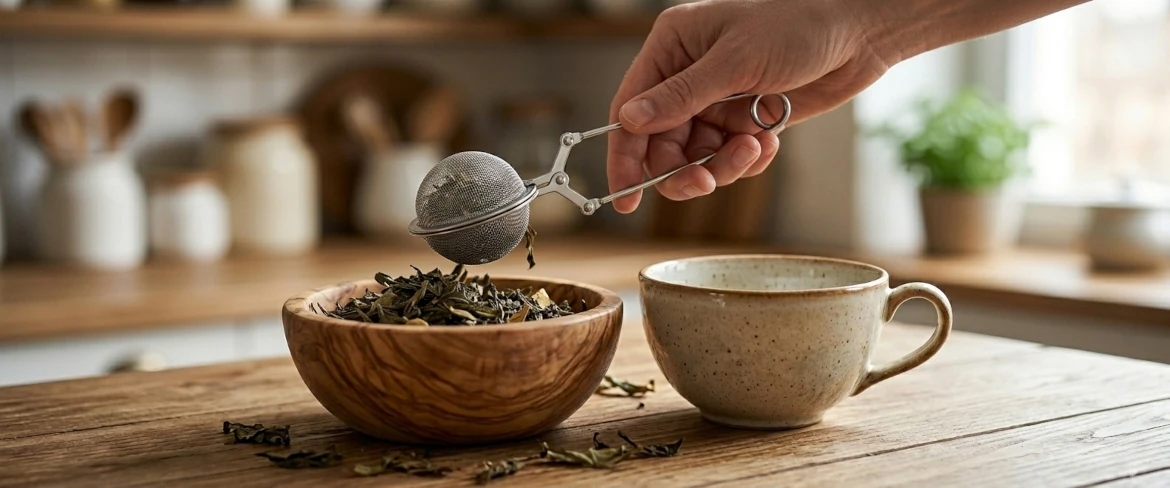
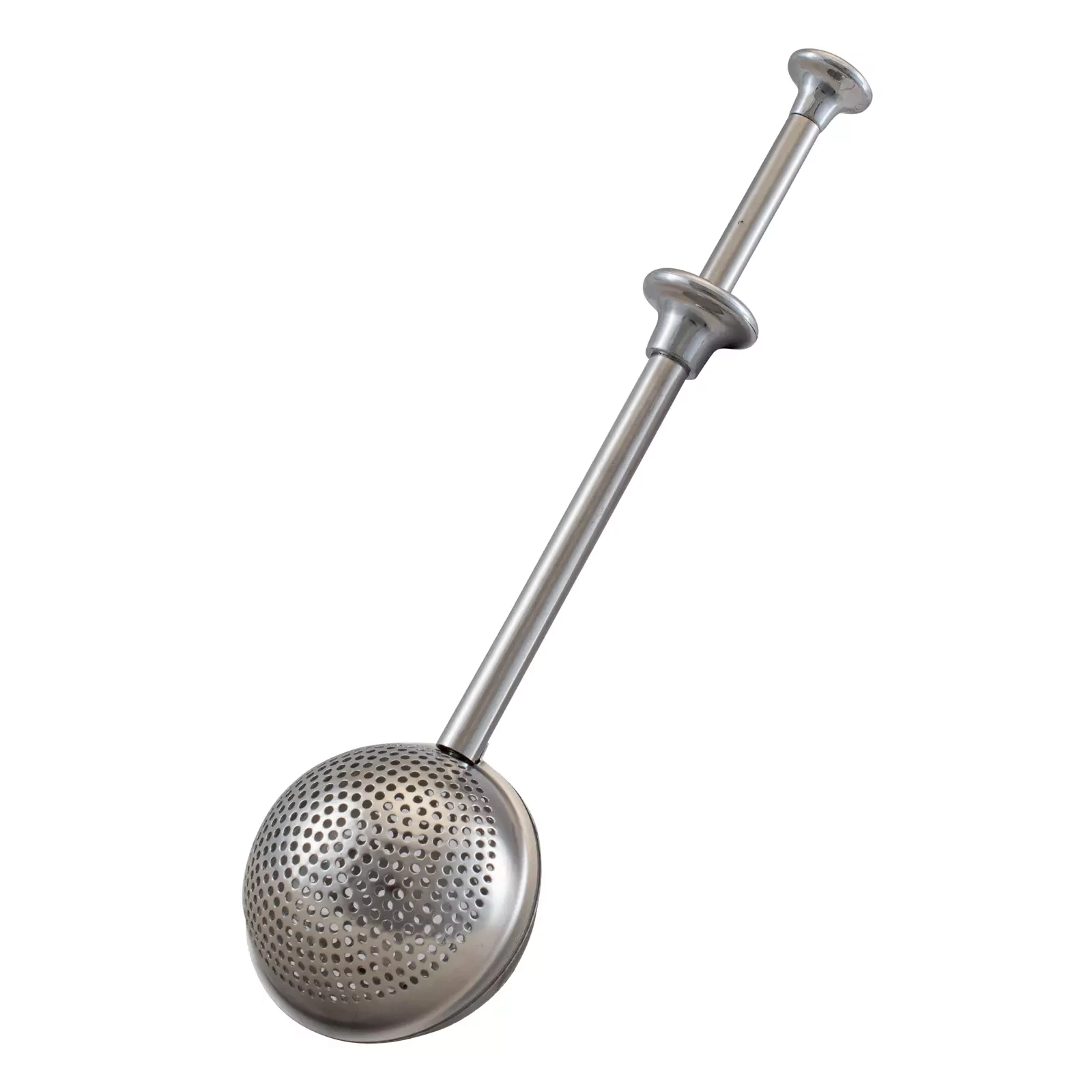
- infuser with a handle and lever (tong infuser) – extremely handy, innovative, and quick to use. It is equipped with a handle and a special spring mechanism. You press the lever with your thumb, the little ball opens, and you can scoop the tea directly from the tin or packet, just like with a spoon. After releasing the lever, the strainer closes tightly and is ready to be immersed in water. Saves time and ensures zero spilled tea on the counter.
The "Bola" infuser is a reliable, simple, and budget-friendly solution. Works great for smaller leaves and herbs.
A guarantee of full flavour! A large stainless steel basket that allows leaves to expand to their maximum.
The lever mechanism is a solution for those who value speed and tidiness while brewing tea.
And what if you are not fond of washing up and laboriously picking wet leaves out of steel strainers? This is where a tea filter comes in – an absolute bullseye for those who value ultimate convenience. The market offers material filters (reusable, usually cotton) and paper ones.
Disposable paper tea filters just need to be filled with dry leaves, thrown into a vessel with hot water, and after measuring the brewing time – simply pulled out and thrown entirely into the bin. It is worth adding that this is a 100% biodegradable solution! Such a filter brilliantly catches even the finest dust. This will be especially appreciated by lovers of strongly broken teas, rooibos, or finely ground, dusty herbs, which classic tea infusers might struggle with.
Herbal tea infuser – how does it differ from a classic one?
Can the same equipment be used for brewing tea and herbs? In theory yes, but in practice... an herbal tea infuser faces different challenges. Herbs (e.g., chamomile, mint, nettle) are often very fluffy, voluminous, and light. They require significantly more space, which is why very capacious baskets or large jugs with an integrated, long filter work best for them.
On the other hand, some herbal blends can be highly ground, almost dusty. In this case, the density of the mesh is crucial – infusers dedicated to herbs should have micro-mesh that will keep all the sediment inside, so the brew is clear and pleasant to drink. Sometimes tiny particles can block certain steel filters, which is why disposable paper filters are often recommended for very fine herbs.
Teapot with tea infuser or a kettle – which is better for brewing tea?
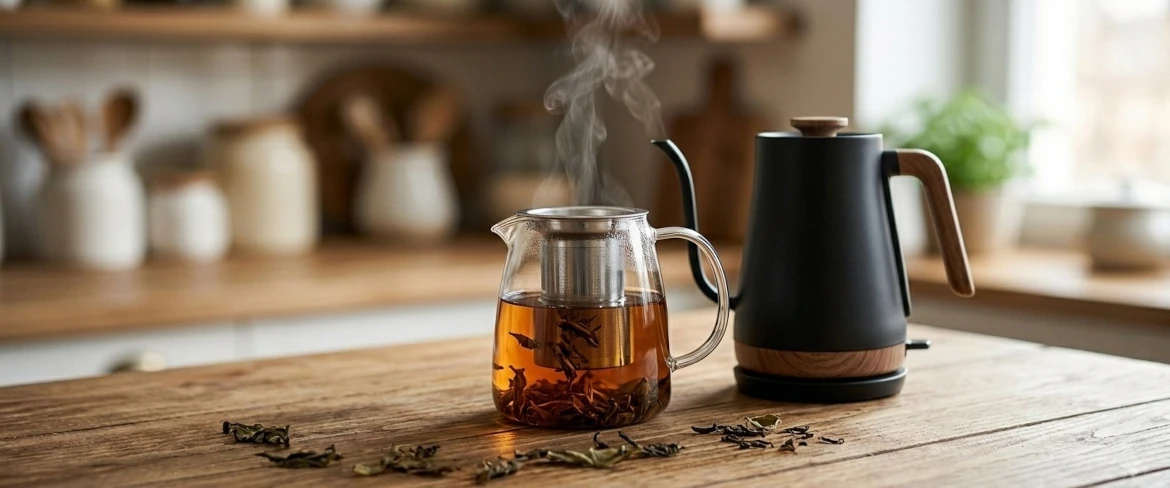
Beginner tea art adepts often ask this question, treating both vessels almost interchangeably. Meanwhile, this is a mistake! In the world of infusions, a kettle and a jug serve completely different functions, but... they complement each other wonderfully, forming a harmonious duo. A kettle is used to heat water to a specific temperature. A jug, on the other hand, is the destination vessel where the magic of extraction happens and from which we proudly serve the ready drink to ourselves and our guests.
To know how to brew loose leaf tea with true finesse and extract the best from it, you don't have to choose between one and the other. Both of these tea accessories significantly elevate the comfort of the entire process. Let's take a closer look at them!
Jug with infuser
If you usually drink tea in a larger group, organise home afternoon teas, or simply like to prepare a solid portion of brew for the whole evening with your favourite book, a capacious tea jug with infuser will quickly become your favourite kitchen gadget. Without a doubt, the most popular choice is a glass teapot with infuser. Why? Because it provides a spectacular visual show! Through the transparent walls, you can observe how rolled leaves slowly dance in the water and gradually unfold, while the entire brew takes on a deep, saturated colour minute by minute.
It is a maximally functional solution. The large volume of the vessel gives the leaves complete freedom. When the tea reaches the ideal strength and the right moment comes, you simply pull out the inner basket with leaves, stopping the brewing process. Thanks to this, the pure brew does not become bitter over time, and you can elegantly pour it into cups for a long while.
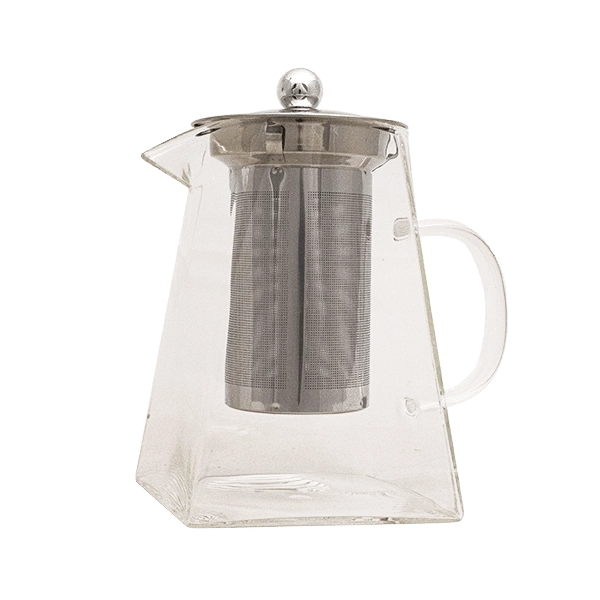
A capacious, simple in form jug with infuser. An ideal choice for those who value modern design and everyday functionality.
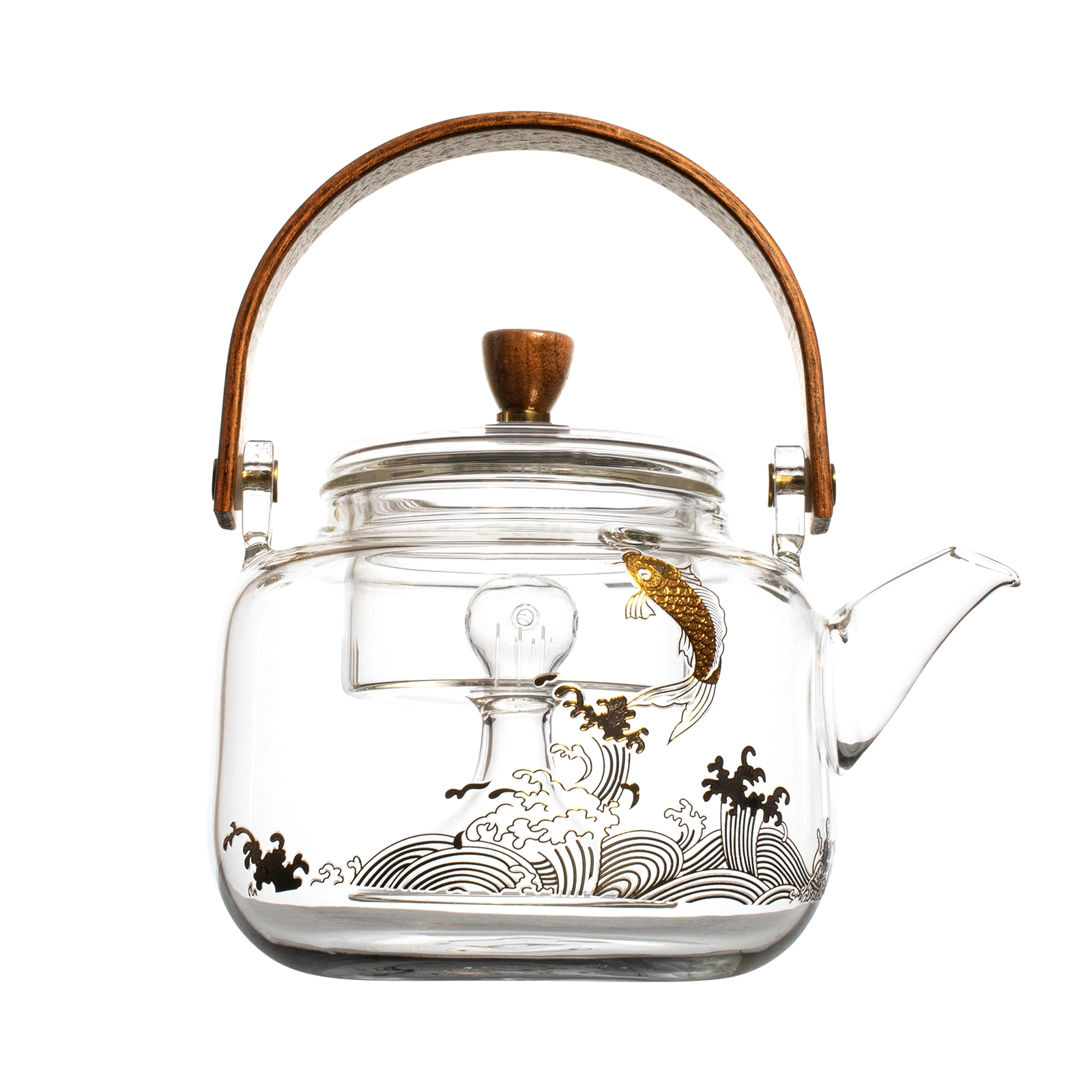
A beautiful, decorative glass jug with a glass infuser. It stands out with a stunning graphic motif. A perfect idea for an elegant gift!
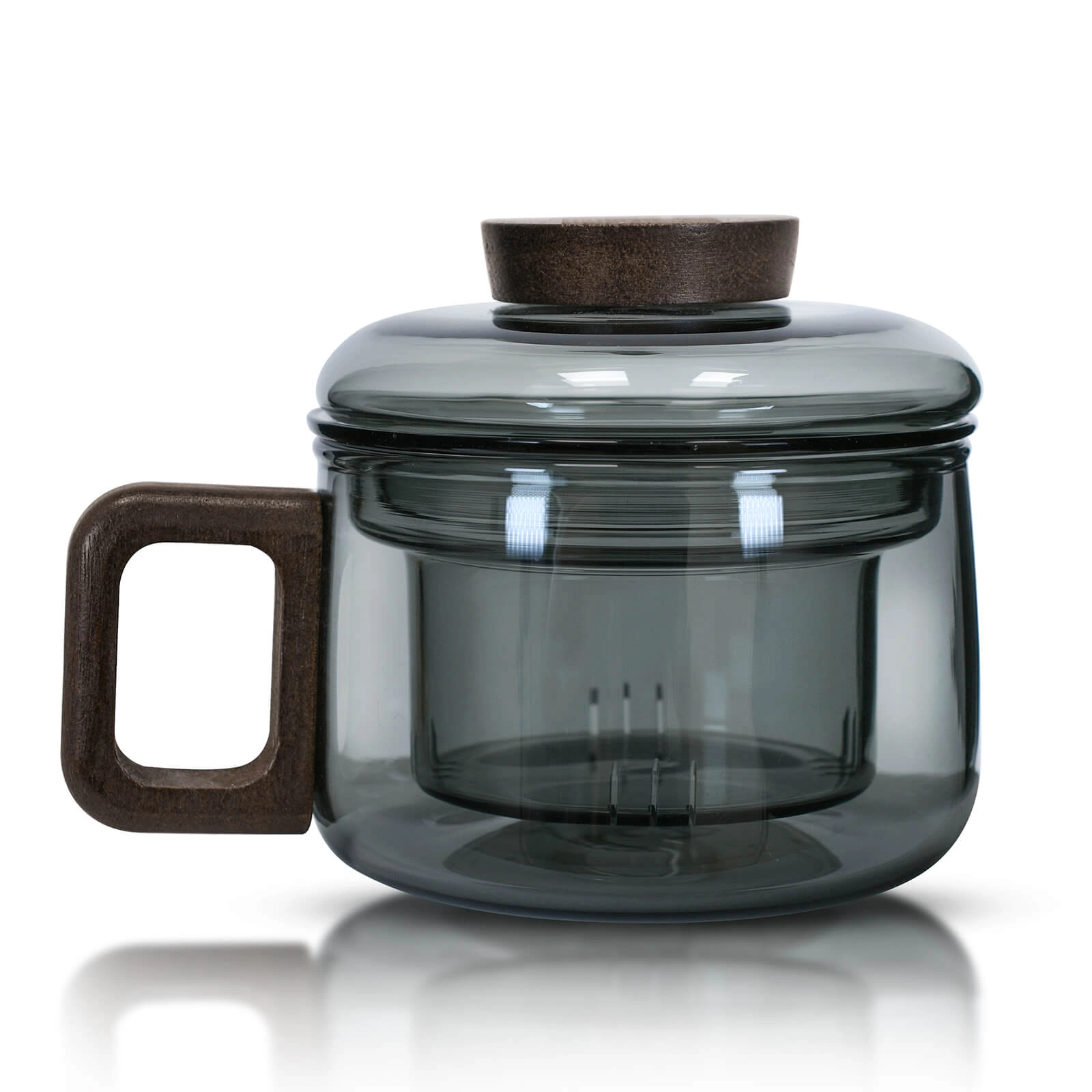
Prefer smaller portions? This adorable glass cup with an infuser is a great alternative to large jugs. Perfect for the office or a home corner.
And how about one more, rather unusual kitchen alternative? Although a classic French Press is mainly associated with coffee, it will successfully serve us as a functional alternative to a teapot with tea infuser. The mechanics of brewing undergo a slight modification here: instead of pulling out a basket with grounds, after counting down the appropriate time, we simply lower the built-in plunger slowly. It presses the wet leaves to the very bottom, effectively separating them from the ready brew. French Presses usually have a large capacity (often hovering around 1000 ml), which makes them a sensational solution for longer sittings with loved ones.
Temperature controlled kettle
Let's move on to the source of success – i.e., the correct water temperature. Sooner or later, every self-respecting infusion enthusiast must face a dilemma: what water temperature for tea guarantees the best effect? It quickly turns out that boiling water, with which we pour over mugs out of habit, can be lethal for many valuable ingredients found in tea. And this is where a modern temperature controlled kettle proudly enters the stage.
Why is this so important? Brewing delicate green tea, noble white tea, or lightly oxidised oolong with water at 100°C causes the leaves to experience a kind of "burn". As a result, we lose valuable aromas, and tannins are rapidly released into the brew, responsible for a highly astringent, bitter, and unpleasant aftertaste. Thanks to a kettle with temperature control, you just need to press the right button to precisely heat the water to 70, 80, or 90°C and fully enjoy the natural flavour profile of the drink.
Buying a kettle with an indicator and heat regulation is a convenience that allows you to put aside traditional kitchen thermometers. You gain absolute certainty that the water is always perfectly tailored to the requirements of the blend you currently feel like drinking. Whether you are preparing a strong, morning black tea (requiring approx. 95°C) or a relaxing, green brew (approx. 70-80°C) – you gain full control over the flavour.
Tea accessories that make a difference
We already know the absolute basics. You have your favourite mug, a great jug with infuser, and you know what water temperature will be ideal. It's time to step up to the next level. There are tea accessories on the market that – although theoretically not absolutely essential for brewing an infusion – make a gigantic difference in the comfort and precision of tea preparation. They are what turn an everyday, routine process into a proper, professional ceremony.
A tea strainer, measuring spoon, and tea thermometer
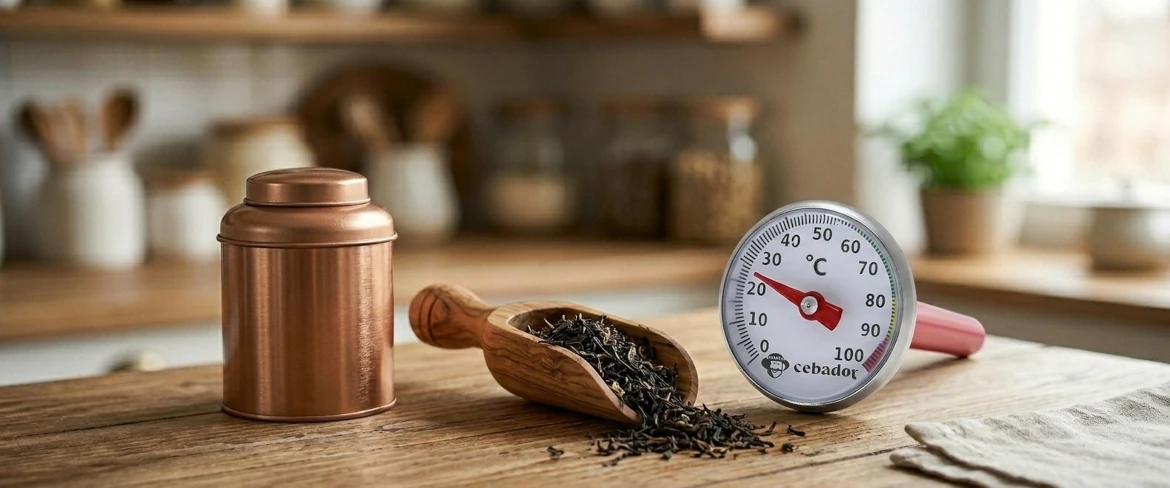
Brewing tea is an art, but it also requires a bit of precision. To maintain the repeatability of the flavour of your favourite blend, we need to control the proportions. Instead of pouring the dried leaves "by eye" using a standard teaspoon, it is worth equipping yourself with a handy tea measuring spoon. A classic wooden scoop works perfectly here, which not only precisely and conveniently measures the right portion of leaves, but also looks beautiful and natural in your kitchen assortment.
The next step is heat control. If you do not have the previously mentioned temperature controlled kettle, all is not lost! A great alternative will be a tea thermometer. A classic analogue thermometer equipped with a convenient clip that you can easily hook onto the edge of a mug or jug will allow you to hit the required 70 or 80°C perfectly. It's a small thing, but it saves the taste of green and white tea!
What about the tea leaves? If you prefer traditional brewing of leaves directly in a jug, instead of an infuser, a fine, dense tea strainer can come to the rescue. By pouring the brew through the strainer from the jug straight into the cup, you get a crystal-clear drink, free of the finest floating leaves and dust.
Tea caddy – how to store tea properly?
Imagine this situation: you bought top-quality loose leaf tea, you have excellent brewing equipment, but... the tea tastes flat and loses its magical charm two weeks after opening the packet. Improper storage is usually the culprit. Tea leaves are like a sponge and are extremely sensitive to four factors: light, moisture, oxygen, and foreign odours. Tea can very quickly absorb the aroma of intense spices from a neighbouring cabinet.
The salvation and guarantee of freshness is an airtight tea caddy. Metal containers completely cut off access to sunlight and protect the dried leaves from airing out. If you want to be sure that your favourite brew will retain its deep aroma for a very long time, it is worth buying tea directly in dedicated packaging. In our store, you will find a wide range of teas in tins – this is not only functionality, but also an incredibly elegant decoration for your kitchen or a great idea for a ready-made gift!
Tea flask and flask with infuser – perfect for travelling
Who said that the ritual of drinking a delicious brew must be limited only to the comfort of your home? For those who live on the run, commute to work, university, or love long mountain hikes, a solid tea flask is an absolute basic. It allows you to keep the drink at a high temperature for many hours, warming you up on the coldest days.
Modern accessories, however, go a step further, combining a thermal vessel with an extraction tool. A flask with infuser is a brilliant and incredibly practical invention! It has a built-in steel strainer, which allows you to pour in the leaves, pour water over them, and take the entire brewing process with you from home. Which model will work best during your travels?
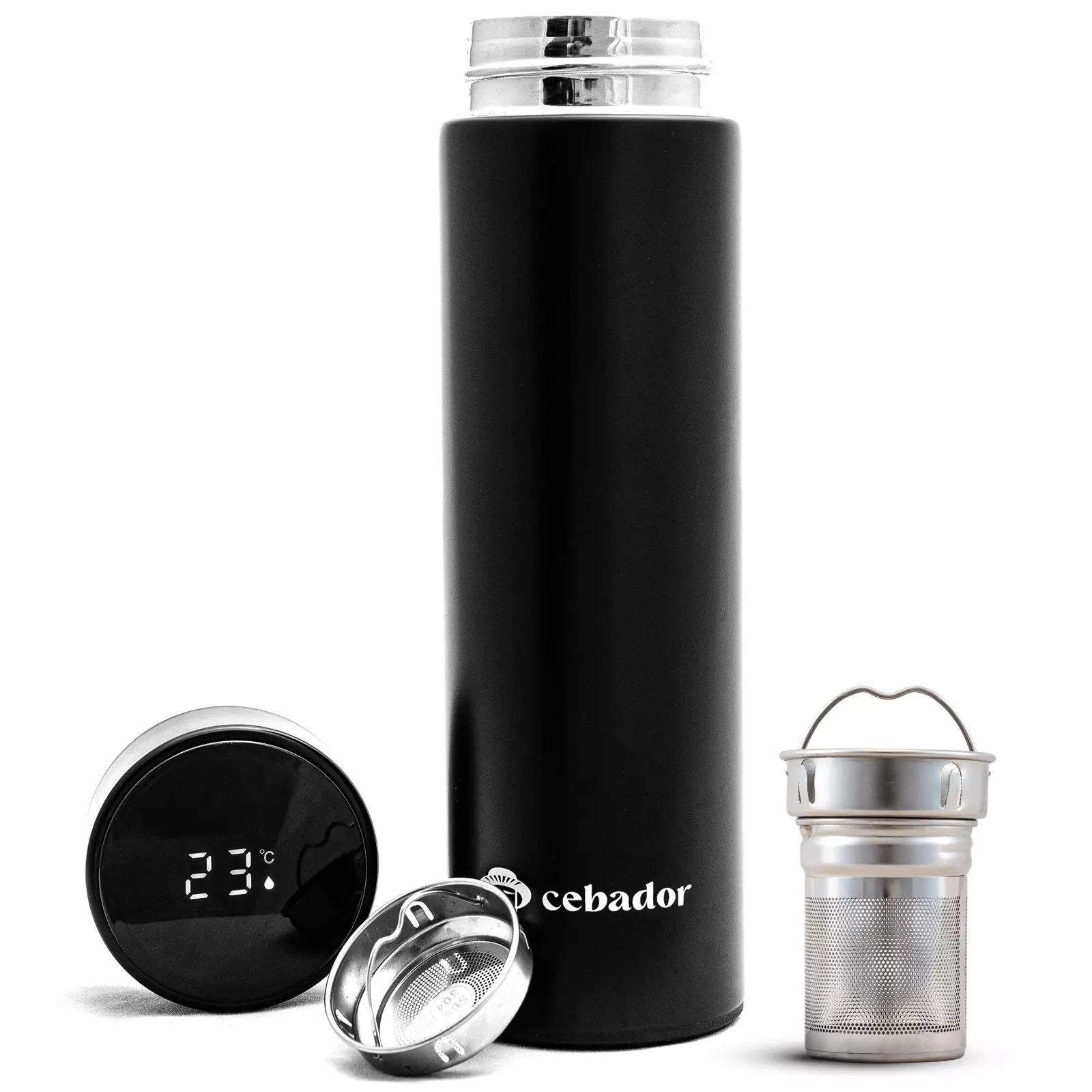
A steel flask, which not only keeps the heat for a long time and has an internal strainer, but also shows the exact temperature of the drink on the cap. No more burnt tongue!
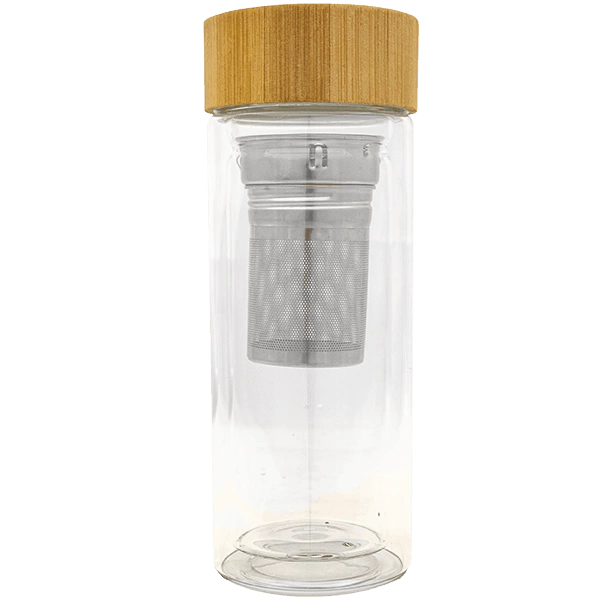
A glass tea flask with a bamboo cap and an infuser. Double walls protect your hands, and the transparent design allows you to enjoy the sight of the brew's colour.
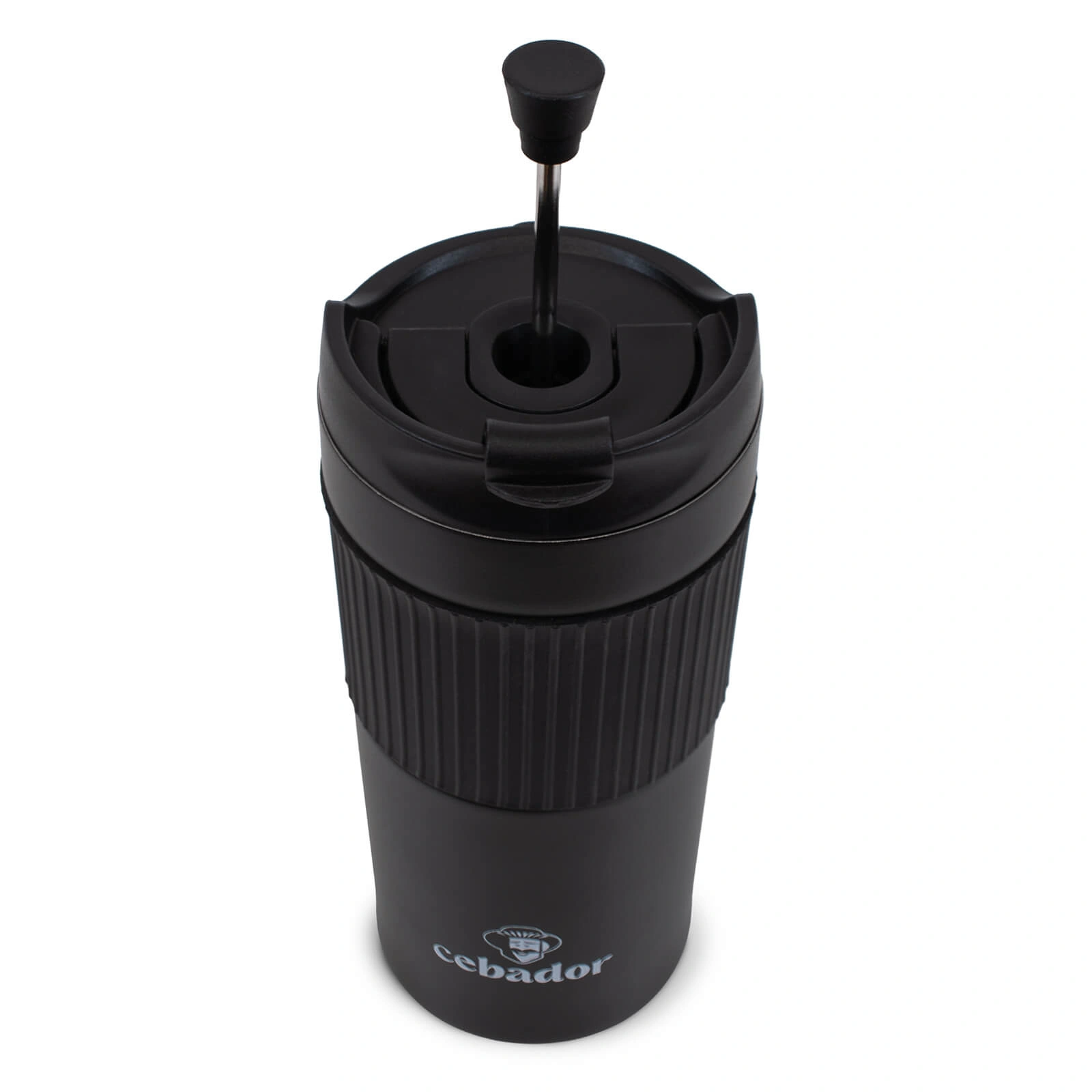
A real hit! A thermal mug equipped with a built-in plunger. You brew, press the leaves to the bottom, and enjoy a brew without a gram of grounds and bitterness on your way to work.
How to use tea accessories to extract the full flavour?
Buying the right equipment is only half the journey to tea mastery. Even the most expensive tea imported from the other side of the world and the most designer tea accessories will not save the brew if the technique fails. Imagine getting your hands on a top-class guitar – the mere fact of owning it won't make you play a concert straight away. It's similar with brewing accessories: they require a bit of knowledge and intuition. Fortunately, unlike playing an instrument, the art of brewing tea can be mastered in just a few moments!
How to brew loose leaf tea step by step?
The key to a perfect brew is maintaining the correct order and proportions. Regardless of whether you use your favourite mug with a small strainer, an elegant teapot with tea infuser, or a kettle with infuser to prepare the drink, this process should always look similar:
- ✔️ Step 1: Warming the vessel. Before you pour in the dried leaves, pour a little hot water into the jug or mug for a moment, stir, and pour it out. Thanks to this, the vessel will not "steal" the temperature from the water you will soon use to pour over the leaves.
- ✔️ Step 2: Measuring the loose leaves. The golden rule is usually 1 teaspoon (or one measuring spoon) of dried leaves per classic mug (approx. 200-250 ml of water). If you like stronger brews, you can slightly increase this amount, but remember to leave space for the leaves to expand in the infuser.
- ✔️ Step 3: Pouring water. The water should be filtered (tap water that is too hard can spoil the taste and leave an ugly residue on the surface). Adjust the temperature to the type of tea.
- ✔️ Step 4: Time and separating the grounds. Keep an eye on the time with a watch in hand (or a timer on your phone). When the time is up, absolutely pull out the strainer, basket, or filter. If the leaves stay in the water too long, the brew will simply become bitter and tart.
💡 Good to know: Are you looking for a break from traditional brewing methods or want to surprise your guests? Be sure to check out our blog post on isomalt tea bombs. It's an incredibly spectacular and delicious way to rediscover tea!
Temperature and time of brewing tea
How long to brew tea depends primarily on its type (the degree of leaf oxidation). The previously mentioned temperature is equally important. If you want to be sure that the perfect brew will land in your cup, stick to these general guidelines:
☕ Optimal tea brewing parameters
| Type of tea | Water temperature | Brewing time |
|---|---|---|
| Black tea |
95-100°C | 3-5 minutes |
| Green tea | 70-80°C | 2-3 minutes |
| White tea | 75-85°C | 2-5 minutes |
| Oolong | 85-90°C | 3-4 minutes |
It is also worth remembering that the brewing time affects not only the bitterness, but also the stimulating properties of the brew. We explained these dependencies in detail in the post: Does tea stimulate? Which tea has the most caffeine and which works the strongest? On the other hand, if you are wondering exactly what benefits for the body come from daily drinking of classic black tea, be sure to check out the article: Is black tea healthy? Discover its properties and nutritional values.
Most common mistakes when brewing tea
At the very end, we have prepared a short "black list" of tea sins. What to avoid to fully enjoy the flavour?
- ❌ Leaving the leaves in the water "to the limit". This is the most common mistake! If you do not take out the infuser after the appropriate time, the brew will become over-brewed, very bitter, and heavy on the stomach.
- ❌ Squeezing the remaining water out of the leaves. Do you have a habit of pressing strainers or paper filters with a teaspoon to squeeze the last drops out of them? It is better not to do this! In this way, the most tart tannins get into the drink.
- ❌ An infuser that is too tight. Even the best tea will not release its flavour if the leaves are packed in a tight, metal ball. Give them space!
- ❌ Re-boiling the same water. Try to always use fresh water for brewing tea. Water boiled multiple times loses oxygen, which makes the tea taste "flatter".
Investment in proper gadgets is a step you certainly will not regret. A good, spacious infuser in the form of a basket or a large strainer, a glass jug for longer evenings, and a temperature controlled kettle are the "holy trinity" that will radically change your tea experiences. By adding a handy measuring spoon and an airtight tea caddy for dried leaves, you will create a real teahouse in your kitchen. Just remember to control the time and temperature, and every cup will reward you with a rich, deep aroma!
Brew a cup of aromatic infusion, sit back comfortably, and enjoy a moment of relaxation – after all, you deserve it!
❓ FAQ – frequently asked questions about tea brewing accessories
1. Which tea infuser to choose?
2. How to use a tea infuser?
3. How long to brew loose leaf tea?
4. What water temperature for tea will be the best?
5. Is an herbal tea infuser suitable for tea?
6. How to clean a tea infuser?
7. How to store tea so it doesn't lose its aroma?
Sources of information:
- Wikipedia: Tea.
- F. Hajiaghaalipour et al., Temperature and Time of Steeping Affect the Antioxidant Properties of White, Green, and Black Tea Infusions, Journal of Food Science, 2016.
- C. Astill et al., Factors affecting the caffeine and polyphenol contents of black and green tea infusions, Journal of Agricultural and Food Chemistry, 2001.
Recommended

USB mug / mate gourd warmer – for yerba mate and tea

Glass teapot with brewer Diamante 1200ml

Cebador Flow XXL Thermal Mug
