
Mint – properties, effects, and application. What is mint good for and how to use it?
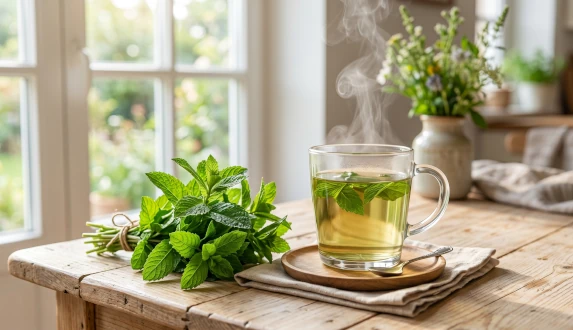
It is hard to imagine a home medicine cabinet, kitchen, or summer refreshment without it. Mint is undoubtedly one of the most popular plants in the world, valued for millennia for its characteristic fragrance and a wide spectrum of action. But did you know that the term "mint" hides a whole family of fascinating varieties with entirely different properties?
In today's blog post, we will take a closer look at mint. We will discover the incredible properties of mint, look at its fascinating varieties, and answer the key question: what is mint good for in everyday life? You will also learn the difference between spearmint vs peppermint, discover what to do with mint in the kitchen, and find out why mint tea, a mint infusion, and yerba mate with mint are an absolute hit. Enjoy this aromatic read that will refresh your knowledge!
Summary:
- What is mint and what are its most important varieties?
- Mint – properties and effects on the body
- Mint – what is it good for? Uses in health and everyday life
- Mint tea or mint infusion – what are they and why drink them?
- How to brew mint? Methods of preparing a mint infusion and mint tea
- What can you do with mint? Culinary uses and more
- Does mint have contraindications?
- Why it is worth using mint every day
What is mint and what are its most important varieties?
Mint (Latin: Mentha) is a genus of plants belonging to the broad Lamiaceae family. In the wild, it can be found on almost every continent, although it grows most willingly in temperate zones, preferring moist and slightly shaded spots. Its history dates back to antiquity – mint was already known to the ancient Egyptians, Greeks, and Romans, who used it to freshen the air, flavour wine, and soothe stomach ailments. Today, it is an absolute staple in herbal medicine and the culinary arts.
If you love herbal vibes and want to introduce this exceptional herb into your daily routine, be sure to check out our "Herbs" category, where you will find carefully selected dried herbs and blends that will work perfectly in your mug or mate gourd!
💡 Fun fact: There are over 30 naturally occurring varieties of mint, but this plant has an incredible tendency to create hybrids. This means that individual types of mint crossbreed with each other in nature, creating hundreds of subspecies with completely new, surprising aromas – from chocolate, through pineapple, all the way to apple!
Types of mint – peppermint, spearmint, lemon mint, and Mexican mint
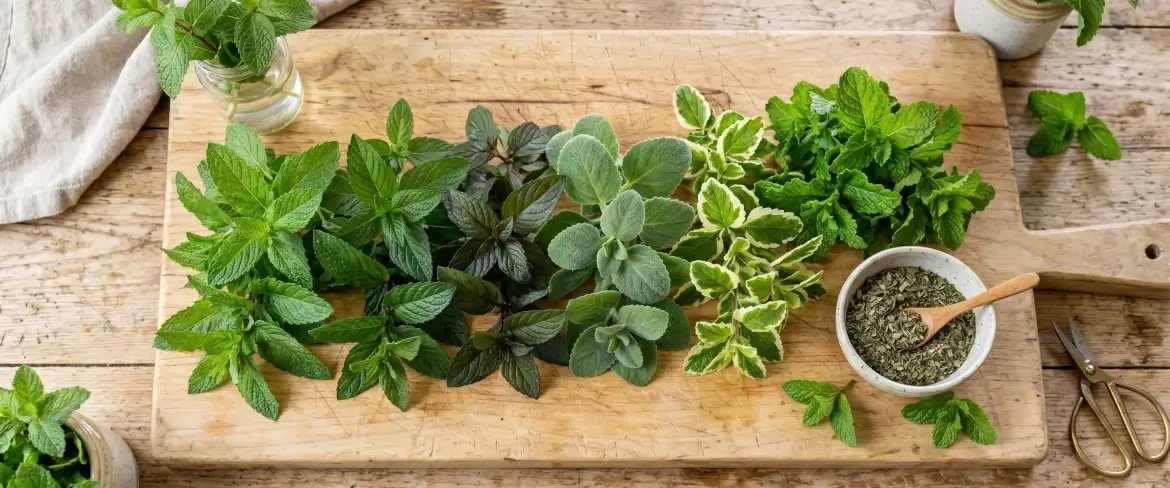
Wondering which type to reach for? There are dozens of species and types, but the big four dominate the tea and culinary market. Although they all belong to the same plant family, they differ in the concentration of essential oils, their effects on the body, and, of course, their flavour.
Peppermint (Mentha piperita)
This is the true queen of medicinal herbs and an absolute classic when it comes to a traditional mint infusion. Interestingly, peppermint (Mentha ×piperita L.) is not an original species, but a natural hybrid created by crossing water mint (Mentha aquatica) with spearmint (Mentha spicata). Its most characteristic feature is a huge content of menthol in its essential oil. This is exactly what is responsible for its intense, cooling, slightly sharp, and "medicinal" aftertaste.
You can find many questions online along the lines of: what mint tea is good for? Usually, users are referring to this very variant. Menthol has a strong antispasmodic effect on the smooth muscles of the digestive tract, which is why peppermint is the best choice after a heavy meal.
💬 Scientific source: G. Mahendran, L. U. Rahman, Ethnomedicinal, phytochemical and pharmacological updates on Peppermint (Mentha × piperita L.) – A review, Phytotherapy Research, 2020.
The latest scientific reviews confirm that the high concentration of menthol in peppermint directly translates into its spasmolytic (relaxant) properties, bringing relief to the digestive system.
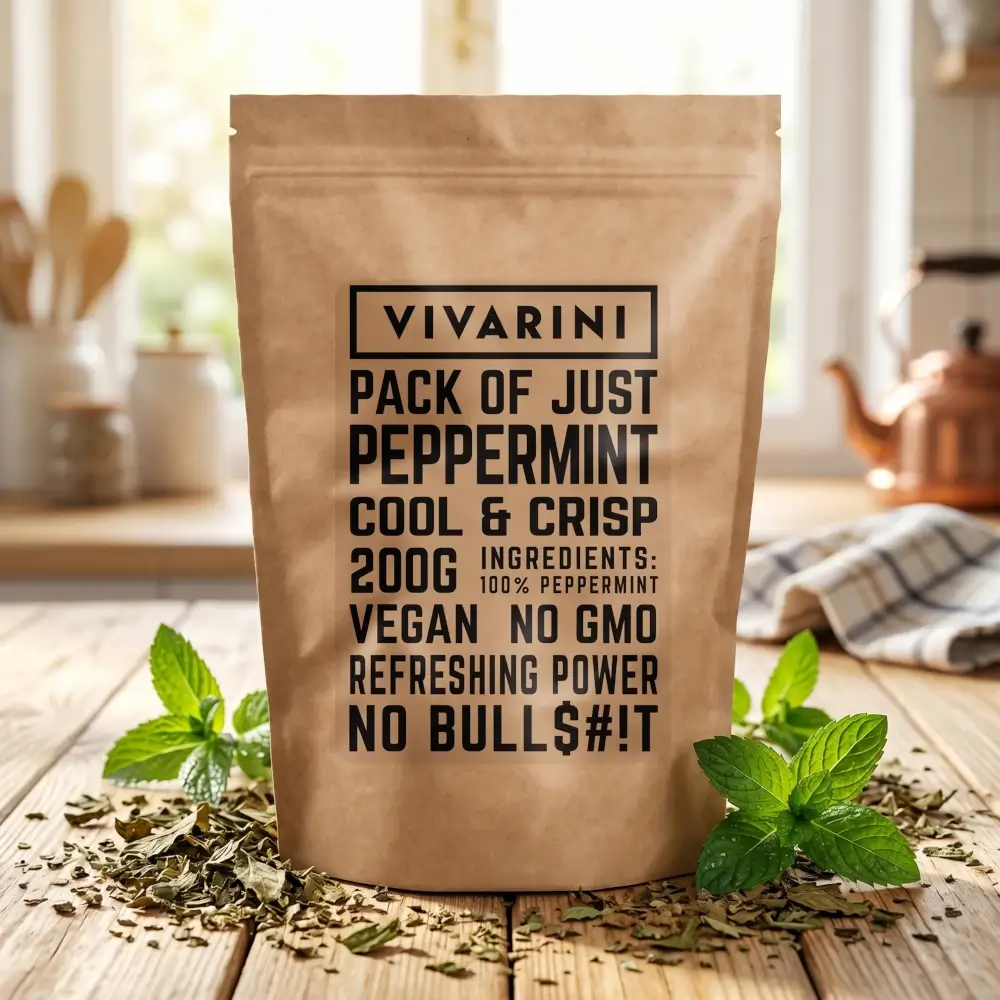
🌿 We recommend: dried peppermint from Vivarini
Are you looking for high-quality dried herbs that will be perfect for preparing homemade infusions? The Vivarini brand offers carefully selected, 100% natural peppermint leaves. A large packet (200 g) will last a long time, and the secure packaging helps retain the maximum amount of precious essential oils, incredible aroma, and the strong, refreshing effect of every portion!
- ✔️ 100% natural dried herb with no additives
- ✔️ high menthol content and intense aroma
- ✔️ perfect for infusions and yerba mate
Spearmint vs peppermint – the most important differences
A very common dilemma in the world of herbs is the comparison: spearmint vs peppermint. Spearmint is the one whose flavour we associate with popular chewing gums and children's toothpastes. How do they differ?
- Menthol content: spearmint has significantly less of it. Its main essential oil is carvone, which gives it a sweeter, softer, and less invasive flavour profile.
- Application: mint tea made from spearmint is much gentler on the stomach. It is actually perfect for children and sensitive individuals.
- Contraindications: this is very important! The menthol contained in peppermint can relax the lower oesophageal sphincter, which in some people exacerbates heartburn and acid reflux. In such cases, mild spearmint will be a much safer choice.
Lemon mint and Mexican mint
If you are a bit bored with the classics, the natural world has some incredible gems to offer – although admittedly, botanical nomenclature can sometimes play joyful tricks here!
- ✔️ Lemon mint (bergamot mint) – true lemon mint (Mentha x piperita f. citrata) is a fascinating variety of peppermint with smooth leaves that release an intense, citrusy aroma reminiscent of bergamot (the same one we know from Earl Grey tea) or eau de cologne. It is ideal for refreshing summer lemonades and light infusions. However, be careful when shopping! Often, plain lemon balm (Melissa officinalis) is sold in shops under the name "lemon mint". Both plants smell beautiful, but botanically they are completely different species.
- ✔️ Mexican mint – here the matter is even more interesting, because this plant... is not a mint at all! Botanically, it is a plant called Plectranthus amboinicus, also known as Mexican oregano or Cuban oregano. Instead of delicate little leaves, it has thick, fleshy, and charmingly hairy succulent leaves. It stands out with a powerful aroma that is a mixture of mint, oregano, and thyme. Unlike delicate species, it is used mainly as a robust spice for meats or heavy sauces.
💡 Fun fact: Mexican mint, despite being exotic and disliking cold weather, is gaining immense popularity in Europe as a potted houseplant. Why? It is believed that its incredibly intense scent very effectively repels mosquitoes and flies!
Mint varieties. Which one to choose for cooking, and which for infusions?
Once you know the different types of mint available, a practical question arises: what to do with mint and which of the varieties will work best for a specific purpose? Whether you are wondering what to do with mint gathered in your own garden or which dried herbs to buy for your pantry, we have prepared a practical cheat sheet for you.
🌿 Uses of the most popular types of mint
| Mint variety | For infusions and teas | In the kitchen and for cold drinks |
|---|---|---|
| Peppermint |
An ingredient in classic mint tea after a meal. A great addition to strong yerba mate. | As a spice for heavy meat dishes and thick health syrups. |
| Spearmint | An ingredient in light mint tea, delicate infusions for children, and Moroccan mint tea. | Perfect for salads, ice cream, fruit desserts, and classic Mojitos. |
| Lemon mint | Refreshing infusions with a citrus note; blends wonderfully with green tea and mild types of yerba mate. | Cocktail decoration, an addition to cold brew lemonades and fruit smoothies. |
| Mexican mint | Intense, warming herbal infusions. | An excellent, robust spice for savoury dishes, roasts, and heavy sauces. |
If you are aiming for strong health benefits (e.g., support after a hearty dinner), choose strong peppermint. If you prefer a mild flavour and want to experiment with sweet or refreshing culinary ideas – spearmint and lemon mint will hit the bullseye! On the other hand, intense Mexican mint will work best for savoury and meat dishes.
Mint – properties and effects on the body
When you think of mint, you probably first imagine that characteristic, refreshing coolness and incredible scent. However, mint is much more than just a pleasant aroma! Its leaves hide a true wealth of substances that can positively affect the functioning of your entire body. It has been used in folk medicine for centuries, and today modern science confirms many of these traditional uses of mint. Wondering what secrets these inconspicuous green leaves hold? Let's take a closer look!
Properties of mint
The plant's rich chemical profile is responsible for its incredible potential. The unique properties of mint result primarily from the presence of essential oils, in which the main role is played by menthol (especially in the case of peppermint) or carvone (in spearmint). But that's not all! Mint is also a great source of flavonoids, tannins, bitters, and mineral salts. Thanks to this, it has a strong antioxidant effect, helping the body fight free radicals. Scientific studies also frequently highlight its antimicrobial properties – natural oils can inhibit the growth of certain unwanted bacteria and fungi.
💬 Scientific source: H. Zhao et al., Peppermint essential oil: its phytochemistry, biological activity, pharmacological effect and application, Biomedicine & Pharmacotherapy, 2022.
The latest international scientific reviews confirm that the rich chemical profile of mint – including a high concentration of essential oils and flavonoids – is responsible for its strong antioxidant effects and its ability to inhibit the growth of unwanted microorganisms.
Mint – effects on the digestive, nervous, and respiratory systems
How exactly do the effects of mint tea translate to your daily well-being? It is worth dividing its impact into three main areas. These are exactly where this aromatic herb performs best!
- 🌿 Digestive system: this is absolutely the number one when it comes to the application of mint. Its effect relies primarily on antispasmodic (spasmolytic) properties. Menthol helps relax the smooth muscles of the gastrointestinal tract, and supports the secretion of gastric juices and bile. Wondering what mint tea is good for most? It is an irreplaceable remedy for feelings of overeating, bloating, and general discomfort after a meal that is too large or greasy.
- 🌿 Nervous system: herbs can wonderfully affect mood, and mint is an excellent example of this. On the one hand, its aroma can soothe and reduce tension after a stressful day. On the other hand – unlike sleep-inducing lemon balm – the scent of mint wonderfully refreshes the mind and promotes concentration. This is exactly why yerba mate with mint is such a brilliant combination! Stimulating mate tea gives an energy boost, while mint softens its smoky flavour and ensures that the stimulation is harmonious and refreshing.
- 🌿 Respiratory system: do you know that moment when you take a deep breath after eating a mint sweet? Mint amplifies the sensation of coolness and the "opening" of the airways. Natural inhalations from a warm mint infusion work perfectly as home support during the chill of the autumn-winter season, providing a feeling of easier breathing.
💡 Worth knowing: The way you store your dried herbs is of huge importance! Studies (including those regarding the impact of storage conditions on the properties of mint) prove that tightly sealing the herbs in a dry, dark place allows you to preserve the maximum amount of essential oils. If you keep mint in a leaky jar on a sunny countertop, it will quickly lose its flavour, aroma, and beneficial properties.
💬 Scientific source: K. Kałwa et al., The effect of storage conditions of dried peppermint (Mentha piperita L.) on the antioxidant properties of the infusions obtained and the content and composition of essential oils, ACTA Scientiarum Polonorum Technica Agraria, 2017.
What is mint good for? Key health benefits
Let's summarise our knowledge! If someone asks you what mint tea is good for, you can confidently pour out arguments from up your sleeve. A properly brewed tea made from this herb is a small ritual that can bring you many benefits.
📌 Mint – summary of the most important benefits:
- ✔️ supports digestion, relieves bloating and the feeling of "heaviness" after eating,
- ✔️ acts as an antispasmodic on the smooth muscles of the digestive system,
- ✔️ eliminates bad breath and freshens breath – thanks to antibacterial properties,
- ✔️ promotes the feeling of clear airways thanks to the inhalant action of menthol,
- ✔️ provides antioxidants, helping to protect cells,
- ✔️ relaxes, lowers stress levels, and simultaneously refreshes the mind.
Now that you know the incredible potential dormant in these green leaves, it is time to put theory into practice! Knowing the active substances and general mechanisms of action is a great foundation, but in the daily rush, we usually just look for a quick, natural rescue for specific well-being problems.
In the next part of the post, we will take a closer look at exactly which life situations make it worth inviting this aromatic herb into your mug. You will see how versatile mint copes with typical ailments – from bothersome bloating after a hearty dinner, through a stressful day at work, to autumn weakness and a blocked nose. Let's find out in which moments a mint infusion will work best for you and why it is worth always having it on hand!

Mint – what is it good for? Uses in health and everyday life
Theory is behind us – it's time for practice! Knowing the active substances and mechanisms of action is a great thing, but in the daily rush, we usually just look for a quick, natural solution for specific ailments. When is it worth inviting this aromatic herb into your mug? Let's take a look at the most common, everyday life situations in which mint turns out to be a real lifesaver.
Mint for digestion, bloating, and stomach aches
Do you know that feeling after a hearty Sunday dinner at grandma's or a festive feast? When you feel that your stomach refuses to cooperate, and an unpleasant feeling of heaviness and bloating appears in your belly, nature comes to the rescue. If you are wondering: mint tea – what is it good for best? The answer is: for all digestive system problems!
Mint tea owes its incredible properties primarily to its antispasmodic action. Peppermint essential oil relaxes the smooth muscles of the digestive tract, helping trapped gases to move freely. Additionally, it stimulates the secretion of bile and digestive juices, which makes the digestion of heavy meals much more efficient. A warm mint infusion drunk a dozen or so minutes after a large meal is one of the best (and tastiest!) home remedies for stomach relief.
Mint for stress and tension – relaxing effects
We live in a constant rush, and stress is unfortunately an inseparable element of our everyday life. It is worth knowing that herbs can wonderfully regulate the work of the nervous system. Mint acts here in a unique way – on the one hand, its fresh aroma helps to reduce muscle tension and calm racing thoughts, and on the other... it doesn't make you sleepy! On the contrary, the scent of menthol refreshes the mind, reduces mental fatigue, and promotes concentration. This is an ideal infusion for work or study.
👉 We recommend: Are you looking for an herb that will have an even stronger calming effect on you and make it easier to fall asleep after a hard day? Be sure to read our blog post: The surprising benefits of chamomile – discover its power in tea and beyond! By the way, chamomile with mint is a wonderful, complementary combination in one mug.
Mint for colds and respiratory tract
When the autumn-winter season arrives, and with it a runny nose, mint should stand in the front row of your home medicine cabinet. How does it work? By drinking a hot, brewed infusion, you simultaneously inhale vapours rich in essential oils. The menthol contained in them stimulates the cold receptors in the respiratory tract. It deceives our brain this way, giving an immediate feeling of coolness and the desired "unblocking" of the nose. Hot mint tea not only warms the body from the inside but facilitates free breathing, which is worth its weight in gold during an infection.
Mint – what else is it good for? Other uses of mint
The digestive, nervous, and respiratory systems are the big three, but the versatility of this herb reaches much further. The less obvious, but very useful uses of mint include:
- ✔️ freshening breath: mint not only masks bad breath with its strong aroma, but thanks to its antibacterial properties, it inhibits the growth of microorganisms, which are its main cause. A cool spearmint infusion is a great, 100% natural mouthwash!;
- ✔️ tension headaches: the feeling of pressure in the temples is often a result of stress and fatigue. Although in such situations concentrated peppermint oil massaged into the temples is more often used, drinking a strong peppermint infusion also helps to relax and lower the tension causing the pain;
- ✔️ skin and hair care: external application of a cooled infusion (in the form of a toner or rub) works great for people with oily, acne-prone skin and dandruff problems. Mint regulates sebum secretion, gently tightens pores, and pleasantly cools the skin.
Mint tea or mint infusion – what are they and why drink them?
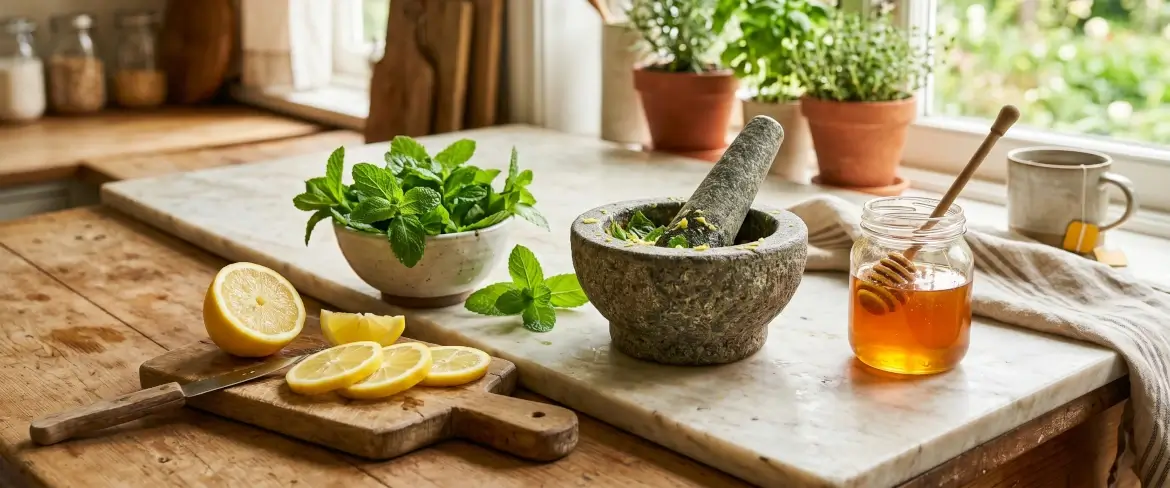
Before we move on to how to prepare a perfect mug of this aromatic beverage step by step, let's clarify an important issue of nomenclature. We often use the terms mint tea and mint infusion interchangeably. Is this correct? It turns out that in everyday, colloquial use – absolutely yes!
From a botanical and professional point of view, the word "tea" is reserved exclusively for infusions prepared from the leaves of the tea bush (Camellia sinensis) – that is, classic black, green, white, or oolong tea. Therefore, when you pour boiling water over just dried mint leaves, without any other additions, technically speaking, you are preparing an herbal mint infusion. However, because in our culture it has become customary to refer to brewing herbs as making tea, the colloquial name mint tea has permanently entered our vocabulary. In this article, we treat both these terms as one and the same, wonderfully refreshing and caffeine-free drink!
Mint tea – what is it good for and when is it best to reach for it?
You already know how broad and versatile the effects of mint tea can be. Because a pure mint infusion is 100% herbal, it does not contain theine, which is the tea equivalent of caffeine. This is a huge advantage! It means that you can reach for it at any time of the day without any worries – even right before bed. When will it work best and in what moments does mint show its action most effectively? Here is a quick cheat sheet:
- ✔️ after a hearty meal (especially in the afternoon): this is an absolutely ideal moment for a cup of strong peppermint tea. It will quickly bring relief to an overfed stomach, stimulate digestion, and prevent afternoon or evening bloating;
- ✔️ during an intense workday: the scent of menthol wonderfully refreshes the mind. Drinking a warm infusion during a break from duties will help you reduce stress and muscle tension, without causing any feeling of sleepiness;
- ✔️ in the evening, before going to sleep: a pure, herbal infusion does not stimulate, which is why it is a great choice for a calming evening ritual. It will relax your body, cut you off from an excess of stimuli, and facilitate peaceful sleep;
- ✔️ when you’re feeling a bit under the weather: on chilly autumn evenings, a mug of hot, steaming mint tea will act as a homemade, natural inhalation. It will warm you up from the inside and clear your tired airways.
📌 Summary:
Regardless of whether you say "infusion" or "tea", by pouring boiling water over pure, dried mint, you get the same safe and caffeine-free elixir. It is a universal beverage that adapts to your needs – in the morning it will refresh your mind, after dinner it will save your stomach, and in the evening it will prepare you for sleep.
A mint infusion is an ideal choice when you want to relax, because it naturally does not contain caffeine. And what if you need a solid energy boost in the morning, but you don't fancy coffee or yerba mate? Then classic teas come to the rescue! Check out our guide: Does tea stimulate? Which tea has the most caffeine and which works the strongest?
How to brew mint? Methods of preparing a mint infusion and mint tea
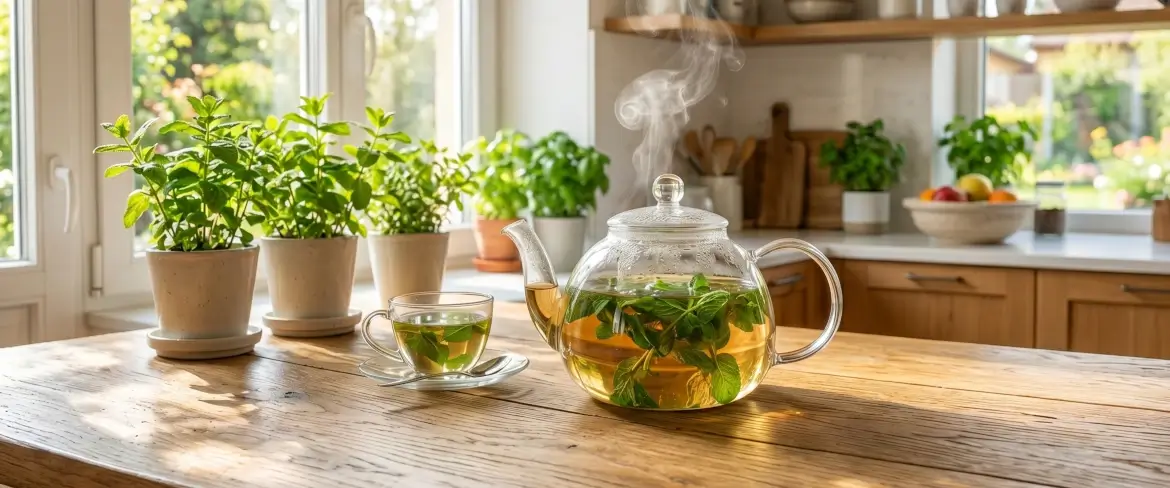
It is time to move on to the most pleasant part – preparing a mint infusion. It might seem that there is no philosophy in this: just pour boiling water over the herbs and it is ready, right? Well, not exactly! Proper brewing is the key to success. It is exactly on this process that whether the properties of mint tea will fully reveal their health benefits, releasing the maximum amount of precious essential oils and a deep, expressive flavour, depends. See how to do it flawlessly to extract the best from these inconspicuous leaves.
🍵 How to prepare an infusion of dried mint step by step?
Dried herbs are the most versatile, durable, and frequently chosen form. Because the drying process deprives the leaves of water, the herb is highly concentrated. Thanks to this, just a small amount is enough to get a mint infusion with an intense flavour and effect. Here is a proven guide on how to brew it correctly:
- 🌿 optimal proportions: pour 1-2 teaspoons of dried mint into a mug. If you care about a stronger antispasmodic effect after eating, go ahead and put in two teaspoons;
- 🌿 water temperature: pour boiling water over the dried herbs (temperature around 95-100°C). High temperature is necessary to quickly "open" the dried leaves and release their active substances;
- 🌿 brewing time: wait for 5 to 10 minutes. The longer you brew, the stronger and more intense flavour you will achieve;
- 🌿 golden rule: brew under a cover! This is absolutely the most important step, which many people forget about. Essential oils (including the main hero, menthol) are extremely volatile. If you do not cover the mug with a saucer or a special lid, most of them will evaporate into the air along with water vapour. Your infusion will then smell beautiful throughout the room, but much fewer beneficial properties will remain in the mug itself.
💡 A small tip: Wondering what is best to prepare such an infusion in? Dried mint can be quite fluffy and needs space to fully develop its aroma, and its finer, crushed fractions require a dense strainer. If you are looking for the perfect equipment, be sure to check out our guide: Tea brewing accessories – which ones to choose?, from which you will learn what kind of herbal infuser will work best for you!
Fresh mint tea – a refreshing alternative
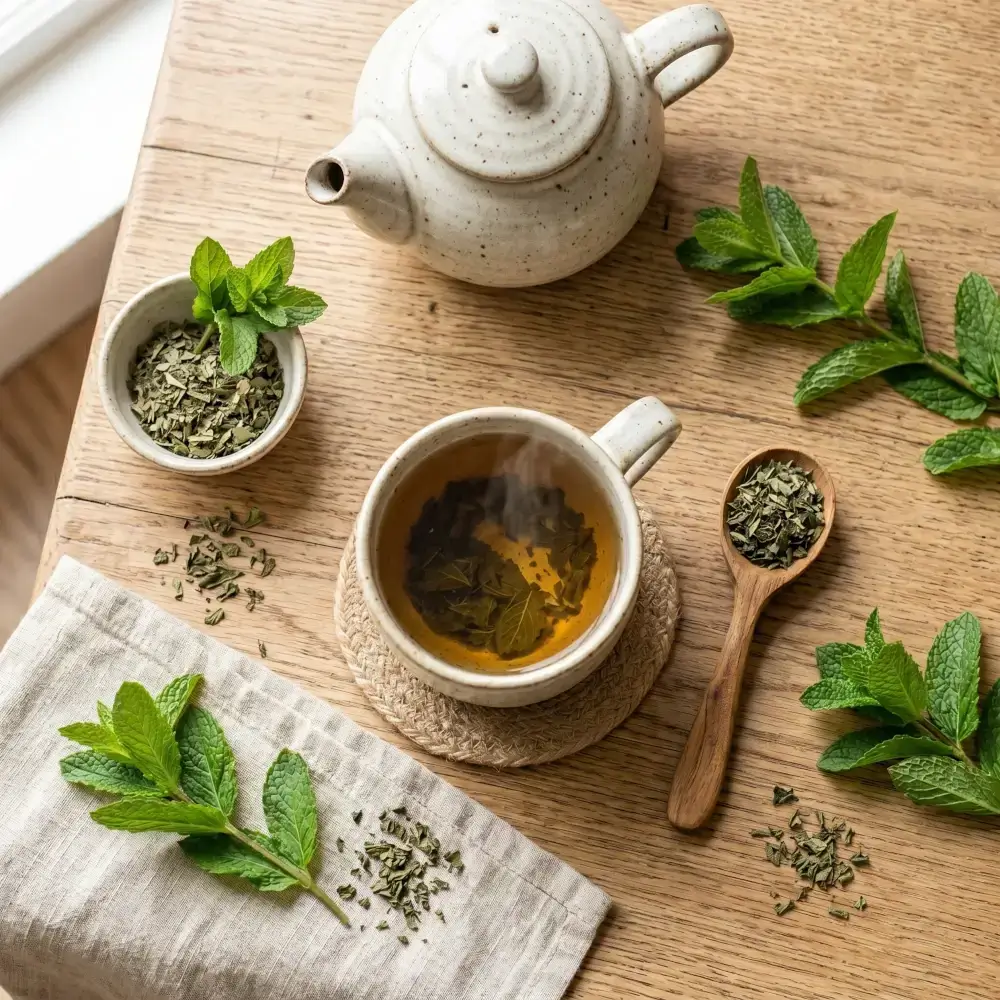
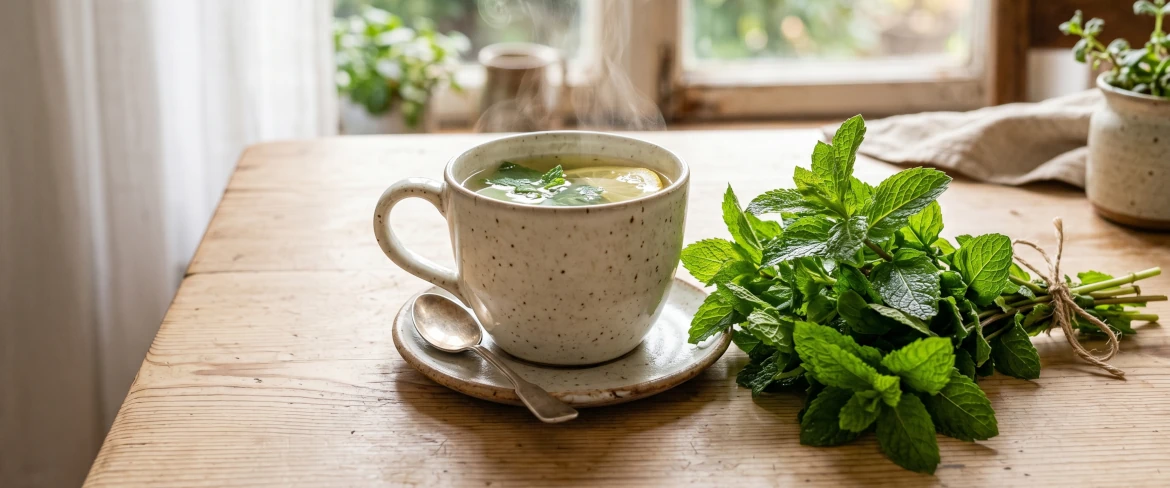
And what if a live plant proudly grows on your windowsill, balcony, or in your garden? Mint tea prepared from fresh leaves is a completely different, incredibly refreshing experience! Compared to dried herbs, an infusion made from a fresh plant is much lighter, crisper, naturally sweeter, and devoid of deep, earthy notes. For this reason, it is perfect for waking up in the morning or as a refreshing base for cold, chilled drinks.
How to brew fresh mint? Since the leaves straight from the bush consist largely of water, they are less concentrated. You must use much more of them than in the case of dried herbs – go ahead and throw a whole, solid handful into the mug! Before you pour hot water over them, it is worth gently crushing them in your hands or slightly tearing them with your fingers. This simple procedure will damage the structure of the leaves and help to release the juices and delightful aroma hidden inside them into the infusion more quickly.
💡 Fun fact: Have you ever heard of Moroccan mint tea (so-called Maghrebi mint tea)? In North African countries, drinking an infusion with fresh mint is a real ritual, an art form, and an expression of the greatest hospitality. The base of this beverage is Chinese Gunpowder green tea, to which whole bunches of fresh leaves are added (usually it is mild spearmint) along with... huge amounts of sugar. What's more, the whole thing is poured into small, decorative glasses from a special teapot held very high in the air. All this is to create a characteristic foam on the surface of the sweet, minty tea!
What can you do with mint? Culinary uses and more
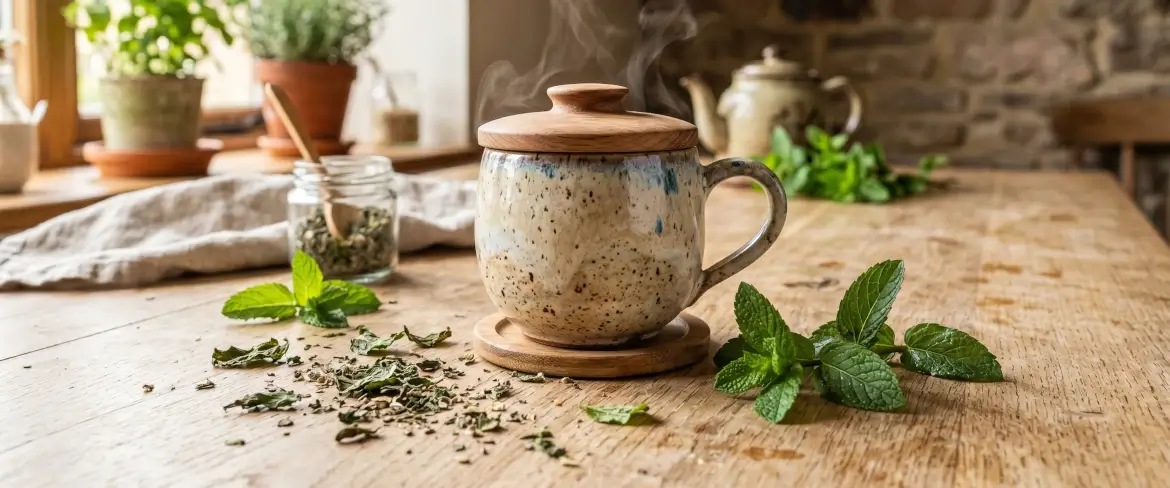
So far, we have focused on drinking a pure, exclusively herbal infusion. But what to do with mint if you fancy a slightly more complex taste experience? It turns out that this aromatic herb is not only a great soloist but also a brilliant team player! It perfectly cuts through flavours, adds crispness, and boosts the character of other drinks. See what is worth combining it with!
Yerba mate with mint, classic teas and herbal blends
Adding just a few leaves of dried or fresh mint to your favourite black or green tea can completely change its profile. It also blends wonderfully with other herbs – combining mint with chamomile, lemon balm, or lemongrass are classics that smell insanely good and relax. If you like such ready-made, perfectly balanced fusions, we recommend you try the unique blends from the Mary Rose brand:
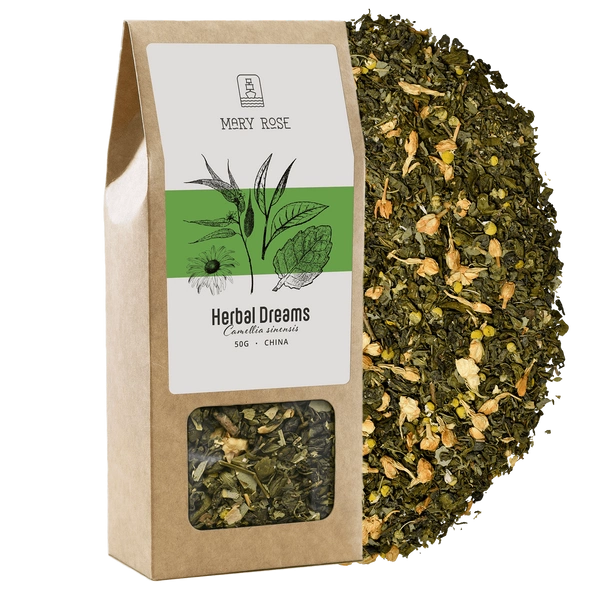
Mary Rose Herbal Dreams
Gunpowder green tea combined with relaxing chamomile, lemon balm, and mint. True herbal soothing with a hint of eucalyptus and jasmine.
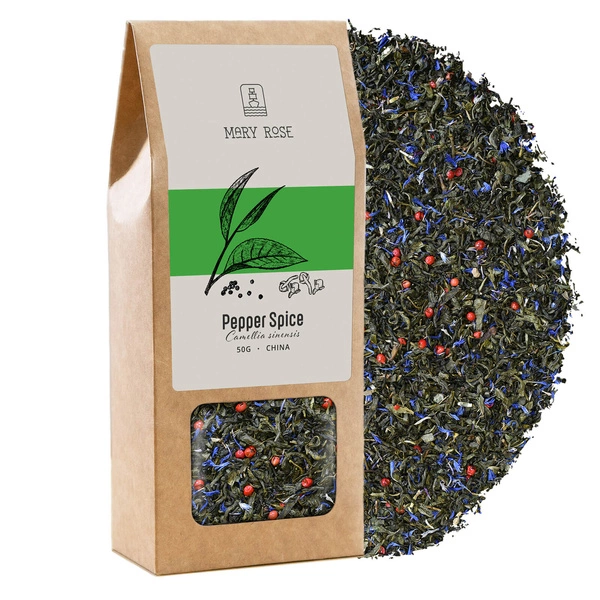
Mary Rose Pepper Spice
An intriguing base of Yunnan green tea, broken with the sharpness of pink pepper and cloves, balanced by the pleasant, cooling menthol from peppermint.
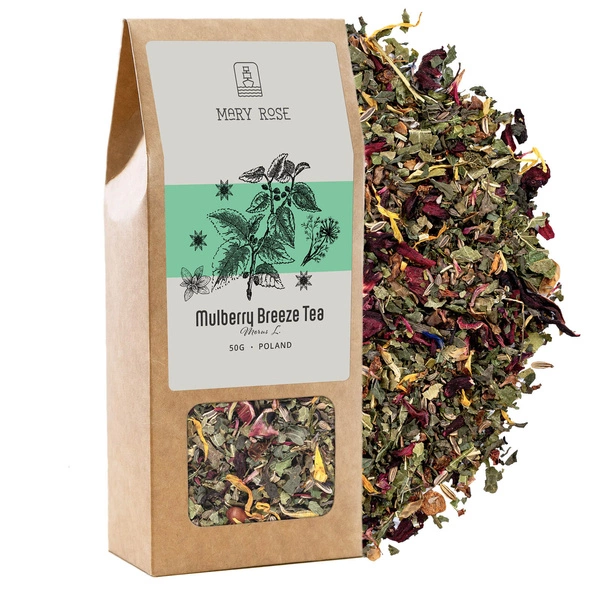
Mary Rose Mulberry Breeze
A caffeine-free, herbal-fruity tea based on dried mulberry leaves with a distinct addition of mint, as well as strawberry and chokeberry fruits.
Speaking of floral and herbal additions to tea, one of the most elegant and relaxing combinations is mint in a duet with jasmine (as in the Herbal Dreams blend mentioned above). If you are intrigued by this unique, floral aroma, be sure to read our blog post: Jasmine tea – properties and effects. How to brew aromatic jasmine tea?
And what about Paraguayan gold? Yerba mate with mint is simply a perfect marriage and the combination most frequently chosen by mate tea lovers. Why? The strong, earthy, and smoky flavour of classic yerba mate is perfectly balanced by crisp, cooling menthol. Such a fusion not only tastes sensational and masks the natural bitterness – which beginners will certainly appreciate – but also strengthens the stimulating effect. Yerba mate gives an energy boost, and mint maximally refreshes and sharpens concentration. In our shop you will find a huge selection of such blends:
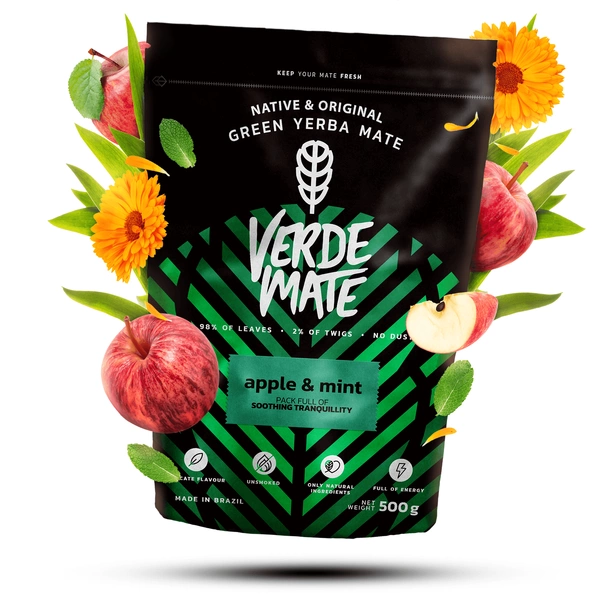
Verde Mate Green Apple & Mint
Mild Brazilian yerba mate, juicy, sweet apple, lemongrass, and peppermint. An absolutely delicious, fruity-herbal harmony!
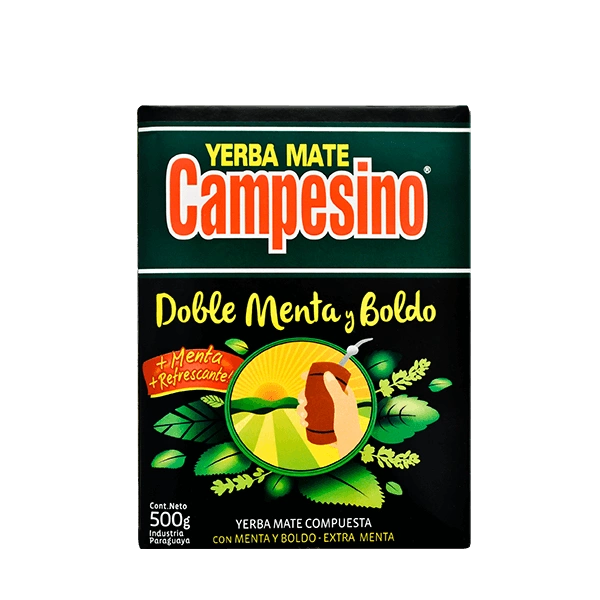
Campesino Double Menta
A real, double mint hit! Strong Paraguayan dried leaves enriched with boldo herb and a very intense, menthol finish.
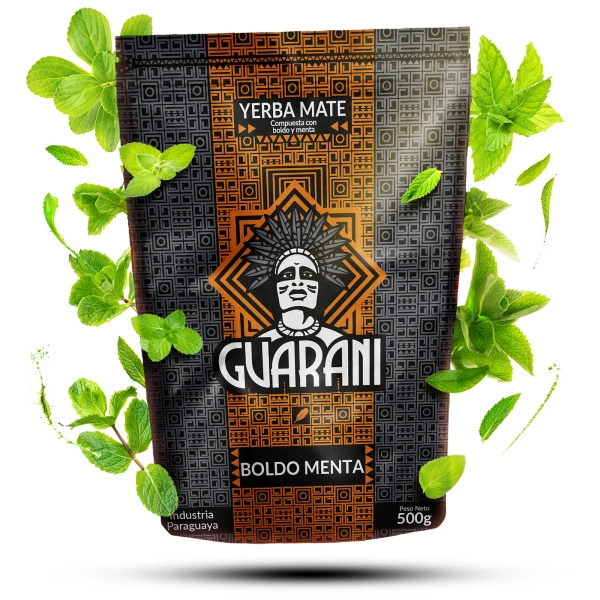
Guarani Boldo Menta
Something for fans of Paraguayan power! Expressive yerba mate with the addition of mint and boldo herb, known for its strong properties supporting stomach function.
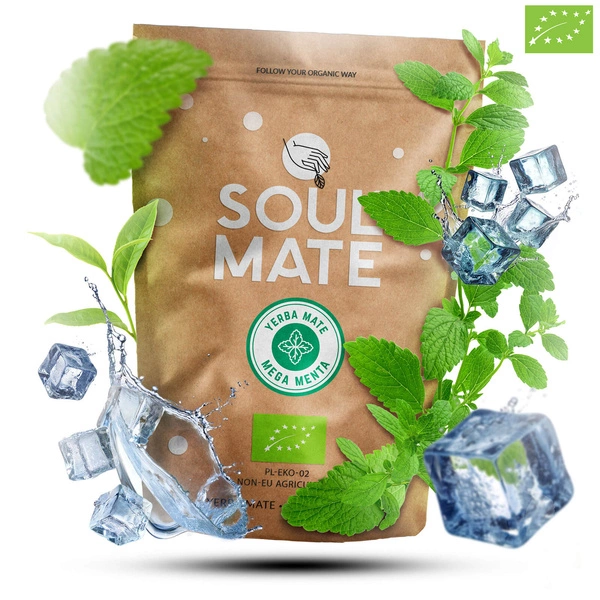
Soul Mate Mega Menta
Organic, hot-air dried (not smoked!) yerba mate combined with a natural, powerful mint-menthol aroma.
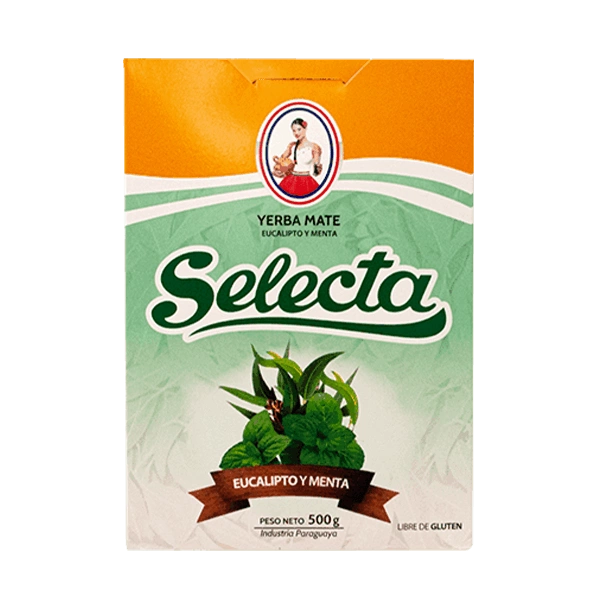
Selecta Eucalipto y Menta
An interesting proposal from Paraguay, combining classic, finely milled yerba mate with a double dose of coolness: the aroma of mint and refreshing eucalyptus.
Yaguar Menta Limon
A classic, incredibly refreshing combination of long-seasoned yerba mate with the citrusy note of lemongrass and the coolness of peppermint.

Cold drinks and culinary experiments with mint
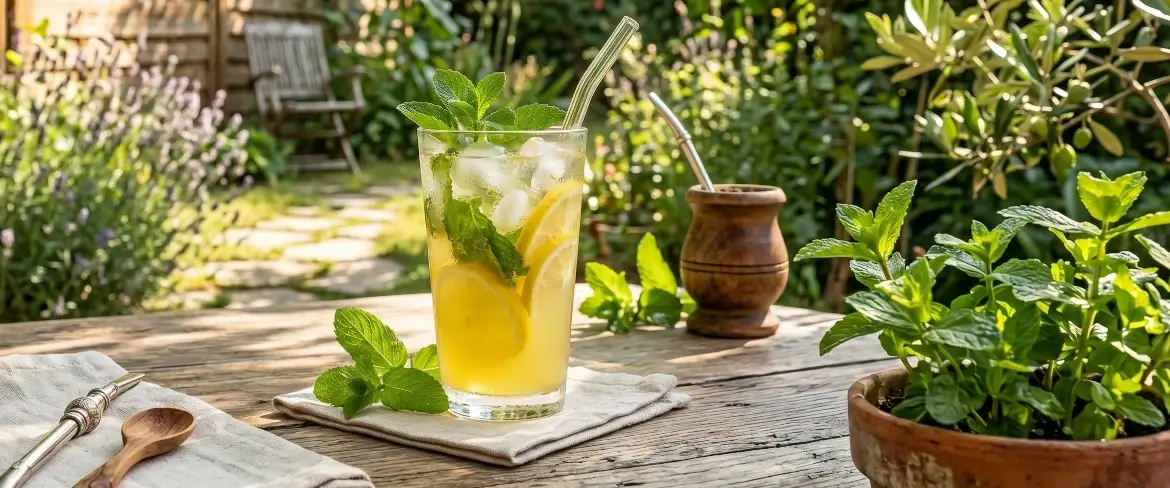
When hot summer days arrive and the heat pours from the sky, do you wonder what to do with mint growing in your garden? The answer is simple – throw it into a jug of cold water! Mint wonderfully releases its oils also at low temperatures. Cold water with mint, a bit of lemon, and honey is the best homemade lemonade. In turn, yerba mate poured with ice-cold water (the famous tereré) – necessarily with a huge amount of ice cubes and fresh mint leaves – is a drink that helps survive any heatwave in Paraguay and Europe.
Let's not forget about the kitchen either. Mint tea shows fantastic medicinal properties, but adding leaves to dishes is pure poetry of flavour! What to combine mint with on a plate?
- ✔️ It perfectly suits dark chocolate desserts – a combination straight out of popular British chocolates.
- ✔️ It brilliantly refreshes heavy salads (e.g., Lebanese tabbouleh with bulgur wheat and vegetables) and yoghurt dips (like Greek tzatziki).
- ✔️ In the form of mint sauce, it is a classic addition to roasts and meat dishes (especially in Arabic and British cuisine).
Does mint have contraindications?
Mint is a wonderful, natural herb, but as with any plant rich in active substances – it is not for everyone. Although for the vast majority of us, daily drinking of mint infusions is 100% safe and incredibly healthy, there are a few situations in which it is worth exercising caution and carefully observing your body's reactions.
Who should be careful with this herb?
- ❌ People suffering from heartburn and acid reflux: this is absolutely the most important contraindication. As we mentioned earlier, menthol (contained mainly in peppermint) has strong relaxing and antispasmodic properties. Unfortunately, it relaxes not only the smooth muscles of the intestines but also the lower oesophageal sphincter. As a result, stomach contents can more easily flow back into the oesophagus, which intensifies unpleasant burning and heartburn. If you are prone to such ailments, avoid strong peppermint infusions after eating – in your case, a much safer choice will be mild spearmint.
- ❌ People with hypersensitivity and allergies: although allergy to plants from the Lamiaceae family is rare, hypersensitivity to menthol itself happens a bit more often. In people with a particularly sensitive digestive system, drinking a very strong mint infusion can paradoxically cause stomach irritation, and when applied externally (e.g., in the form of oil) – lead to skin redness.
- ❌ Small children: strong, intense essential oils contained in peppermint can be simply too invasive for the bodies of very small children. For the youngest ones, much milder infusions are recommended, e.g., chamomile, fennel, or delicate spearmint.
It is worth remembering one more universal rule of herbalism: too much of a good thing! Herbs, even though completely natural, have a real, biological effect on our organs. Drinking 1 to 3 mugs of mint tea a day is a safe, optimal dose that will perfectly support your well-being. However, if you start drinking strong infusions by the litre and replace plain water with them, instead of bringing relief, over time they may irritate the gastric mucosa.
📌 Worth remembering:
Mint is a fantastic ally for health, but always listen to your body! If after drinking classic mint tea you feel any discomfort in your stomach or an exacerbation of heartburn, simply take a break, reduce the amount of loose dried herbs used, or swap strong peppermint for milder herbs.
Why it is worth using mint every day
We have reached the end of our aromatic journey! As you can see, mint is much more than just a popular addition to chewing gum or a quick rescue after a meal that is too large. It is an incredibly versatile plant that, thanks to its rich chemical profile, can provide wonderful, one hundred percent natural support for your body every day.
Regardless of whether you choose intense peppermint or the milder spearmint version, you will appreciate the properties of mint on many levels. On the one hand, it will look after your digestive comfort; on the other – thanks to its cooling menthol content – it will pleasantly refresh your mind, facilitate concentration, and reduce everyday tension. Most importantly, preparing such a homemade elixir takes just a few moments! A delicious mint tea drunk in the afternoon, a cool mint infusion with ice on a hot day, or perhaps a stimulating yerba mate with a minty accent in the morning? The possibilities are almost endless, and each of them is a small step towards better well-being.
We hope this post has inspired you to undertake culinary and tea experiments. Do not be afraid to combine flavours, test different varieties, and discover your own favourite proportions. Invite this amazing herb into your kitchen for good and enjoy its beneficial effects every day. Everything you need to start this refreshing adventure can be found on our virtual shelves!
Brew your favourite mint infusion, take a deep breath, and feel the natural refreshment on your own skin – cheers!
❓ FAQ – most frequently asked questions about mint
1. What is mint good for?
2. What are the properties of mint?
3. Is mint healthy?
4. Mint tea – what is it good for?
5. How often can you drink mint tea?
6. Is fresh or dried mint better?
7. What to do with mint?
Sources of information:
- Wikipedia: Mentha.
- H. Zhao et al., Peppermint essential oil: its phytochemistry, biological activity, pharmacological effect and application, Biomedicine & Pharmacotherapy, 2022.
- G. Mahendran, L. U. Rahman, Ethnomedicinal, phytochemical and pharmacological updates on Peppermint (Mentha × piperita L.) – A review, Phytotherapy Research, 2020.
- K. Kałwa et al., The effect of storage conditions of dried peppermint (Mentha piperita L.) on the antioxidant properties of the infusions obtained and the content and composition of essential oils, ACTA Scientiarum Polonorum Technica Agraria, 2017.
Recommended

Pajarito Menta Limon 0,5kg

Guarani Menta Limón 0.5kg
