
Mary Rose matcha – Japanese tradition, types and modern variants
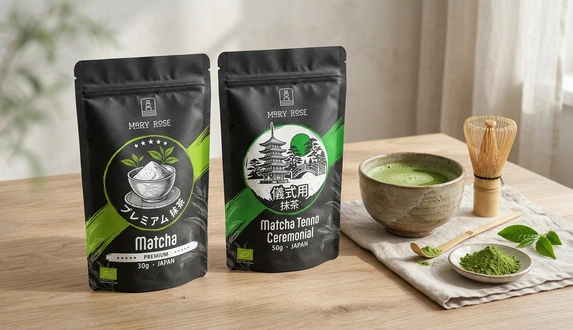
An intensely green powder, a bamboo whisk and a bowl in which a smooth, creamy foam forms – this is matcha in its most classic form. The same tea is also used in lattes, smoothies, porridge and cakes. That is why the choice does not end with the question of whether to reach for matcha, but which one. Japanese or Chinese, culinary, premium or ceremonial grade, or perhaps a mild latte blend? In this article, we take a closer look at the Mary Rose brand and show you which types of matcha you will find in its range.
We start with the basics: what matcha is, how it is made and why it is so closely linked to the Japanese tea ceremony. Then we introduce Mary Rose matcha – from Japanese matcha with organic certification, through Chinese matcha in three grades, to flavoured latte blends and colourful alternatives without tea. At the end, we suggest how to choose a product to suit your needs, how to prepare it and what to look at in reviews. Good matcha is not one particular pack, but one that suits the way you want to drink it.
Table of contents:
- Matcha – what is it and where does it come from?
- Mary Rose – a brand of products inspired by nature
- Mary Rose matcha
- How do I choose Mary Rose matcha?
- How do I prepare Mary Rose matcha?
- Mary Rose matcha reviews – what should you check before buying?
- Mary Rose matcha in a traditional and a modern form
Matcha – what is it and where does it come from?
Matcha is green tea ground into a very fine powder. It comes from the same plant as black, white and classic green tea – the tea bush Camellia sinensis. What sets it apart is the way it is grown, processed and served: the powder is not brewed in a strainer, but mixed into water or milk and drunk whole. The Japanese word matcha simply means “powdered tea”. Although it is associated mainly with Japan, this way of drinking tea has its roots in China. You can read more about the taste and history of this drink in our article Matcha from A to Z, and ready-made products are in the matcha category.
In recent years, matcha has gone far beyond Japanese tea houses. It is an ingredient in lattes, smoothies, ice cream and baked goods, and its intense green colour looks good in photos. However, its popularity means that products with very different origins, flavours and uses are sold under the name “matcha”. That is why it is worth knowing where it came from and how it is made.
Matcha in the Japanese tea tradition
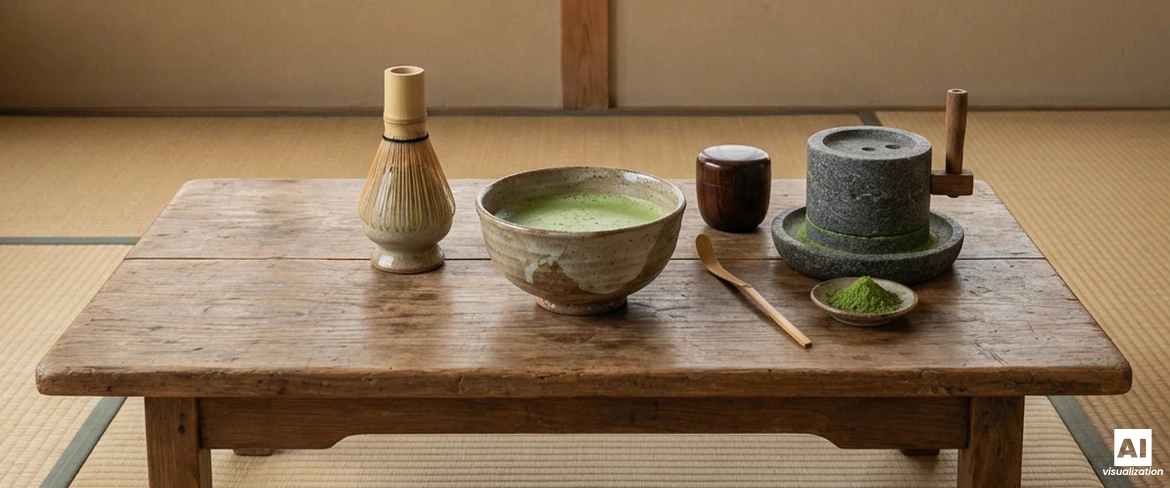
Powdered tea was brought to Japan from China by Buddhist monks. The monk Eisai is most often mentioned here: around 1191 he brought this way of preparing tea from China, and later described it in a separate work. Over time, matcha became the heart of the Japanese tea ceremony, called chanoyu or chadō, meaning “the way of tea”. The ceremony is more than preparing a drink. It is about focus, simplicity, the order of gestures and respect for the guests.
Several traditional tools are used to prepare matcha:
- ➡️ chasen – a bamboo whisk for whisking the powder with water,
- ➡️ chawan (matchawan) – a wide bowl in which the drink is prepared and served,
- ➡️ chashaku – a bamboo scoop for measuring the powder.
Two kinds of drink are prepared in the ceremony. Usucha, meaning “thin tea”, is lighter and frothy. Koicha, meaning “thick tea”, uses much more powder for the same amount of water and has the consistency of a thick syrup. For koicha, the most delicate matchas are usually chosen, because in such a concentrated drink every bitter note is clearly noticeable. We explain which matcha accessories to start with in the article Matcha accessories – what to buy to start.
How is matcha made?
The production of matcha begins on the plantation. Usually two to three weeks before harvest, the tea bushes are shaded with mats or special covers. Limited access to light makes the leaves a darker green and milder in flavour – they contain less bitterness and more of a sweetish, broth-like note, which the Japanese call umami.
After harvest, the young leaves go through several stages:
- ✔️ steaming – a short treatment with steam stops oxidation and keeps the green colour,
- ✔️ drying – the leaves are dried without rolling, as with many other green teas,
- ✔️ cleaning – stems and hard leaf veins are removed; the resulting dried leaf is called tencha,
- ✔️ grinding – tencha is ground into a very fine powder, traditionally in slow stone mills.
The fine powder is no accident. The smaller the particles, the easier they are to mix into water and the smoother the drink – with no lumps and no feeling of sand on the tongue. Which leaves the powder was made from and how finely it was ground also determine whether it works better in a bowl with water, or in lattes and desserts.
💡 Fun fact: The way of grinding affects not only the fineness of the powder, but also its aroma. Scientists compared matcha ground in three ways: in a cyclone mill, in a bead mill and in traditional stone mills. Each method gave a different aroma profile – the powder from the cyclone mill had a more distinctly leafy smell, and the one from the stone mills had more distinct roasted notes.
💬 Scientific source: Y. Huang et al., Effect of three milling processes (cyclone-, bead- and stone-millings) on the quality of matcha: Physical properties, taste and aroma, Food Chemistry, 2022.
How is matcha different from classic green tea?
The most important difference is simple: with ordinary green tea, you drink an infusion and the leaves stay in the strainer. With matcha, you drink the whole powdered leaf suspended in water. That is why the drink is thicker, more opaque and usually more intense in flavour.
The preparation itself is also different. Loose-leaf green tea is covered with hot water and left for a few minutes. Matcha is measured out with a scoop, put into a bowl, covered with a small amount of water and whisked vigorously until a fine foam appears on the surface. The form matters too: matcha is easy to add to milk, a smoothie or a cake, which you cannot do with dried leaves. You will find a step-by-step comparison of the two drinks in the article Green tea vs matcha – how do they differ.
If you want to prepare matcha the traditional way, start with a ready-made matcha set with a whisk and a scoop.
View matcha setsSo matcha is the same plant as green tea, but a completely different experience. Flavour, colour and consistency depend largely on how the bushes were grown, when the leaves were harvested and how finely they were ground. These are exactly the features that distinguish the individual products of the Mary Rose brand, which we introduce in the next section.
Mary Rose – a brand of products inspired by nature
Mary Rose is a brand that focuses on tea and plants for brewing. In its range, you will find loose-leaf teas from around the world, dried flowers and herbs, striking flowering teas and, above all, a wide choice of matcha. The common denominator is a simple idea: plants in a simple, clear form that can be brewed traditionally or used in the kitchen. Some products, including Japanese matcha, have organic farming certification. You can find all the brand's products available in our shop on the Mary Rose page.
This brand is particularly convenient for matcha lovers. Under one name, you can compare matcha from Japan and China, different quality grades, ready-made latte blends and even colourful powders without tea. This makes it easier to compare descriptions, pack sizes and prices side by side, and then choose what really suits your habits.
What products does Mary Rose offer?
The brand's range can be divided into several main groups:
- ✔️ matcha – classic green matcha from Japan and China in culinary, premium and ceremonial grades, ready-made matcha latte blends and colourful powders from the Matcha Alternative line,
- ✔️ matcha sets – matcha together with a bamboo whisk, a scoop and a bowl, or in an elegant gift pack,
- ✔️ loose-leaf teas – green, black, white, fruit, rooibos or pu-erh, as well as spiced tea blends,
- ✔️ edible flowers and herbs – including rose petals, hibiscus, chamomile, lavender, marigold and cornflower, for infusions,
- ✔️ flowering teas and tea bombs – teas that change spectacularly in a teapot or mug when covered with water.
However, Mary Rose matcha takes up the most space in the range. Besides the products we describe in the next section, the brand also offers hojicha – roasted green tea in powder form – and large packs of matcha: from 200 g up to 1 kg of Japanese organic matcha. Such pack sizes are useful when matcha is a regular part of your kitchen or when you prepare it for more people. If you are looking for something as a gift, tea bombs are also an interesting option. We explain how they work in the article Isomalt tea bombs.
Matcha is only part of the brand's range – alongside it you will find loose-leaf teas, edible flowers and flowering teas.
View Mary Rose productsMary Rose matcha
Mary Rose matcha means dozens of products, and it is easy to lose track of them when you only look at photos of the packs. That is why we divide them into four groups. The first two are classic green matcha – from Japan and from China – in different quality grades. The third is ready-made latte blends, in which matcha meets a sweet and milky ingredient. The fourth is colourful powders from the Matcha Alternative line, which have only the way of preparation in common with tea. For each group, we suggest what the given product is best for.
Japanese matcha from Mary Rose
Japanese matcha tea from Mary Rose comes from two regions. Culinary and premium matcha are made in Kagoshima Prefecture on the island of Kyushu, and ceremonial Tenno in Shizuoka Prefecture on the island of Honshu, at the foot of Mount Fuji. All three have organic farming certification and only one ingredient: powdered green tea. They differ in their intended use, and this is also visible in the pack sizes: you can buy culinary matcha in a pack of up to 1 kg, and premium and ceremonial matcha in smaller ones, because they are usually drunk in their pure form, in small portions. You will find all the variants in the Japanese matcha category.
Organic Japanese matcha from Kagoshima with a vivid colour and umami notes. It works well in matcha lattes, smoothies, ice cream and cakes. Pack size 100 g, and for people who use it every day – also 200 g, 500 g and 1 kg.
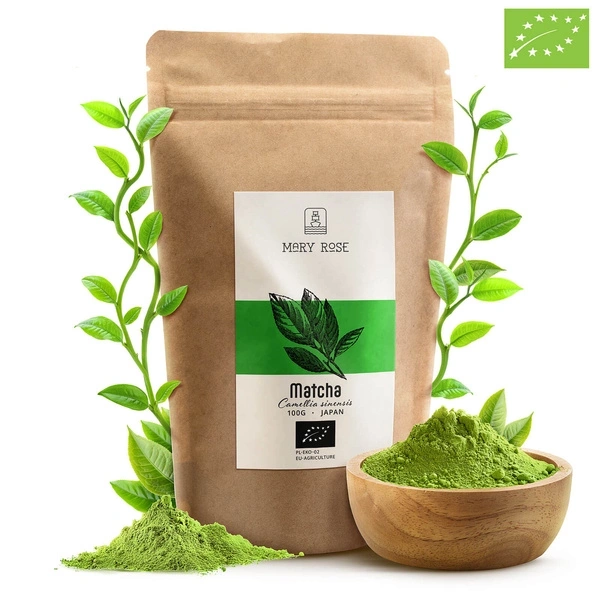
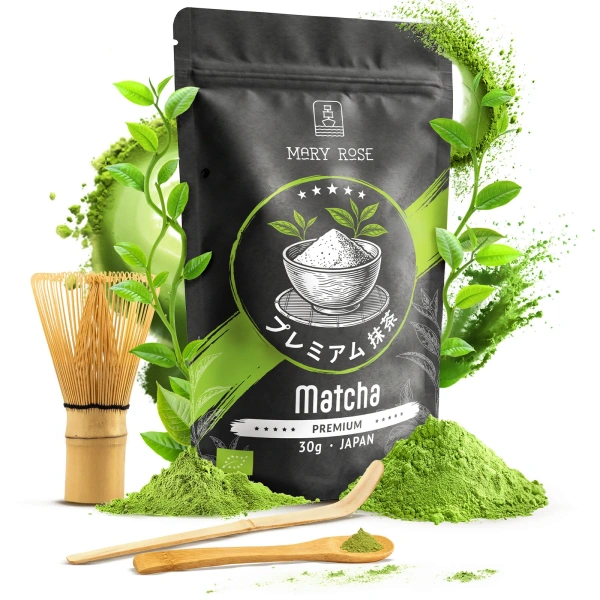
Organic Premium matcha from the first, spring harvest. It has a vivid green colour, a smooth texture and a delicate, slightly sweetish flavour without a noticeable bitterness. Good both with plain water and in lattes. Pack sizes 30 g and 100 g.
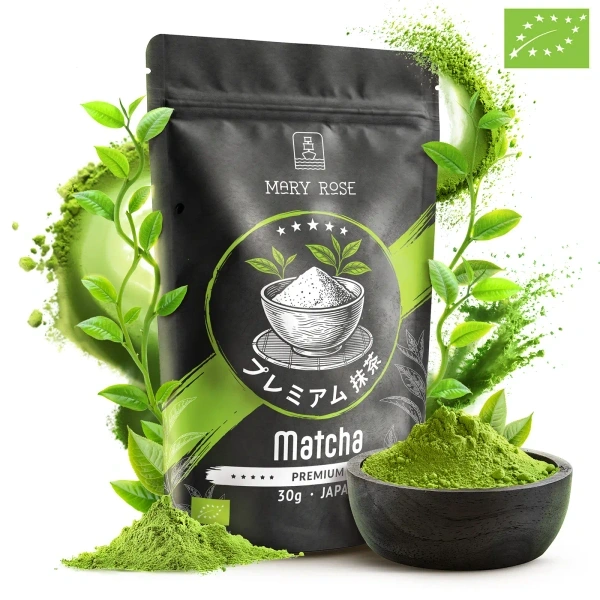
Matcha Tenno from Shizuoka, also from the first harvest. Its pure, sweetish flavour without bitterness means it is best drunk with plain water – as lighter usucha or thick koicha. Pack sizes 30 g and 50 g.
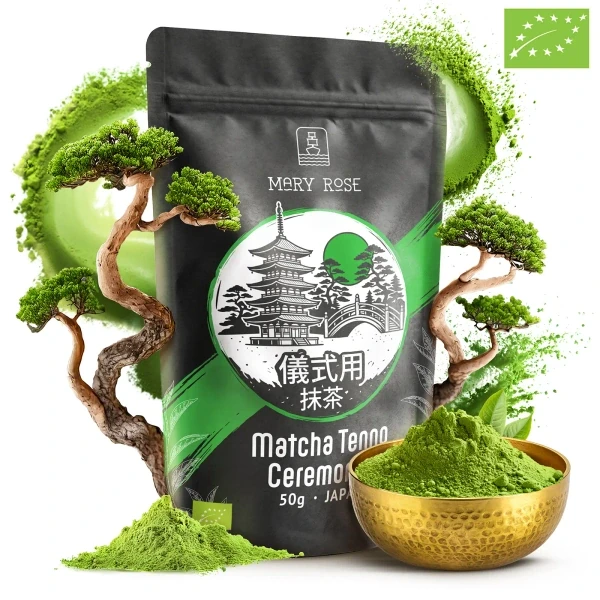
The name Tenno means “emperor” in Japanese and reflects well the place of this matcha in the brand's range. It is a choice for people who already know the taste of matcha and want to try it in its most traditional form.
Chinese matcha from Mary Rose
Chinese matcha from Mary Rose comes from the area around Hangzhou in eastern China, and its ceremonial variety from the Jingshan region. As we wrote in the first section, it was in China that the custom of whisking powdered tea was born, which later reached Japan. Chinese Mary Rose matcha does not have organic certification, but it has a wide choice of pack sizes: from 100 g up to 1 kg, depending on the grade. The leaves for all three grades are harvested in spring. You will find the full range in the Chinese matcha category.
Chinese culinary matcha, ground in stone mills. It has an intense flavour with a distinct astringency that does not disappear in cakes, ice cream or lattes. Pack sizes from 100 g to 1 kg. You can also find Chinese matcha in a metal tin.
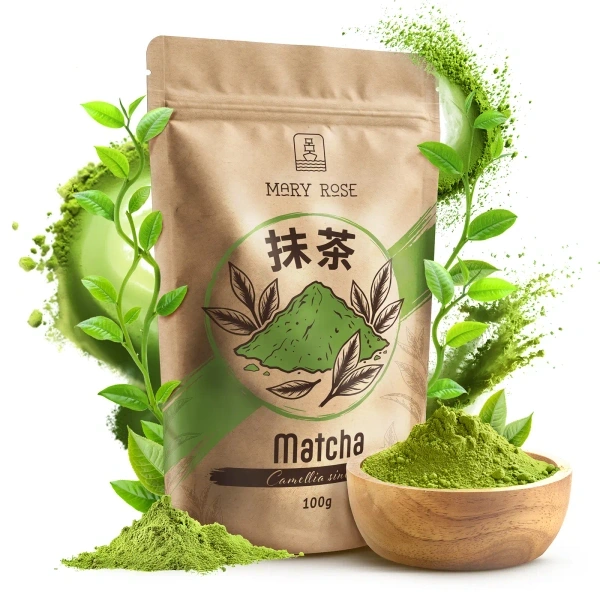
Chinese Premium matcha from young leaves with an intense green colour and a smooth, full flavour without an unpleasant bitterness. The product description presents it as a compromise between culinary and ceremonial matcha. Pack sizes from 100 g to 1 kg.
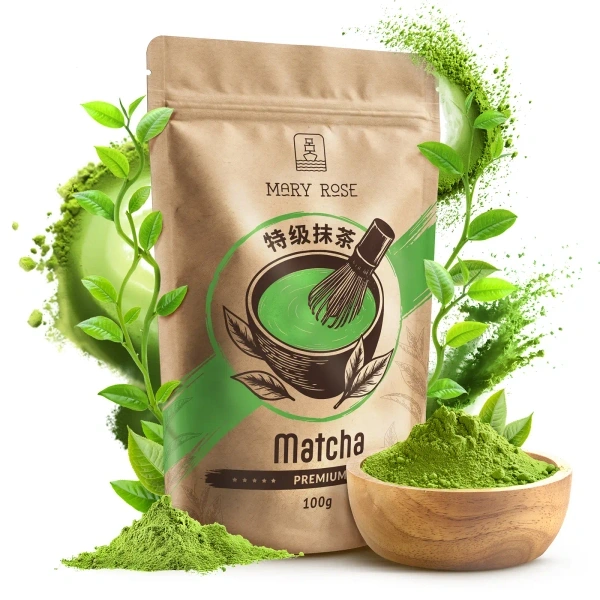
Chinese ceremonial matcha from the Jingshan region. Mild, slightly sweetish, full of umami, with a creamy foam and no sharp bitterness. It tastes best the traditional way, with plain water. Pack sizes 100 g and 200 g.
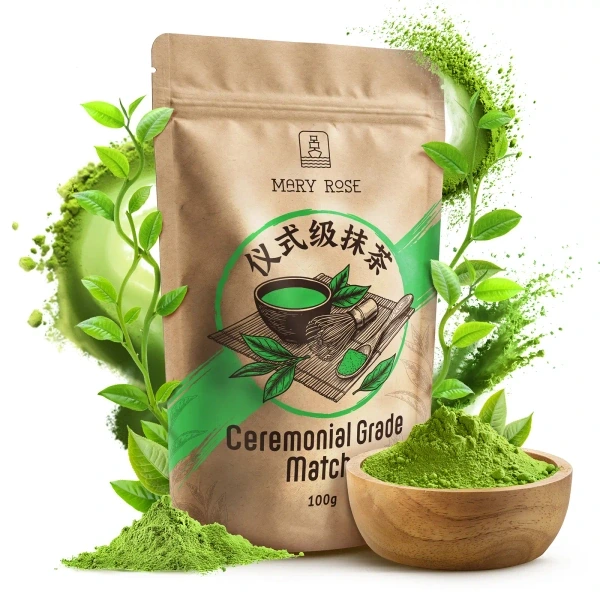
Larger pack sizes of Chinese matcha are good news for people who add it to baked goods, morning smoothies or lattes for the whole family. With regular use, a large pack simply lasts longer.
Matcha latte and flavoured variants
If pure matcha with water seems too strong to you, ready-made blends for matcha latte are a good start. Mary Rose offers two kinds of such products. Matcha Latte BIO is a combination of Japanese matcha with coconut sugar – with no milk in the ingredients, so you choose whether to add cow's milk or a plant-based drink. The three flavoured versions – strawberry, coconut and mango – contain milk powder, so you only need to mix them with water, cold or warm. All of them give a milder, dessert-like drink in which matcha is one of the ingredients, not the main feature. We describe recipes and serving ideas for each of them in the article Mary Rose matcha latte – flavoured matcha with fruit and coconut.
Matcha Latte BIO: 80% coconut sugar and 20% Japanese matcha. Coconut sugar gives the drink a sweetness reminiscent of caramel. One teaspoon per cup of milk is enough. Pack sizes 30 g and 100 g.
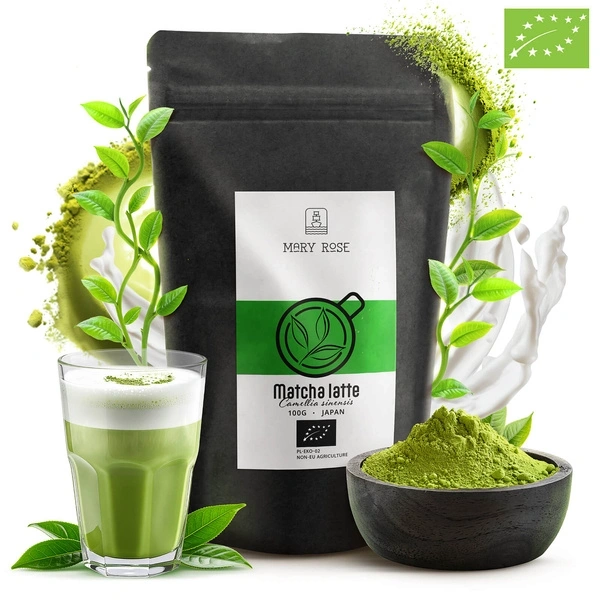
Strawberry Matcha Latte with freeze-dried strawberry. The fruity flavour combines here with the caramel-like sweetness of coconut sugar.
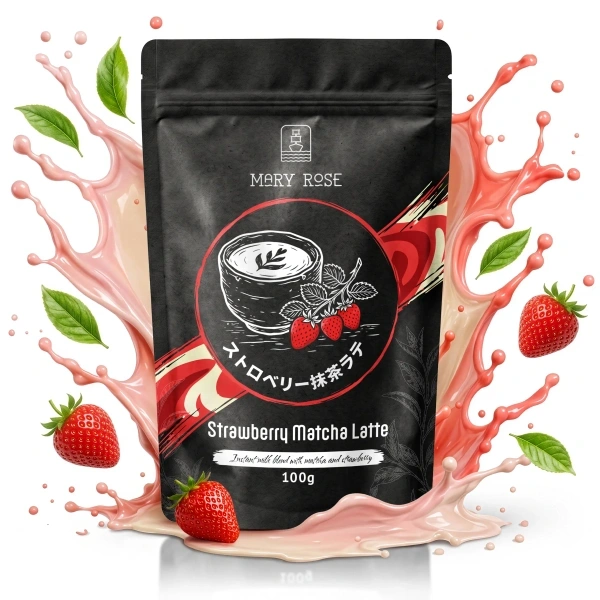
Coconut Matcha Latte with coconut milk powder. The exotic touch of coconut complements the umami notes of matcha well.
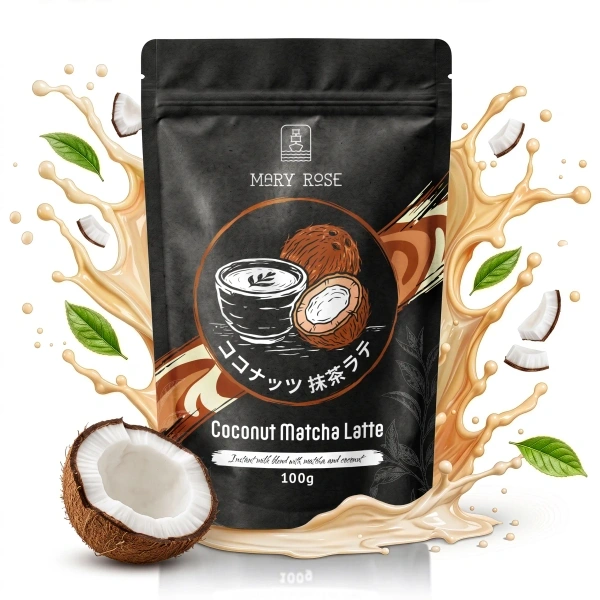
Mango Matcha Latte with freeze-dried mango. The delicately grassy profile of matcha combines with the tropical taste of the fruit.
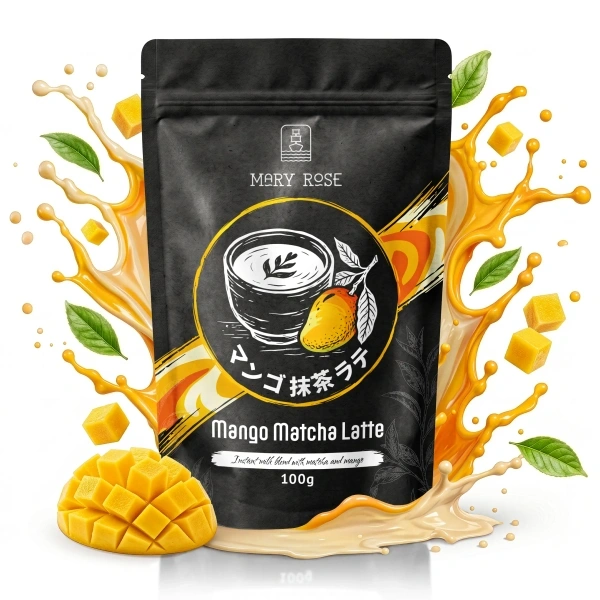
You can also prepare the flavoured blends cold – just mix the powder with cold water and add ice. It is a convenient option for warm days or when you do not have a milk frother to hand.
Colourful alternatives to matcha
The last group is products from the Matcha Alternative line. Although they have the word “matcha” in the name, they are not tea: they do not contain leaves of the tea bush and have no caffeine. They are powdered fruit or vegetables, sometimes with a colouring ingredient added. They are prepared in a similar way to matcha – with water or milk, using a whisk or a frother – but the amount of powder and the water temperature depend on the variant, so it is worth checking them on the pack. They give intense colours and sweet, fruity or spiced flavours, which is why they often end up in lattes, smoothie bowls and desserts. Before buying, it is worth reading the ingredients of the specific variant, because each one is made from a different raw material. You will find detailed descriptions of the flavours and ways of preparing them in the article Colourful matcha: is it really matcha?, and all the variants in the colourful matcha category.
Blue Matcha Alternative: freeze-dried banana with blue spirulina extract, which gives the drink a blue colour. The flavour is mild, creamy and banana-like.
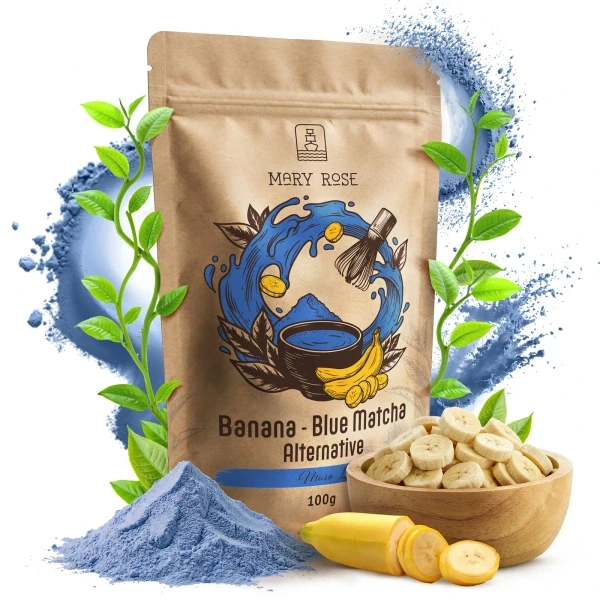
Pink Matcha Alternative: 100% freeze-dried dragon fruit with a magenta colour. The flavour is naturally sweet and delicately fruity.
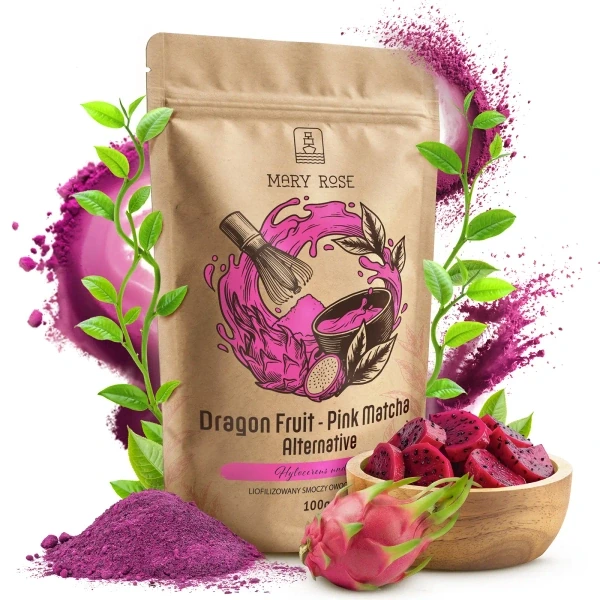
Purple Matcha Alternative: powdered ube, a purple yam (Dioscorea alata). The flavour is sweetish and mild, with notes of vanilla and nuts.
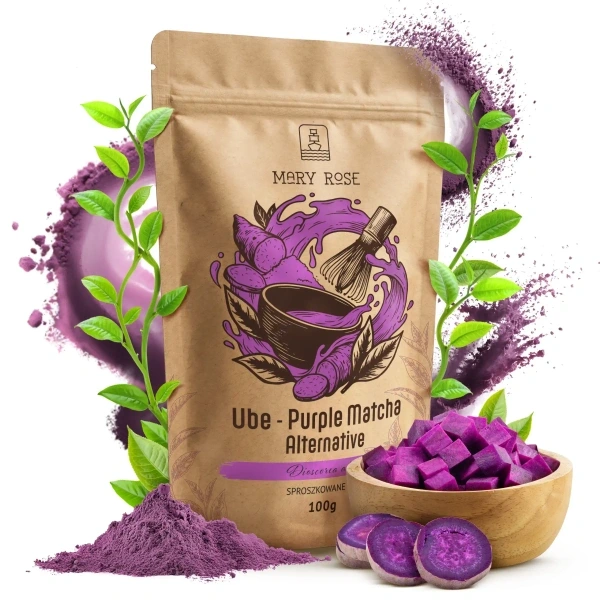
Orange Matcha Alternative: freeze-dried pumpkin with cinnamon, ginger, nutmeg and cloves. A sweet pumpkin flavour with warming spices.
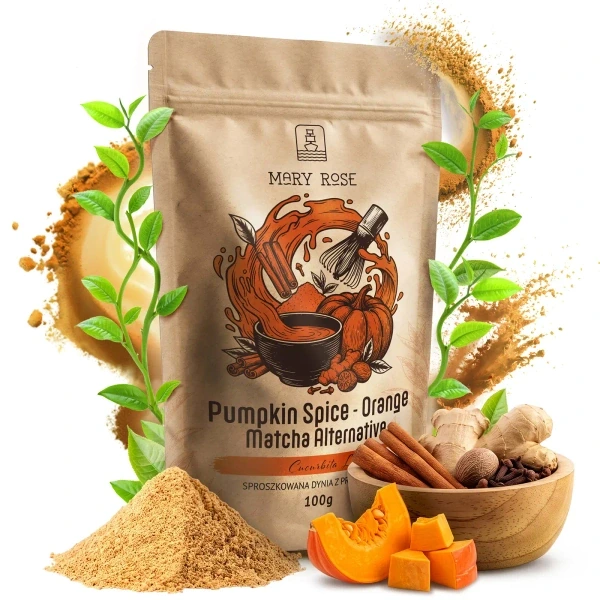
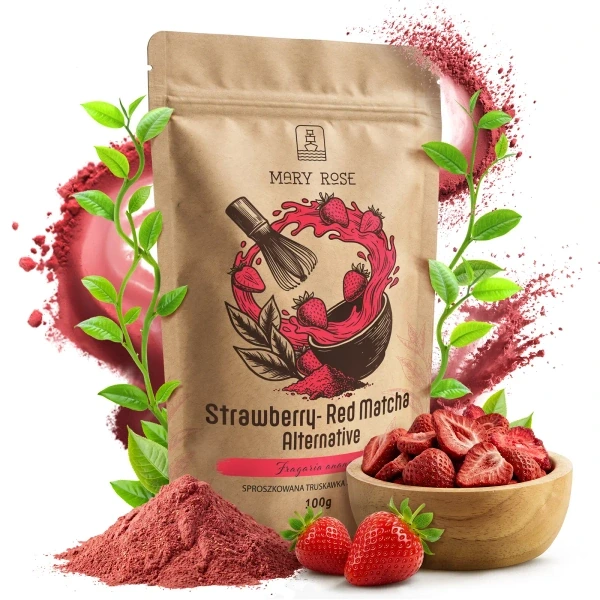
Red Matcha Alternative: freeze-dried strawberry with black carrot concentrate, which deepens the red colour. The flavour is sweet and slightly tangy.
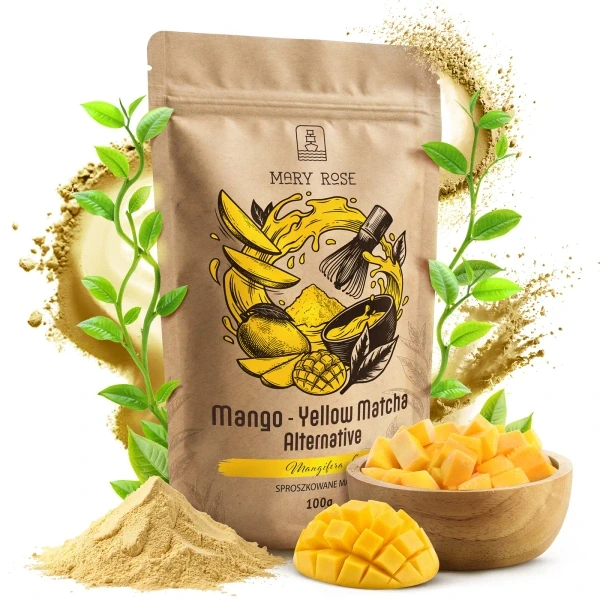
Yellow Matcha Alternative: 100% freeze-dried mango. A naturally sweet, fruity taste of the tropics.
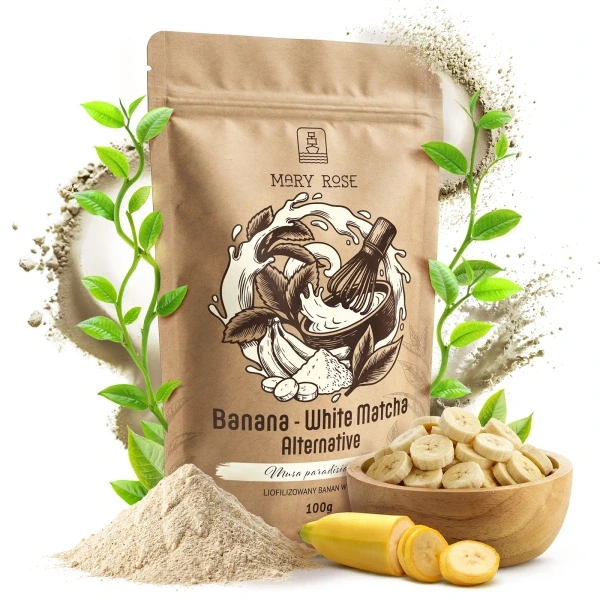
White Matcha Alternative: 100% freeze-dried banana with a light, almost white colour. Naturally sweet – good for lattes, porridge and pancakes.
All the colourful alternatives are available in 50 g and 100 g packs. The smaller version is a good way to try a few colours before you decide on your favourite.
How do I choose Mary Rose matcha?
With such a wide range, it is easy to assume that the best matcha tea is simply the most expensive one. But good matcha is the one that suits the way you drink it. In practice, a good choice depends on how you intend to drink it. You choose differently for a bowl with plain water, a morning latte or a cake. So it is worth answering three questions: where the matcha should come from, which grade you need and how often you will reach for it. Below, we sort out the differences between the Mary Rose matcha variants.
Japanese or Chinese matcha?
In the Mary Rose range, the differences between Japanese matcha and Chinese matcha can be seen mainly in three areas:
- ➡️ certification – Japanese Mary Rose matcha has organic farming certification, the Chinese one does not,
- ➡️ pack sizes – culinary matcha from both countries is available in a pack of up to 1 kg, but you can buy Chinese premium matcha in large packs, while the Japanese one comes in 100 g at most,
- ➡️ price – per gram, Chinese matcha is cheaper in this range in every grade.
Does this mean that matcha from Japan is always better? Not necessarily. The country of origin tells you about the region, the climate and the growing tradition, but it does not automatically decide the quality. In both countries, simpler matcha intended for the kitchen is made, as well as higher-grade matcha that is drunk with plain water. Researchers who compared matcha from different regions available on the Chinese market noticed that some of the samples from China had an aroma similar to the Japanese samples. The differences between regions came mainly from the compounds responsible for aroma. The choice between Japan and China is therefore largely a matter of taste, budget and intended use.
💬 Scientific source: Y. Luo et al., Variations of main quality components of matcha from different regions in the Chinese market, Frontiers in Nutrition, 2023.
Classic, premium or ceremonial matcha?
Mary Rose matcha comes in three quality grades. These names do not come from a single, widely accepted standard, and producers may understand them slightly differently. That is why, before buying, it is worth reading the description of the specific product and the information on the pack. In the Mary Rose range, the differences look like this:
- ✔️ culinary-grade matcha (classic) – has the strongest flavour, with a noticeable astringency and bitterness; its character does not disappear in cakes, ice cream or lattes,
- ✔️ premium-grade matcha – smoother and milder, described as a compromise between culinary and ceremonial matcha; it works with water and with milk,
- ✔️ ceremonial-grade matcha – the most delicate, sweetish and without sharp bitterness; intended to be drunk with plain water, as in the traditional ceremony.
A higher grade does not mean that the matcha is “better” for everything. It is a shame to add ceremonial matcha to a cake, because its subtle flavour will be lost among the other ingredients. On the other hand, culinary matcha drunk with plain water may seem too bitter. It is best to match the grade to the way you really drink or use matcha.
💡 Fun fact: Researchers analysed 25 green tea powders sold in the United States. The more expensive matchas usually contained more chlorophyll, which is responsible for the green colour, and more free amino acids, including theanine. The cheaper products were also called “matcha” – which is why the authors pointed to the need for a common, international definition of matcha.
💬 Scientific source: H. Horie et al., Comparison of the Chemical Components of Powdered Green Tea Sold in the US, Japan Agricultural Research Quarterly, 2018.
How do I choose a product to suit my needs?
If you still do not know where to start, use this short cheat sheet:
- ➡️ you are just starting – reach for Japanese organic Premium matcha in a 30 g pack or for a ready-made Matcha Latte BIO blend; both let you get to know the taste of matcha in a small portion, without buying a large pack,
- ➡️ you like classic matcha with water – choose ceremonial matcha: Japanese Tenno or Chinese from Jingshan,
- ➡️ you mostly drink lattes – go for premium matcha or for the flavoured blends, which you can prepare in a few moments,
- ➡️ you use matcha in the kitchen – choose culinary matcha, preferably in a larger pack,
- ➡️ you want to avoid caffeine – instead of matcha, choose a colourful alternative from the Matcha Alternative line.
Pack size matters a lot too. Small packs, 30 g or 50 g, are good for a start, when you want to compare a few variants. Opened matcha gradually loses its intense colour and fresh aroma, so if you drink it rarely, it is not worth buying large supplies. Packs of 100 g and larger are for people who drink matcha every day or add it to baked goods. And if you are still putting together your accessories, a convenient solution is a set in which the matcha already comes with a whisk and a scoop. You can read more about choosing your first set in the article Matcha set – which one to choose for a start.
We recommend
Japanese matcha set with organic Premium matcha 30 g and bamboo accessories – a good start for beginners.
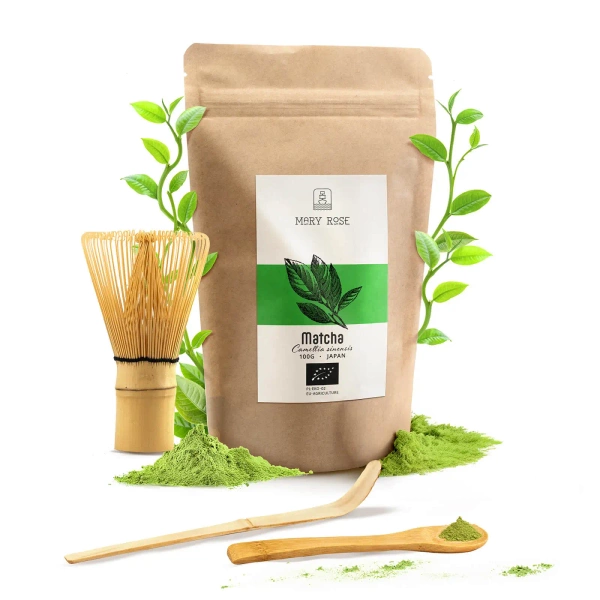
Japanese organic matcha 100 g with a whisk and a scoop – for everyday lattes and for the kitchen.
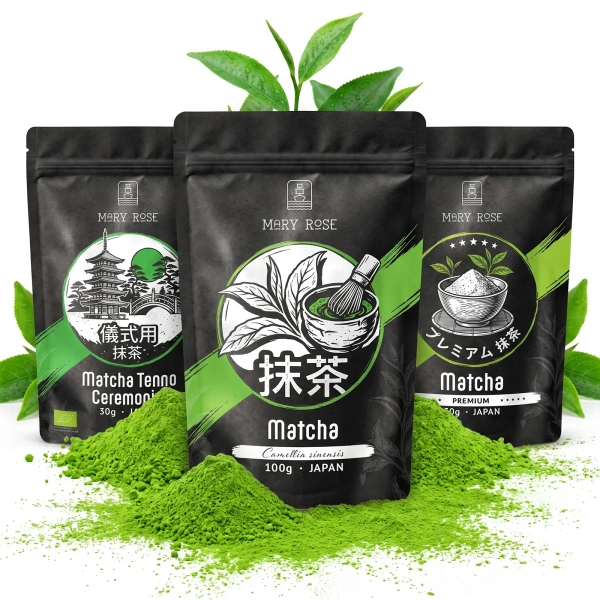
Ceremonial, premium and culinary in one set – the simplest way to compare the grades.
How do I prepare Mary Rose matcha?
Preparing Mary Rose matcha takes only a moment, but a few details have a big effect on the flavour. Three things matter most: the right amount of powder, water that is not boiling and vigorous whisking. The instructions below apply to classic green matcha – Japanese and Chinese, in all grades.
Classic matcha with water, step by step:
- Measure the powder. Put 1-2 g of matcha in the bowl, which is roughly half to one level teaspoon. It is best to sift it through a fine sieve – then no lumps will form.
- Heat the water. Do not use boiling water for matcha. The water should be 70-80°C – water that is too hot can bring out unnecessary bitterness from the matcha.
- Add water and whisk. Add 70-100 ml of water and whisk with the chasen whisk in quick, “W”-shaped movements until a fine, even foam appears on the surface. Instead of a whisk, you can use a frother.
- Drink straight away. The powder settles at the bottom over time, so it is best to drink matcha right after preparing it.
If you want to try the traditional, thick koicha, reach for ceremonial matcha, e.g. Japanese Tenno. In that case, you use much more powder for the same amount of water.
Matcha latte, hot and cold, is made from the same concentrated matcha base. Prepare the matcha with a small amount of water, and then top it up with frothed cow's milk or a plant-based drink, e.g. an oat drink. You can make the cold version by pouring the concentrate into a glass with ice and cold milk. The ready-made Mary Rose blends have their own proportions, given on the pack:
- ➡️ Matcha Latte BIO – dissolve a teaspoon of the blend (about 7 g) in a little water at 70-80°C and top up with 200 ml of hot milk,
- ➡️ flavoured lattes (strawberry, coconut, mango) – mix 3 small, heaped teaspoons (about 15 g) with 200 ml of water, cold or warm (60-70°C); the milk is already in the ingredients.
You will find more ideas for the milky version, including with plant-based drinks, in the article Matcha latte – what is it and how to make the perfect matcha with milk at home. Three things are enough to prepare matcha: a whisk, a sieve and a bowl. Over time, you can add further matcha accessories, such as a stand that helps the whisk keep its shape. Below you will find a basic set to start with.
We recommend
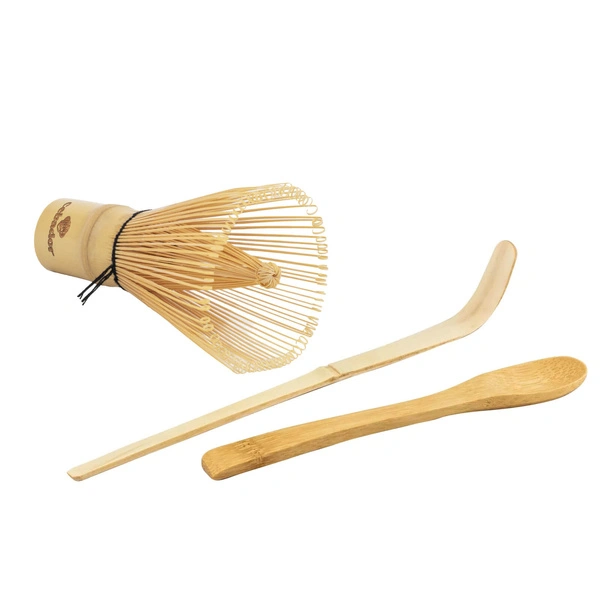
A chasen whisk made from a single piece of bamboo, a chashaku scoop and a spoon – everything for whisking matcha.
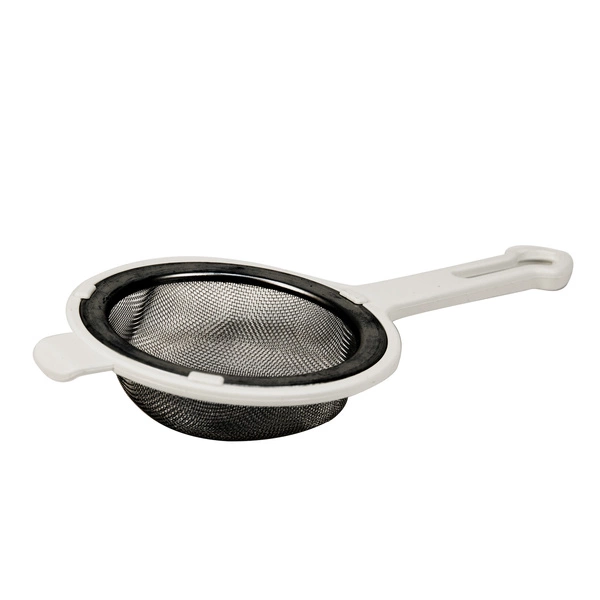
A fine stainless steel mesh breaks up lumps, so matcha mixes into water more easily.
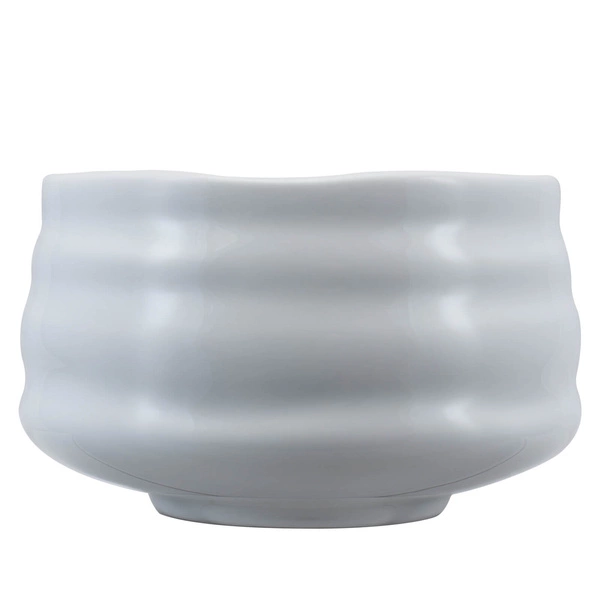
A wide ceramic bowl with a capacity of 500 ml, in which you can comfortably whisk matcha.
Mary Rose matcha reviews – what should you check before buying?
Before buying a new tea, many people look at reviews. If you type “Mary Rose matcha reviews” into a search engine, it is worth knowing how to read them. The same matcha can get completely different ratings – depending on what someone expected from it and how they prepared it. A review is most useful when you know which product it talks about and what it was used for.
When reading reviews of matcha, pay attention to a few elements:
- ✔️ flavour – whether it is mild and sweetish, or distinct and slightly bitter; it matters whether it was assessed in pure matcha with water or in a latte,
- ✔️ aroma – whether it is fresh and plant-like, or rather weak; it is also worth checking whether the author of the review writes about the aroma of the powder itself or of the finished drink,
- ✔️ colour – the higher the grade, the more intense and vivid the green usually is,
- ✔️ consistency – whether the powder mixes in easily, whether it forms lumps and whether a fine foam appears after whisking,
- ✔️ ease of preparation – whether it was enough to whisk the matcha well with water, or a sieve or a frother was needed,
- ✔️ use – whether the matcha was drunk with water, with milk, or added to baked goods.
It is always worth comparing reviews with the description of the specific product: its ingredients, origin, grade and pack size. A comment like “too bitter” about culinary matcha is not a flaw – such matcha has a strong flavour because it is intended for the kitchen. On the other hand, ceremonial matcha added to a cake may seem “tasteless”, because its delicacy is lost among the other ingredients. The way of preparation also matters a lot: pouring boiling water over the powder or not whisking can spoil even very good matcha.
💡 Fun fact: The colour and flavour of matcha are also affected by how it was stored. Researchers observed matcha kept at different temperatures for two months. As time passed and the temperature rose, the powder lost its brightness and green colour, and the content of catechins and caffeine gradually fell. So if someone writes about “dull” matcha in a review, it is worth considering how long it had been open and how it was stored.
💬 Scientific source: J. M. Kim et al., Effect of storage temperature on the antioxidant activity and catechins stability of Matcha (Camellia sinensis), Food Science and Biotechnology, 2020.
The surest way to form your own opinion is to compare two or three variants side by side. Then the differences in colour, flavour and foam are visible straight away – without relying on other people's descriptions. Other people's reviews are a good starting point, but the decision is yours. Matcha that seems too intense to one person will be the perfect morning drink for another.
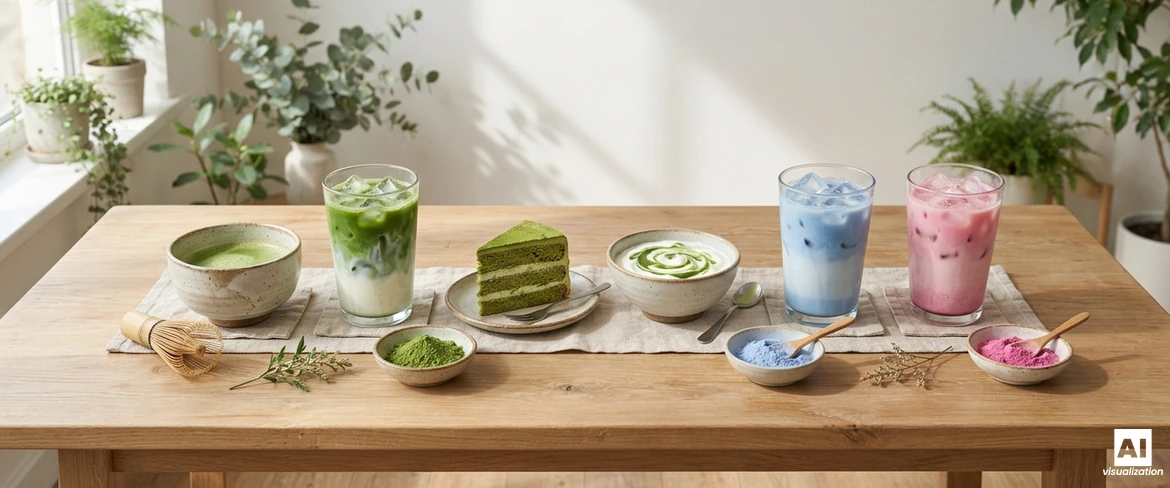
Mary Rose matcha in a traditional and a modern form
Mary Rose matcha combines two worlds. On the one hand, it is a tea that you can prepare as in the Japanese ceremony: in a bowl, with a bamboo whisk and plain water. On the other, it is an ingredient that is easily added to a morning latte, a smoothie or a homemade cake. The same green matcha can therefore be a calm ritual or a quick addition to everyday cooking.
Ceremonial matcha suits a traditional drink best, and premium matcha or ready-made latte blends suit drinks with milk. Culinary matcha works well in baked goods, ice cream, porridge and green smoothies, and you will find ideas for sweet recipes in the article Matcha desserts. Colourful powders from the Matcha Alternative line, in turn, add colour to drinks and desserts when you are looking for something without caffeine.
📌 In short:
- ✔️ with water, traditionally – ceremonial matcha: Japanese Tenno or Chinese from Jingshan,
- ✔️ with milk – premium matcha or ready-made Matcha Latte blends,
- ✔️ in the kitchen – culinary matcha, also in large packs,
- ✔️ without caffeine – colourful powders from the Matcha Alternative line.
Whether matcha is for you a moment of focus over a bowl or a green accent in a glass of latte, in the Mary Rose range it is easy to find a variant that suits your preferences. All you need to do is start with one product and discover the next ones step by step.
Traditional or modern – your matcha is waiting for its first whisking.
❓ FAQ – questions about Mary Rose matcha
1. What is Mary Rose matcha?
2. Is Mary Rose matcha Japanese?
3. How is Japanese matcha different from Chinese matcha?
4. How do I prepare Mary Rose matcha?
5. Which Mary Rose matcha should I choose to start with?
6. How is classic matcha different from Matcha Alternative?
7. Can I add Mary Rose matcha to desserts?
8. How should I store matcha after opening?
9. Does Mary Rose matcha contain caffeine?
Sources of information:
- Wikipedia: Matcha.
- Y. Luo et al., Variations of main quality components of matcha from different regions in the Chinese market, Frontiers in Nutrition, 2023.
- Y. Huang et al., Effect of three milling processes (cyclone-, bead- and stone-millings) on the quality of matcha: Physical properties, taste and aroma, Food Chemistry, 2022.
- J. M. Kim et al., Effect of storage temperature on the antioxidant activity and catechins stability of Matcha (Camellia sinensis), Food Science and Biotechnology, 2020.
- H. Horie et al., Comparison of the Chemical Components of Powdered Green Tea Sold in the US, Japan Agricultural Research Quarterly, 2018.
Recommended

Gift Set: 3x Japanese Matcha + Bamboo Accessories

Gift Set for Colourful Matcha Latte: Matcha + Blue Matcha + Accessories

Gift Set for Preparing Pink Matcha
